
SpaceX's Double Milestone Week — Two Records That Change Everything
SpaceX's Double Milestone Week — Two Records That Change Everything SpaceX just punched through two massive milestones in one week, and the industry is still catching its breath. A Falcon 9 booster smashed its own record with flight number 35, then the company rolled out plans for what could be the biggest IPO in history. This is not some slow build. This is SpaceX turning reus
SpaceX's Double Milestone Week — Two Records That Change Everything
SpaceX just punched through two massive milestones in one week, and the industry is still catching its breath. A Falcon 9 booster smashed its own record with flight number 35, then the company rolled out plans for what could be the biggest IPO in history. This is not some slow build. This is SpaceX turning reusability into routine and valuation into a global conversation all at once.
June 8 delivered the flight milestone. June 12 is set for the stock debut. Both moments land with the same message: SpaceX is no longer testing the future. It is running it at full throttle. Buckle up, because the details hit different when you lay them out straight.
B1067's record 35th flight and what it means for reusability
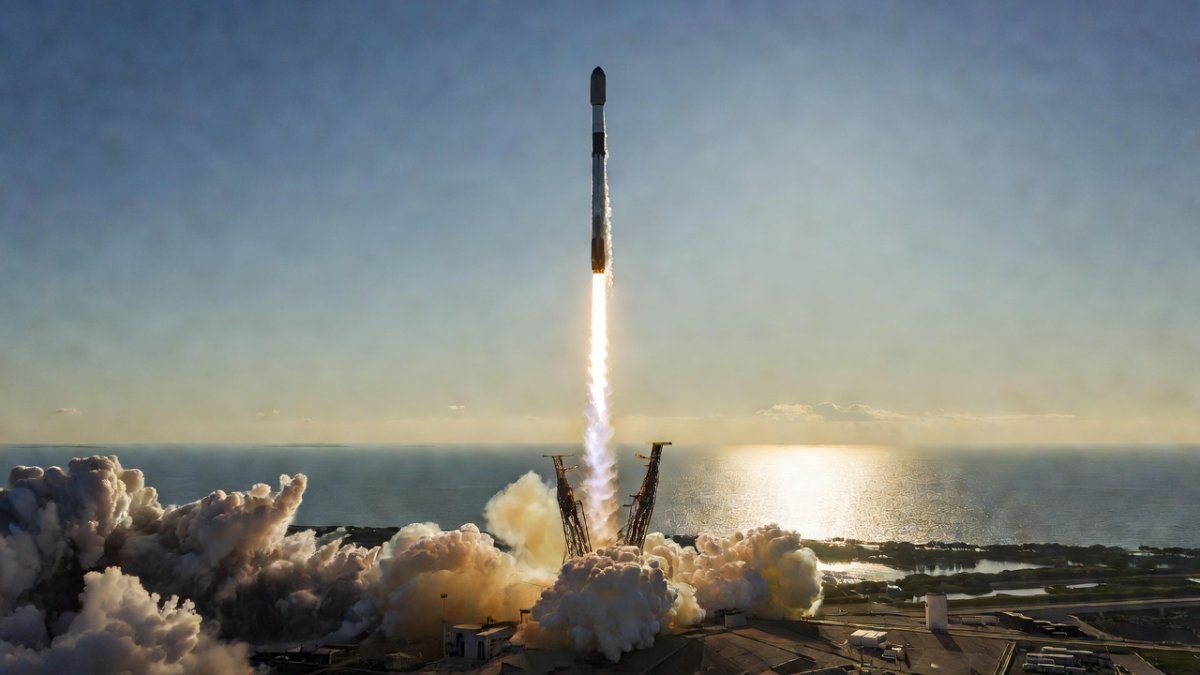
Booster B1067 lifted off from SLC-40 at Cape Canaveral Space Force Station at 6:13 a.m. EDT on June 8, 2026. It carried 29 Starlink V2 Mini Optimized satellites and then touched down on the droneship A Shortfall of Gravitas in the Atlantic. That marked its 35th flight, a new record for any orbital-class booster.
The same booster first flew back in June 2021. Now, five years later, it keeps coming back like it is on a weekly schedule. Ars Technica put it plain: we take the Falcon 9 for granted, but we probably should not. Thirty-five flights on one piece of hardware changes the conversation from experimental to operational.
Every prior flight proved the hardware could survive reentry. This one proved it can keep doing it without drama. The Falcon 9 family now sits at 660 launches and 657 successes as of that morning. That kind of track record does not happen by accident.
The economics of reusability — why 35 flights matters
Reusability stops being a slogan once a booster clears three dozen missions. Each flight spreads the original build cost across more missions, which is the entire point. B1067 turning five years old while still flying shows the design margin is real, not theoretical.
SpaceX has turned the first stage into something closer to an airliner than a traditional rocket. You fly it, inspect it, fly it again. The 35th flight on B1067 is the proof point that this loop can run for years without the hardware giving out. That changes launch economics at the root.
When one booster handles what used to require dozens of single-use stages, the cost per kilogram to orbit drops hard. Starlink missions especially benefit because the satellite count per launch stays high while the marginal cost stays low. Thirty-five flights is not a stunt. It is the new baseline.
The IPO details: price, shares, valuation, exchanges
SpaceX filed confidentially and set the NASDAQ ticker SPCX, with a parallel listing on the NASDAQ Texas exchange. The fixed price lands at $135 per share for 555.6 million Class A shares. That targets a raise near 75 billion dollars and a valuation between 1.75 and 1.8 trillion dollars.
If the numbers hold, this would eclipse the previous record set by Saudi Aramco. Bloomberg called the offering well oversubscribed before trading even starts. Forbes framed it as a 1.77 trillion dollar bet on an orbital economy. Those are the stakes on the table for June 12.
The roadshow kicked off June 4. Order books close June 10. A dedicated retail investor event follows on June 11. Trading begins the next day. No public S-1 numbers beyond the share count and price have been released, and that is exactly how the process was designed.
Retail investor access — 30% allocation, how to participate
Thirty percent of the offering is reserved for retail investors. That is not window dressing. That is deliberate access. Designated brokers include Robinhood, SoFi, E*Trade, Fidelity, and Charles Schwab. Fidelity set its minimum at 2,000 dollars.
Anyone with an account at those platforms can get in line once the order books open. The allocation means Main Street gets a real slice instead of watching institutions take everything. SpaceX is not hiding the offering behind closed doors. It is opening a lane for everyday investors who want exposure to the orbital economy.
June 11 is the retail-specific event. That timing lets individual buyers hear the pitch directly before trading begins. The structure keeps the process transparent and gives retail the same shot at allocation that bigger players receive.
Starlink as growth engine across 150 countries
Starlink already reaches roughly 150 countries. That global footprint turns the constellation into the clearest revenue engine inside SpaceX. Every additional booster flight feeds more satellites into orbit, which expands coverage and capacity at the same time.
The V2 Mini Optimized satellites launched on B1067 are part of that build-out. More satellites mean better service in remote regions and higher throughput in crowded markets. The 35-flight record directly supports that expansion because the marginal cost per satellite keeps falling.
Starlink is no longer a side project. It is the operational proof that SpaceX can monetize low Earth orbit at scale. Investors watching the IPO will see that network as the bridge between today’s valuation and tomorrow’s orbital economy.
Bigger picture — OpenAI filing same week, tech IPO wave
OpenAI filed its own IPO on June 9, landing in the same week as SpaceX. Two of the most watched private companies in tech are stepping into public markets within days of each other. That timing is not coincidence. It signals a broader wave of high-growth tech offerings.
SpaceX brings the physical infrastructure of space. OpenAI brings the software layer of intelligence. Both are pricing the future at once. The market now gets to decide how it values orbital connectivity versus advanced AI in back-to-back debuts.
Investors have not seen this kind of concentrated tech IPO activity in years. The overlap forces a direct comparison of risk, reward, and long-term narratives. SpaceX and OpenAI are not competing directly, but their simultaneous arrivals reshape the conversation about where capital flows next.
What this means for investors and space industry
For investors, SPCX offers a rare public window into a company that has already changed launch costs and satellite broadband. The 1.75 to 1.8 trillion dollar valuation reflects both proven hardware and the promise of an orbital economy that keeps scaling.
For the broader space industry, the 35-flight record sets a new standard that competitors must match. Reusability is no longer optional. It is the price of admission. Starlink’s reach across 150 countries shows the downstream business model is already working.
The IPO also brings fresh capital that can accelerate Starship development and constellation growth. That feedback loop between flight heritage, revenue, and public markets is what separates SpaceX from every other player in the sector right now.
Action steps for readers
First, check your brokerage account at Robinhood, SoFi, E*Trade, Fidelity, or Charles Schwab to confirm eligibility for the retail allocation. Second, mark June 10 for order book close and June 11 for the retail investor event so you do not miss the window. Third, review the fixed price of 135 dollars per share and the 30 percent retail reserve before placing any indication of interest.
Fourth, track the NASDAQ ticker SPCX once trading begins on June 12 and compare it against the 1.75 to 1.8 trillion dollar valuation range. Fifth, watch how Starlink’s expansion in 150 countries translates into reported metrics after the listing. Those steps turn the double milestone from headline into actionable position.
How B1067 Crushes Legacy Launchers
ULA's Atlas V tops out at roughly 15 flights across its entire fleet before retirement. Russia's Soyuz has flown hundreds of times but burns a fresh rocket every single mission. Europe's Ariane series follows the same expendable script, with each vehicle scrapped after one ride. B1067 just logged flight 35 and landed ready for more. That single booster has now delivered more orbital mass than most national programs manage in a decade. Reusability isn't a gimmick anymore. It's the reason SpaceX controls the cadence while everyone else waits on new hardware builds.
The Regulatory and Political Machine Behind the Launches
FAA licensing has turned into a monthly routine for SpaceX instead of a multi-year slog. NASA keeps handing over Commercial Crew and cargo contracts because the company hits every milestone on time and under budget. Defense deals through the Space Force add another layer of steady revenue. Regulators still nitpick landing zones and debris rules, but the political reality is clear: Washington needs SpaceX more than SpaceX needs Washington. Those partnerships lock in billions in guaranteed work and keep competitors buried in paperwork.
Blue Origin and Amazon's Long Shot at Catching Up
Jeff Bezos poured billions into Blue Origin and still can't match Falcon 9 flight rates. New Glenn sits grounded while Starlink constellations multiply. Amazon's Project Kuiper aims to flood orbit with its own satellites, yet it depends on SpaceX rockets for most early launches. The gap isn't just hardware. It's operational tempo. Blue Origin has yet to prove rapid reuse at scale. Kuiper faces the same supply-chain bottlenecks that once slowed everyone else. Catching up would require a decade of flawless execution that hasn't materialized yet.
What a $75 Billion IPO Actually Moves in the Economy
Early employees and investors cash out at life-changing levels while new capital floods into Starship development and global Starlink ground stations. Suppliers from Texas to Florida see fresh orders. Pension funds and index trackers that buy the stock spread the gains across millions of ordinary portfolios. The real multiplier hits downstream: cheaper broadband reaches remote regions, defense satellites launch faster, and launch costs keep dropping. That $75 billion isn't just paper wealth. It's fuel for an entire ecosystem that now orbits around one company's execution speed.
By Jessica Ali, Lead Anchor — Global 1 News
This article was produced with AI-assisted research and editorial support. Reporting is based on sources cited in the article.
What's Your Reaction?
 Like
0
Like
0
 Dislike
0
Dislike
0
 Love
0
Love
0
 Funny
0
Funny
0
 Wow
0
Wow
0
 Sad
0
Sad
0
 Angry
0
Angry
0

Editor-in-Chief at Global1.News. Atlanta-based journalist who cuts through the BS and tells it like it is. Lead anchor, host, and the voice you hear when the spin stops and the truth starts.















Comments (0)