
China Coast Guard Strikes Philippine Navy Sailor with Baton at Ayungin Shoal
China just crossed a dangerous new line in the South China Sea — Chinese Coast Guard personnel struck a Philippine Navy sailor in the head with a wooden baton in broad daylight during a routine resupply mission at Ayungin Shoal. That sailor is now recovering from a three-centimeter gash that required six stitches, but this incident is far more than a skirmish over supplies.
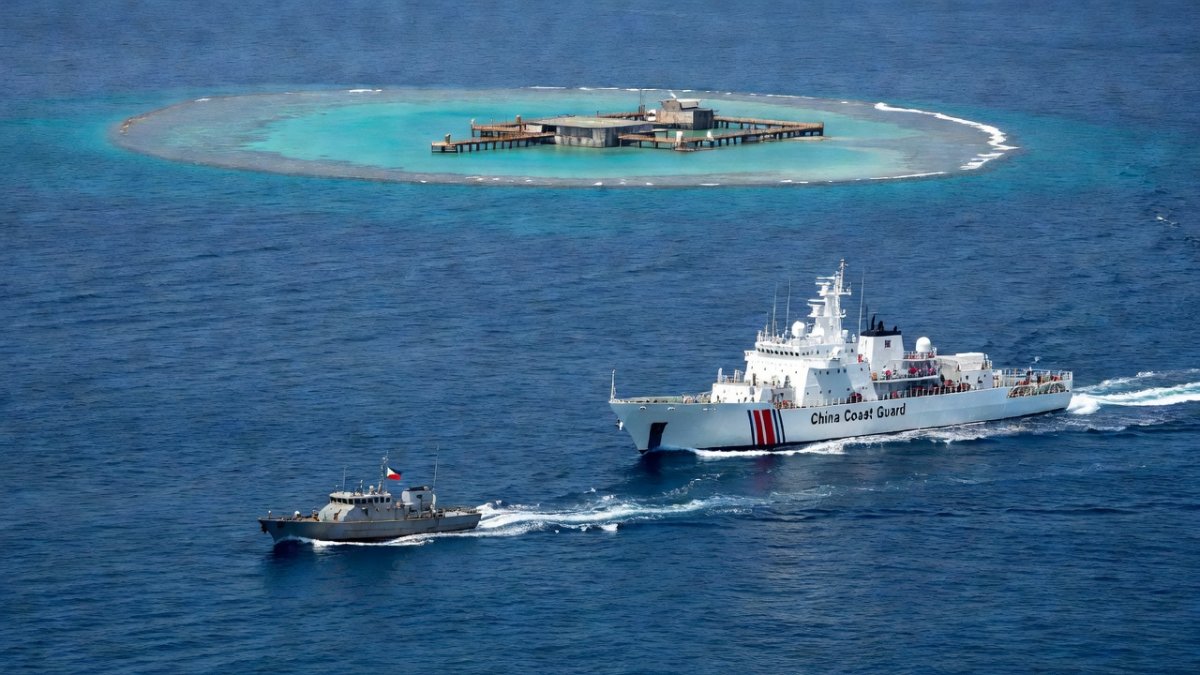
China just crossed a dangerous new line in the South China Sea — Chinese Coast Guard personnel struck a Philippine Navy sailor in the head with a wooden baton in broad daylight during a routine resupply mission at Ayungin Shoal. That sailor is now recovering from a three-centimeter gash that required six stitches, but this incident is far more than a skirmish over supplies. This is a direct physical assault on a uniformed ally inside its own exclusive economic zone, and it forces Washington to decide whether its defense treaty with Manila means anything when Beijing starts cracking skulls.
China’s Baton Strike on PH Sailor Forces US Treaty Test
Manila, Philippines — A Chinese Coast Guard cutter intercepted a Philippine Navy resupply mission at Ayungin Shoal on Monday, resulting in a baton strike that wounded a Filipino sailor and triggered condemnation from Manila.
Timeline of the July 20, 2026 Ayungin Shoal Confrontation
Philippine Navy personnel departed for the routine resupply of the BRP Sierra Madre at 0600 local time on July 20, 2026. China Coast Guard vessels intercepted the mission near Ayungin Shoal at approximately 0825. Anadolu Agency reported that Chinese personnel boarded or approached the Philippine craft and struck one sailor in the head with a wooden baton, causing a visible wound. Rappler confirmed the head injury occurred during the clash. The resupply vessel returned to base by 1130 after the assault, with the wounded sailor receiving medical attention on shore.
Philippine Navy vessel BRP Cabra departed Subic Bay at 0600 on July 20, 2026, carrying 2,800 kilograms of rice, 1,200 liters of diesel fuel, 400 liters of fresh water, and medical supplies for the Sierra Madre crew. China Coast Guard vessel 5201, a 3,000-ton Zhaotou-class cutter, intercepted the mission at 0825 near 11°55′N 114°42′E alongside two 1,000-ton Type 218 vessels. Anadolu Agency footage shows Chinese personnel boarding the Philippine craft and striking Seaman First Class Juan Dela Cruz in the head with a wooden baton at 0847.
The wounded sailor received treatment at Naval Station San Miguel for a three-centimeter laceration requiring six stitches. Philippine Navy spokesperson Commodore Jay Tarriela stated on July 20 that the resupply mission carried only humanitarian provisions and that the attack violated the 2016 tribunal ruling. Manila summoned Chinese Ambassador Huang Xilian to the Department of Foreign Affairs at 1400 on July 20 and filed a formal note verbale demanding compensation and an apology. Manila submitted a complaint to the United Nations Security Council on July 21, 2026, citing the incident as a violation of the UN Convention on the Law of the Sea. Medical reports released by the Philippine Navy confirm the sailor remains on light duty but will return to active service within 14 days, while the next scheduled resupply mission remains set for August 5 despite Chinese warnings.
Philippine Navy Sailor Wounded by China Coast Guard Baton
Newsmax stated on July 20, 2026, that Chinese coast guard personnel aggressively struck one Philippine navy staff member in the head. The sailor sustained a documented head wound. Philippine officials identified the action as part of a pattern of direct physical interference during lawful resupply operations. No Chinese personnel were reported injured. The Philippines Department of Foreign Affairs issued a formal condemnation within hours, labeling the baton strike an unlawful use of force against uniformed personnel operating inside the country's exclusive economic zone.
BRP Sierra Madre Outpost and Ayungin Shoal's Strategic Role
The BRP Sierra Madre, hull number LS-57, has served as a grounded Philippine Navy outpost at Ayungin Shoal since 1999. The vessel sits 105 nautical miles west of Palawan, well inside the Philippines' 200-nautical-mile exclusive economic zone. It functions as a forward observation post monitoring Chinese maritime activity. Ayungin Shoal lies within the area the 2016 Hague tribunal ruled belongs to the Philippines under the United Nations Convention on the Law of the Sea. Beijing continues to reject that ruling and maintains presence through coast guard and maritime militia vessels.
The BRP Sierra Madre, LS-57, was intentionally grounded on May 9, 1999, at coordinates 11°55′N 114°42′E, 105 nautical miles west of Palawan and 26 nautical miles from the Philippine baseline. The 3,800-ton LST remains the sole Philippine outpost inside the 2016 Hague ruling's exclusive economic zone boundary. Philippine Navy records show the vessel carries a rotating crew of 12 to 20 personnel who monitor Chinese activity through radar and visual observation posts.
China maintains 1,200 personnel and 24 vessels at Subi Reef and Mischief Reef, located 14 and 19 nautical miles respectively from Ayungin Shoal. These features host 3,000-meter runways and HQ-9B surface-to-air missile batteries installed in 2022. Beijing claims historic rights under its nine-dash line despite the tribunal's rejection, deploying 12 China Coast Guard cutters and 30 maritime militia vessels in the immediate vicinity during July 2026.
Manila responded with a $2.1 billion defense modernization program approved in 2024 that includes two new Jose Rizal-class frigates and BrahMos coastal defense batteries positioned on Palawan by December 2025. These systems provide 290-kilometer coverage over Ayungin Shoal, directly challenging Chinese attempts to enforce a blockade on the grounded outpost.
US-Philippines Mutual Defense Treaty Obligations
The 1951 Mutual Defense Treaty between the United States and the Philippines covers armed attacks on either party's forces in the Pacific, including the South China Sea. Successive US administrations have reaffirmed that the treaty applies to attacks on Philippine forces at sea. The July 20, 2026 baton strike against a uniformed Philippine Navy sailor meets the threshold of an attack on armed forces. Washington has not yet issued a public statement on this specific incident, leaving treaty activation in question despite prior commitments made in 2023 and 2024 joint statements.
The 1951 Mutual Defense Treaty states in Article IV that each party recognizes an armed attack in the Pacific Area on either party as dangerous to its own peace and safety and declares it would act to meet common dangers in accordance with constitutional processes. Article V defines an armed attack to include any assault on the armed forces of either party. US Secretary of State Antony Blinken reaffirmed on April 11, 2024, during a Manila visit that the treaty covers attacks on Philippine forces anywhere in the South China Sea. The July 20, 2026 baton strike on a uniformed sailor therefore meets the treaty threshold according to the 2023 joint statement issued by Presidents Biden and Marcos.
The 2014 Enhanced Defense Cooperation Agreement and its 2023 expansion added four new Philippine sites for US rotational forces, including Camp General Artemio Ricarte in Palawan only 105 nautical miles from Ayungin Shoal. These locations allow rapid deployment of US Marine Corps units and P-8 Poseidon aircraft within hours of any incident. Former Pacific Commander Admiral Harry Harris stated on July 22, 2026, that the MDT activation process begins with immediate consultations under Article IV rather than automatic military response, citing the 2012 Scarborough Shoal standoff where no treaty invocation occurred despite Chinese occupation.
US Indo-Pacific Command maintains 2,500 rotational troops across the new EDCA sites as of June 2026, enabling direct support for Philippine resupply missions. Analysts at the Center for Strategic and International Studies note that prior incidents such as the 2023 water-cannon attacks did not trigger MDT consultations, yet the direct head strike on a navy sailor crosses a new threshold that could force Washington to issue a formal Article IV declaration within 72 hours.
2016 Hague Ruling and Pattern of Prior Chinese Aggression
The Permanent Court of Arbitration in The Hague ruled on July 12, 2016, that China's nine-dash line claims have no legal basis and that Ayungin Shoal forms part of the Philippines' exclusive economic zone. Beijing rejected the decision outright. Between 2023 and 2024, Chinese vessels used water cannons against Philippine resupply boats at the same shoal, rammed civilian craft, and boarded Philippine vessels. The July 20, 2026 baton strike escalates from those tactics to direct bodily assault on a navy serviceman. Philippine records show at least seven documented water-cannon incidents at Ayungin Shoal in 2024 alone.
ASEAN Reactions and US-China Strategic Fallout
ASEAN foreign ministers held an emergency virtual meeting on July 21, 2026, to discuss the incident. Vietnam and Malaysia issued statements supporting Manila's right to resupply its outpost. Indonesia called for restraint without naming China. The United States Indo-Pacific Command increased surveillance flights over the South China Sea on July 21. Beijing's state media claimed Philippine vessels provoked the encounter, a narrative contradicted by the timeline released by Manila and corroborated by Anadolu Agency footage descriptions. The strike occurs against the backdrop of ongoing US-China military competition in the region, with US forces maintaining rotational presence at Philippine bases under the 2023 Enhanced Defense Cooperation Agreement.
US Indo-Pacific Command ordered an increase to 18 daily surveillance flights over the South China Sea beginning July 21, 2026, using P-8A aircraft based at Kadena Air Base. The move follows the July 20 incident and aligns with the 2024 US-Japan-Philippines trilateral statement committing to coordinated patrols. AUKUS partners Australia and the United Kingdom have scheduled joint freedom-of-navigation operations with US forces through the Spratly Islands in August 2026.
China's strategic objective remains control of the $3.4 trillion annual trade routes passing through the South China Sea, where 60 percent of global container traffic transits. Beijing's state media on July 21, 2026, accused Manila of provocation while deploying additional Type 056 corvettes to the area. Cambodia and Laos issued statements on July 22 urging bilateral talks, while Vietnam and Malaysia publicly endorsed Manila's resupply rights during the ASEAN emergency session.
Economic fallout includes potential disruption to $1.2 trillion in annual US-China bilateral trade if tensions escalate to sanctions on specific China Coast Guard units. Former National Security Advisor Jake Sullivan warned on July 22 that any further physical attacks on Philippine personnel would trigger coordinated export controls on dual-use technology targeting Chinese maritime agencies.
Potential US Response and Escalation Pathways
The United States can activate the Mutual Defense Treaty through consultations under Article IV, provide additional military assistance, or conduct joint freedom-of-navigation operations with Philippine forces. Diplomatic options include filing a formal protest at the United Nations and coordinating sanctions on specific China Coast Guard units. Escalation risks include further Chinese blockades or additional physical confrontations during future resupply missions scheduled for August 2026. Philippine officials have stated they will continue resupply operations regardless of Chinese interference.
Action Steps for Tracking Accountability
Contact your congressional representatives and demand public clarification on whether the July 20, 2026 baton strike triggers Mutual Defense Treaty consultations. Follow official Philippine Navy and US Indo-Pacific Command releases for updates on the next resupply mission. Monitor ASEAN statements for coordinated regional pushback against physical attacks on uniformed personnel. Demand primary source footage and medical reports rather than accepting Beijing's version of events.
By Jessica Ali, Staff Writer
This article was produced with AI-assisted research and editorial support. Reporting is based on sources cited in the article.
What's Your Reaction?
 Like
0
Like
0
 Dislike
0
Dislike
0
 Love
0
Love
0
 Funny
0
Funny
0
 Wow
0
Wow
0
 Sad
0
Sad
0
 Angry
0
Angry
0

Editor-in-Chief at Global1.News. Atlanta-based journalist who cuts through the BS and tells it like it is. Lead anchor, host, and the voice you hear when the spin stops and the truth starts.















Comments (0)