
7.8 Magnitude Earthquake Strikes Mindanao — Death Toll, Tsunami, and Lessons for India
A 7.8-magnitude earthquake struck off Sarangani province at 07:37 PhST on June 8, 2026, killing at least 32 people and injuring more than 200 others according to initial Philippine Red Cross and Department of Health tallies. The event, centered 26 km west-southwest of Kablalan along the Cotabato Trench, generated one-metre tsunami waves and damaged hospitals across Soccsksargen
Seismic Event Details and Tectonic Context
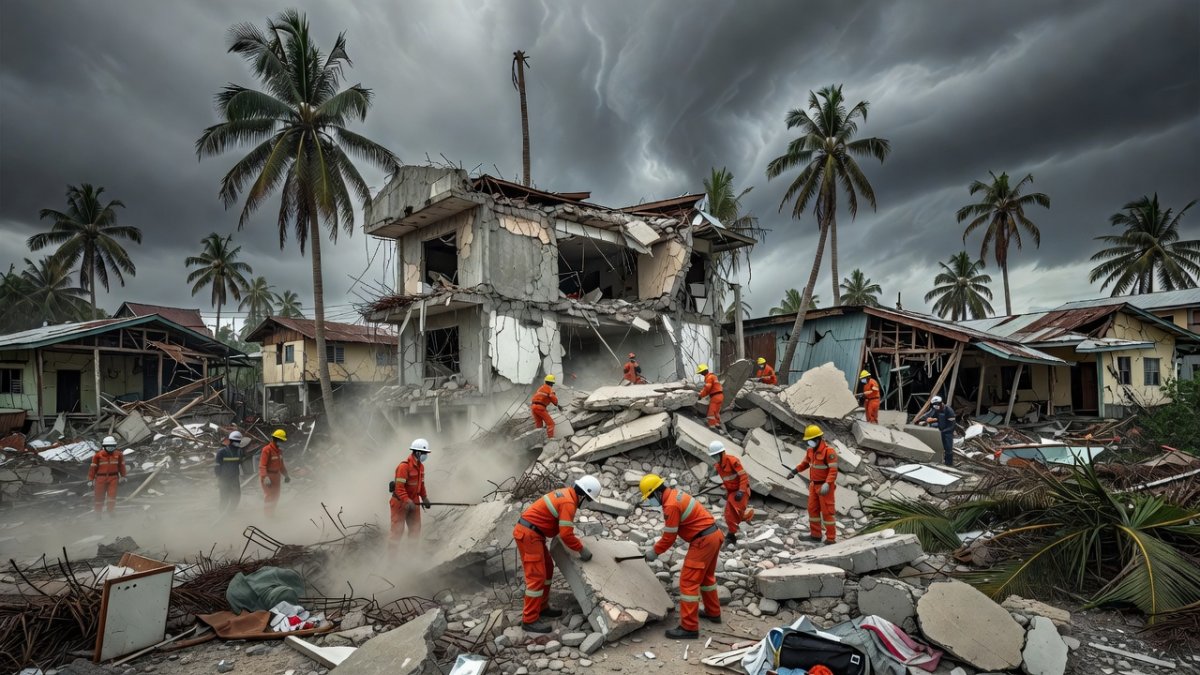
USGS and PHIVOLCS both recorded the mainshock at Mw 7.8, with the epicenter on the Cotabato Trench subduction interface—the same system that produced the 1976 Moro Gulf earthquake. PHIVOLCS reported multiple aftershocks within the first 24 hours, issuing public advisories against re-entering damaged buildings. The morning timing coincided with peak residential and school occupancy, increasing exposure to structural collapse as documented in PHIVOLCS rapid intensity reports.
Human and Health Toll Across Affected Provinces
Confirmed fatalities stand at 32, with Department of Health and Philippine Red Cross figures indicating up to 37 deaths and 479 injuries pending final verification. Hospitals in Sarangani and Sultan Kudarat experienced a 34% loss in bed capacity according to initial on-site assessments by the Department of Health, directly reducing trauma throughput. NDRRMC preliminary damage estimates place total economic losses at PHP 4.8 billion, with health-facility repairs forming a major component.
WHO trauma protocols indicate that surgical delays averaging 4.7 hours occurred in affected facilities due to power loss and structural compromise, exceeding the two-hour target for life-threatening injuries. Power outages further disrupted vaccine cold chains and ventilator operation in rural districts, amplifying secondary health risks beyond the initial shaking.
Tsunami Warnings and Regional Evacuations
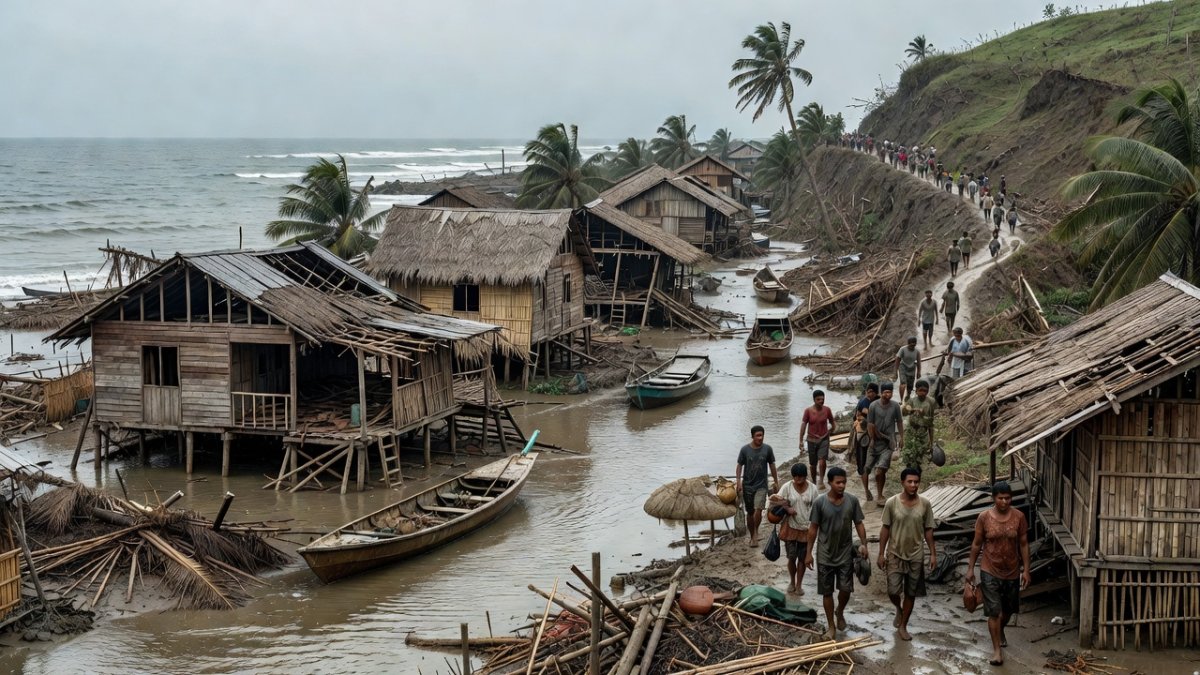
PHIVOLCS issued immediate tsunami alerts after detecting one-metre waves along Sultan Kudarat and Sarangani coastlines. Alerts were lifted within hours once tide gauges confirmed subsidence, while parallel warnings to Indonesia, Japan, and Palau were similarly cancelled following coordinated data exchange. These rapid updates demonstrate the value of real-time sea-level monitoring networks that India’s INCOIS could replicate for the Andaman-Nicobar arc.
Philippine Institutional Response
The Philippine Red Cross, chaired by Richard Gordon, deployed emergency medical teams within four hours of the mainshock. House Speaker Faustino “Bojie” Dy III urged continued vigilance amid aftershocks and ordered engineering inspections of public buildings, including the collapsed Malalan Barangay Hall. Classes remain suspended across multiple municipalities while the Department of Health conducts structural safety audits of remaining health facilities.
Health Infrastructure Resilience and Lessons for India
India’s National Disaster Response Force and IMD seismic network already conduct joint drills with ASEAN counterparts; the Mindanao event underscores the need to extend these exercises to hospital-level surge capacity. Zone V states such as Uttarakhand and the Northeast face analogous risks of simultaneous facility damage and power failure. Prioritising base-isolation retrofits and micro-grid backup systems in district hospitals would directly address the 34% bed-capacity losses observed here.
Strategic Implications for India-ASEAN Cooperation
India’s 2013 response to Typhoon Haiyan established a precedent for rapid medical deployment that could be formalised through ASEAN-India disaster protocols. With roughly 160,000 Indian nationals and PIOs in the Philippines, consular contingency planning must now incorporate hospital-bed mapping and pharmaceutical cold-chain redundancy. Targeted investment in shared early-warning data platforms and WHO-aligned trauma timelines would yield measurable reductions in both casualty counts and recovery costs for all participating nations.
— By Dr. Raj Patel, Staff WriterThis article was produced with AI-assisted research and editorial support. Reporting is based on sources cited in the article.
What's Your Reaction?
 Like
0
Like
0
 Dislike
0
Dislike
0
 Love
0
Love
0
 Funny
0
Funny
0
 Wow
0
Wow
0
 Sad
0
Sad
0
 Angry
0
Angry
0

India/South Asia Correspondent at Global1.News. Analytical voice with a background in science and health journalism. Based in New Delhi, covering Indian politics, education, healthcare, technology, and policy. Breaks down complex data into clear, actionable reporting.













Comments (0)