
South Korea's Critical Mineral Supply Chains: Diversification Gains and Enduring Chinese Exposure
The 2026 Export Surge and Its Hidden Mineral Foundations South Korea recorded $85.9 billion in goods exports in April 2026, marking a 48 percent increase from the previous year. Semiconductors alone surpassed $30 billion for the second straight month, underscoring the vitality of industries such as electric vehicle batteries and advanced displays. These headline figures, howeve
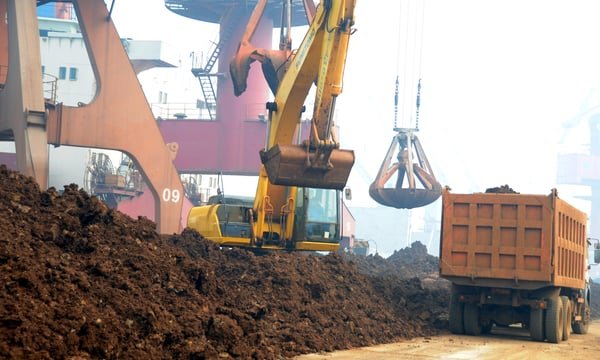
The 2026 Export Surge and Its Hidden Mineral Foundations
South Korea recorded $85.9 billion in goods exports in April 2026, marking a 48 percent increase from the previous year. Semiconductors alone surpassed $30 billion for the second straight month, underscoring the vitality of industries such as electric vehicle batteries and advanced displays. These headline figures, however, rest on a narrow upstream foundation of critical minerals whose sourcing patterns reveal both measured progress and structural vulnerabilities.
Trade statistics compiled through South Korea's mineral import statistics system, KOMIS, for the full year 2025 provide the most detailed view available of these supply chains. The data illustrate a bifurcated outcome: diversification has occurred in select cases, yet overall import reliance remains extreme. The Korea Institute of Geoscience and Mineral Resources has previously estimated South Korea's net import dependence on critical minerals at over 99.7 percent, meaning the central policy question concerns the identity of suppliers and the resilience of those arrangements under disruption.
Policy Triggers and the Pace of Sourcing Shifts
Beijing's export controls have served as the primary catalyst for observable changes in Korean import patterns. For six minerals essential to semiconductors, batteries, and displays, China's share of South Korean imports in 2025 ranged between 14.8 percent and 94.2 percent. The most rapid adjustments followed specific Chinese announcements, with sourcing realignments materializing within roughly eighteen months in the clearest instances.
These shifts demonstrate that Korean firms can respond to external restrictions when alternative processing capacity exists abroad. At the same time, the data caution against equating changes in the reported country of origin with genuine reductions in strategic exposure, particularly when upstream extraction remains concentrated elsewhere.
Documented Diversification in Gallium, Germanium, and Antimony
Gallium offers the clearest illustration of post-control rebalancing. After China announced export restrictions on gallium and germanium in August 2023, Korean importers initially increased purchases from China, raising its share to 73.6 percent in 2024 amid stockpiling. By 2025 that share had fallen to 26.0 percent, with Germany supplying 25.9 percent, the United States 24.3 percent, and Japan 18.2 percent. The transition accelerated once tighter controls took effect.
Germanium followed an even more complete reorientation. Canada's share reached 70.7 percent of Korean imports in 2025, while China's portion declined from 59.3 percent in 2023 to 14.8 percent. Existing Canadian processing infrastructure facilitated this adjustment. Antimony imports showed a parallel movement after September 2024 controls: China's share dropped from 69.0 percent in 2024 to 27.2 percent in 2025, with Thailand rising to 48.6 percent.
These cases highlight how targeted Chinese measures can prompt Korean buyers to activate alternative suppliers when capacity is already operational. The speed of the gallium and germanium transitions, completed within eighteen months, reflects the priority Korean semiconductor and display manufacturers assign to supply continuity.
Limitations of Apparent Diversification and Persistent Concentrations
The antimony figures require careful interpretation. Although customs data record a decline in direct Chinese shipments, China remains the world's dominant refiner and continues to import concentrates from Thailand, Myanmar, and Russia. Consequently, an increase in Thailand-origin antimony recorded by KOMIS may reflect only a change in the final processing location rather than a fundamental alteration in upstream control. A lower Chinese share in import statistics therefore does not automatically translate into diminished strategic risk.
Three other minerals display the opposite pattern. Indium, critical for transparent conductive layers in displays and touchscreens, still originated from China at 94.2 percent of Korean imports in 2025. Graphite and tungsten likewise remain heavily concentrated, with no comparable rebalancing visible in the 2025 data. These minerals underpin core Korean export sectors, including flat-panel displays and battery anodes, where substitution or rapid supplier switching faces technical and scale constraints.
Implications for Korean Industrial Policy and Chaebol Strategy
The KOMIS evidence carries direct consequences for Korea's leading conglomerates. Samsung Electronics and SK Hynix depend on stable germanium and gallium supplies for advanced chip production, while battery makers such as LG Energy Solution and Samsung SDI require consistent graphite and indium inputs. The observed diversification in gallium and germanium reduces immediate single-supplier exposure, yet the continued high concentration in indium and graphite leaves these firms vulnerable to future Chinese policy adjustments.
Korean government agencies have responded by supporting overseas processing partnerships and domestic recycling initiatives, yet the 2025 data indicate that such efforts have produced uneven results across mineral categories. The contrast between minerals that diversified after explicit controls and those that did not suggests that policy leverage is greatest when alternative non-Chinese capacity already exists at commercial scale.
Broader Geopolitical and Regional Dimensions
From a Korean foreign-policy perspective, the mineral supply patterns intersect with efforts to strengthen economic security ties with the United States, Japan, and European partners. The documented increases in German, American, and Canadian sourcing align with these objectives, yet the persistence of high Chinese shares in indium, graphite, and tungsten underscores the limits of rapid decoupling in sectors where China controls both extraction and refining.
Inter-Korean relations are not directly implicated by these trade statistics, but the broader context of supply-chain resilience influences Seoul's calculations regarding economic cooperation with Beijing. Historical precedents of Japanese export restrictions on semiconductor materials in 2019 prompted similar diversification drives; the current mineral data show that comparable adjustments are feasible when processing alternatives are available, but remain incomplete where they are not.
The 2025 KOMIS figures therefore present Korean policymakers with a mixed record. Diversification has advanced in minerals subject to recent Chinese controls, yet structural dependence on Chinese-origin supply continues in several strategically vital categories. Future policy will need to distinguish between shifts in reported import origin and genuine upstream diversification if supply security is to be durably enhanced. By Prof. David Park, Staff Writer
This article was produced with AI-assisted research and editorial support. Reporting is based on sources cited in the article.
What's Your Reaction?
 Like
0
Like
0
 Dislike
0
Dislike
0
 Love
0
Love
0
 Funny
0
Funny
0
 Wow
0
Wow
0
 Sad
0
Sad
0
 Angry
0
Angry
0

East Asia/Technology Correspondent at Global1.News. Seoul-based voice covering Korean politics, technology, business, and culture. Analyzes how technology and geopolitics intersect across East Asia.













Comments (0)