
Lee Jae-myung Meets Pope Leo XIV at Vatican for Peace Talks
The Historic Encounter at the Apostolic Palace The meeting between President Lee Jae-myung and Pope Leo XIV took place on June 15, 2026, inside the Apostolic Palace in Vatican City. This marked Lee's first papal audience since assuming office in June 2025 and formed part of a wider European itinerary that included stops in Belgium, EU institutions, Italy, and the G7 summit. The
The Historic Encounter at the Apostolic Palace
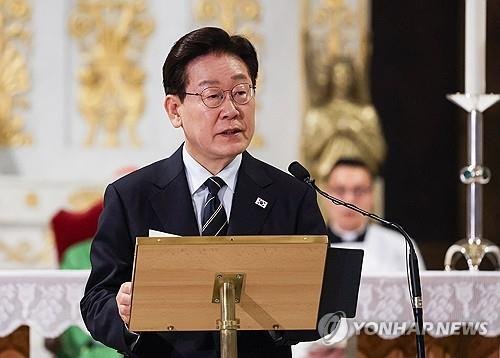
The meeting between President Lee Jae-myung and Pope Leo XIV took place on June 15, 2026, inside the Apostolic Palace in Vatican City. This marked Lee's first papal audience since assuming office in June 2025 and formed part of a wider European itinerary that included stops in Belgium, EU institutions, Italy, and the G7 summit. The encounter carried added diplomatic weight because Pope Leo XIV is the first American pontiff, elected in 2025, creating a distinct channel for dialogue between Seoul and the Holy See at a time of shifting global alignments.
Cheong Wa Dae described the audience as cordial and substantive, with both leaders exchanging views on shared values of peace and human dignity. First Lady Kim Hae-kyung accompanied the president and joined him for official photographs with the pope, underscoring the personal dimension of the visit. The setting inside the Apostolic Palace allowed for private discussion away from public scrutiny, a format long favored by the Vatican for sensitive regional matters.
Analysts note that the choice of the Vatican as a stopover during Lee's European tour reflects Seoul's interest in cultivating neutral diplomatic platforms. Unlike bilateral meetings with major powers, engagement with the Holy See offers access to moral authority and quiet facilitation that can complement traditional alliance structures without provoking immediate geopolitical friction.
World Youth Day 2027: A Strategic Invitation
During the audience, President Lee formally invited Pope Leo XIV to visit South Korea for World Youth Day scheduled for August 2027. National Security Adviser Wi Sung-lac confirmed the invitation in a subsequent press briefing, noting that the event would mark the first time World Youth Day returns to Asia since the 2014 gathering. The invitation positions South Korea as a central hub for global Catholic youth engagement and carries measurable economic implications through tourism and infrastructure investment estimated in the hundreds of billions of Korean won.
Both sides agreed to cooperate closely on preparations, with the Ministry of Foreign Affairs (MOFA) tasked to coordinate logistics alongside Vatican officials. World Youth Day 2027 is expected to draw several million participants, offering Seoul an opportunity to showcase its organizational capacity while advancing soft-power objectives. The event also aligns with broader cultural diplomacy efforts that link religious gatherings to national branding.
Preparatory discussions have already begun within relevant ministries to secure venues and transport networks. Officials emphasize that successful hosting could generate lasting networks between Korean Catholic communities and international counterparts, reinforcing people-to-people ties that extend beyond the immediate security agenda.
Inter-Korean Peace Diplomacy and the Vatican's Role
President Lee used the audience to brief Pope Leo XIV on South Korea's ongoing peace initiatives concerning the Korean Peninsula. The Vatican reaffirmed its unwavering support for facilitating dialogue, consistent with its long-standing position that humanitarian and confidence-building measures should continue despite political difficulties. Lee stressed the importance of maintaining open channels even when official inter-Korean communication remains limited.
The Holy See's historical engagement includes Pope Francis's 2014 visit to South Korea and repeated expressions of willingness by the late pontiff to travel to North Korea if invited. Senior officials during the June 2026 meetings also discussed the possibility of a future papal visit to Pyongyang, building on precedents set by earlier popes. Such a step would represent a significant development in Track 1.5 diplomacy on the peninsula.
Vatican support is viewed in Seoul as complementary to government-to-government efforts. By maintaining a stance of principled neutrality, the Holy See can serve as a trusted interlocutor when direct contacts between the two Koreas encounter obstacles, thereby preserving space for incremental progress on humanitarian issues such as family reunions and medical assistance.
High-Level Consultations with the Vatican Secretariat of State
Following the papal audience, President Lee met Cardinal Secretary of State Pietro Parolin and Archbishop Paul Richard Gallagher. These consultations focused on practical measures to relieve inter-Korean tensions, including expanded humanitarian exchanges and cultural programs. The Vatican's preference for discreet diplomacy allows discussion of sensitive topics without public posturing that might complicate progress.
MOFA officials accompanying the president highlighted existing channels for family reunions and medical assistance that could benefit from additional Vatican facilitation. Both sides acknowledged that religious and cultural exchanges often provide entry points when political negotiations stall. The meetings produced no dramatic announcements but established working-level contacts for continued coordination.
Archbishop Gallagher's involvement underscored the Secretariat of State's institutional memory regarding Korean affairs. Regular exchanges at this level help ensure that Vatican perspectives remain informed by developments on the peninsula and that Seoul receives timely feedback on international Catholic opinion.
South Korea's European Diplomatic Outreach
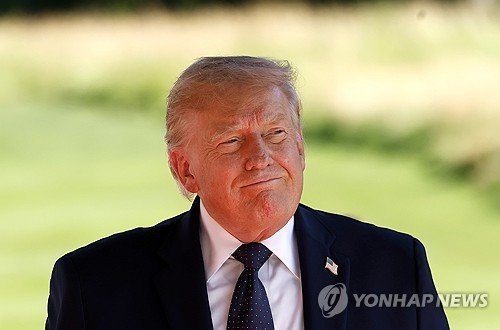
The Vatican stop formed one element of President Lee's broader European strategy aimed at diversifying partnerships amid intensifying US-China rivalry. By engaging both the EU institutions and the Holy See, Seoul seeks to strengthen its position as a middle power capable of operating across multiple diplomatic registers. The G7 participation further anchored this outreach in established multilateral forums.
European partners have shown interest in Korea's technological capabilities and its experience managing relations with a nuclear-armed neighbor. The Vatican dimension adds a values-based component that resonates with European audiences concerned about human rights and conflict resolution. This layered approach helps mitigate risks associated with over-reliance on any single axis of diplomacy.
Cheong Wa Dae has indicated that future European engagements will continue to balance security, economic, and normative objectives. The Vatican's unique status as a sovereign entity without territorial ambitions makes it a particularly useful interlocutor for exploring ideas that larger states might view through narrower strategic lenses.
Papal Diplomacy on the Korean Peninsula: Historical Context
Vatican-Korea relations date back more than a century, with formal diplomatic ties established in 1947. Pope John Paul II's 1989 visit to South Korea occurred during a period of democratic transition and left a lasting impression on Korean Catholics. Pope Francis's 2014 journey reinforced the Church's role as an advocate for reconciliation and social justice on the peninsula.
The Catholic Church in Korea played a notable part in the country's democratization movement, providing institutional shelter for activists and moral framing for demands of political reform. This historical record gives contemporary papal diplomacy added credibility among segments of Korean society that value the Church's earlier contributions to civic life.
Pope Leo XIV's potential visit would extend this tradition into a new geopolitical environment. As the first American pope, his perspective may incorporate distinctive insights into US-ROK alliance dynamics while preserving the Holy See's independence from any single government's foreign policy priorities.
Implications for Northeast Asian Geopolitics
The June 2026 Vatican meetings occur against a backdrop of persistent North Korean nuclear development and fluctuating great-power competition. Seoul's engagement with the Holy See illustrates an effort to maintain diverse diplomatic instruments that can operate alongside the US-ROK alliance without directly challenging it. Religious and humanitarian channels offer low-profile avenues for signaling flexibility.
China-Korea relations remain a critical variable. Beijing's reaction to any expanded Vatican role on the peninsula will likely depend on whether such activity is perceived as interfering with Chinese interests or as a stabilizing factor that reduces the risk of conflict. South Korean officials have been careful to frame Vatican involvement as complementary to existing multilateral efforts.
Track 1.5 diplomacy involving religious actors has proven resilient in other conflict zones. By nurturing these contacts now, Seoul positions itself to activate them should conditions on the peninsula shift toward renewed dialogue, thereby expanding the toolkit available for managing Northeast Asian security challenges.
Looking Ahead: The Path to World Youth Day 2027
Preparations for World Youth Day 2027 will require sustained coordination between MOFA, local governments, and Vatican organizers over the coming months. Key milestones include site selection, volunteer recruitment, and security planning, all of which carry budgetary implications measured in hundreds of billions of Korean won. Success will depend on maintaining political continuity across administrations.
The event carries significance for Asian Catholicism beyond Korea's borders. A well-executed gathering could encourage greater participation from Catholic communities across the region and highlight Korea's emergence as a center of global Catholic activity. It may also create opportunities for parallel diplomatic outreach during the papal visit.
Looking toward 2027, the Lee administration views the Vatican relationship as one component of a longer-term strategy that links religious diplomacy, youth engagement, and inter-Korean confidence building. Whether these threads converge into tangible progress on peninsula issues remains to be seen, yet the institutional groundwork laid in June 2026 provides a foundation for continued exploration.
By Prof. David Park, Staff Writer
This article was produced with AI-assisted research and editorial support. Reporting is based on sources cited in the article.
What's Your Reaction?
 Like
0
Like
0
 Dislike
0
Dislike
0
 Love
0
Love
0
 Funny
0
Funny
0
 Wow
0
Wow
0
 Sad
0
Sad
0
 Angry
0
Angry
0

East Asia/Technology Correspondent at Global1.News. Seoul-based voice covering Korean politics, technology, business, and culture. Analyzes how technology and geopolitics intersect across East Asia.










Comments (0)