
The Sad Truth Scotland Must Face After Early World Cup Exit
The Boston Paradox The declaration signed by Boston mayor Michelle Wu to establish Glasgow as a sister city captured the essence of Scotland's presence at this World Cup. Economic and cultural links between the two places now look set to strengthen after a week in which the Boston economy drew clear benefit from the tartan takeover that accompanied the national team. Scots who
The Boston Paradox
The declaration signed by Boston mayor Michelle Wu to establish Glasgow as a sister city captured the essence of Scotland's presence at this World Cup. Economic and cultural links between the two places now look set to strengthen after a week in which the Boston economy drew clear benefit from the tartan takeover that accompanied the national team. Scots who once colonised Massachusetts found fresh friends across the Atlantic, and the atmosphere around Fenway Park during a Major League Baseball game illustrated the point when supporters delivered a full-throated rendition of The Proclaimers' 500 Miles. Songs such as Flower of Scotland and Loch Lomond rang out alongside the swirl of bagpipes and the sight of kilts and tartan, creating an impression that Scotland had prevailed in every respect except the one that mattered most.
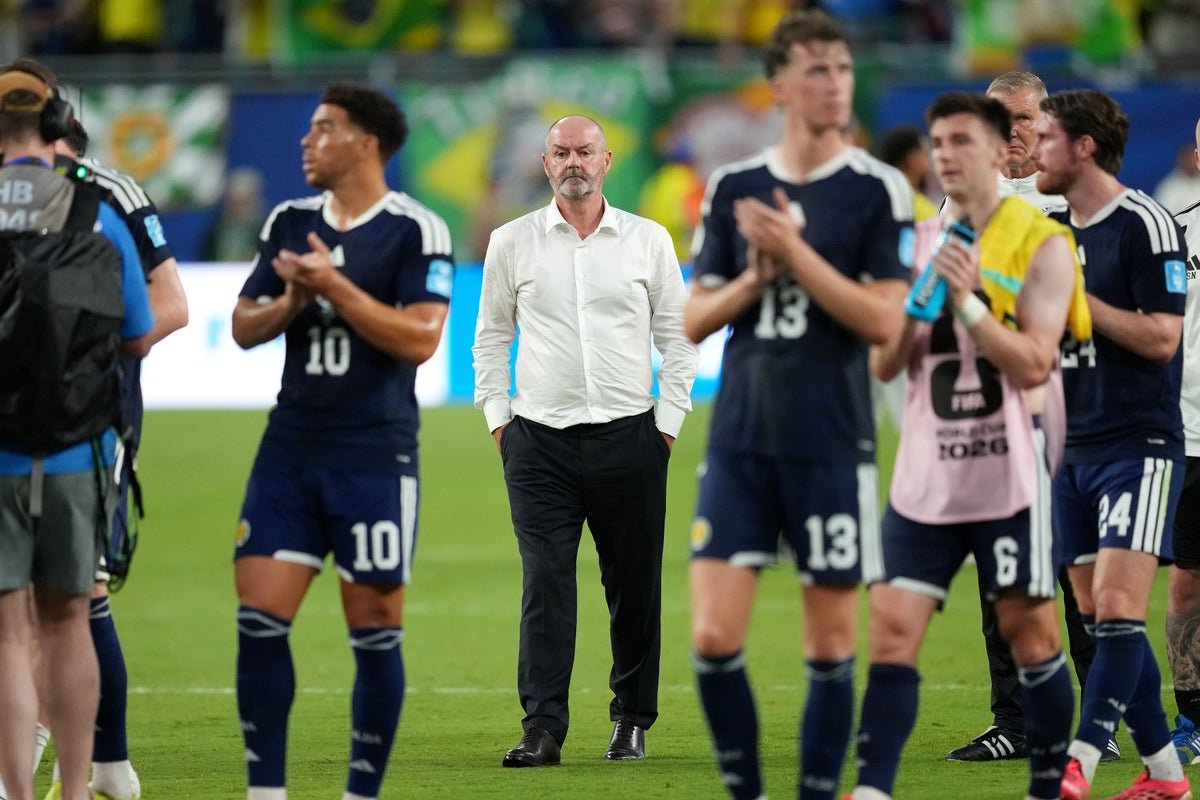
Off the pitch the campaign could be described as a success. On it the outcome remained familiar. The side left the tournament without reaching the last 32, extending a sequence that now stretches 72 years since the country's first appearance at a major event. Earlier exits had at least involved missing the last eight or last 16. The expanded format appeared to create fresh openings, yet three points proved insufficient once other third-placed teams moved ahead in the standings. Defeats to Morocco and Brazil were presented by Steve Clarke as understandable given the opponents' rankings, but the manner of those results left Scotland unable to claim they had done enough to progress.
The single victory over Haiti therefore stood as an isolated achievement rather than the foundation for further advance. While the result ended a long wait for a first World Cup win, the surrounding displays offered little reassurance that the group stage exit could be viewed as anything other than a continuation of established patterns.
Clarke's Tactical Record
Steve Clarke's choices across the three matches revealed a recurring difficulty in selecting the most effective starting line-ups. The decision to begin with a 4-4-2 formation against Haiti was intended to signal ambition yet succeeded only in restricting Scott McTominay's influence by placing him too deep. Against Morocco the unexpected deployment of Kieran Tierney on the left wing produced neither width nor penetration. When Lawrence Shankland was asked to operate as a lone striker versus Brazil the arrangement likewise failed to generate sustained threat.
These selections formed part of a wider pattern visible across three tournaments. The manager repeatedly fielded sides that did not maximise the qualities of the available players. The result was a lack of coherent identity on the field that stood in contrast to the vocal support in the stands. Haiti, for example, displayed attacking intent when facing Morocco and scored twice as many goals as Scotland managed in the entire group. The Scottish side, by comparison, went 200 minutes without registering a shot on target after John McGinn's goal against Haiti.
Clarke had spoken before the tournament of the desire to avoid regrets upon departure. The tactical missteps ensured that several players will reflect on opportunities that were not taken because the system placed them in positions where their strengths could not be expressed. The cumulative record of one win, three goals and five points from nine games across the three tournaments therefore reflects more than isolated misfortune.
Individual and Positional Weaknesses
Scotland's defensive vulnerabilities were exposed by individual errors at critical moments. Grant Hanley was at fault for Morocco's goal, Scott McKenna for Brazil's opener and Jack Hendry for what could have been a second. These lapses highlighted a shortage of high-class central defenders capable of performing consistently at this level. The same period has also exposed limitations at right-back once Aaron Hickey is removed from consideration. Nathan Patterson faced an especially difficult task when tasked with containing Vinicius Junior, and the contest proved predictably one-sided.
In goal the options appeared equally constrained. Angus Gunn had not started a league match throughout the domestic season, a fact that underlined the limited depth available. The forward line presented a parallel concern. Scotland have lacked quality strikers of genuine international standard for much of this century, making the decision to leave Oli McBurnie out of the squad all the more conspicuous after his strong campaign with Hull.
These positional shortcomings meant the team relied heavily on a small group of established performers to compensate. When those individuals failed to reach their usual standards the overall display suffered. The absence of attacking fluency was therefore not solely a matter of fortune but a reflection of structural weaknesses that the tournament laid bare.
The Ageing Profile
The composition of the squad carried an inherent risk that became clearer once the tournament concluded. By the time the next World Cup arrives several senior figures will have moved well beyond their peak years. Andy Robertson, John McGinn, Grant Hanley, Jack Hendry, Ryan Christie and Kenny McLean will all be at least 35. Kieran Tierney, Scott McTominay, Lawrence Shankland, Lyndon Dykes, Che Adams, John Souttar and Scott McKenna will be 33 or 34, while Craig Gordon will be 47.
This demographic reality placed extra pressure on the current generation to deliver during what may prove their final realistic opportunity. The expectation that the leading players would rise to the occasion was not fully met. McGinn secured the only goal of note, yet McTominay appeared less dynamic than he had been in club football. Only Lewis Ferguson produced a consistently positive contribution, while Ben Gannon-Doak offered glimpses of promise without altering the broader outcome.
The side therefore depended on a narrow band of talent that could not be guaranteed to remain available or effective in four years' time. The lack of widespread excellence across the squad amplified the consequences of any single underperformance.
Managerial Future
The award of a four-year contract to Steve Clarke now appears open to greater scrutiny after a third successive tournament that ended in disappointment. The statistics from his time in charge remain modest: one win, three goals and five points collected from nine matches. Beyond the victory against Haiti there was little evidence of sustained progress or the development of a distinctive style that could be carried forward.
Kenny McLean, whose long-range strike had proved decisive in the play-off against Denmark, was fortunate to avoid a red card during the Haiti match. Such incidents added to a sense that the campaign never quite achieved the control or composure required. The manager's repeated selection of line-ups that did not suit the personnel available compounded the frustration felt by supporters who had hoped for a different outcome.
With the next major tournament still some distance away, the question of whether the current leadership structure can oversee the necessary changes becomes central. The record to date suggests that fresh thinking will be required if the pattern of early exits is to be broken.
What Comes Next
The immediate task involves integrating players who were unavailable or underused during the World Cup. Billy Gilmour will return after injury prevented his participation, while Tyler Fletcher received a call-up as a teenager and Lennon Miller has also been identified as part of the emerging group. Ben Gannon-Doak already showed enough to suggest he can contribute at this level, yet all three require regular competitive minutes if they are to develop the experience necessary for senior international football.
Evidence that a substantial cohort of replacements is ready to step forward remains limited. The transition therefore cannot be left to chance. An overhaul of the squad is required before the cycle leading to 2030 begins in earnest, because the current core will not be in a position to carry the same workload.
Without deliberate planning the risk is that Scotland will again arrive at a major tournament relying on the same narrow pool of ageing performers. The opportunity exists to broaden the base of talent, but that process must begin immediately if the disappointments of recent years are not to be repeated.
By Erica Thornton, Staff WriterThis article was produced with AI-assisted research and editorial support. Reporting is based on sources cited in the article.
What's Your Reaction?
 Like
0
Like
0
 Dislike
0
Dislike
0
 Love
0
Love
0
 Funny
0
Funny
0
 Wow
0
Wow
0
 Sad
0
Sad
0
 Angry
0
Angry
0

US Politics and Policy Correspondent at Global1.News. Based in Washington DC, covering American politics, policy, elections, and the courts. Knows how the system works and tells you what it actually means.














Comments (0)