
S. Korea World Cup Drone Incident Exposes FIFA Security Gaps
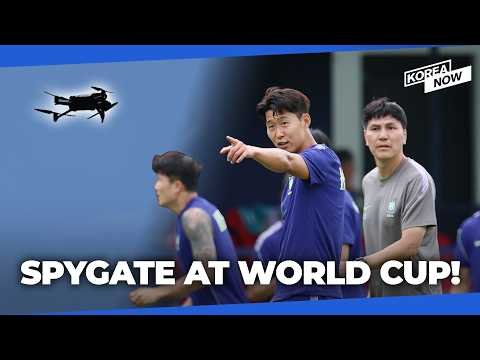
On 16 June 2026, during a closed training session at Chivas Verde Valle in Zapopan, Mexico, an unidentified drone hovered above the South Korean national football team's pitch, prompting an immediate security response from Mexican military forces. The incident, which occurred just two days before the Republic of Korea's crucial Group A match against co-host Mexico at the 2026 F
On 16 June 2026, during a closed training session at Chivas Verde Valle in Zapopan, Mexico, an unidentified drone hovered above the South Korean national football team's pitch, prompting an immediate security response from Mexican military forces. The incident, which occurred just two days before the Republic of Korea's crucial Group A match against co-host Mexico at the 2026 FIFA World Cup, has raised urgent questions about the adequacy of tournament security protocols and the growing challenge of unauthorized drone surveillance at mega-sporting events.
Drone Incident at South Korea World Cup Camp Exposes FIFA Security Gaps
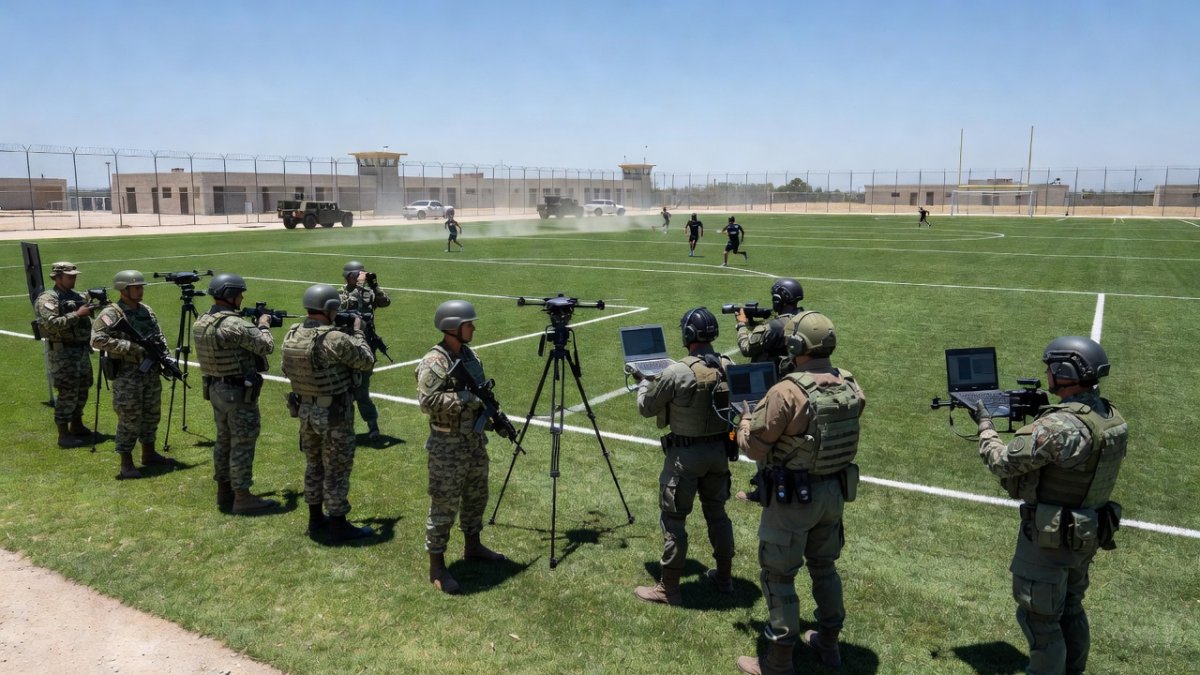
Seoul, South Korea – 18 June 2026 — A security official from the Korea Football Association (KFA) spotted the drone during a behind-closed-doors session at the Chivas Verde Valle training complex in Zapopan. The official immediately alerted Mexican military personnel stationed at the facility under Plan Kukulkán, the comprehensive security framework activated for the 2026 World Cup. Mexican forces deployed specialized detection equipment and successfully neutralized the device before it could capture detailed footage of tactical drills.
FIFA Security Protocols and the Drone Challenge
Plan Kukulkán, announced by Mexican authorities in March 2026, mobilizes approximately 100,000 federal and state personnel to protect all World Cup venues, team base camps, and fan zones across the tournament's three host nations. The operation explicitly incorporates counter-drone measures, yet the incident at Chivas Verde Valle illustrates the practical difficulties of real-time enforcement across dispersed training sites. FIFA's existing regulations require host nations to maintain no-fly zones around official facilities, but enforcement relies heavily on host-country military assets rather than FIFA-controlled technology.
According to an anonymous Mexican federal official cited by the Associated Press, several drones have been neutralized in recent days after attempting to enter security zones around stadiums in Mexico City, Guadalajara, and Monterrey, as well as team base camps and fan festivals. This pattern suggests that the threat is not isolated to a single training ground and raises questions about whether current FIFA-mandated security frameworks adequately address the rapid proliferation of commercial drone technology available to private actors.
Two individuals believed to be the drone operators retrieved their device and fled the scene before Mexican authorities could apprehend them. The KFA has formally requested a local police investigation and notified FIFA's security division of the breach.
Sports Diplomacy Between Seoul and Mexico City
The episode occurs against a backdrop of generally constructive bilateral relations between the Republic of Korea and Mexico. The two nations have expanded cooperation in automotive manufacturing, energy infrastructure, and cultural exchange in recent years. The national football teams' meeting on 18 June at Estadio Guadalajara carries symbolic weight beyond the group stage, representing a sporting encounter between two economies with growing trade ties and shared membership in the G20.
Both sides enter the fixture with opening-match victories — South Korea defeating Czechia 2-1 and Mexico overcoming South Africa 2-0 — intensifying the stakes of any perceived security lapse. While Mexican authorities responded swiftly once notified, the fact that the operators escaped custody may prompt Seoul to seek additional assurances regarding the protection of Korean personnel and assets during the remainder of the tournament. Such requests would align with established Korean diplomatic practice of prioritizing citizen safety in overseas deployments, whether athletic or commercial.
South Korea's Security Sensitivities in Context
National teams from the Republic of Korea routinely operate under heightened security awareness shaped by decades of inter-Korean tension and the persistent threat of asymmetric surveillance. Although the present incident involves no direct link to the Korean peninsula, the presence of an unauthorized aerial device during a closed session inevitably resonates with domestic audiences accustomed to vigilance against monitoring threats. The Korea Football Association's decision to involve both local police and FIFA reflects standard operating procedure developed through prior experiences at major international tournaments.
Coach Hong Myung-bo's measured public response underscores the team's determination to maintain concentration. "During our training, there was a drone in the sky," Hong stated during his pre-match press conference on 17 June at Estadio Guadalajara. "Fortunately, it was right before we practised our tactics, so it did not impact us. But while we were preparing for the match, that was the most important timing, so what happened was unfortunate." His emphasis on the timing — immediately before tactical work — highlights how even brief aerial intrusions can disrupt the psychological preparation required at the highest level of international competition.
Drone Proliferation at Mega-Sporting Events
Unauthorized drone activity has become a recurring concern at global sporting events since the mid-2010s, with incidents reported at the Olympic Games, European Championships, and FIFA World Cup tournaments. The 2026 World Cup marks the first time FIFA has confronted this issue across three host nations simultaneously — the United States, Canada, and Mexico — amplifying coordination challenges for security planners. Mexico's Plan Kukulkán represents one of the most ambitious integrated security deployments in tournament history, yet the Zapopan incident demonstrates that technological countermeasures alone cannot eliminate human-operated threats without robust ground-level apprehension capabilities.
South Korea's own experience hosting the 2002 FIFA World Cup, co-hosted with Japan, and the 2018 Pyeongchang Winter Olympics provides institutional memory that could usefully inform FIFA's evolving guidelines on aerial surveillance threats. The 2018 Olympics notably deployed advanced drone detection and jamming systems, reflecting the Korea Communications Commission's proactive approach to spectrum management and security. Future host committees will likely need to integrate predictive analytics, expanded no-drone geofencing, and rapid-response civilian teams alongside military assets to address the drone challenge comprehensively.
Strategic Implications for Tournament Integrity
The incident at Chivas Verde Valle is unlikely to derail the Korea-Mexico fixture itself, but it contributes to a broader narrative about the vulnerability of elite sport to low-cost technological disruption. As commercial drones become smaller, quieter, and more capable of live high-definition streaming, the distinction between recreational photography and targeted intelligence gathering grows increasingly difficult to police in real time. FIFA and tournament organizers face a strategic imperative to move beyond reactive neutralization toward preventive security architectures that combine regulation, technology, and international intelligence sharing.
For South Korea, the episode serves as a reminder that even in friendly host environments, continuous security adaptation is essential. The Korea Football Association's experience in managing this incident — from immediate detection to diplomatic notification — may well inform the security planning for future Korean participation in international tournaments. The coming days will reveal whether Mexican authorities can identify and apprehend the operators, and whether FIFA will issue supplementary security directives before the knockout stages commence.
By Prof. David Park, Staff Writer
This article was produced with AI-assisted research and editorial support. Reporting is based on sources cited in the article.
What's Your Reaction?
 Like
0
Like
0
 Dislike
0
Dislike
0
 Love
0
Love
0
 Funny
0
Funny
0
 Wow
0
Wow
0
 Sad
0
Sad
0
 Angry
0
Angry
0

East Asia/Technology Correspondent at Global1.News. Seoul-based voice covering Korean politics, technology, business, and culture. Analyzes how technology and geopolitics intersect across East Asia.














Comments (0)