
Under a Fragile Ceasefire, Israel's Drones Kill on Gaza's Beaches
A Middle East Eye report documents the immediate aftermath of an Israeli drone strike that hit the al-Mawasi beachfront in Khan Younis on June 18, 2026. Two Palestinian civilians were killed and six others wounded while they sought relief from extreme summer heat at the seaside recreation area. The footage shows displaced families gathered in tents when the strike occurred. Und
A Middle East Eye report documents the immediate aftermath of an Israeli drone strike that hit the al-Mawasi beachfront in Khan Younis on June 18, 2026. Two Palestinian civilians were killed and six others wounded while they sought relief from extreme summer heat at the seaside recreation area. The footage shows displaced families gathered in tents when the strike occurred.
Under a Fragile Ceasefire, Israel's Drones Continue to Kill Palestinians on Gaza's Beaches
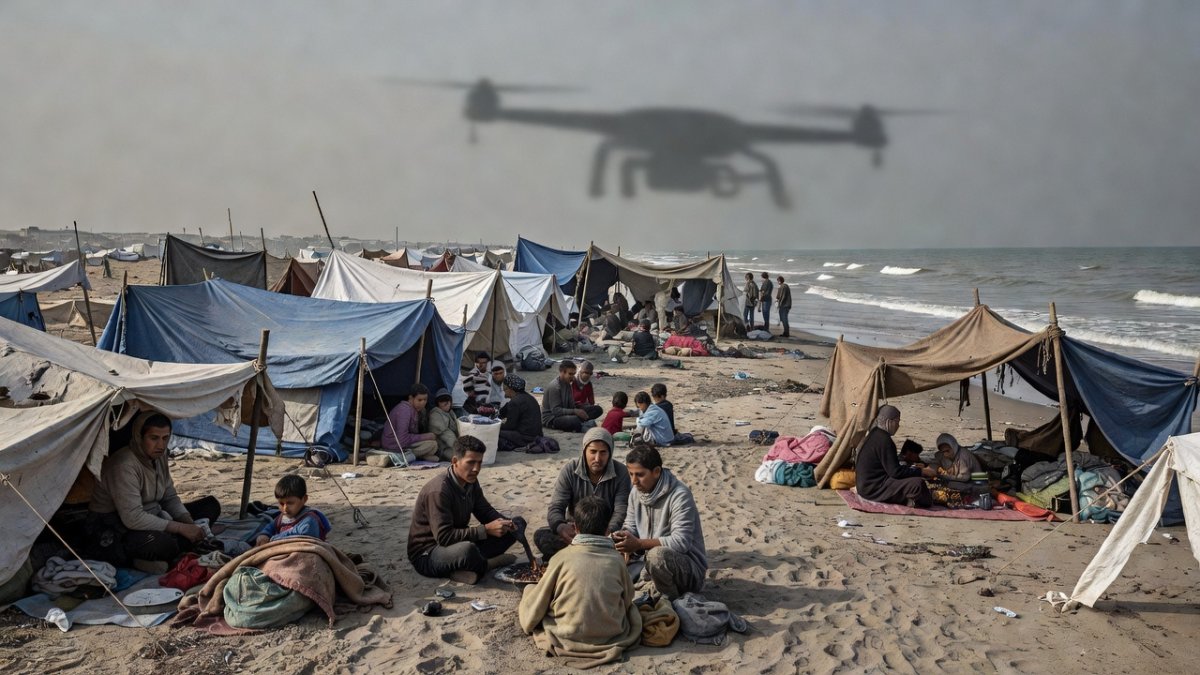
Gaza City, Palestine – June 18, 2026 — An Israeli drone strike targeted civilians at the al-Mawasi beachfront in Khan Younis, killing two people and wounding six more according to reports from Anadolu Agency and the Palestine Chronicle. The victims belonged to families displaced from other parts of Gaza who had come to the narrow coastal strip seeking cooler air and a brief escape from overcrowded tent conditions. Witnesses told Quds News Network that the strike came without warning during the afternoon when dozens of people were resting near the water. The location lies within the designated al-Mawasi zone that Israeli authorities had previously described as a humanitarian area. Medical teams from local hospitals transported the wounded to facilities already strained by earlier casualties. The incident occurred despite the ceasefire that took effect on October 10, 2025. Families at the scene described hearing the drone overhead moments before the explosion scattered belongings and injured children playing nearby. Rescue workers recovered personal items including water containers and clothing from the sand after the attack. The strike added to a pattern of incidents documented by Countercurrents in the months following the ceasefire agreement.
Deadly Strike on a Crowded Beachfront
The al-Mawasi beachfront in Khan Younis stretches along a thin strip of land measuring roughly 14 kilometers long and one kilometer wide. On June 18, 2026, displaced Palestinian families had set up temporary shelters there to escape the intense heat inside inland tent camps. According to Anadolu Agency reporting, two civilians died instantly when the drone-fired missile struck the crowded area while six others sustained injuries ranging from shrapnel wounds to burns. The Palestine Chronicle quoted local residents who said the victims included parents who had brought their children to the water's edge for relief after weeks of temperatures exceeding 35 degrees Celsius. Quds News Network recorded accounts from survivors who described the sudden impact that threw sand and debris across the recreation spot. Medical personnel arriving minutes later found the wounded lying near damaged tents and personal belongings scattered across the sand. The strike took place in a zone that had received hundreds of thousands of displaced people since earlier phases of the conflict. Families interviewed by Countercurrents explained that they had followed Israeli instructions to move to al-Mawasi believing it offered greater safety than their original neighborhoods. The attack left the small community in shock as relatives gathered to identify the deceased and accompany the injured to nearby clinics. No prior evacuation warning reached the beachgoers according to multiple witness statements collected after the event.
Ceasefire in Name Only
Since the ceasefire began on October 10, 2025, more than 1,005 Palestinians have been killed in Gaza with an average of four deaths recorded each day. Israeli Prime Minister Benjamin Netanyahu stated in May 2026 that Israel controls 60 percent of the territory. The overall death toll from the war stands above 73,000 Palestinians killed and 173,000 wounded according to health authorities cited by Anadolu Agency. Reports from the Palestine Chronicle document 3,200 ceasefire violations attributed to Israeli forces through repeated strikes and incursions. In May 2026 alone, 119 people died including 19 children and 10 women, representing 30 percent of that month's fatalities. Quds News Network reported that many of these deaths occurred in areas previously designated for civilian movement. Countercurrents noted that the pattern continued even as international monitors called for stricter adherence to the October agreement. Netanyahu's admission of territorial control came during a period when displacement orders kept shifting the boundaries of permitted zones. Daily tallies compiled by local health committees show consistent casualties from drone activity and artillery fire despite the formal truce. Families in Khan Younis described living under constant uncertainty as the ceasefire failed to halt lethal incidents at the rate of several per week. The cumulative figures reflect a situation where the agreement reduced large-scale operations but left smaller attacks largely unchecked.
A 'Safe Zone' That Offers No Safety
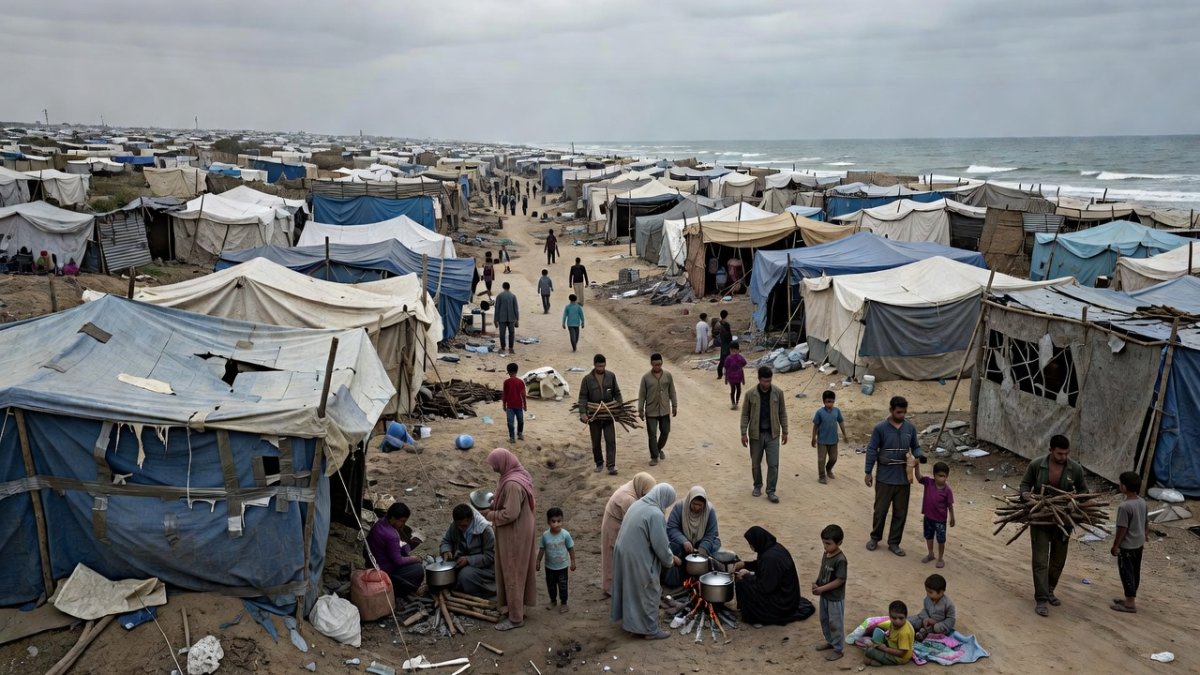
Al-Mawasi was established as a narrow 14 kilometer by one kilometer corridor intended to shelter displaced residents after repeated evacuation orders. Hundreds of thousands of Palestinians now live in tents across this coastal strip with limited access to clean water or sanitation. Reuters documented the destruction of 150 kilometers of water networks and the collapse of sewage systems throughout Gaza, conditions that directly affect the overcrowded beachfront population. Families told Anadolu Agency that they were directed to al-Mawasi by Israeli forces yet continued to face strikes inside the zone. The Palestine Chronicle reported that the area lacks adequate medical points and relies on distant hospitals already overwhelmed by earlier casualties. Quds News Network described how the destruction of infrastructure forces residents to collect water from distant sources while sewage flows near living areas. Countercurrents highlighted that the combination of extreme heat and destroyed utilities creates daily health risks for children and elderly residents in the tents. The June 18 strike occurred in a section of the beachfront where multiple families had gathered, underscoring the absence of effective protection even in designated zones. Local committees have repeatedly requested additional humanitarian access but report that restrictions remain in place. The narrow geography leaves little room for expansion as new arrivals continue to arrive from other parts of Gaza.
International Condemnation and Sweeping Impunity
UN High Commissioner for Human Rights Volker Türk condemned the unrelenting pattern of killings in Gaza and the sweeping impunity that allows such incidents to continue without accountability. Türk's statement referenced repeated attacks on civilians in areas including al-Mawasi despite the ceasefire. Medical Aid for Palestinians Gaza Director Fikr Shalltoot stated that thousands of people had been told the worst was over yet continue burying loved ones after each new strike. Anadolu Agency reported that Türk called for independent investigations into the June 18 incident and similar events. The Palestine Chronicle noted that no Israeli officials have faced consequences for the more than 3,200 documented violations since October 2025. Quds News Network quoted human rights groups demanding that the international community enforce existing legal obligations. Countercurrents recorded Shalltoot's observation that the lack of protection leaves families exposed in every part of the territory. Türk emphasized that the pattern of strikes on civilian locations requires immediate attention from member states. Organizations monitoring the situation report that statements of concern have not translated into mechanisms capable of preventing further deaths. The combination of high overall casualties and ongoing incidents in designated zones illustrates the gap between international appeals and practical outcomes on the ground.
The Human Toll of a Stalled Peace
Daily life for displaced families in al-Mawasi revolves around managing extreme heat, scarce water, and the constant possibility of further strikes. Children make up a significant portion of the casualties recorded in May 2026 when 19 of the 119 deaths were minors. Parents interviewed by the Palestine Chronicle described keeping their children close to tents after the June 18 attack while still needing to collect water and food from distribution points. Anadolu Agency reported that the destruction of 150 kilometers of water networks forces long walks in the heat for basic supplies. Quds News Network documented cases where families lost relatives in earlier phases of the conflict and now face renewed losses during the ceasefire period. Countercurrents highlighted the psychological strain on residents who were promised safety in al-Mawasi yet witnessed the beachfront strike. The overall toll of 73,000 killed and 173,000 wounded leaves many households without primary earners or caregivers. Medical Aid for Palestinians staff noted that existing health facilities struggle to treat both chronic conditions and new injuries from sporadic attacks. Residents continue to adapt to the narrow strip of land while hoping for improved conditions that have not materialized since October 2025.
What Comes Next — Palestinians Left Without Protection
The June 18 strike in al-Mawasi demonstrates that the ceasefire agreement has not created reliable safety for civilians in Gaza. With Israel controlling 60 percent of the territory according to Netanyahu and more than 3,200 violations recorded, the risk of additional drone attacks remains high. UN High Commissioner Volker Türk's call for an end to impunity has yet to produce enforceable measures. Families in the 14 kilometer by one kilometer zone face continued exposure as infrastructure damage from earlier fighting leaves them without adequate water or sanitation. Medical Aid for Palestinians Director Fikr Shalltoot warned that residents who believed the worst had passed are still experiencing losses. Anadolu Agency and the Palestine Chronicle both documented the human cost of incidents that occur despite the October 10, 2025 agreement. Without stronger international mechanisms to monitor and prevent violations, the average of four deaths per day since the ceasefire is likely to persist. The situation in Khan Younis beachfront areas shows that designated zones offer limited protection when strikes continue without consequence. Future developments will depend on whether statements from bodies such as the United Nations translate into actions that safeguard the remaining population.
By Fatima Al-Rashid, Staff Writer
This article was produced with AI-assisted research and editorial support. Reporting is based on sources cited in the article.
What's Your Reaction?
 Like
0
Like
0
 Dislike
0
Dislike
0
 Love
0
Love
0
 Funny
0
Funny
0
 Wow
0
Wow
0
 Sad
0
Sad
0
 Angry
0
Angry
0

Gulf/MENA Correspondent at Global1.News. Based in Doha, covering Gulf politics, energy markets, diplomacy, and development across the Middle East and North Africa. Tracks the economic transformation of the Gulf states.














Comments (0)