
Tiny but Mighty: New 'Rama IX Springtail' Species Discovered in Thailand's Pathum Thani
The Discovery On Wednesday, Acting Director Suwarong Wongsiri of the National Science Museum stood before reporters at the museum complex in Pathum Thani to share news that had quietly unfolded in the nearby forest park. A joint research team drawn from the National Science Museum, Thaksin University, and Prince of Songkla University had identified a previously unknown springta
The Discovery
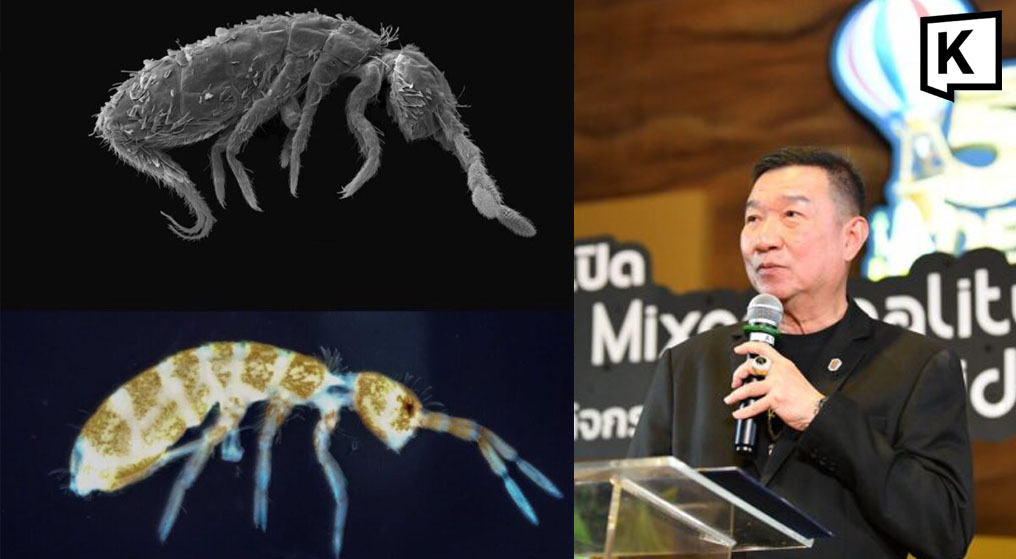
On Wednesday, Acting Director Suwarong Wongsiri of the National Science Museum stood before reporters at the museum complex in Pathum Thani to share news that had quietly unfolded in the nearby forest park. A joint research team drawn from the National Science Museum, Thaksin University, and Prince of Songkla University had identified a previously unknown springtail living among leaf litter and damp soil. The find was made at the forest park attached to the Rama IX Museum, a site already valued for its quiet green spaces within the larger National Science Museum grounds in Khlong Ha sub-district.
Fieldwork began several months earlier when entomologists noticed minute white-and-orange insects that did not match any known Thai records. Careful collection and laboratory comparison confirmed the animals represented a new species. The announcement this week marks the first time the three institutions have jointly described a springtail, underscoring growing cooperation between national museums and regional universities in documenting Thailand’s smaller fauna.
Pathum Thani province, long known for its agricultural plains and expanding suburban communities, now hosts one more entry on the national biodiversity list. The discovery site lies only a short drive from Bangkok, reminding residents that meaningful scientific finds can occur close to home rather than solely in remote national parks.
Physical Description
The Rama IX springtail measures between 1.1 and 1.4 millimetres in length, making it barely visible without magnification. Its slender body carries a base colour of white interrupted by soft orange-brown bands that run across the segments. Dark eye patches sit prominently on the head, giving the tiny creature a distinctive appearance when viewed under a microscope.
Researchers distinguish this species from its closest relative, Alloscopus tetracanthus, primarily through the arrangement and density of body hairs. While both share a similar overall shape, the pattern of setae on the new species forms a unique configuration that became the key diagnostic character during identification. These microscopic differences matter greatly to taxonomists who rely on such details to separate closely related forms.
Despite its small size, the insect displays the classic springtail morphology: a compact body, short legs, and the furcula, or tail-like structure, that allows it to leap when disturbed. The combination of colour bands and hair patterns makes it stand out among other members of the genus found in Thailand.
Naming the Rama IX Springtail
Scientists formally described the species as Alloscopus ramani sp. nov., placing it within the subfamily Heteromurinae of the family Orchesellidae. The specific name “ramani” directly honours the discovery location at the Rama IX Museum forest park. This choice reflects both geographic precision and a gesture of respect toward the late King Bhumibol Adulyadej, whose reign is commemorated by the museum itself.
In Thai culture, naming a living thing after a revered monarch carries deep symbolic weight. The decision to link the springtail with Rama IX underscores the continuing influence of royal legacy on science and conservation. It also signals that even the smallest creatures deserve recognition within the broader story of national heritage.
Seventeen species of the genus Alloscopus have now been recorded worldwide, with seven previously known from Thailand. The addition of Alloscopus ramani brings the Thai total to eight and highlights how much remains to be learned about this group even in well-studied provinces.
Ecological Role
Springtails function as essential decomposers in forest and soil ecosystems. By consuming fungi, bacteria, and decaying plant material, they convert organic matter into forms that plants can readily absorb. Their activity accelerates nutrient cycling and helps maintain the fertility of the forest floor where they live.
These minute animals also serve as natural regulators of microbial communities. By grazing on certain fungi and bacteria, they prevent any single group from dominating, thereby supporting a balanced soil microbiome. In moist environments across Thailand, from lowland forests to agricultural edges, springtails quietly sustain the processes that keep soil healthy.
More than 9,000 springtail species have been described globally, occupying habitats as varied as volcanic craters, cave systems, and urban gardens. Their presence often indicates good soil condition, making them useful indicators for environmental monitoring in rapidly changing landscapes like central Thailand.
Thailand's Hidden Biodiversity
The discovery of a new species so close to Bangkok illustrates how much of Thailand’s biodiversity remains undocumented. Even in provinces with dense human populations and extensive farming, small invertebrates continue to reveal themselves to patient researchers. This finding suggests that similar undescribed species likely exist in other museum grounds, temple forests, and community woodlands across the country.
Thailand’s tropical climate and varied topography create countless microhabitats where tiny organisms can evolve in isolation. The fact that Alloscopus ramani appears restricted to a single known location in Pathum Thani emphasises the need for careful surveys before development alters these pockets of habitat.
Public awareness of such discoveries can foster greater appreciation for local nature. When citizens learn that new species are still being found nearby, they often become more supportive of green spaces and museum-led education programmes that protect these hidden residents.
The Research Collaboration
The partnership between the National Science Museum, Thaksin University, and Prince of Songkla University combined curatorial expertise with university-based fieldwork capacity. Museum staff provided access to the forest park and long-term specimen storage, while university researchers contributed specialised knowledge of collembolan taxonomy and molecular techniques.
Such collaborations are becoming increasingly important as Thailand seeks to build national capacity in biodiversity science. By pooling resources, the three institutions completed the description more efficiently than any single organisation could have managed alone. The project also trained students from both universities in modern identification methods.
Acting Director Suwarong Wongsiri noted that continued cooperation will be essential for future discoveries. He emphasised that museums and universities together can expand knowledge of Thailand’s smallest inhabitants while inspiring the next generation of Thai scientists.
Why This Matters for Thai Agriculture
Healthy soils underpin Thailand’s rice, fruit, and vegetable production. Springtails contribute directly to soil structure by fragmenting organic matter and mixing it with mineral particles. Their feeding activity releases nutrients that crops depend on, reducing the need for excessive chemical fertilisers in some traditional farming systems.
In central Thailand, where intensive agriculture meets expanding urban areas, maintaining soil biodiversity becomes ever more critical. The presence of native springtails such as Alloscopus ramani signals that local soils still support complex food webs capable of natural nutrient cycling. Protecting these organisms can therefore support both ecological balance and long-term agricultural productivity.
Farmers and extension officers who understand the role of springtails may adopt practices that preserve soil moisture and organic matter. Simple measures such as reduced tillage and cover cropping help maintain the damp microhabitats these creatures require, linking scientific discovery with practical benefits for rural communities.
The Hidden Paradise Exhibition
Visitors can now see the Rama IX springtail on display as part of the “Hidden Paradise” exhibition at the Rama IX Museum. The exhibit highlights Thailand’s lesser-known invertebrates and places the new species within the broader context of forest-floor ecology. Specimens are preserved and presented with explanatory panels that explain their ecological importance.
The museum is located within the National Science Museum complex in Khlong Ha sub-district, Khlong Luang district, Pathum Thani province. Opening hours run from 09:30 to 15:00 Tuesday through Friday and from 09:30 to 17:00 on weekends and public holidays, allowing families and school groups convenient access after weekday classes or on leisurely weekends.
The exhibition encourages visitors to look closely at the ground beneath their feet. By showcasing a creature discovered only metres from the museum buildings, curators hope to spark curiosity about the living world that exists alongside daily life in central Thailand.
What's Next
Researchers plan additional surveys in nearby provinces to determine whether Alloscopus ramani occurs beyond its current known range. Genetic studies will also help clarify its relationship to other members of the genus and may reveal whether similar undescribed forms exist elsewhere in Southeast Asia.
Conservation implications extend beyond the single species. The discovery reinforces calls to maintain green corridors and protected pockets of habitat within developed landscapes. Museums and universities intend to use the find as a case study for training programmes that prepare young scientists to document and protect Thailand’s invertebrate diversity.
Long-term monitoring of the forest park will track how seasonal changes and visitor activity affect springtail populations. Such data can inform management guidelines that balance public access with the needs of sensitive soil organisms.
Reflections
Acting Director Suwarong Wongsiri offered a moving perspective during the announcement: “We must give importance to these tiny springtails that are near invisibility to the naked eye, because in reality, springtails serve a monumental role as the ‘housekeepers’ or heroes of the ecosystem. They break down organic matter into soil nutrients and act as natural regulators, keeping microbes and fungi in check. They are truly vital links that keep the food chain cycling smoothly.”
He continued, “The discovery of the Rama IX springtail is more than a taxonomic achievement. It is a reminder for us to look back and appreciate the importance of the biodiversity that closest to us. With every step we take on damp ground, these tiny creatures may be hard at work. This collaboration between academic institutions and the museum represents a major stride toward expanding our knowledge, empowering us to understand and protect the smallest of living things, and their homes, to preserve our beautiful ecosystem forever.”
His words capture a gentle yet powerful message for Thai readers: even creatures smaller than a grain of rice deserve attention and care. By honouring the late King through both the museum and the species name, the discovery weaves together science, culture, and a shared responsibility to safeguard Thailand’s living heritage for future generations.
By Ann Srisawat, Staff WriterThis article was produced with AI-assisted research and editorial support. Reporting is based on sources cited in the article.
What's Your Reaction?
 Like
0
Like
0
 Dislike
0
Dislike
0
 Love
0
Love
0
 Funny
0
Funny
0
 Wow
0
Wow
0
 Sad
0
Sad
0
 Angry
0
Angry
0

Southeast Asia Correspondent at Global1.News. Based in Bangkok, covering Thai and Southeast Asian politics, economy, technology, and culture. Deep regional perspective on one of the world's most dynamic regions.















Comments (0)