
Oh Se-hoon's Fifth Term: A Conservative Stronghold Amidst Political Turbulence in Seoul
The Unexpected Victory and Electoral Dynamics The June 3 mayoral election delivered a narrow but decisive fifth term for Oh Se-hoon as Seoul's mayor, despite exit polls indicating defeat until the early hours of June 4. Official results showed Oh securing victory by approximately 60,000 votes, or a one-percent margin over his Democratic Party rival. This outcome occurred agains

The Unexpected Victory and Electoral Dynamics
The June 3 mayoral election delivered a narrow but decisive fifth term for Oh Se-hoon as Seoul's mayor, despite exit polls indicating defeat until the early hours of June 4. Official results showed Oh securing victory by approximately 60,000 votes, or a one-percent margin over his Democratic Party rival. This outcome occurred against the backdrop of a national political landscape dominated by the Democratic Party's control of both the executive branch under President Lee Jae-myung and a substantial majority in the National Assembly.
Oh's campaign rhetoric centered on preserving Seoul as the "last bastion" of conservative governance. This framing resonated sufficiently to overcome widespread polling deficits. The result underscores how localized appeals to institutional balance can counter national trends favoring the ruling party in other regions, except the historically conservative southeast.
Oh Se-hoon's Political Trajectory and Personal Style
Oh entered national politics in 2000 after a career as an environmental lawyer, initially representing the conservative People Power Party lineage. He first won the Seoul mayoralty in 2006 at age 45, becoming the youngest individual to hold the position. His early tenure emphasized urban aesthetics, contributing to Seoul's 2010 UNESCO designation as a Creative City of Design.
Subsequent terms revealed a pattern of high-stakes political theater, most notably during the 2010-2011 free school lunch referendum. Oh resigned after the referendum failed to meet turnout thresholds, having publicly staked his position on opposition to universal welfare provisions. Following a period outside elected office from 2012 to 2016, including advisory work in Peru and Rwanda, Oh returned via the 2021 by-election triggered by Park Won-soon's suicide amid harassment allegations. His 2022 re-election extended this record before the current fifth term.
The Conservative Identity Crisis and PPP Tensions
Oh's pre-election maneuvers highlighted fractures within the People Power Party. He initially threatened to run as an independent, positioning himself as a "rational conservative" distinct from party leadership. This distancing included explicit calls for the PPP to sever connections with former President Yoon Suk-yeol following the failed self-coup attempt. Party figures responded by questioning Oh's record across four prior terms, exposing mutual recriminations rather than unified strategy.
Such internal discord reflects a broader conservative identity crisis in South Korea. With the Democratic Party holding legislative dominance and the presidency, Oh's victory positions Seoul as a potential laboratory for redefining conservative governance outside traditional party structures. This approach may influence future opposition strategies ahead of national contests.
Implications for the Lee Jae-myung Administration
The Lee Jae-myung administration now confronts a persistent conservative executive in the capital, limiting the ruling party's ability to implement uniform policies across major urban centers. Seoul's administrative weight, encompassing transportation networks, housing regulations, and social services, provides Oh with leverage to challenge or modify central government initiatives through local ordinances and budgetary priorities.
Oh's emphasis on fiscal restraint, evident in past opposition to expansive welfare measures, suggests continued friction over resource allocation. The administration's national majority offers legislative tools, yet Seoul's mayoral authority over daily governance creates practical checks that could slow policy rollout in areas such as environmental projects and public infrastructure.
Governance Challenges and Future Outlook for Seoul
Oh's record includes criticism over his absence during the 2022 Itaewon tragedy while traveling in Europe, alongside ongoing debates about costly environmental initiatives. His fifth term will require addressing these accountability concerns while managing Seoul's role as South Korea's economic and cultural hub. The nonconsecutive nature of his mandates adds complexity to continuity in long-term urban planning.
Looking ahead, Oh's independent streak within conservative circles could reshape intergovernmental relations. If he maintains distance from PPP leadership, Seoul may emerge as a testing ground for pragmatic conservatism focused on administrative competence rather than ideological alignment. This dynamic carries implications for how opposition forces organize against Democratic Party dominance at the national level.
By Prof. David Park, Staff WriterThis article was produced with AI-assisted research and editorial support. Reporting is based on sources cited in the article.
What's Your Reaction?
 Like
0
Like
0
 Dislike
0
Dislike
0
 Love
0
Love
0
 Funny
0
Funny
0
 Wow
0
Wow
0
 Sad
0
Sad
0
 Angry
0
Angry
0
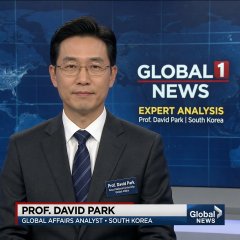
East Asia/Technology Correspondent at Global1.News. Seoul-based voice covering Korean politics, technology, business, and culture. Analyzes how technology and geopolitics intersect across East Asia.














Comments (0)