
NVIDIA and SK Hynix Forge Multi-Year Partnership for Next-Generation AI Memory
The announcement of a multi-year technology partnership between NVIDIA and SK hynix marks a pivotal deepening of collaboration between the world's leading AI computing company and one of its most critical memory suppliers. This agreement positions advanced memory development at the center of global AI infrastructure expansion while reinforcing South Korea's role in the semicond
The announcement of a multi-year technology partnership between NVIDIA and SK hynix marks a pivotal deepening of collaboration between the world's leading AI computing company and one of its most critical memory suppliers. This agreement positions advanced memory development at the center of global AI infrastructure expansion while reinforcing South Korea's role in the semiconductor supply chain.
NVIDIA and SK Hynix Forge Multi-Year Partnership for Next-Generation AI Memory
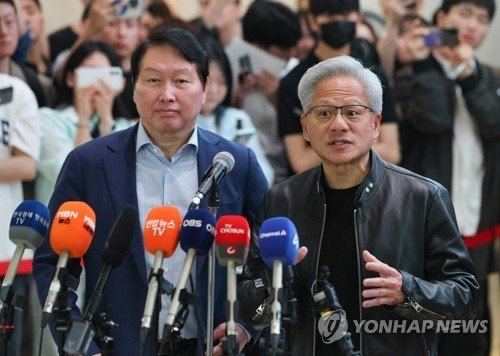
Seoul, South Korea – June 8, 2026 — On June 8, 2026, NVIDIA Corporation and SK hynix Inc. formalized their multi-year technology partnership at SK Group headquarters in Seoul. The agreement aligns SK hynix's memory development roadmap directly with NVIDIA's AI infrastructure strategy, extending a relationship that has already delivered high-bandwidth memory solutions for current-generation AI platforms.
NVIDIA CEO Jensen Huang described the collaboration as a "very significant and long-term partnership," while SK Group Chairman Chey Tae-won noted that the companies have spent years building toward this elevated level of cooperation. Both executives emphasized that the partnership moves beyond traditional supplier relationships into joint technology development.
The Partnership Announcement
On June 8, 2026, NVIDIA Corporation and SK hynix Inc. formalized their multi-year technology partnership at SK Group headquarters in Seoul. The agreement aligns SK hynix's memory development roadmap directly with NVIDIA's AI infrastructure strategy, extending a relationship that has already delivered high-bandwidth memory solutions for current-generation AI platforms.
"AI factories are the engines of the next industrial revolution, and advanced memory is essential to their performance," NVIDIA CEO Jensen Huang stated. "SK hynix has been an extraordinary partner to NVIDIA, playing a central role in delivering advanced memory technologies for NVIDIA AI computing platforms. Together, we will co-develop the next generation of memory for AI factories and support the accelerating global expansion of AI infrastructure."
SK Group Chairman Chey Tae-won echoed the sentiment, noting that "SK hynix and NVIDIA have been building toward this for years, and this partnership reflects the depth of that collaboration. Together, we are co-developing the next generation of memory for AI factories and applying AI to how we design and manufacture semiconductors — work that will shape the future of AI infrastructure."
Technology Specifics and Co-Development Roadmap
The partnership centers on SK hynix supplying HBM4 (High Bandwidth Memory 4) for NVIDIA's Vera Rubin AI supercomputers, which are currently in full production with deliveries scheduled for the third quarter of 2026. This supply commitment addresses the extended development cycles required for advanced memory technologies.
Co-development will extend across multiple NVIDIA platforms, including Vera CPUs, RTX Spark-powered personal computers, and Jetson Thor robotic computing systems. The companies will apply NVIDIA CUDA-X libraries and PhysicsNeMo to semiconductor design and manufacturing processes at SK hynix facilities, accelerating simulations, TCAD workflows, and in-house engineering codes.
SK hynix will further develop fab digital twins using NVIDIA Omniverse, OpenUSD scene optimization, and cuOpt software to enable autonomous operations within its production sites. These initiatives represent a concrete application of AI tools to semiconductor manufacturing itself, transforming how chips are designed and produced.
Jensen Huang's Broader Engagements During Seoul Visit
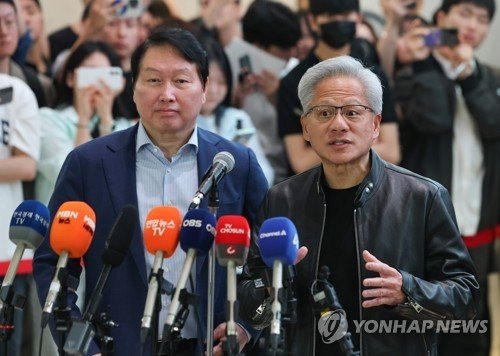
This agreement formed part of Jensen Huang's second visit to South Korea within seven months. During the same trip, NVIDIA announced separate AI infrastructure collaborations with NAVER for sovereign AI capacity beginning at 55 megawatts, LG Group for robotics and autonomous driving applications, Doosan Group for physical AI, and KRAFTON and T1 for RTX Spark deployments in Korean PC Bangs.
Huang also met with professional gamer Lee Sang-hyeok, known as Faker, and publicly identified robotics as South Korea's next major growth sector. He visited traditional Korean restaurants, sampling pork belly and soju — a cultural touch that underscored the broadening scope of NVIDIA's engagement with Korean industry and society. These engagements illustrate NVIDIA's strategy of building an ecosystem spanning cloud infrastructure, consumer applications, and industrial robotics within a single national market.
South Korea's Strategic Semiconductor Position
SK hynix ranks as the world's second-largest semiconductor memory manufacturer after Samsung Electronics. South Korean chip exports constitute approximately 16 percent of the country's total exports, making the sector both an economic pillar and a matter of national strategic interest. The Ministry of Trade, Industry and Energy has formally designated semiconductors as a national strategic technology, providing tax incentives and R&D support to maintain Korea's competitive edge.
The partnership reinforces SK hynix's established position as a key supplier of high-bandwidth memory for AI training and inference workloads. NVIDIA has now certified all three major memory producers — SK hynix, Samsung Electronics, and Micron — to supply HBM4, ensuring diversified sourcing while highlighting Korea's central role in the global AI hardware stack.
Geopolitical Context and Future Outlook
The US-China technology rivalry has elevated Korea's semiconductor capabilities to geopolitical significance. By aligning SK hynix's development timeline with NVIDIA's multi-year roadmap, the partnership provides greater predictability for both companies amid shifting export controls and supply-chain realignments. Korean semiconductor policymakers at the Ministry of Trade, Industry and Energy have closely monitored these developments as part of broader efforts to secure Korea's position in the global AI supply chain.
Looking ahead, the collaboration is expected to strengthen South Korea's technological edge in memory production and advanced manufacturing. Continued joint work on AI-optimized fabrication and physical AI platforms positions Korean firms to participate in emerging robotics and autonomous systems markets — sectors identified by Huang as future priorities for the Korean economy. The partnership also signals deepening integration between US and Korean technology ecosystems at a time when allies are seeking to build more resilient semiconductor supply chains.
By Prof. David Park, Staff Writer
This article was produced with AI-assisted research and editorial support. Reporting is based on sources cited in the article.
What's Your Reaction?
 Like
0
Like
0
 Dislike
0
Dislike
0
 Love
0
Love
0
 Funny
0
Funny
0
 Wow
0
Wow
0
 Sad
0
Sad
0
 Angry
0
Angry
0

East Asia/Technology Correspondent at Global1.News. Seoul-based voice covering Korean politics, technology, business, and culture. Analyzes how technology and geopolitics intersect across East Asia.














Comments (0)