
Office Air Crisis in India: 73% of Workplaces Fail Tests
Seventy-three percent of Indian office buildings fail basic indoor air quality standards, yet millions of employees continue working eight-hour days in sealed environments where the air they breathe can be two to five times more polluted than the air outside. A June 27, 2026, India Today Health 360 investigation presented by Sneha Mordani has exposed the scale of this invisible
Seventy-three percent of Indian office buildings fail basic indoor air quality standards, yet millions of employees continue working eight-hour days in sealed environments where the air they breathe can be two to five times more polluted than the air outside. A June 27, 2026, India Today Health 360 investigation presented by Sneha Mordani has exposed the scale of this invisible health crisis affecting corporate workspaces from Mumbai to Bengaluru, linking poor indoor air to headaches, chronic fatigue, respiratory infections, and measurable declines in cognitive performance.
India's Office Air Crisis: 73% of Workplaces Fail Health Standards as Millions Face Hidden Health Risks
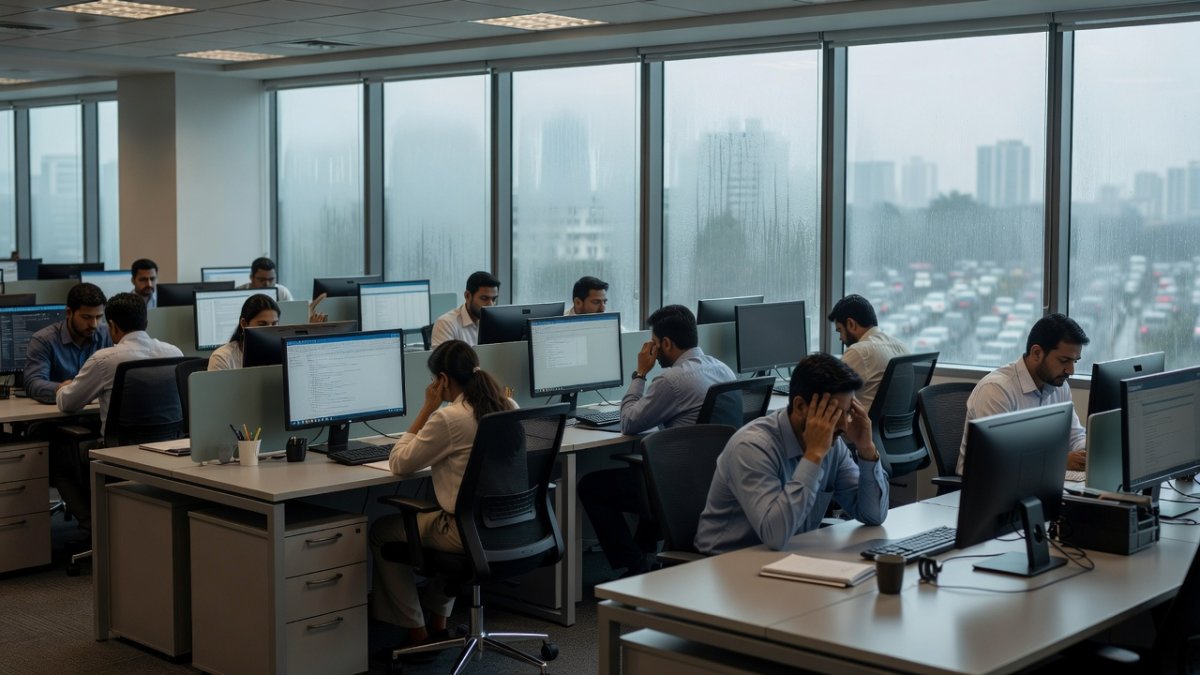
New Delhi, India — July 3, 2026 — Indian office workers spend more than eight hours daily in sealed, air-conditioned environments where indoor air can be two to five times more polluted than outdoor air. A June 27, 2026, India Today Health 360 report presented by Sneha Mordani reveals how recycled air in corporate workspaces across the country accumulates dust, germs, chemicals, and carbon dioxide, directly triggering headaches, throat irritation, breathing difficulties, and chronic fatigue. This issue intersects with India's expanding IT and services economy, where millions of employees in cities from Mumbai to Bengaluru face daily exposure that undermines both health and output.
Quantifying the Problem: Data from 30 Offices Across Nine Cities
A joint study by GBCI India and Saint-Gobain Research India evaluated indoor environmental quality across 30 corporate offices in nine major Indian cities and found that 73 percent failed basic indoor air quality standards. Within the same sample, 67 percent exceeded safe nitrogen dioxide levels and 75 percent recorded unsafe carbon dioxide concentrations. Only about 10 percent of Indian offices currently employ HEPA filters capable of capturing fine particulates. These figures align with global observations that people spend 90 percent of their time indoors, yet Indian workplaces lag significantly behind in adopting filtration technology that could mitigate the risk.
Health Consequences and Sick Building Syndrome
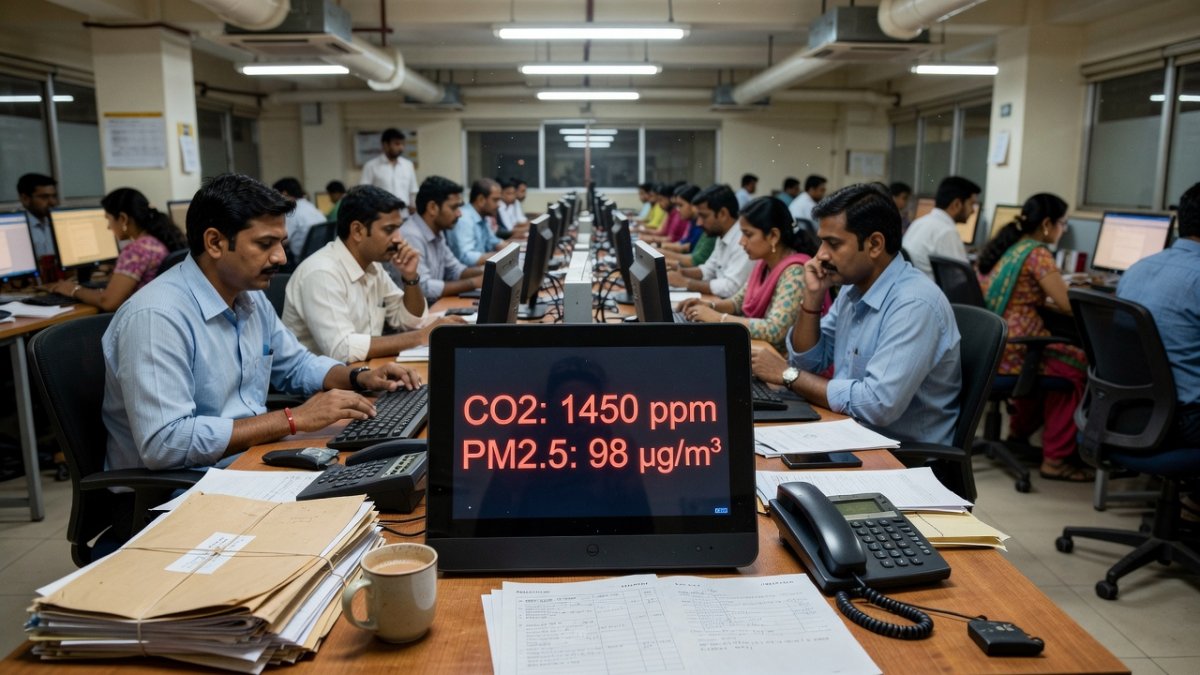
Medical experts interviewed in the India Today broadcast confirm that indoor air pollution carries risks comparable to outdoor pollution. Elevated carbon dioxide above 1,000 ppm produces headaches, drowsiness, and diminished concentration — thresholds that the World Health Organization and the National Institute for Occupational Safety and Health (NIOSH) recommend never be crossed. Three out of four Indian offices exceed this limit. Symptoms of Sick Building Syndrome (SBS) — headaches, fatigue, eye irritation, dry throat, and reduced focus — appear routinely among employees. Over time, continuous exposure raises the incidence of allergies, respiratory infections, and asthma exacerbations, placing additional strain on India's public healthcare framework and increasing out-of-pocket medical expenses for middle-class workers.
Productivity Losses and Workforce Implications
A study by the Harvard T.H. Chan School of Public Health demonstrates that improved indoor air quality produces measurable gains in cognitive function, including decision-making and crisis response. In the Indian context, where the services sector contributes approximately 55 percent to GDP, such declines in focus translate into tangible economic costs. A Honeywell survey found that 95 percent of Indian workers believe indoor air quality affects their health, 56 percent expect continuous monitoring in their workplaces, and nearly 30 percent would consider changing jobs because of poor conditions. High attrition driven by environmental factors adds recruitment and training expenses for employers while disrupting project timelines in competitive sectors such as software development and financial services.
Regulatory and Certification Landscape in 2026
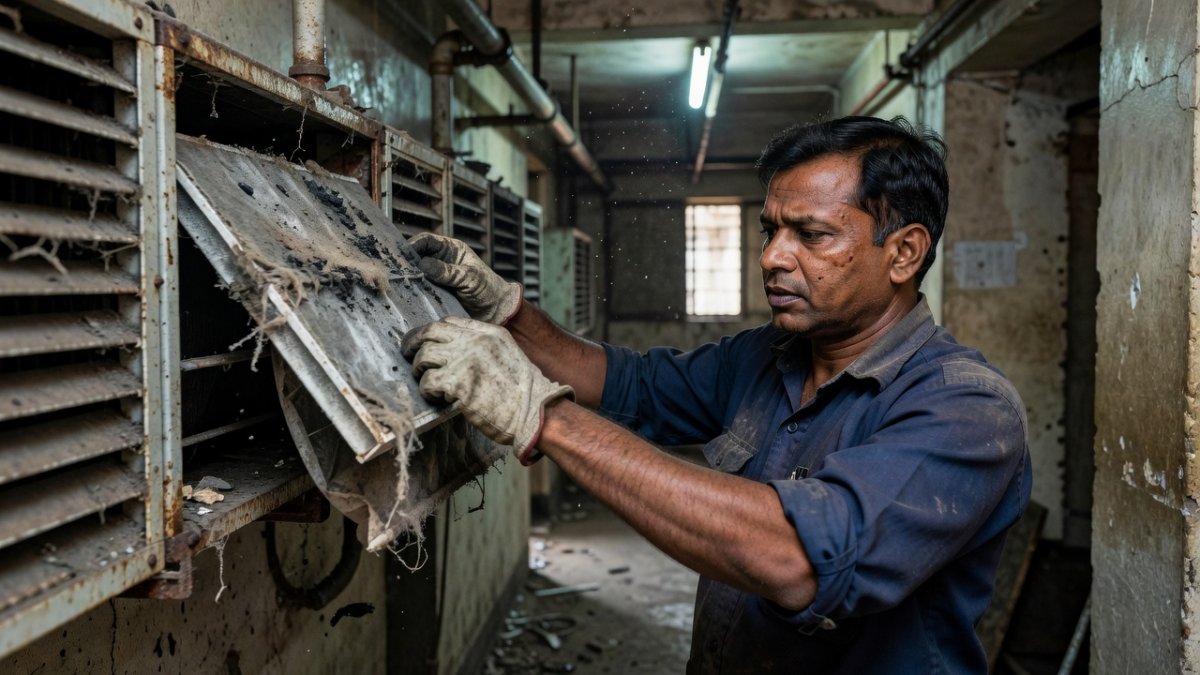
India lacks a single consolidated statute governing indoor air quality in commercial buildings. Enforcement instead occurs through voluntary green-building certifications such as the Indian Green Building Council (IGBC) and GRIHA, which increasingly incorporate air-quality benchmarks. While these frameworks encourage adoption of low-VOC materials, demand-controlled ventilation, and humidity control between 40 and 60 percent with temperatures maintained at 22–24 °C, compliance remains uneven. The absence of mandatory nationwide standards leaves millions of workers without enforceable protections, even as state pollution control boards focus primarily on ambient outdoor conditions. The Ministry of Environment, Forest and Climate Change has yet to issue specific IAQ guidelines for commercial workspaces, a gap that public health experts say needs urgent attention.
Practical Solutions Already Available
Effective remediation combines upgraded HVAC systems fitted with HEPA filters, portable air purifiers using activated carbon and NO2-specific media for zones poorly served by central ventilation, and IoT-based sensors for real-time monitoring. The India Today report stresses a symbiotic approach: central air-conditioning units handle bulk air exchange while targeted purifiers address localized pollutant buildup. ASHRAE standards recommend 8 to 15 litres of fresh air per second per person — a benchmark that few Indian commercial buildings currently meet. When these measures are paired with regular maintenance and adherence to the 1,000 ppm CO2 ceiling, measurable reductions in particulate matter and allergens follow. Early adopters among Indian corporations report fewer sick days and improved employee retention.
The Bottom Line
Poor indoor air quality in offices represents a preventable public-health burden with direct implications for India's economic competitiveness. Respiratory illnesses linked to workplace exposure increase utilization of government hospitals and subsidized medicines, ultimately borne by taxpayers. For the growing middle class that relies on private health insurance, higher premiums reflect elevated claims from chronic conditions. Students entering the workforce after graduating from IITs, IIMs, and other premier institutions encounter the same compromised environments that their parents' generation tolerated, perpetuating cycles of reduced cognitive performance and long-term health costs. Addressing indoor air quality aligns with national priorities of human-capital development and sustainable economic growth. The data, the medical consensus, and the available technology all point in one direction: India can no longer afford to ignore the air its workforce breathes indoors.
— By Dr. Raj Patel, Staff Writer
This article was produced with AI-assisted research and editorial support. Reporting is based on sources cited in the article.
What's Your Reaction?
 Like
0
Like
0
 Dislike
0
Dislike
0
 Love
0
Love
0
 Funny
0
Funny
0
 Wow
0
Wow
0
 Sad
0
Sad
0
 Angry
0
Angry
0

India/South Asia Correspondent at Global1.News. Analytical voice with a background in science and health journalism. Based in New Delhi, covering Indian politics, education, healthcare, technology, and policy. Breaks down complex data into clear, actionable reporting.














Comments (0)