
Putin's Approval Rating Plunges at Fastest Rate Since Ukraine Invasion as Fuel Crisis Bites
The Sharpest Weekly Drop Recorded by VTsIOM The state-run pollster VTsIOM released figures this week showing President Vladimir Putin's job approval rating falling to 66.9 percent from 70.4 percent in a single week. The survey of 1,600 respondents conducted between June 22 and June 28 also recorded disapproval rising to 21.3 percent. Trust in the president declined from 76.7 pe
The Sharpest Weekly Drop Recorded by VTsIOM
The state-run pollster VTsIOM released figures this week showing President Vladimir Putin's job approval rating falling to 66.9 percent from 70.4 percent in a single week. The survey of 1,600 respondents conducted between June 22 and June 28 also recorded disapproval rising to 21.3 percent. Trust in the president declined from 76.7 percent to 73.3 percent. Independent outlet Agentstvo described the movement as the sharpest weekly drop in trust since the 2022 invasion of Ukraine.
VTsIOM data had already shown a notable 10-percentage-point decline between March and April, when approval reached a wartime low of 65.6 percent amid complaints over internet blackouts and Telegram restrictions. The latest weekly slide exceeds the previous steepest drop of 1.8 points recorded in early April. These figures emerge from a period when the Kremlin has sought to project wartime consolidation, yet the numbers indicate measurable erosion in public confidence.
Analysts note that even modest weekly shifts in VTsIOM readings carry weight because the organization operates under direct state oversight. The consistency of the downward trend across consecutive weeks suggests the decline is not an isolated fluctuation but a response to accumulating domestic pressures.
Fuel Shortages Amplify Public Discontent
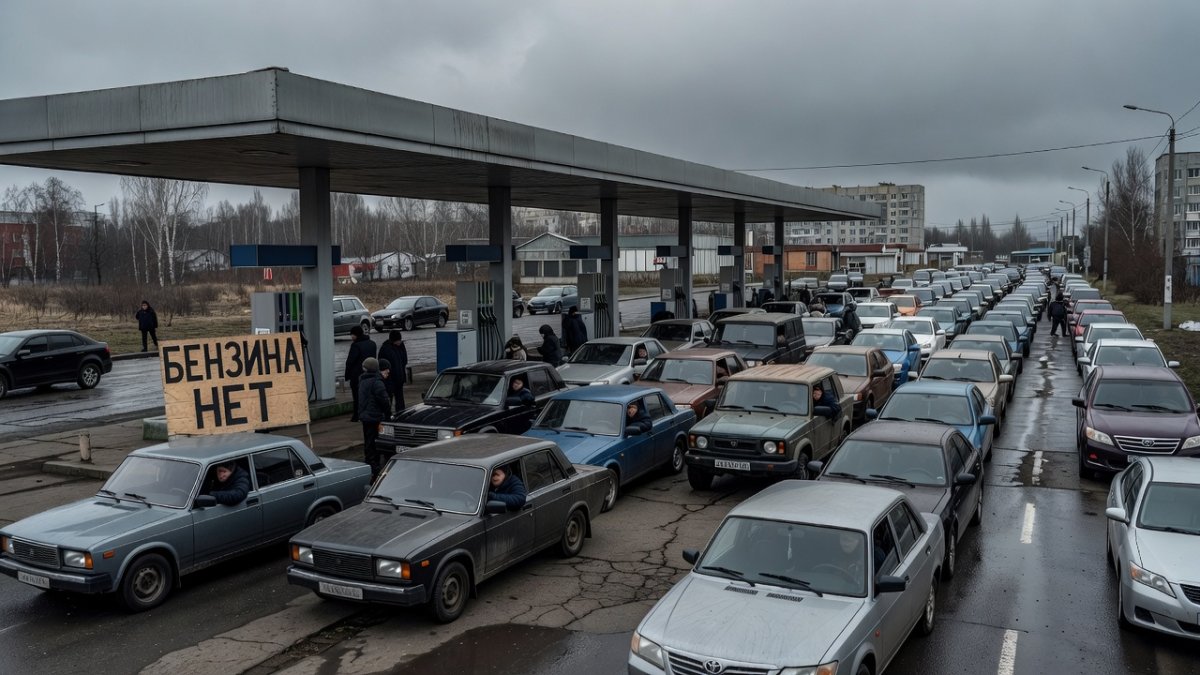
Ukrainian drone strikes on Russian oil refineries have disrupted domestic fuel supplies, forcing the Kremlin to arrange gasoline imports from India. Officials have confirmed ongoing talks to secure additional purchases from other countries to stabilize the market. The shortages have raised prices at pumps and created long queues in multiple regions, directly affecting ordinary citizens who rely on personal vehicles for work and daily travel.
The fuel crisis intersects with broader economic strains from the war, including restricted access to imported components and higher logistics costs. Residents in rural areas and smaller towns report particular hardship, as public transport options remain limited. Kremlin statements have framed the imports as temporary measures, yet the visible disruption has undermined narratives of economic resilience.
Power structures within the presidential administration now face internal questions over how to manage the visible effects of these shortages without conceding policy failures. The timing of the VTsIOM decline aligns closely with the spread of fuel-related complaints, suggesting a direct link between material hardship and falling approval metrics.
Independent Pollsters Confirm the Downward Trend
The Levada Center, an independent pollster, reported Putin's job approval at 74 percent in June, down from 79 percent in May. Earlier Levada readings had shown a fall from 86 percent to 79 percent over a comparable period. FOM, another established firm, surveyed 1,500 people across 51 regions on June 21 and recorded a drop from 79 percent to 73 percent.
Western research by Gallup covering March through May also captured declining confidence among Russian respondents. These separate methodologies, conducted without state direction, produce broadly consistent signals of erosion. Levada and FOM maintain reputations for methodological rigor despite operating in an environment of increasing regulatory pressure.
The convergence of state-run and independent data strengthens the case that the decline is not an artifact of any single survey design. Regional sampling by FOM across dozens of territories further indicates the trend is not confined to major cities but extends into the provinces where fuel shortages have been most acute.

VTsIOM Halts Publication of Open-Ended Trust Surveys
Last month VTsIOM ceased releasing results from its open-ended trust question after the internal figure fell below critical thresholds. The decision was announced on June 8, coinciding with the lowest reading since 2022. Officials at the organization offered no public explanation beyond routine adjustments to survey instruments.
The move drew attention because open-ended formats allow respondents to name trusted figures without prompting, often producing more volatile results than closed questions. Kremlin-aligned analysts have previously cited high trust numbers as evidence of consolidated support. Removing the indicator from public view limits external scrutiny of any further deterioration.
Observers interpret the change as an internal signal that authorities view sustained low readings as politically sensitive. The timing, just weeks before the latest job-approval slide, suggests heightened caution within state polling structures about releasing unfiltered indicators of public sentiment.
Reluctance to Speak Freely Shapes Reported Numbers
Experts emphasize that many Russians remain hesitant to express critical views to pollsters because of potential repercussions from authorities. Fear of surveillance or professional consequences leads some respondents to provide answers they believe align with official expectations. This dynamic tends to inflate approval figures relative to private sentiment.
Previous steep declines, such as the 10-point drop between March and April, still registered despite these constraints, indicating the underlying dissatisfaction was strong enough to overcome caution. Analysts at independent research centers argue that true disapproval levels may be higher than published numbers suggest, particularly in regions experiencing acute fuel shortages.
The reluctance effect does not invalidate the direction of the trend. When even guarded respondents register lower approval, the shift points to genuine movement in underlying attitudes. Gallup's cross-border methodology has noted similar patterns of self-censorship in other restrictive environments.
Daily Life Strains Spread Across Regions
Fuel shortages have altered routines in both urban centers and remote districts. Truck drivers and agricultural workers face higher operating costs that reduce household income. In several oblasts, local authorities have introduced informal rationing at filling stations, creating additional friction in daily commutes.
Carnegie Endowment reporting has highlighted elite-level disagreements in Moscow over related issues such as internet restrictions, revealing fractures in policy coordination. These tensions compound the visible effects of the fuel crisis on the ground. Regional governors must manage public frustration while adhering to central directives that limit open discussion of supply problems.
The combination of economic pressure and restricted information channels has produced uneven but widespread discontent. Areas dependent on long-distance road transport report the most immediate disruptions, while major cities experience secondary effects through rising goods prices.
Consequences for Wartime Consolidation
Sustained declines in approval metrics, even within a controlled polling environment, carry implications for the Kremlin's ability to maintain wartime cohesion. Lower trust ratings reduce the margin for mobilizing public support during periods of intensified military operations or further economic restrictions.
Internal power structures must now weigh the costs of continued fuel imports against domestic political stability. The decision to suppress certain survey indicators suggests awareness that visible erosion could embolden elite rivals or regional actors seeking greater autonomy.
While core support among security services and state employees remains intact, the broader population's response to material hardship introduces new variables into calculations of regime durability. Independent monitoring by Levada and FOM will continue to provide reference points for tracking whether the current slide stabilizes or accelerates in coming weeks.
By Irina Volkov, Staff WriterThis article was produced with AI-assisted research and editorial support. Reporting is based on sources cited in the article.
What's Your Reaction?
 Like
0
Like
0
 Dislike
0
Dislike
0
 Love
0
Love
0
 Funny
0
Funny
0
 Wow
0
Wow
0
 Sad
0
Sad
0
 Angry
0
Angry
0
Russia/Eastern Europe Correspondent at Global1.News. Covering Russian politics, energy, security, and the shifting dynamics of the post-Soviet space. Provides clear-eyed analysis on one of the world's most opaque regions.










Comments (0)