
Nobel T-Cell Science Powers India's CAR-T Cancer Revolution
The 2018 Nobel Prize in Physiology or Medicine awarded to James Allison and Tasuku Honjo for their discoveries on T-cell regulation opened a new era in cancer immunotherapy. Their work on CTLA-4 and PD-1 checkpoints laid the foundation for engineered T-cell therapies that are now transforming outcomes for patients with relapsed blood cancers in India and worldwide. How CAR-T Ce
The 2018 Nobel Prize in Physiology or Medicine awarded to James Allison and Tasuku Honjo for their discoveries on T-cell regulation opened a new era in cancer immunotherapy. Their work on CTLA-4 and PD-1 checkpoints laid the foundation for engineered T-cell therapies that are now transforming outcomes for patients with relapsed blood cancers in India and worldwide.
How CAR-T Cell Therapy Works: The Core Science
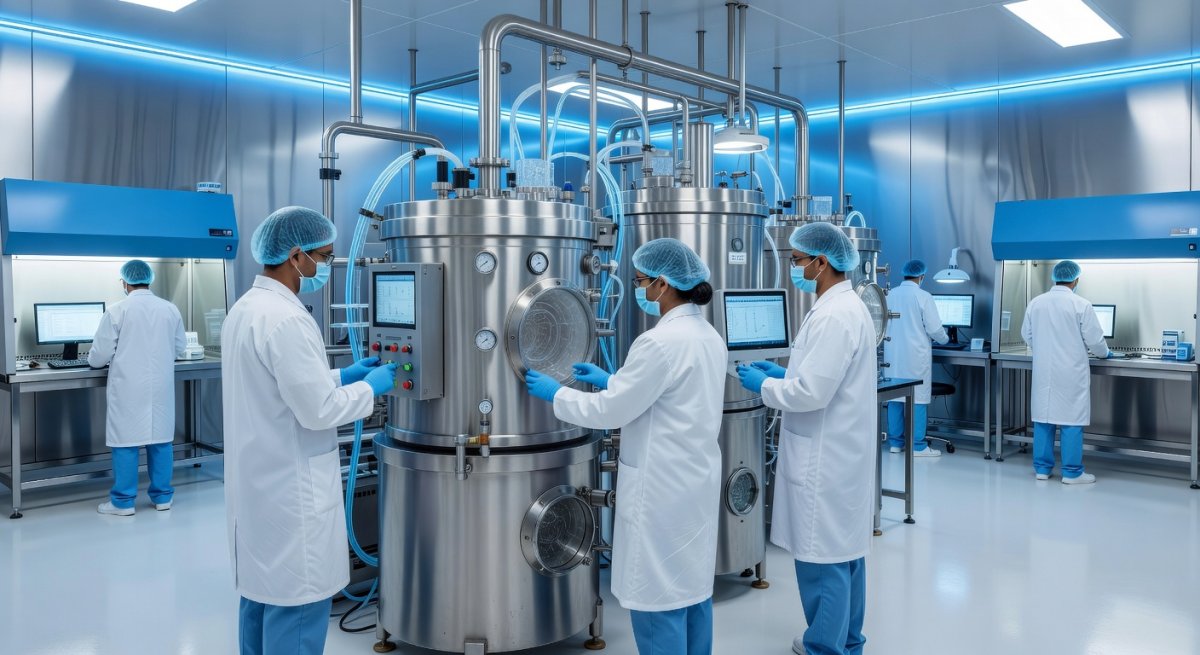
CAR-T therapy begins with leukapheresis to extract a patient's autologous T-cells. These cells are then genetically modified using lentiviral or retroviral vectors to express chimeric antigen receptors that recognise specific tumour antigens such as CD19. The engineered cells undergo expansion in bioreactors for 7–14 days before quality control and reinfusion. Once inside the body, the CAR-T cells proliferate, recognise cancer cells, and trigger targeted cytotoxicity. Clinical protocols at Tata Memorial Centre and ACTREC have documented peak CAR-T expansion between days 7 and 14 post-infusion, correlating with tumour clearance in 76 percent of B-cell lymphoma cases treated in Indian trials.
India's Cancer Burden and the Unmet Need
The Indian Council of Medical Research (ICMR) estimates 1.46 million new cancer cases annually, with projections reaching 2 million by 2040. WHO data indicate approximately 850,000 cancer deaths each year in India. Haematological malignancies account for nearly 8 percent of this burden, yet access to advanced therapies remains limited. The National Programme for Prevention and Control of Cancer, Diabetes, CVD and Stroke (NPCDCS) has allocated increased central funding since 2023 to strengthen tertiary oncology centres, yet gaps persist in molecular diagnostics and cell-therapy infrastructure across tier-2 cities.
NexCAR19: India's Indigenous Breakthrough
In 2024, ImmunoACT, a spin-off from IIT Bombay, received CDSCO approval for NexCAR19, India's first commercially available CAR-T product. Priced at ₹4–5 lakh per dose compared with ₹3–4 crore for imported therapies, NexCAR19 targets CD19-positive B-cell lymphomas and leukaemias. Phase II data from Tata Memorial Centre showed a 76 percent overall response rate and 58 percent complete remission at six months. Treatment centres now include Tata Memorial Hospital Mumbai, AIIMS Delhi, CMC Vellore, and ACTREC Navi Mumbai. Cytokine release syndrome, occurring in 35–45 percent of patients, is managed through Indian-adapted protocols using tocilizumab and corticosteroids, reducing ICU stays to an average of 4.2 days.

Autoimmune Frontier: Expanding CAR-T Applications
Beyond oncology, CAR-T therapy is entering autoimmune research. AIIMS Delhi has initiated early-phase trials using CD19-directed CAR-T cells for refractory systemic lupus erythematosus and rheumatoid arthritis. Preliminary data from five patients show sustained B-cell depletion and clinical remission lasting beyond nine months without serious adverse events. These studies align with global observations that CAR-T can reset immune tolerance, offering potential disease-modifying outcomes where conventional immunosuppressants fail.
Policy, Infrastructure and Remaining Challenges
India's 2023 Biotechnology Policy explicitly aims to establish the country as a regional cell-therapy manufacturing hub, targeting 10 GMP-compliant facilities by 2027. The global CAR-T market is projected to reach $15–20 billion by 2030, creating export opportunities for Indian firms. However, challenges remain: only 12 centres currently possess apheresis capability meeting international standards, cold-chain logistics for viral vectors are underdeveloped outside metros, and fewer than 200 clinicians have formal CAR-T training. NPCDCS-supported fellowships and IIT Bombay's short-term certification programmes are addressing the personnel gap, yet scaling to 50,000 annual procedures will require sustained public-private investment.
The Bottom Line
NexCAR19's launch marks a decisive step toward affordable, India-centric cell therapy. With continued focus on infrastructure, training, and regulatory streamlining, CAR-T has the potential to shift survival curves for thousands of Indian patients annually while positioning the nation as a global leader in next-generation immunotherapies. The legacy of the 2018 Nobel Prize is now being realised in Indian hospitals at a fraction of the historical cost.
— By Dr. Raj Patel, Staff Writer
This article was produced with AI-assisted research and editorial support. Reporting is based on sources cited in the article.
What's Your Reaction?
 Like
0
Like
0
 Dislike
0
Dislike
0
 Love
0
Love
0
 Funny
0
Funny
0
 Wow
0
Wow
0
 Sad
0
Sad
0
 Angry
0
Angry
0

India/South Asia Correspondent at Global1.News. Analytical voice with a background in science and health journalism. Based in New Delhi, covering Indian politics, education, healthcare, technology, and policy. Breaks down complex data into clear, actionable reporting.












Comments (0)