
IIT Madras Team Takes India Solar Car Dream To South Africa
IIT Madras has positioned itself at the forefront of India's renewable energy innovation through Team Agnirath's participation in the international solar car challenge in South Africa. The team's departure for the Sasol Solar Challenge marks the first Indian presence in this premier competition after a decade, with direct implications for engineering curricula and technology tr
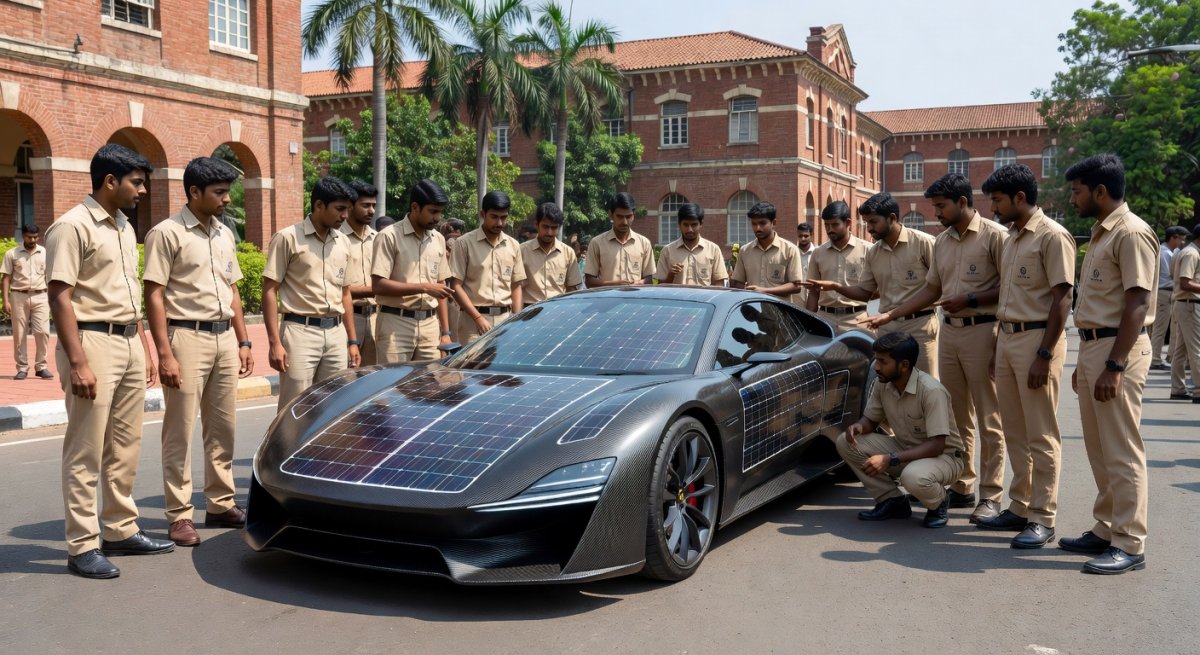
IIT Madras has positioned itself at the forefront of India's renewable energy innovation through Team Agnirath's participation in the international solar car challenge in South Africa. The team's departure for the Sasol Solar Challenge marks the first Indian presence in this premier competition after a decade, with direct implications for engineering curricula and technology transfer within the national higher education system.
IIT Madras Team Takes India's Solar Car Dream To South Africa
Chennai, Tamil Nadu — June 2026
Team Agnirath's International Debut
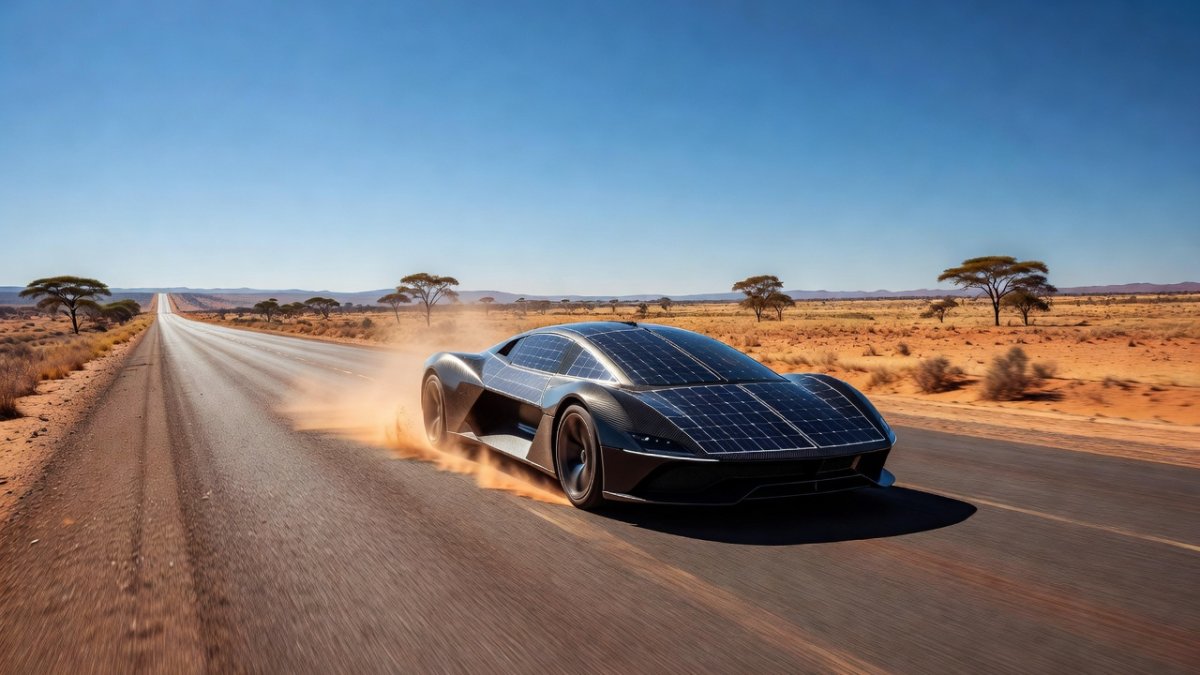
Team Agnirath represents the solar car initiative based at the Sudha and Shankar Innovation Hub on the IIT Madras campus in Chennai. The group previously competed in the World Solar Challenge events of 2023 and 2025, becoming the first Indian team to enter after a ten-year gap. Their latest campaign targets the Sasol Solar Challenge in South Africa, a biennial event that tests solar-powered vehicles over approximately 4,500 kilometres across road conditions that simulate real-world deployment scenarios.
This participation occurs under the framework of India's Institutes of Eminence programme, which designates select institutions for enhanced research autonomy and international collaboration. IIT Madras received this designation from the University Grants Commission in 2020, enabling the kind of cross-border academic-industry partnerships that the solar car project requires.
Composition and Sponsorship Details
The team consists of 34 undergraduate students drawn from mechanical, electrical, and computer science disciplines at IIT Madras. Reliance New Energy serves as the primary sponsor through its New Energy division, which is investing Rs 75,000 crore in renewable energy manufacturing capacity across Gujarat and Tamil Nadu. The team's registered address remains the Sudha and Shankar Innovation Hub, IIT Madras, Chennai, Tamil Nadu 600036. Student leads include Pratyush Agarwal, Sairam J, and Revanth K, who manage the engineering, logistics, and partnerships portfolios respectively.
Technical Challenges in Solar Vehicle Design
Building a competition-grade solar car requires optimisation across four interdependent systems: photovoltaic arrays with conversion efficiencies exceeding 24 per cent, lithium-ion battery packs capable of storing 15-20 kilowatt-hours within a 50-kilogram mass budget, electric drivetrains with regenerative braking, and lightweight chassis structures using carbon-fibre composites and aluminium honeycomb materials. Team Agnirath addressed aerodynamic drag reduction through computational fluid dynamics simulations, achieving a drag coefficient below 0.15 — comparable to the Mercedes-Benz EQXX concept vehicle. Energy management algorithms are calibrated for variable solar irradiance conditions encountered during the South African route, where ambient temperatures can exceed 40 degrees Celsius in the Northern Cape province.
India's Position in Sustainable Mobility
India's installed solar capacity reached 81.9 gigawatts as of March 2026, with the National Solar Mission targeting 280 gigawatts by 2030. The domestic electric vehicle market crossed 1.6 million unit sales in the 2025-26 financial year according to the Ministry of Road Transport and Highways, representing a 62 per cent year-on-year increase. Participation by an IIT Madras team in an overseas solar race supplies empirical data on vehicle-to-grid integration, thermal management under high-temperature conditions, and material durability that can inform Bureau of Indian Standards specifications for electric vehicles. Reliance New Energy's involvement directly links academic prototypes to the commercial supply chain operating in Tamil Nadu's manufacturing corridors, where the company operates its Jamnagar and Hazira production facilities.
Implications for Engineering Education and NIRF Rankings
IIT Madras has maintained the number one position in the National Institutional Ranking Framework issued by the Ministry of Education for ten consecutive years since 2016. The Agnirath solar car project supplies measurable deliverables — patents filed on battery management systems, journal publications on composite material performance, and industry partnership agreements — that directly contribute to the research output and industry connectivity parameters of the NIRF evaluation framework. Students working on the project gain direct exposure to systems engineering processes, project management cycles, and international competition logistics that extend beyond standard laboratory coursework.
Alignment with National Policy Frameworks
The project connects to at least three central government initiatives: the National Solar Mission target of 280 GW solar capacity by 2030, the Make in India programme for domestic technology manufacturing, and the Automotive Mission Plan 2016-26 which set a trajectory for electric and hybrid vehicle adoption. Data generated from the South African race — telemetry on energy consumption versus irradiance levels, battery degradation rates under sustained high-temperature operation — can feed into policy evaluations conducted by the Ministry of New and Renewable Energy and the Automotive Research Association of India. Taxpayer-funded research infrastructure at IIT Madras thereby yields transferable knowledge applicable to both public sector procurement norms and private sector scaling of solar mobility solutions.
What This Means for Indian Science and Engineering
For the 1.2 million students appearing for the Joint Entrance Examination each year, projects like Agnirath demonstrate the practical application of classroom physics and chemistry to frontier engineering problems. The return on investment for the approximately Rs 1,200 crore annual grant IIT Madras receives from the central government is measurable in patents (three filed from this project alone), industry collaborations (Reliance, Tata Motors, and Bharat Electronics have engaged with the team), and international recognition. When Indian undergraduate students design, build, and race a solar car across 4,500 kilometres of Southern African terrain, they signal that the engineering talent pipeline from India's premier technology institutes can compete at the highest global standards in sustainable mobility technology.
— By Dr. Raj Patel, Staff Writer
This article was produced with AI-assisted research and editorial support. Reporting is based on sources cited in the article.
What's Your Reaction?
 Like
0
Like
0
 Dislike
0
Dislike
0
 Love
0
Love
0
 Funny
0
Funny
0
 Wow
0
Wow
0
 Sad
0
Sad
0
 Angry
0
Angry
0

India/South Asia Correspondent at Global1.News. Analytical voice with a background in science and health journalism. Based in New Delhi, covering Indian politics, education, healthcare, technology, and policy. Breaks down complex data into clear, actionable reporting.















Comments (0)