
NIFTEE 2026 Results Controversy Exposes Deep Flaws in NTA's Examination Machinery
The National Testing Agency declared the final results for NIFTEE 2026 on June 3, 2026, triggering immediate protests from thousands of candidates after attendance records and scorecards showed glaring mismatches. With 21,307 unique candidates registered across 129 examination centres in 97 cities and 40,247 total test entries recorded, the scale of the discrepancies has raised
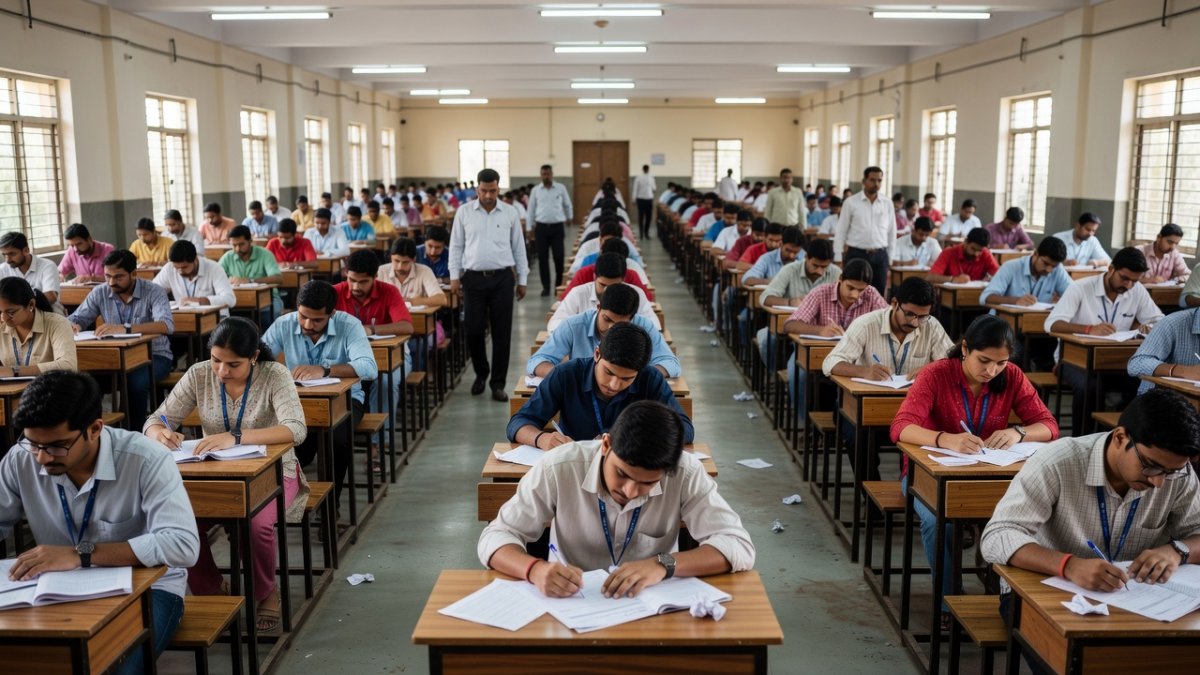
The National Testing Agency declared the final results for NIFTEE 2026 on June 3, 2026, triggering immediate protests from thousands of candidates after attendance records and scorecards showed glaring mismatches. With 21,307 unique candidates registered across 129 examination centres in 97 cities and 40,247 total test entries recorded, the scale of the discrepancies has raised serious questions about the integrity of admissions to 20 NIFT campuses for the 2026-27 academic session.
NIFTEE 2026 Results Controversy Exposes Deep Flaws in NTA’s Examination Machinery
New Delhi, Delhi – June 5, 2026 — The National Testing Agency’s handling of NIFTEE 2026 has drawn sharp criticism after students reported that several candidates marked absent in official records nevertheless received scorecards and ranks. The B.Des programme alone drew over 13,900 candidates for the General Ability Test, while 1,703 postgraduate applicants attended interviews in New Delhi between April 6 and 11. These figures underscore both the exam’s national reach and the potential scale of any systemic error.
Scale of NIFTEE 2026 and the Nature of Reported Discrepancies
Stage 1 of NIFTEE 2026 took place on February 8, 2026, with candidates appearing for both the General Ability Test and Creative Ability Test at centres spanning 97 cities. The subsequent Stage 2 examinations—Situation Tests, Studio Tests, Technical Ability Tests, and Artisan Skill Tests—were conducted on April 26, 2026, at 28 centres in 20 cities. Despite this elaborate logistical framework, multiple candidates have documented cases where their attendance was incorrectly logged as absent while their final results appeared online.
NDTV reporting has highlighted instances in which students who physically appeared for both GAT and CAT papers found their names missing from attendance sheets yet listed in the merit list. Such contradictions directly affect seat allocation across all 20 NIFT campuses, including the flagship Delhi and Mumbai centres that together account for a significant share of the annual intake.
What This Means for India
India’s design education pipeline feeds directly into the country’s textiles, fashion, and creative industries, sectors that contribute substantially to export earnings and employment in states such as Tamil Nadu, Gujarat, and Uttar Pradesh. When the NTA, the same agency responsible for NEET, JEE Main, CUET, and UGC NET, presides over disputed results, the ripple effects reach thousands of aspirants from smaller towns who view NIFT admission as a rare route to upward mobility. Taxpayers fund the NTA’s operations; repeated lapses therefore represent both a governance failure and an economic inefficiency that delays an entire cohort’s entry into the workforce.

Recurring Patterns Across NTA-Conducted Examinations
The NIFTEE 2026 controversy follows a documented pattern. Similar attendance-scorecard mismatches have surfaced in UP Board examinations, Delhi University semester results, and Mumbai University assessments in recent years. Because the NTA centralises testing for multiple high-stakes national examinations, any procedural weakness in biometric verification or server-side attendance logging is amplified across lakhs of candidates. The agency’s reliance on a single digital ecosystem without robust real-time reconciliation mechanisms creates systemic risk rather than isolated glitches.
Policy Implications for the Ministry of Education
The Ministry of Education’s decision to route all major entrance tests through the NTA was intended to standardise processes and reduce state-level variations. Yet the absence of independent third-party audits after each examination cycle has left students without credible redressal pathways. For the 2026-27 academic session, any delay in resolving NIFTEE disputes will compress the already tight counselling calendar, potentially forcing NIFT to either reduce intake or extend deadlines that clash with other central university admissions.
The Bottom Line
With 21,307 candidates and 40,247 test entries processed for NIFTEE 2026, the NTA cannot treat attendance discrepancies as minor administrative errors. The episode reinforces the urgent need for tamper-proof biometric systems, publicly accessible audit trails, and swift grievance redressal mechanisms if public confidence in India’s centralised examination framework is to be restored. Until these safeguards are implemented, students from every state will continue to bear the cost of institutional opacity.
— By Dr. Raj Patel, Staff Writer
This article was produced with AI-assisted research and editorial support. Reporting is based on sources cited in the article.
What's Your Reaction?
 Like
0
Like
0
 Dislike
0
Dislike
0
 Love
0
Love
0
 Funny
0
Funny
0
 Wow
0
Wow
0
 Sad
0
Sad
0
 Angry
0
Angry
0

Caribbean Correspondent at Global1.News. Based in Port of Spain, Trinidad, covering Caribbean politics, economy, energy, climate, and culture. Amplifying the voices and stories of the Caribbean region.















Comments (0)