
Trump Tariffs Threaten India's $9.8B Pharma Exports to US
In a move that could reshape global medicine supply chains, President Donald Trump has unveiled aggressive tariffs on imported generic drugs, directly challenging India's role as the world's pharmacy. This policy risks driving up costs for millions of American patients reliant on affordable medications while pressuring Indian manufacturers to overhaul decades-old production models. The stakes extend far beyond trade balances, touching public health systems on two continents.
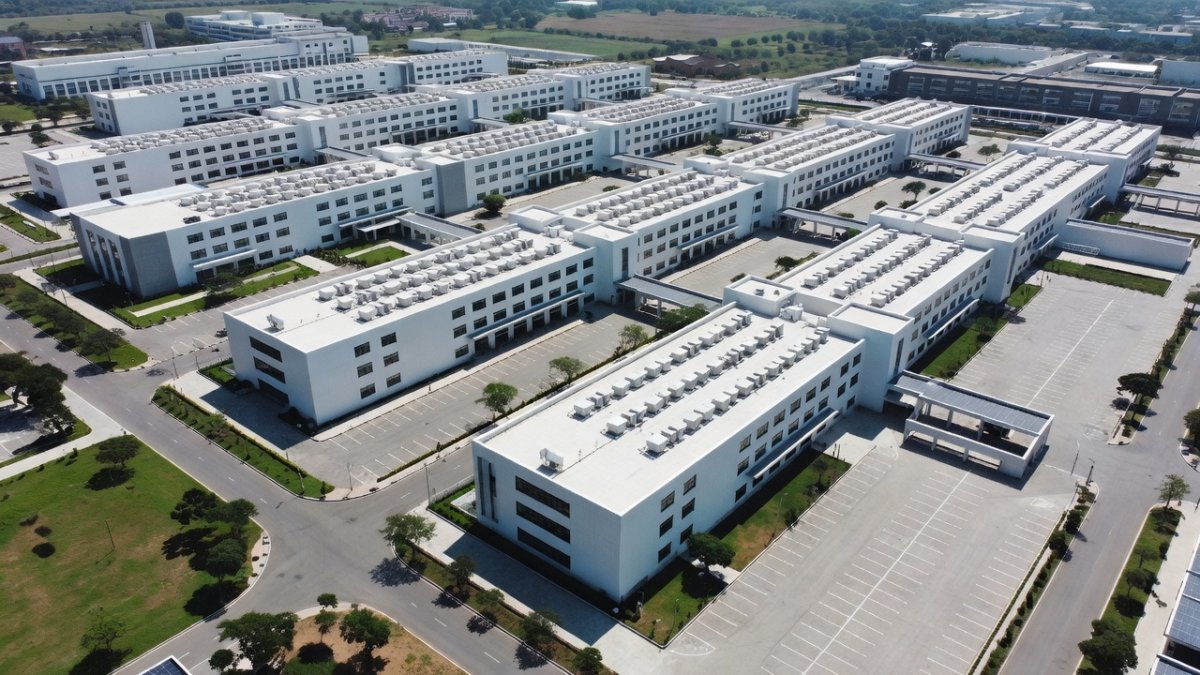
In a move that could reshape global medicine supply chains, President Donald Trump has unveiled aggressive tariffs on imported generic drugs, directly challenging India's role as the world's pharmacy. This policy risks driving up costs for millions of American patients reliant on affordable medications while pressuring Indian manufacturers to overhaul decades-old production models. The stakes extend far beyond trade balances, touching public health systems on two continents.
Trump Tariffs Put India's Pharma Exports at Risk
New Delhi, India - July 22, 2026 — US President Donald Trump announced on July 21, 2026 via Truth Social a 100 percent tariff on imported generic drugs starting August 2028, doubling to 200 percent in August 2029. Generic drug manufacturers receive a two-year window until August 2028 to relocate production to the United States or face these tariffs. The policy targets the supply chain that currently allows India to ship generics into the US market at zero tariff rates.
How the Two-Year Timeline Reshapes Investment Calculus
The August 2028 deadline creates an unusually compressed timeline for an industry where FDA facility approvals typically require 18 to 36 months. Indian manufacturers must decide within months whether to commit hundreds of millions in US plant investments, begin site selection and regulatory filings, or accept the 100 percent tariff as a cost of doing business. The 200 percent escalation in August 2029 effectively eliminates the option of delaying decisions past the initial deadline, forcing strategic clarity far sooner than comparable trade measures have demanded.
India's Dominance in Global Generic Drug Supply
India supplies nearly 40 percent of US generic drugs by volume and exported 9.8 billion dollars worth of pharmaceutical products to the United States in FY25, representing approximately 40 percent of India's total pharma exports. India's pharmaceutical exports to the United States have grown dramatically since the 1990s, rising from under $500 million in 1995 to over $8 billion by 2023, accounting for approximately 40 percent of all generic prescriptions filled in America. This dominance traces directly to the Patents Act of 1970, which recognized only process patents rather than product patents for pharmaceuticals, enabling Indian firms to reverse-engineer and manufacture affordable versions of blockbuster drugs still under patent elsewhere. The Hyderabad-Mumbai pharma corridor contains over 1,200 formulation units that produce 60 percent of India's generic output and includes more than 1,200 FDA-approved facilities established since 2000.
Key Indian Pharma Firms' US Market Exposure
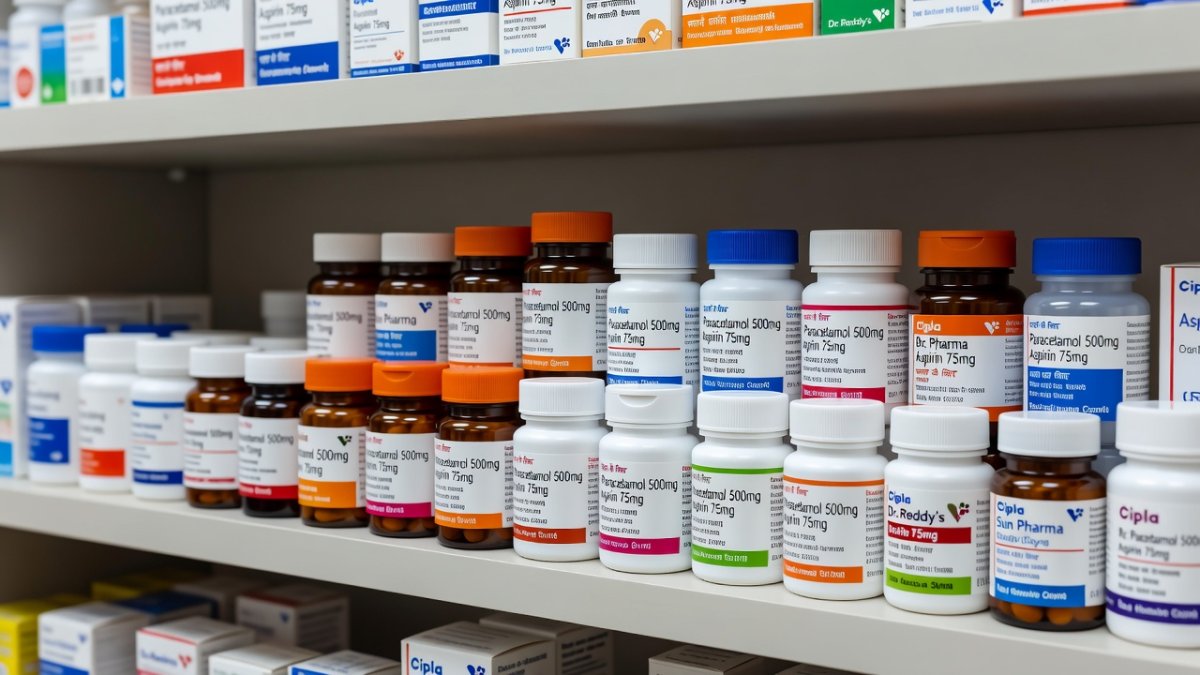
Sun Pharma reports $5.1 billion in annual revenue with roughly 35 percent US exposure — approximately $1.785 billion tied directly to its 620 FDA-approved ANDAs. Dr. Reddy's Laboratories holds 28 percent US exposure ($1.12 billion across 480 ANDAs), while Cipla maintains 22 percent ($660 million from 310 filings concentrated in respiratory and dermatology segments). Additional firms including Aurobindo Pharma, Lupin, Zydus Lifesciences, and Torrent Pharma face similar concentration risks, with 60 percent of Sun's ANDA portfolio concentrated in oral solids and 25 percent in injectables — segments facing the steepest margin compression under the tariff schedule.
Historical tariff threats in 2019 triggered immediate share-price declines of 7 to 12 percent across these names within a week, with Aurobindo and Lupin recording similar 9 percent drops on reciprocal-duty speculation. Relocating even 30 percent of capacity to US sites would require $75 million to $120 million per FDA-approved facility, plus 18- to 36-month approval cycles that delay revenue recognition and strain working capital already pressured by 12 to 15 percent API cost inflation.
Anticipated Price Hikes for Critical Medications
The USC Schaeffer Center projects price hikes of 25 to 40 percent on antibiotics such as amoxicillin and cephalexin. Cardiovascular drugs including losartan and atorvastatin, which treat more than 50 million Americans, along with HIV antiretrovirals like tenofovir and oncology generics such as imatinib and paclitaxel, stand at risk of similar increases. These projections rest on documented historical events: the 2018-2019 valsartan contamination crisis doubled prices, and 2020 COVID-related API disruptions produced six-month amoxicillin shortages. Indian-made generics currently save Medicare and Medicaid $90 billion yearly by keeping average generic prices at 10 to 20 percent of brand-name equivalents.
Employment and Economic Stakes in India's Pharma Sector
The Indian pharma sector employs more than 3 million people directly across Telangana, Maharashtra, and Gujarat. Any forced relocation of manufacturing capacity would affect these jobs and the supply stability of medicines that Indian generics currently deliver to Medicare and Medicaid at an annual savings of approximately 90 billion dollars. A contraction in US exports could paradoxically ease pressure on India's domestic market, where prices for essential medicines might decline 10 to 15 percent due to redirected inventory, though smaller manufacturers already operating on thin margins would face strain. Indian patients may encounter reciprocal supply constraints if trade negotiations fail to preserve existing zero-tariff access for US-bound shipments.
India's Policy Responses and Trade Strategies
India currently applies a 10.91 percent duty on American drug imports while facing zero US tariffs on its shipments. The Ministry of Commerce is preparing multiple rounds of bilateral engagement with US trade officials through the remainder of 2026, positioning the Department of Pharmaceuticals to coordinate industry submissions on supply-chain data. The Ministry of Health has separately issued warnings about potential domestic shortages in critical categories if production lines are idled. Potential remedies under discussion include invoking the WTO dispute settlement mechanism under GATT Article XXI for national-security carve-outs, imposing reciprocal 10 to 15 percent duties on US-origin insulin and oncology injectables, or accelerating negotiations for an expanded trade agreement that carves out pharma exemptions.
India's Production Linked Incentive scheme, launched in 2021 with $2 billion allocated through 2030, targets a 25 percent boost in domestic API manufacturing capacity and reduced import dependence on China — though tariff retaliation could delay returns on those investments. The National Pharmaceutical Pricing Authority would likely face upward revisions to scheduled drug ceilings if imported input costs rise 8 to 10 percent, risking shortages in 120 essential medicines monitored under the National List. Meanwhile, the Department of Pharmaceuticals is accelerating PLI disbursements to 14 API parks while redirecting biosimilar growth — already up 18 percent to Europe and Japan — toward $4.2 billion in African and ASEAN markets to offset US concentration risks.
Long-Term Implications for Global Healthcare Access
The two-year adjustment window ending August 2028 requires Indian companies to evaluate US facility investments against the 100 percent tariff that begins that month and the 200 percent rate scheduled for August 2029. Continued reliance on the Patents Act of 1970 framework and expansion of the PLI scheme represent the primary domestic levers available to maintain export competitiveness while protecting access for both US and Indian patients. The 2028-2029 timeline, announced by President Trump on Truth Social on July 21, 2026, forces rapid strategic recalibration across a sector that supplies medicines for millions of patients on two continents — a timeline that leaves little room for delay or diplomatic drift.
— By Dr. Raj Patel, Staff WriterThis article was produced with AI-assisted research and editorial support. Reporting is based on sources cited in the article.
What's Your Reaction?
 Like
0
Like
0
 Dislike
0
Dislike
0
 Love
0
Love
0
 Funny
0
Funny
0
 Wow
0
Wow
0
 Sad
0
Sad
0
 Angry
0
Angry
0

India/South Asia Correspondent at Global1.News. Analytical voice with a background in science and health journalism. Based in New Delhi, covering Indian politics, education, healthcare, technology, and policy. Breaks down complex data into clear, actionable reporting.













Comments (0)