
NEET UG 2026 Paper Leak Exposes NTA Failures: CBI Probe, Re-Exam Set for June 21
The NEET UG 2026 examination, conducted on May 3 for 2.27 million medical aspirants across India, has been engulfed in a scandal of unprecedented scale. A 150-page "guess paper" containing 410 handwritten questions reached candidates via WhatsApp just 2-3 days before the test. Of these, 140 questions worth 600 marks out of the total 720 matched the actual paper exactly, with th
The NEET UG 2026 examination, conducted on May 3 for 2.27 million medical aspirants across India, has been engulfed in a scandal of unprecedented scale. A 150-page "guess paper" containing 410 handwritten questions reached candidates via WhatsApp just 2-3 days before the test. Of these, 140 questions worth 600 marks out of the total 720 matched the actual paper exactly, with the Chemistry section showing a complete 100 percent overlap. The breach originated at the printing-press stage, revealing a profound internal security failure within the National Testing Agency (NTA).
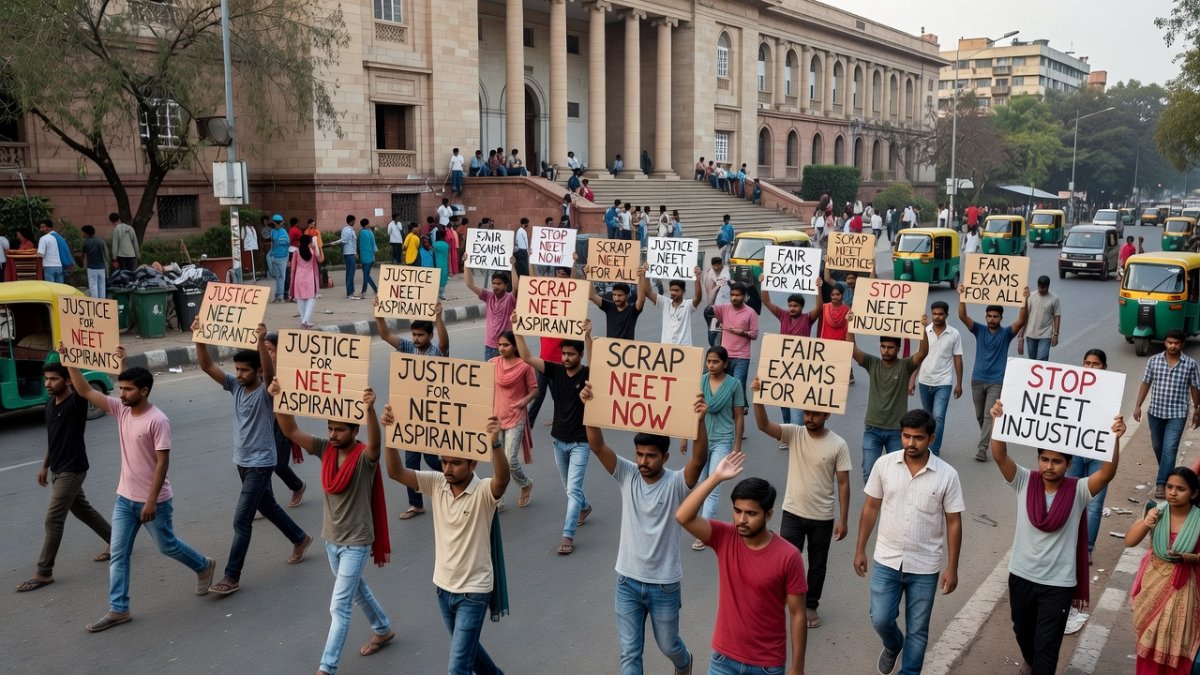
This incident follows the 2024 NEET controversy and has triggered nationwide protests, a CBI investigation ordered on May 12, 2026, and the formal cancellation of the exam. The fallout extends beyond examination halls into the very foundation of India's medical education pipeline, affecting future doctors who will staff AIIMS hospitals, primary health centres in Rajasthan's rural districts, and research institutions under the Indian Council of Medical Research (ICMR).
NEET UG 2026 Paper Leak: Systemic Collapse in Medical Entrance Testing Threatens India's Healthcare Future
New Delhi – June 8, 2026 — The cancellation of NEET UG 2026 has sent shockwaves through India's education and healthcare systems. With 2.27 million students affected, the leak of 140 exact questions has exposed vulnerabilities that reach from printing presses in Rajasthan and Kerala to examination centres in Delhi and Haryana. As the country prepares for a re-examination on June 21, questions about accountability at the NTA and the Education Ministry remain unanswered.
The Anatomy of the Breach: From Printing Press to WhatsApp Groups
The leak began at the printing-press stage, where internal lapses allowed the full question paper to escape secure channels. A 150-page document with 410 handwritten questions circulated on WhatsApp, achieving a 100 percent match in Chemistry and an overall 140-question overlap worth 600 marks. This level of precision indicates not random guessing but direct access by insiders. The trail ran from Rajasthan and Kerala printing facilities through networks in Delhi and Haryana, highlighting how geographic spread complicated early detection. Such a breach undermines the credibility of an exam that determines entry into MBBS seats at institutions like AIIMS New Delhi and medical colleges across Uttar Pradesh and Tamil Nadu.
Analysis of the leak's structure reveals deliberate targeting of high-weightage sections. Chemistry's complete match suggests the leaker possessed intimate knowledge of the paper-setting process. For 2.27 million aspirants, many from modest backgrounds in states like Bihar and Odisha, this represents not merely lost preparation time but a fundamental erosion of trust in merit-based selection. The incident forces a re-examination of how the NTA, tasked with conducting transparent national-level tests, failed at the most basic security checkpoint.
Investigation Unfolds: CBI Arrests and the NTA Insider Network
On May 12, 2026, the government ordered a CBI probe, leading to swift arrests. NTA-appointed chemistry lecturer PV Kulkarni, who had direct access to the exam paper, was detained along with accomplice Manisha Sanjay Waghmare. A physics expert from the NTA was later taken into custody, bringing the total to 11 arrests spanning Delhi, Pune, Jaipur, and Nashik. In Rajasthan alone, the Special Operations Group detained over 45 individuals linked to the distribution network. These arrests confirm an organised operation rather than isolated misconduct.
The involvement of NTA staff members points to systemic internal vulnerabilities. When those entrusted with paper security become participants in the leak, the entire examination architecture requires overhaul. For Indian taxpayers funding the NTA and for students investing years of preparation, these arrests represent both accountability and a stark reminder that institutional safeguards proved inadequate. The CBI's multi-state operation underscores the national security implications of compromised medical entrance processes.
Re-Examination Logistics: Air Force Deployment and Paper-Setter Lockdown
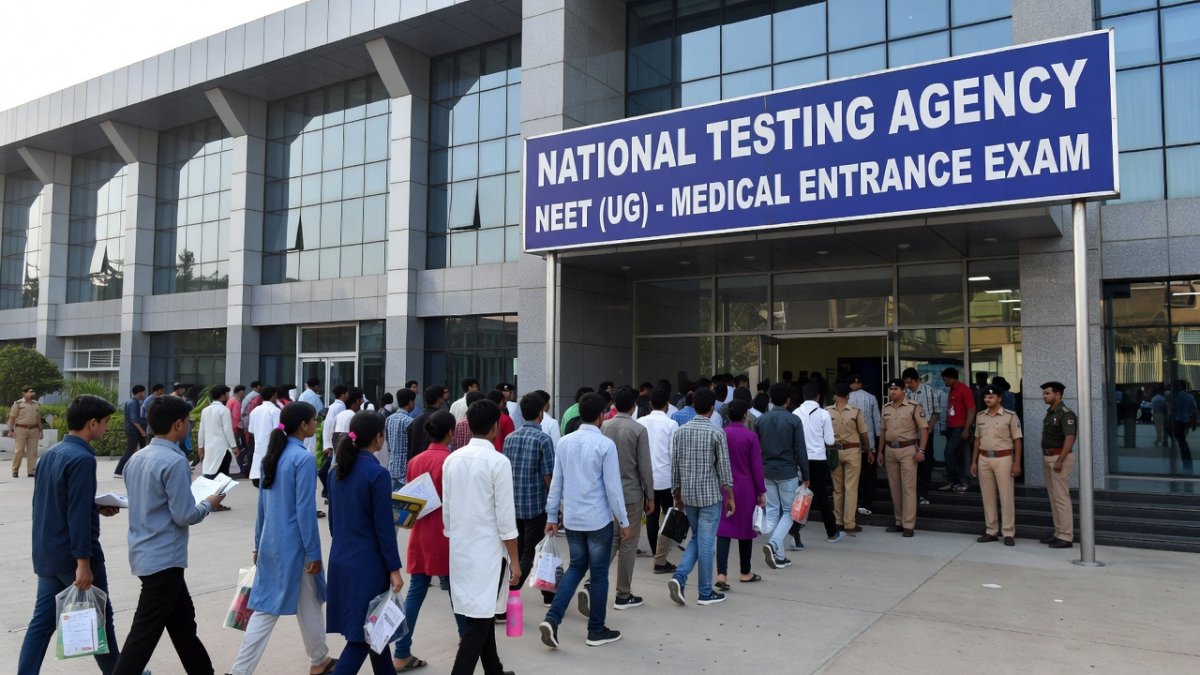
The NTA has scheduled the re-examination for June 21, 2026, in pen-and-paper mode from 2 PM to 5:15 PM across 551 Indian cities and 14 international centres. Existing registration data remains valid, fees have been refunded, and city intimation slips were released on June 7. The Indian Air Force has been tasked with secure transport of question papers, while paper setters remain in total lockdown without phones or internet access until the exam date. These extraordinary measures reflect the gravity of restoring public confidence.
Yet logistical challenges persist. Coordinating secure printing and distribution for 2.27 million candidates across diverse terrains — from the Northeast's remote districts to metropolitan hubs — demands precision. The decision to retain pen-and-paper format for 2026 while announcing a shift to Computer-Based Testing from 2027 introduces further complexity. Students, many already displaced from study routines, must now adapt once more, with implications for mental health and performance equity.
Political Fallout and Demands for Institutional Reform
Education Minister Dharmendra Pradhan faces intense scrutiny, with the INDIA bloc presenting a five-point action plan demanding his resignation. Massive student protests have erupted in Delhi, Mumbai, and other cities, echoing the 2024 NEET unrest. Petitions before the Supreme Court seek dissolution of the NTA, arguing that repeated failures necessitate an entirely new testing framework. These developments intersect with broader debates on education governance under the current administration.
The political dimension cannot be separated from healthcare outcomes. Delayed admissions mean postponed entry of new doctors into a system already strained by shortages in rural postings and specialist cadres. ICMR-linked research projects and AIIMS expansion plans depend on a steady pipeline of qualified graduates. When political accountability lags, the ultimate cost falls on patients awaiting improved medical services in underserved regions.
Transition to Computer-Based Testing: Opportunities and Risks
The NTA's announcement of a full shift to Computer-Based Testing from 2027 aims to reduce physical paper-handling vulnerabilities. Digital platforms could enable real-time monitoring and randomised question ordering, potentially curbing leaks of the scale seen in 2026. However, implementation across 551 cities requires robust infrastructure, reliable electricity, and equitable access for candidates from varying socioeconomic backgrounds.
States like Kerala and Rajasthan, already central to the leak investigation, will serve as testing grounds for the new system. Success hinges on addressing digital divides that could disadvantage aspirants from smaller towns. If executed effectively, CBT could restore credibility; if poorly managed, it risks new forms of technical manipulation and exclusion.
Long-Term Implications for Indian Medical Education and Public Health
The NEET UG 2026 cancellation disrupts the timeline for filling approximately 1 lakh MBBS seats nationwide. This delay cascades into postgraduate training and eventual deployment of physicians, directly affecting healthcare delivery metrics tracked by the Ministry of Health. Rural districts in states such as Madhya Pradesh and Jharkhand, already facing doctor shortages, will experience prolonged gaps in fresh recruitment.
Moreover, the episode erodes faith in competitive examinations that millions view as pathways out of poverty. When leaks favour those with access to insider networks, the principle of equal opportunity collapses. Future reforms must therefore combine technological upgrades with independent oversight mechanisms involving bodies like the ICMR and state health universities. Only then can the system safeguard both examination integrity and the quality of India's future medical workforce.
— By Dr. Raj Patel, Staff WriterThis article was produced with AI-assisted research and editorial support. Reporting is based on sources cited in the article.
What's Your Reaction?
 Like
0
Like
0
 Dislike
0
Dislike
0
 Love
0
Love
0
 Funny
0
Funny
0
 Wow
0
Wow
0
 Sad
0
Sad
0
 Angry
0
Angry
0

India/South Asia Correspondent at Global1.News. Analytical voice with a background in science and health journalism. Based in New Delhi, covering Indian politics, education, healthcare, technology, and policy. Breaks down complex data into clear, actionable reporting.













Comments (0)