
US-Iran War Escalates Sharply as CENTCOM Hits Multiple Iranian Targets on July 21
CENTCOM Presses 10th Night of Strikes on Key Iranian Sites As of July 21, 2026, US Central Command has launched what officials describe as the 10th consecutive night of airstrikes against Iranian territory.
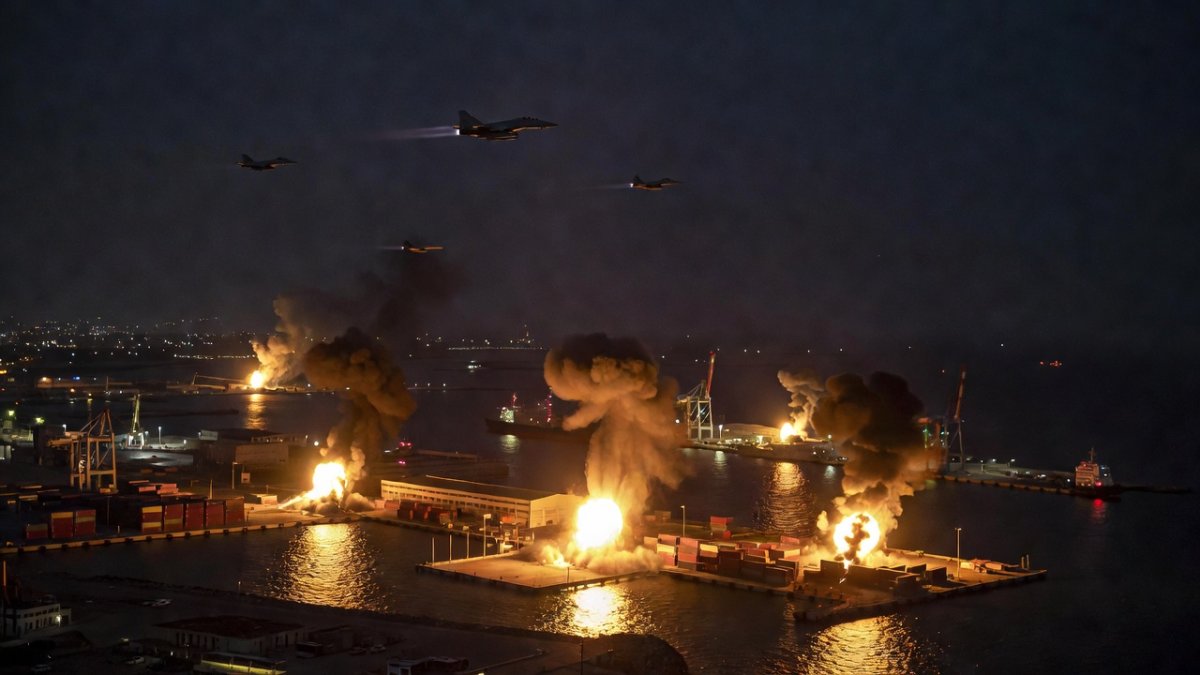
CENTCOM Presses 10th Night of Strikes on Key Iranian Sites
As of July 21, 2026, US Central Command has launched what officials describe as the 10th consecutive night of airstrikes against Iranian territory. The targets reportedly included Bandar Abbas, Qeshm Island, Chabahar, Konarak, Sirik, Bandar Lengeh, and Shiraz. These locations span critical coastal and inland infrastructure tied to Iran's military and logistics networks.
Pentagon briefings indicate the campaign follows the collapse of a ceasefire memorandum of understanding on July 8. That breakdown came after alleged Iranian strikes on commercial shipping in the Strait of Hormuz, prompting an immediate US response. CENTCOM has framed the ongoing operations as necessary to degrade Iran's ability to project power against American and partner forces in the region.
The intensity of the strikes marks a clear intensification from earlier phases of the conflict that began February 28. On that date, a joint US-Israeli air campaign killed several Iranian officials, including Supreme Leader Ali Khamenei. Since then, the fighting has expanded far beyond the initial exchanges.
Military analysts tracking open-source imagery note repeated hits on port facilities and air defense nodes. Yet officials have stopped short of claiming permanent degradation of Iran's overall capabilities, underscoring the cautious assessment required at this stage of the fighting.
Iranian Drones Target Kuwait While Jordan Attack Still Resonates
Iran responded on July 21 with drone attacks directed at US military facilities inside Kuwait. Sirens sounded across Kuwait City as air defenses activated. The incident adds another Gulf state to the expanding list of locations drawn into the direct crossfire.
This follows the deadly July 18 Iranian ballistic missile and drone barrage that killed two US service members in Jordan. One additional service member remains listed as missing in action after unidentified remains were later recovered. Four other personnel were evacuated to Jordanian hospitals for treatment.
President Masoud Pezeshkian addressed the nation and stated, "The reality is that today the Islamic Republic of Iran is engaged in a full-scale war" with the United States. He warned that Iran may have to endure further strikes while continuing its own retaliatory operations against American positions.
Since the US-Israeli campaign opened on February 28, Iran has mounted repeated attacks on US forces across the region. The July 18 deaths in Jordan prompted President Trump to vow retaliation, setting the stage for the current multi-night CENTCOM bombing series that began July 19.
Strait of Hormuz Sees Vessel Strike and Multiple Fires
A vessel transiting the Strait of Hormuz was struck by an unknown projectile off Oman's coast on July 21, according to the United Kingdom Maritime Trade Operations center. The impact sparked a fire aboard the ship. Separate reports confirmed multiple fires burning on both sides of the strategic waterway.
The strait remains the world's most critical chokepoint for energy shipments. US forces have trapped more than 1.5 million barrels of Iranian oil per day through interdiction and related measures. Earlier temporary closures by Iran had already driven oil prices higher, and the latest violence has renewed those pressures.
Qatar publicly blamed Iran after an LNG tanker was struck on July 7, an incident that helped unravel the short-lived ceasefire. Shipping companies are now rerouting or delaying transits, raising insurance costs and delivery timelines for global energy markets.
The combination of direct hits and fires has created a hazardous operating environment. Maritime authorities continue to issue warnings, yet commercial traffic has not fully halted, reflecting the economic stakes involved for all parties.
Houthis Declare Maritime Blockade on Saudi Arabia
In Yemen, Houthi forces declared a maritime blockade targeting Saudi Arabia and Red Sea shipping lanes through the Bab el-Mandeb strait. The move directly threatens the alternative export routes Saudi Arabia had used to bypass earlier disruptions in the Strait of Hormuz.
The Houthi announcement expands the geographic scope of the conflict and complicates coalition efforts to keep energy flowing. Red Sea traffic had offered a partial workaround for Gulf producers, but that corridor now faces heightened risk of attack.
Regional shipping data shows increased naval activity near Bab el-Mandeb as commercial operators assess the new threat. The declaration aligns with Iran's broader strategy of leveraging proxy forces to stretch US and partner defenses across multiple theaters.
Analysts note that any sustained interruption through both Hormuz and Bab el-Mandeb would represent a severe shock to global supply chains already strained by nearly five months of open conflict.
American Casualty Figures Climb Since Early July
Nearly 100 US troops have been injured since July 7, according to Pentagon figures. Of those, 96 percent have returned to duty. The two fatalities and one missing service member from the July 18 Jordan attack remain the most serious single-day losses reported in recent weeks.
Four personnel required evacuation to Jordanian medical facilities following that strike. The human cost has sharpened political debate in Washington over the trajectory of the war and the level of allied burden-sharing.
At the NATO Ankara Summit on July 8, President Trump publicly criticized allies for insufficient support of the campaign. That friction continues to color diplomatic discussions even as kinetic operations intensify.
Military families and veterans' groups have called for clearer communication on force protection measures. Officials emphasize that the majority of injured personnel have recovered quickly, yet the cumulative toll since the February 28 start of major combat remains a central concern.
Oil Prices Spike as Energy Markets Absorb Fresh Shocks
Brent crude surged 4.5 percent on the latest news, reaching a session high of $88.02 per barrel—the highest level in a month. Traders cited the combination of Hormuz fires, the vessel strike, and the Houthi Red Sea blockade as immediate drivers.
The US interdiction of more than 1.5 million barrels per day of Iranian oil has already tightened supply. Any further constriction through the strait or the Bab el-Mandeb would amplify upward pressure on prices and inflation risks worldwide.
Saudi Arabia's previous ability to shift some volumes via Red Sea ports is now in doubt. Energy ministries across Asia and Europe are monitoring inventories and contingency plans as the situation develops hour by hour.
Market participants remain focused on whether the current CENTCOM campaign will restore freedom of navigation or provoke additional Iranian and proxy responses that deepen the disruption.
Pezeshkian Frames Conflict as Existential Full-Scale War
Iranian President Masoud Pezeshkian's declaration that the Islamic Republic is engaged in a full-scale war with the United States marks a rhetorical escalation matching the military one. He acknowledged the possibility of enduring additional strikes while insisting on continued resistance.
The statement comes after months of tit-for-tat attacks that began with the February 28 US-Israeli operation. Iran has consistently portrayed its actions as defensive responses to what it calls aggression against its sovereignty and leadership.
US officials counter that Iranian attacks on American forces and commercial shipping left no choice but sustained military pressure. The July 8 ceasefire collapse, triggered by alleged Iranian hits on commercial vessels, is cited as proof that diplomatic pauses have failed.
Both sides appear locked into a cycle of action and reaction. Pezeshkian's words signal that Tehran sees no immediate off-ramp, raising the prospect of further nights of CENTCOM strikes and additional Iranian retaliatory attempts.
Five-Month Arc From February Strikes to July Bombing Campaign
The war's opening chapter on February 28 saw US and Israeli airstrikes eliminate key Iranian figures, including Supreme Leader Ali Khamenei. That operation shattered previous red lines and set the conditions for prolonged conflict.
A fragile ceasefire memorandum of understanding held briefly before collapsing on July 8 amid accusations that Iran struck commercial ships in the Strait of Hormuz. The US answered with renewed strikes, and the NATO Ankara Summit that same day exposed allied divisions when President Trump faulted partners for inadequate backing.
The July 18 Iranian attack in Jordan that killed two Americans and left one missing became the catalyst for the current 10-night CENTCOM offensive. By July 21 the campaign had already struck a wide array of Iranian coastal and inland targets while Iran and its partners answered with drones over Kuwait and a new Red Sea blockade.
As of this reporting, the trajectory remains sharply upward. With oil markets rattled, shipping lanes contested, and casualty counts rising, the coming days will test whether either side can impose costs sufficient to force a change in the other's calculus. Global1.News will continue tracking every development.
By Jessica Ali, Staff WriterThis article was produced with AI-assisted research and editorial support. Reporting is based on sources cited in the article.
What's Your Reaction?
 Like
0
Like
0
 Dislike
0
Dislike
0
 Love
0
Love
0
 Funny
0
Funny
0
 Wow
0
Wow
0
 Sad
0
Sad
0
 Angry
0
Angry
0

Editor-in-Chief at Global1.News. Atlanta-based journalist who cuts through the BS and tells it like it is. Lead anchor, host, and the voice you hear when the spin stops and the truth starts.













Comments (0)