
NASA Reveals Artemis III Crew — Meet the Four Astronauts Who Will Test Moon Landers in Earth Orbit
NASA Reveals Artemis III Crew — Meet the Four Astronauts Who Will Test Moon Landers in Earth Orbit The Big Reveal at Johnson Space Center Folks, if you blinked on June 9, 2026, you missed NASA dropping the hammer at 11 AM ET inside Johnson Space Center in Houston. Administrator Jared Isaacman — the former billionaire turned commercial astronaut confirmed back in December 2025 —
NASA Reveals Artemis III Crew — Meet the Four Astronauts Who Will Test Moon Landers in Earth Orbit
The Big Reveal at Johnson Space Center
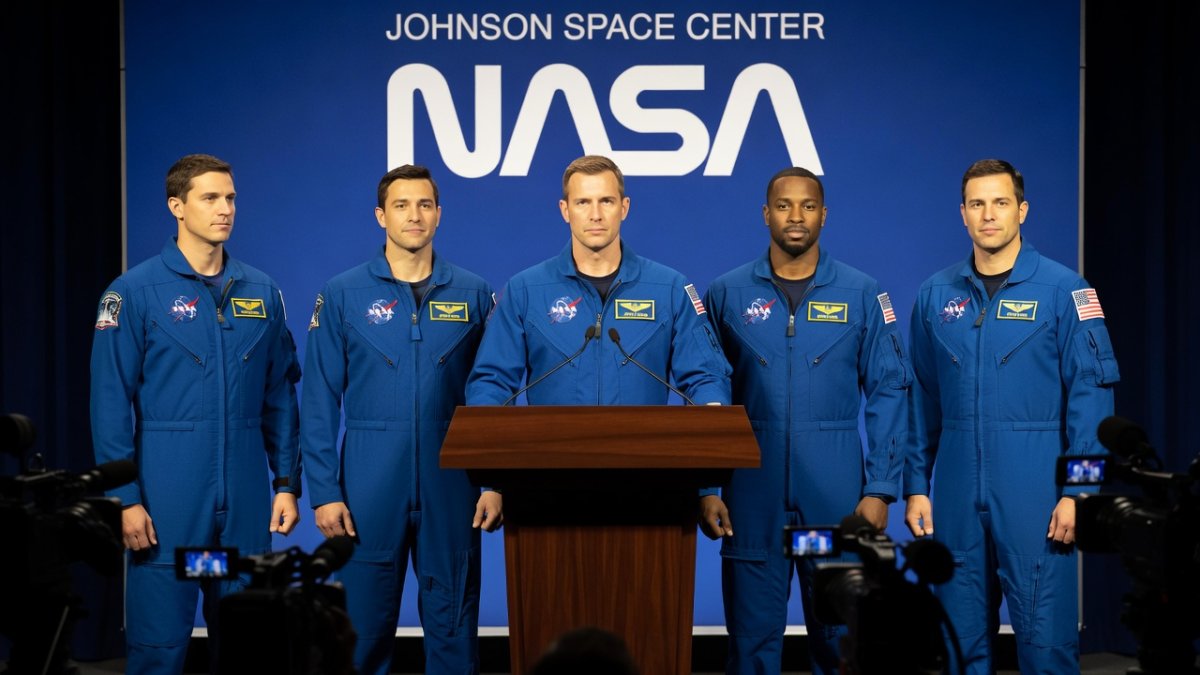
Folks, if you blinked on June 9, 2026, you missed NASA dropping the hammer at 11 AM ET inside Johnson Space Center in Houston. Administrator Jared Isaacman — the former billionaire turned commercial astronaut confirmed back in December 2025 — stepped to the podium and named the Artemis III crew. No fanfare fluff, just straight facts about four men who will fly the first crewed test of two competing lunar landers in Earth orbit.
This is not the Moon landing we were promised years ago. Isaacman revised the plan on February 27, 2026, pushing the first crewed lunar landing to Artemis IV in 2028. Artemis III now serves as the dress rehearsal, exactly like Apollo 9 tested the lunar module before Apollo 11 touched down. If you’re as fired up as I am about American space achievement, you already know the difference between hype and hardware. This announcement cut through the noise.
Who’s Suited Up for Artemis III
Commander Randy Bresnik, 58, NASA astronaut and former Marine TOPGUN fighter pilot, leads the crew. He logged 149 days in space across shuttle STS-129 and ISS Expedition 52/53. Pilot Luca Parmitano from the European Space Agency and Italian Space Agency brings more than 300 days in orbit and a background as an Italian Air Force pilot. Mission Specialists Andre Douglas and Frank Rubio round out the prime crew. Rubio, a trained physician, still holds NASA’s record for the longest single spaceflight at 371 days. Backup pilot Bob Hines stands ready if needed.
Every single one of these five astronauts is male. That marks a clear departure from Artemis II, which flew Christina Koch as the first woman beyond low Earth orbit. NASA made the call based on experience and mission requirements, not optics. Call it as you see it: the agency picked the roster that best matches the technical demands of testing rendezvous, docking, and the new Axiom AxEMU spacesuit.
Earth Orbit Only? The Mission Shift Explained
Artemis III will launch on the SLS rocket from Kennedy Space Center, target a late-2027 liftoff, and stay in Earth orbit the entire time. The crew will practice rendezvous and docking with both SpaceX’s Starship HLS and Blue Origin’s Blue Moon lander. They will also put the AxEMU suit through its paces. No lunar surface operations. That is the revised reality Isaacman laid out.
Some folks will call this a delay. Others will call it responsible engineering. Either way, the original lunar landing goal for Artemis III got moved because the hardware needed more checkout time. Isaacman did not sugarcoat it. He simply reset the timeline so the first boots on the Moon under Artemis happen on Artemis IV. That is the kind of straight talk we need from leadership instead of moving goalposts in secret.
Comparing to Apollo and Artemis II
Think Apollo 9. That 1969 mission stayed in Earth orbit to test the lunar module’s systems before the historic landing two flights later. Artemis III follows the same logic. Artemis II already proved the Orion spacecraft and SLS stack with a successful crewed Moon flyby in April 2026 — the first since Apollo 17 in 1972. Wiseman, Glover, Koch, and Hansen brought that vehicle home safely. Now Bresnik’s crew takes the next mechanical step.
The numbers matter. Parmitano’s 300-plus days in space and Rubio’s 371-day endurance record give this crew unmatched long-duration experience. Bresnik’s fighter-pilot pedigree and Douglas’s engineering background fill the remaining gaps. This is not a publicity flight. It is a systems-validation flight with real risk and real data on the line.
Isaacman’s Vision: Building Earth’s First Starfleet
Isaacman closed the announcement by calling Artemis “the very beginning of Earth’s first Starfleet.” Parmitano added his own measured words: “I’m honored by the role I have been given, and humbled by the task in front of us.” Those quotes landed because they came from people who have already flown and know what the hardware can and cannot do.
Atlanta has always cheered loud for American spaceflight, and this mission keeps that flame alive. But cheering does not replace scrutiny. The crew selection, the mission redesign, and the 2027 launch target all deserve the same hard look we give any other government program. Isaacman’s commercial background brings fresh pressure to deliver on schedule and under budget. Whether that pressure produces results or just new PowerPoint slides remains to be seen.
What This Means for You – Your Move
Artemis III is not the finish line. It is the next checkpoint before humans return to the lunar surface under American leadership. The five astronauts named today carry that responsibility. So do the engineers, the contractors, and the taxpayers funding the SLS, Orion, and the two landers.
If you want to stay in the loop, track the official NASA Artemis updates, follow the crew’s training milestones, and contact your representatives about sustained funding for the program. Spaceflight does not happen by accident. It happens when citizens demand competence and results. The Artemis III crew is ready. The question is whether the rest of the system is.
By Jessica Ali, Lead Anchor — Global 1 News
This article was produced with AI-assisted research and editorial support. Reporting is based on sources cited in the article.
What's Your Reaction?
 Like
0
Like
0
 Dislike
0
Dislike
0
 Love
0
Love
0
 Funny
0
Funny
0
 Wow
0
Wow
0
 Sad
0
Sad
0
 Angry
0
Angry
0

Editor-in-Chief at Global1.News. Atlanta-based journalist who cuts through the BS and tells it like it is. Lead anchor, host, and the voice you hear when the spin stops and the truth starts.















Comments (0)