
Mindanao Earthquake Destroys 1,462 Classrooms, Triggers Power Grid Crisis
The Quake That Hit Mindanao's Schools The magnitude 7.8 earthquake struck Mindanao with force that reached deep into barangay communities, where schools serve as the heart of daily learning and gathering. DepEd reported that in-person classes faced immediate disruption across several regions as buildings sustained heavy damage. Families in affected areas watched their children'
The Quake That Hit Mindanao's Schools
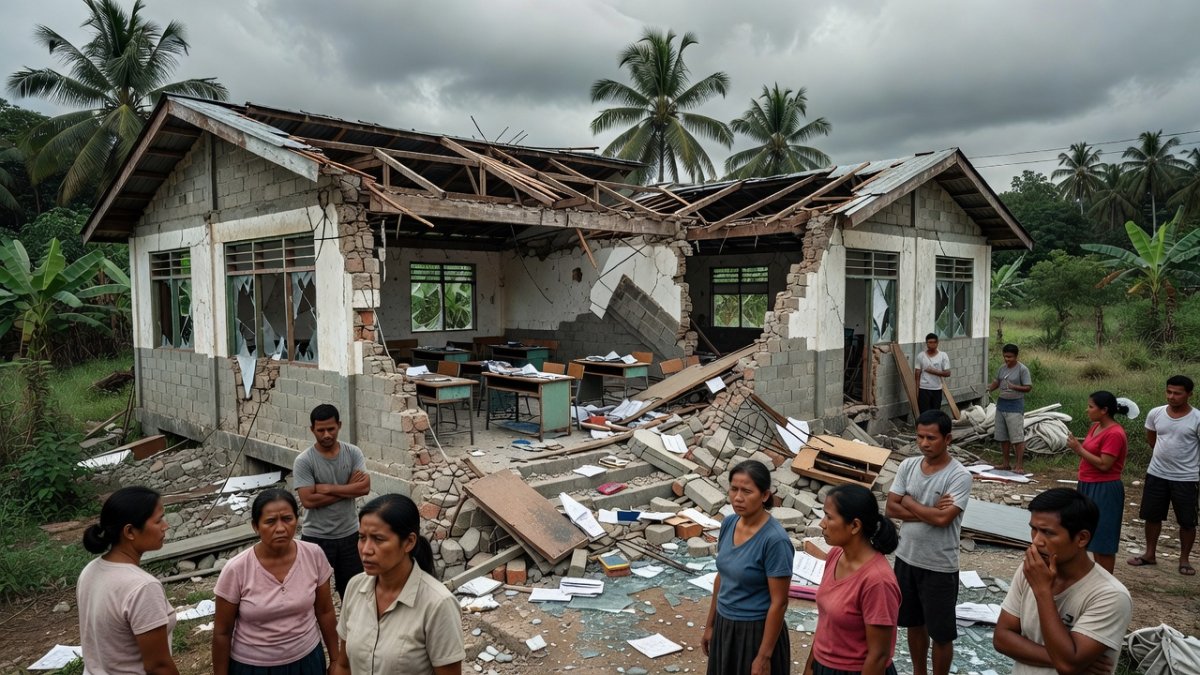
The magnitude 7.8 earthquake struck Mindanao with force that reached deep into barangay communities, where schools serve as the heart of daily learning and gathering. DepEd reported that in-person classes faced immediate disruption across several regions as buildings sustained heavy damage. Families in affected areas watched their children's classrooms crumble, leaving students without the familiar spaces where they once gathered for lessons and community events.
Local safety assessments began right away, with DepEd emphasizing that class suspension and resumption decisions rest on the condition of school facilities and coordination with LGUs and field offices. In many barangays, parents and teachers stood together assessing cracked walls and fallen ceilings, their voices carrying the weight of worry for the young ones whose routines had been upended overnight. The quake's reach extended beyond structures, touching the daily lives of OFW families who rely on stable education for their children back home.
DepEd noted that 4,364 classes remained suspended as of Wednesday, a figure that reflects the scale of the challenge in getting students back to learning. Barangay officials worked alongside DepEd personnel to check every corner of damaged schools, ensuring no child would return until safety was confirmed. This careful process highlights the shared commitment to protecting the next generation amid the aftershocks.
Communities felt the absence of school bells and playground laughter almost immediately, as the quake left behind scenes of scattered books and broken desks in once vibrant classrooms. LGUs stepped in to support temporary learning arrangements where possible, drawing on the spirit of bayanihan that has long defined Filipino responses to crisis. The focus remained on restoring normalcy for students whose futures depend on continued education.
1,462 Classrooms Lost and What That Means
At least 1,462 classrooms were destroyed by the magnitude 7.8 quake, a loss that strikes at the core of education access in Mindanao barangays. DepEd figures also show 1,442 classrooms with major damage and 4,398 with minor damage, alongside 146 school facilities affected overall. These numbers translate into thousands of students without proper places to study, forcing families to consider how learning will continue in the weeks ahead.
The destruction means more than lost buildings; it represents interrupted dreams for children in rural areas where schools often double as community centers. OFW families sending remittances home now face added uncertainty about their children's schooling, as the quake compounded existing challenges in remote provinces. DepEd continues to coordinate with LGUs to prioritize repairs based on safety assessments.
With 1,022 schools reporting damage across five regions, the impact spreads through daily routines that once centered on classroom time. Teachers find themselves adapting lessons in open spaces or makeshift areas while waiting for structural evaluations. The human cost appears in the quiet conversations between parents and educators about keeping education alive despite the rubble.
Bayanihan efforts have already begun in some barangays, where residents gather to clear debris from school grounds and support one another through the uncertainty. DepEd's guidance on class resumption underscores the need for patience and thorough checks with local authorities. This measured approach aims to protect students while acknowledging the deep disruption felt by entire communities.
Five Regions Affected — Province by Province
The earthquake damaged schools across five regions, with province-level breakdowns revealing the widespread reach into Mindanao communities. South Cotabato recorded damage in 194 schools, while North Cotabato saw 172 schools affected, according to DepEd data. These figures illustrate how the quake touched both urban centers and remote barangays, leaving LGUs to manage recovery alongside DepEd field offices.
Sultan Kudarat reported 157 schools with damage, and Sarangani followed with 120, each province facing unique challenges in restoring facilities for students. Davao Occidental listed 101 affected schools, Davao del Sur 94, Davao del Norte 47, and Compostela Valley 43. Families in these areas, including those with OFW relatives abroad, now navigate the added strain of disrupted education.
Coordination between DepEd and LGUs has become essential in each province, as safety assessments determine when classes can safely resume. The varied numbers reflect differences in school density and building conditions across the regions. Barangay leaders play a key role in relaying local needs to higher authorities during this period.
Students and teachers across these provinces share stories of sudden evacuations and the loss of familiar learning environments. The total of 1,022 damaged schools underscores the collective effort required to rebuild. DepEd continues monitoring conditions to guide resumption decisions in partnership with affected communities.
Teachers, Students, and Families Left Waiting
Teachers in damaged Mindanao schools stand ready yet uncertain, as DepEd implements class suspensions based on facility conditions and LGU coordination. Students wait at home or in temporary shelters, their lessons paused while assessments continue. Families, many with OFW members sending support from overseas, feel the weight of this delay on their children's progress.
The 4,364 suspended classes represent daily interactions that once built knowledge and community bonds in barangay schools. Parents gather in small groups to discuss how to keep children engaged, drawing strength from bayanihan traditions that encourage mutual aid. DepEd's statements reassure that resumption will follow thorough safety checks.
Local government units work closely with DepEd field offices to evaluate each site, ensuring no rushed decisions put students at risk. In the meantime, teachers prepare alternative plans, often reaching out to families through simple community networks. The waiting period tests the resilience of everyone involved in the education system.
OFW families express concern through messages home, hoping for quick restoration of classrooms that anchor their children's futures. The human stories emerging from this period highlight patience and quiet determination amid the quake's aftermath. DepEd remains focused on balancing safety with the need to return to learning as soon as possible.
The Power Grid Collapse — Mindanao Under Yellow Alert
The magnitude 7.8 earthquake triggered a yellow alert on the Mindanao grid, where available capacity stood at 2,731 MW against a peak demand of 2,611 MW. NGCP spokesperson Mae Curiano explained that forced outages stemmed directly from quake damage to multiple coal units and other facilities. Twelve power plants went offline, while 33 others operated at derated capacities, leaving 1,259.9 MW unavailable.
Barangay households felt the immediate effects as lights flickered and appliances stopped, disrupting evening routines that families depend on after long days. LGUs coordinated with power authorities to manage the shortfall, urging conservation during the alert period. The situation added pressure to communities already dealing with school damage and other quake impacts.
OFW families back home adjusted to limited electricity, finding ways to stretch resources while waiting for grid stability. The yellow alert status reflects ongoing efforts to restore full operations, with NGCP monitoring every plant affected by the seismic event. Daily life in affected provinces slowed as residents adapted to the reduced supply.
Power interruptions compounded challenges for local businesses and services tied to education and community support. DepEd offices in the regions also navigated these outages while coordinating recovery plans. The grid's vulnerability became clear as the quake exposed weaknesses in the system's infrastructure.
Visayas Feels the Ripple — Surging Power Costs
The Mindanao earthquake sent ripples to the Visayas grid, which entered red alert with 25 plants on forced outage. Rates surged 38.5 percent to P7.79 per kWh, according to IEMOP VP Isidro Cacho Jr., who noted that summer heat had already driven up demand before the additional strain. This increase affects households and small enterprises across the region.
Families in Visayas barangays now face higher electricity bills at a time when many support relatives in quake-hit Mindanao areas. The red alert status highlights the interconnected nature of the national grid, where disruptions in one area influence costs elsewhere. LGUs in Visayas have begun advising residents on energy-saving measures during peak hours.
OFW families experience the pinch through remittances that must now cover elevated utility expenses alongside other needs. The surge in rates comes as communities elsewhere rebuild, creating a broader economic ripple from the original seismic event. Power authorities continue working to bring plants back online and stabilize supply.
Daily consumption patterns shifted as households turned off non-essential lights and appliances to manage costs. The 38.5 percent jump underscores how natural disasters can extend their influence far beyond the epicenter. Coordination between grids remains vital to easing the burden on consumers.
Daily Life Disrupted — Sari-Sari Stores and Jeepney Drivers
Sari-sari stores in Mindanao barangays struggled with power outages following the yellow alert, as refrigeration for basic goods became unreliable during the grid strain. Jeepney drivers navigated darkened routes and higher fuel costs tied to the Visayas rate surge, affecting their ability to earn steady income. These small disruptions ripple through communities already coping with school damage.
Store owners adapted by stocking fewer perishable items and relying on daylight hours for sales, while families adjusted shopping habits to match available power. Jeepney operators shared stories of longer waits at terminals as demand patterns changed amid the alerts. LGUs offered support where possible to keep local transport running.
OFW families sending money home noticed the strain on household budgets, with sari-sari store purchases and jeepney fares becoming more expensive under the new conditions. Bayanihan spirit appeared as neighbors helped one another restock or share rides during the difficult period. The earthquake's power impact touched these everyday livelihoods directly.
Drivers and storekeepers alike expressed hope for grid recovery, knowing their work supports the broader community recovery. DepEd-related activities in the area also felt indirect effects from these daily challenges. The human stories from sari-sari stores and jeepney lines reveal resilience amid ongoing adjustments.
Bayanihan in Action — Communities Rebuilding Together
Bayanihan has come alive in quake-affected Mindanao barangays, where residents join forces to clear debris from damaged schools and support one another through power shortages. LGUs coordinate with DepEd to assess facilities while community members volunteer time and resources for temporary solutions. This collective spirit helps ease the burden on families waiting for classes to resume.
OFW families contribute through remittances that fund local rebuilding efforts, strengthening ties between those abroad and neighbors at home. Sari-sari store owners and jeepney drivers participate by offering what they can during the yellow alert period, keeping essential services accessible. The 1,462 destroyed classrooms become a shared focus for recovery.
DepEd's ongoing coordination with field offices and LGUs benefits from this grassroots involvement, as barangay volunteers assist in safety checks and cleanup. The power grid challenges in Mindanao and Visayas further test community bonds, yet residents respond with practical help and encouragement. Stories of neighbors sharing generators or pooling transport highlight the enduring value of bayanihan.
Teachers and students join these efforts where possible, turning waiting time into opportunities for community strengthening. The combined impacts on education and power supply draw out the best in local responses across the five regions. Through it all, the focus remains on restoring stability for the next generation.
By Bella Reyes, Staff WriterThis article was produced with AI-assisted research and editorial support. Reporting is based on sources cited in the article.
What's Your Reaction?
 Like
0
Like
0
 Dislike
0
Dislike
0
 Love
0
Love
0
 Funny
0
Funny
0
 Wow
0
Wow
0
 Sad
0
Sad
0
 Angry
0
Angry
0

Philippines/Southeast Asia Correspondent at Global1.News. Manila-based journalist covering Philippine politics, environment, maritime security, and social issues. Passionate about marine conservation and the communities protecting the Philippines' natural heritage.















Comments (0)