
South Korea 2026 World Cup: Sports Diplomacy and Soft Power
South Korea 2026 World Cup: Sports Diplomacy and Soft Power An academic analysis of how South Korea leverages the 2026 FIFA World Cup for sports diplomacy, Hallyu integration, and national branding across Group A matches and Latin American engagement. ** South Korea enters the 2026 FIFA World Cup with a deliberate foreign-policy objective that extends well beyond athletic resul
South Korea enters the 2026 FIFA World Cup with a deliberate foreign-policy objective that extends well beyond athletic results. The tournament's expanded 48-team format and its distribution across three North American hosts create a structured platform for the Republic of Korea to project influence in regions where traditional diplomatic instruments have reached limits. Scheduled matches in Guadalajara, Monterrey, and additional venues place Korean representatives in sustained contact with Mexican institutions, Central American audiences, and a sizable Korean diaspora community.
Sports Diplomacy as Foreign Policy
Sports diplomacy constitutes the deliberate use of athletic events and athlete mobility to advance state interests when conventional channels face constraints. South Korea has employed this instrument since the late 1980s, treating major tournaments as extensions of foreign ministry outreach rather than isolated sporting occasions. The Ministry of Foreign Affairs routinely coordinates with the Korea Football Association to embed cultural and economic messaging within team activities. Historical precedent includes the 1988 Seoul Olympics, which served as the first large-scale international event after democratization and helped normalize relations with Eastern European states still under communist governance.
Policy documents from the Presidential Committee on Sports Diplomacy, established in 2019, explicitly list World Cup participation among instruments for middle-power diplomacy. These documents reference Joseph Nye's soft-power framework and adapt it to Korean conditions, emphasizing the combination of technological achievement, popular culture, and disciplined athletic performance. In the 2026 cycle, the government has allocated supplementary budget lines for public-diplomacy programming tied directly to the three Group A fixtures, indicating that the tournament is treated as a scheduled foreign-policy deployment rather than an ad-hoc opportunity.
The 1988 Olympics and 2002 World Cup Legacy
The 1988 Seoul Olympics marked South Korea's emergence from authoritarian rule and established a template for subsequent mega-event strategy. Hosting 13,000 athletes from 160 nations allowed the newly elected Roh Tae-woo administration to demonstrate institutional stability to Western capitals still uncertain about the durability of Korean democracy. Economic data from the period show a 12 percent rise in foreign direct investment inflows in the two years following the Games, a correlation frequently cited in later government white papers.
The 2002 FIFA World Cup, co-hosted with Japan, extended this model into Northeast Asian regional diplomacy. Despite historical tensions, joint organizational structures required sustained bureaucratic cooperation between Seoul and Tokyo. South Korea's fourth-place finish, achieved under coach Guus Hiddink with Hong Myung-bo as captain, generated measurable increases in national-brand metrics tracked by the Korea Development Institute. These two events created an institutional memory within the foreign service that treats World Cup cycles as predictable windows for calibrated international messaging, a memory now activated for 2026.
Group A Geopolitical Significance
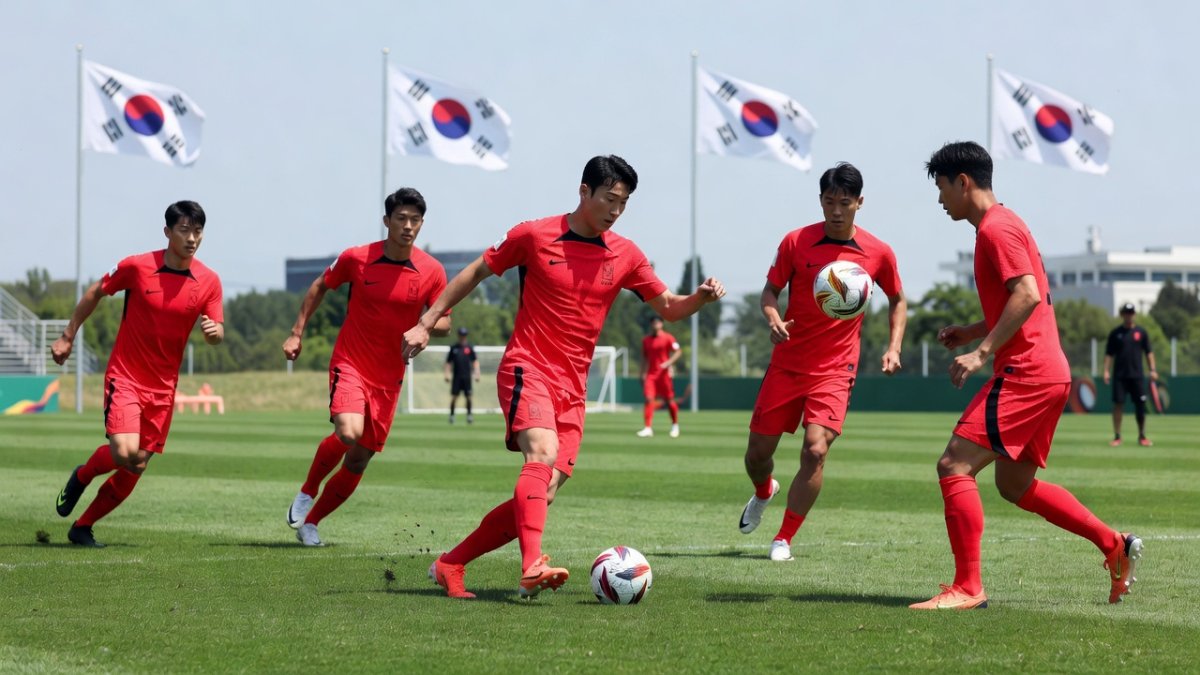
Group A places South Korea in direct sporting and diplomatic proximity to Mexico, Czechia, and South Africa. The June 12 fixture against Czechia in Guadalajara opens the campaign in a European Union member state whose defense industry has supplied components for Korean fighter-jet programs. The June 18 match against co-host Mexico at Estadio BBVA in Monterrey occurs in the industrial heartland of bilateral trade. The June 25 encounter with South Africa in Estadio Monterrey returns the team to a country whose post-apartheid transition South Korea studied closely during its own democratization.
Each opponent carries distinct diplomatic weight. Czechia represents an entry point for renewed engagement with Central Europe after pandemic-era disruptions. South Africa offers a platform for trilateral cooperation with African Union institutions on green-hydrogen supply chains. Mexico functions as the primary node for Latin American outreach. The Ministry of Foreign Affairs has therefore instructed embassies in Prague, Pretoria, and Mexico City to synchronize cultural programming with match dates, converting the group stage into a sequenced diplomatic itinerary.
ROK-Mexico Bilateral Relations
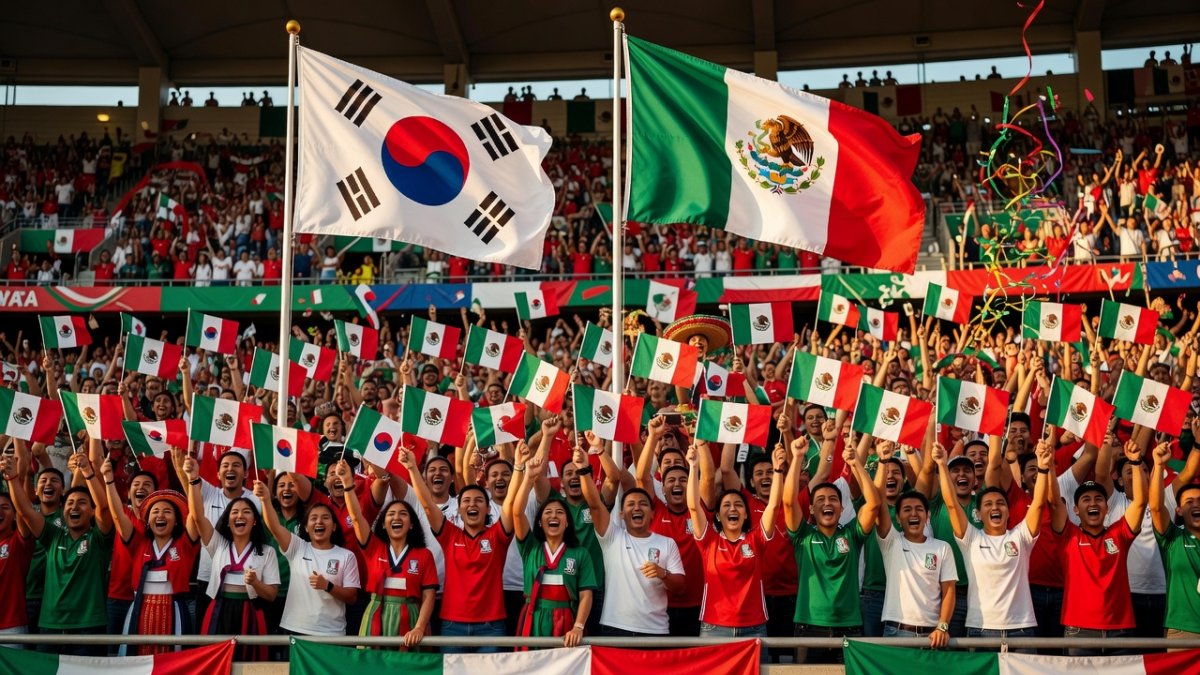
Diplomatic relations between the Republic of Korea and Mexico date to 1905, when the Korean Empire established formal contact through third-party legations. Contemporary trade exceeds 15 billion dollars annually, concentrated in automobiles, semiconductors, and petrochemicals. The 2019 modernization of the Korea-Mexico Free Trade Agreement expanded coverage to digital services and intellectual-property protections, reflecting both economies' shift toward high-value exports.
Mexico hosts the largest Korean diaspora community in Latin America, numbering more than 12,000 residents concentrated in Mexico City, Monterrey, and Guadalajara. These communities maintain active chambers of commerce that facilitate business matchmaking during tournament periods. The Korean Embassy in Mexico City has scheduled a series of alumni forums and technology exhibitions timed to coincide with the national team's presence, converting the June 18 match into a focal point for commercial diplomacy. Historical memory of the 1905 opening and the subsequent century of migration supplies narrative continuity that Mexican officials routinely acknowledge in joint statements.
Hallyu-Sports Integration
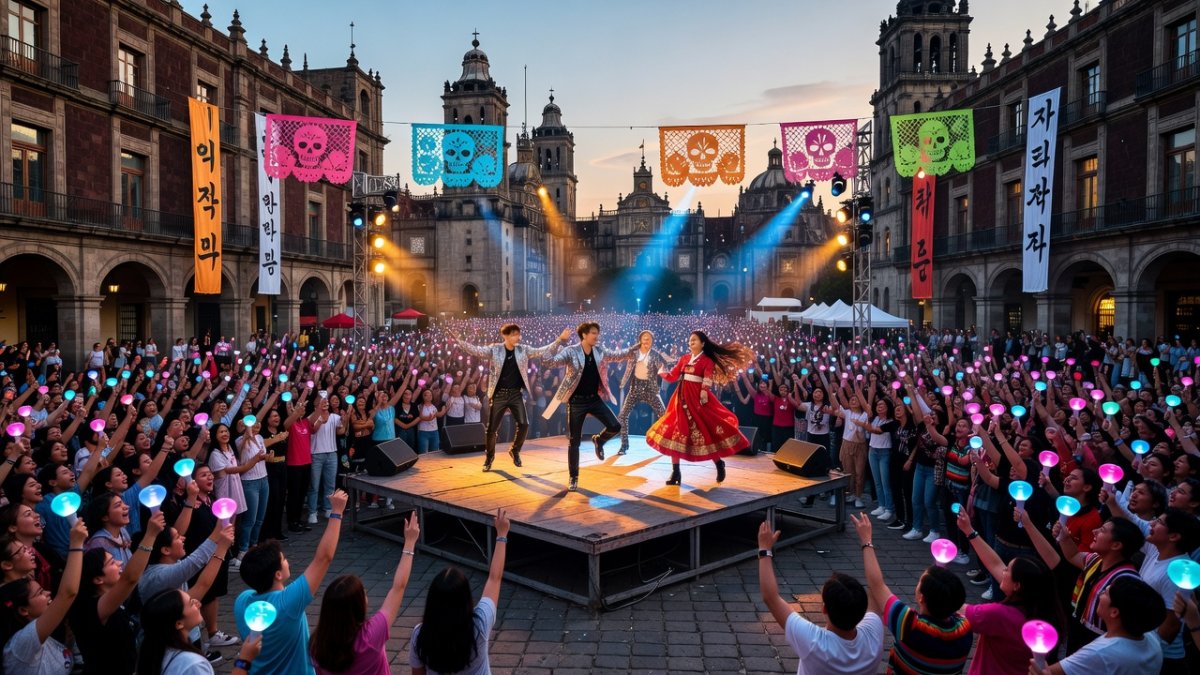
The Korean Wave supplies the cultural substrate for athletic diplomacy. Government agencies have institutionalized coordination between the Ministry of Culture, Sports and Tourism and the Korea Football Association since 2013. For 2026, K-pop acts aespa and Kwon Eun-bi have been designated as official supporters and will perform in Monterrey and Guadalajara, extending the reach of Korean popular culture into Mexican youth demographics. These performances are budgeted under the "Global Hallyu 2030" initiative, which tracks audience engagement metrics across 40 countries.
Integration extends beyond performances. Match broadcasts on Mexican streaming platforms include Korean-language commentary segments produced in partnership with the Korea Tourism Organization, directing viewers to specialized content on Korean food, technology, and higher education. Data from the 2022 Qatar World Cup showed a 34 percent increase in Mexican streaming searches for Korean cultural products during Korea's matches; planners expect comparable or higher conversion rates in 2026 given the larger Mexican audience base.
Players as Ambassadors
Individual athletes function as distributed diplomatic assets. Captain Son Heung-min, based at LAFC in Major League Soccer, already operates within North American media markets and maintains fluency in English and Spanish-language interviews. Kim Min-jae at Bayern Munich provides access to German industrial networks, while Lee Kang-in at Paris Saint-Germain engages French-speaking African diplomatic circles. Hwang Hee-chan at Wolverhampton Wanderers sustains visibility in the United Kingdom, a key partner in defense and financial-services cooperation.
The foreign ministry maintains a quiet liaison program that briefs national-team players on country-specific talking points before departure. Briefings cover trade statistics, diaspora concerns, and current bilateral priorities. This practice, refined after the 2018 and 2022 tournaments, treats players as adjunct public-diplomacy officers whose off-field statements receive as much scrutiny as on-field results.
Inter-Korean Legitimacy Competition
World Cup performance continues to serve as an arena for legitimacy competition between Seoul and Pyongyang. North Korea's participation in earlier qualification cycles and its selective engagement with international sports federations demonstrate parallel use of athletic events for regime signaling. South Korean policymakers therefore monitor comparative media coverage and audience reception metrics in third countries, particularly in the Global South, where both Koreas maintain development-assistance programs.
Historical data from the 1966 and 2010 World Cups indicate that North Korean results generated temporary spikes in international attention that Seoul sought to counter through sustained cultural programming. The 2026 tournament's expanded format increases the number of matches available for such comparative observation, prompting the Presidential Committee to allocate additional resources for real-time public-diplomacy responses in host cities.
Latin America Strategy
Beyond Mexico, South Korea has pursued a multi-year diplomatic offensive across Latin America that treats the 2026 World Cup as an accelerant rather than an isolated event. The Korea-Latin America and Caribbean Cooperation Forum, launched in 2021, identified sports and cultural exchange as priority pillars. Embassies in Brazil, Chile, and Colombia have received instructions to replicate elements of the Mexican program, including diaspora outreach and K-pop collaborations timed to Korean matches.
Trade figures underscore the stakes: Korean exports to the region surpassed 48 billion dollars in 2024, with electric-vehicle batteries and 5G infrastructure forming the fastest-growing categories. World Cup visibility is expected to support ongoing negotiations for expanded free-trade agreements with Mercosur members. By anchoring cultural programming to concrete commercial objectives, Seoul converts the tournament into a force multiplier for an established regional strategy rather than a standalone publicity exercise.
By Prof. David Park, Staff Writer
This article was produced with AI-assisted research and editorial support. Reporting is based on sources cited in the article.
What's Your Reaction?
 Like
0
Like
0
 Dislike
0
Dislike
0
 Love
0
Love
0
 Funny
0
Funny
0
 Wow
0
Wow
0
 Sad
0
Sad
0
 Angry
0
Angry
0
East Asia/Technology Correspondent at Global1.News. Seoul-based voice covering Korean politics, technology, business, and culture. Analyzes how technology and geopolitics intersect across East Asia.










Comments (0)