
China Test-Fires Nuclear-Capable Missile Into the Pacific — Regional Allies Sound the Alarm
China Test-Fires Nuclear-Capable Missile Into the Pacific — Regional Allies Sound the Alarm Atlanta, GA — China launched a submarine-launched ballistic missile from a nuclear-powered submarine into the Pacific Ocean on Monday, triggering sharp condemnation from Australia, New Zealand, and Japan. The test marks Beijing's first publicly acknowledged strategic submarine missile la
China Test-Fires Nuclear-Capable Missile Into the Pacific — Regional Allies Sound the Alarm
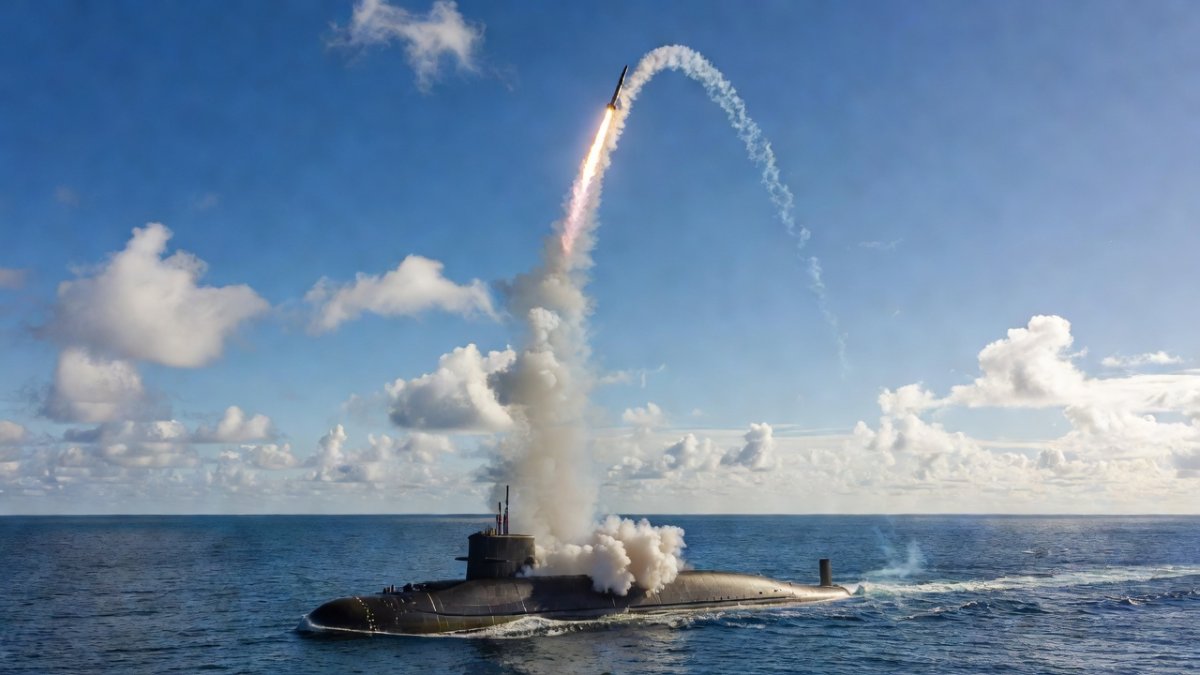
Atlanta, GA — China launched a submarine-launched ballistic missile from a nuclear-powered submarine into the Pacific Ocean on Monday, triggering sharp condemnation from Australia, New Zealand, and Japan. The test marks Beijing's first publicly acknowledged strategic submarine missile launch into those waters — a major step in its nuclear deterrence capabilities.
According to reports from CNN, The New York Times, the Associated Press, and USNI News, the People's Liberation Army Navy fired the missile from a nuclear submarine operating in the South China Sea, sending a mock warhead into a designated impact zone in the Pacific.
Details of the Launch
PLA Navy spokesperson Senior Captain Wang Xuemeng confirmed in a statement that at 12:01 p.m. local time on Monday, a Chinese strategic nuclear submarine successfully launched a submarine-launched strategic missile carrying a training simulated warhead into high-seas waters of the Pacific Ocean. The missile, he said, accurately landed in the predetermined sea area, as reported by Xinhua, China's official news agency.
Military analysts identified the weapon as likely the JL-3 (Julang-3) submarine-launched ballistic missile — China's newest sea-based nuclear deterrent. With an estimated range exceeding 10,000 kilometers, the JL-3 is capable of reaching the continental United States from launch positions in the South China Sea or western Pacific, according to assessments from the Pentagon's China Military Power Report and independent defense analysts.
The test coincided with the start of China's annual joint naval exercise with Russia, marking a deliberate demonstration of Beijing's expanding military cooperation with Moscow, multiple news outlets reported.
Regional Response
Australia led the diplomatic response, with Prime Minister Anthony Albanese's administration characterizing the launch as "destabilizing" and expressing serious concern about a nuclear-capable missile test in the South Pacific, reported ABC Australia and Al Jazeera.
New Zealand's Foreign Minister Winston Peters stated that China's actions threatened peace and stability in the region, according to CNN. For a nation operating under a nuclear-free zone policy, a Chinese ballistic missile impact in nearby Pacific waters represents a direct challenge to Wellington's long-standing security framework.
Japan's Chief Cabinet Secretary Yoshimasa Hayashi confirmed that Tokyo lodged a formal protest through diplomatic channels, adding that Japan was coordinating with the United States and other allies on the appropriate response, according to Stars and Stripes.
The United States State Department expressed concern about the test and called for greater transparency from Beijing regarding its strategic weapons programs. The Pentagon confirmed it was monitoring the situation but declined to discuss operational details.
What This Means for Pacific Security
China has been developing a nuclear triad — land-based missiles, bomber aircraft, and submarine-launched weapons — for over a decade. The submarine leg is the most technically demanding and strategically significant component, because a nuclear submarine is virtually undetectable once submerged.
With a demonstrated SLBM capability reaching across the Pacific, Beijing has achieved what military analysts describe as a credible sea-based second-strike deterrent. In practical terms, this means that even if a first strike eliminated China's land-based missiles, its submarines could retaliate — the same doctrine that has underpinned US and Russian nuclear strategy for decades.
The Pentagon's most recent China Military Power Report estimated that Beijing could deploy 1,000 operational nuclear warheads by 2030. Tests like Monday's validate the delivery systems for those warheads and signal China's transition from a minimum deterrent posture to a full-spectrum nuclear power.
Wider Geopolitical Context
Monday's missile test did not occur in isolation. It follows a series of escalating tensions across the Indo-Pacific region:
Australia recently signed additional defense cooperation agreements with Pacific Island nations, part of an ongoing effort through the AUKUS pact to counter Chinese influence in the region. The United States has been reinforcing its military presence in Guam and the Northern Mariana Islands, constructing hardened bunkers and missile defense systems designed to withstand Chinese ballistic missile attacks.
The Philippines, a US treaty ally, remains engaged in an escalating confrontation with Chinese coast guard vessels in the South China Sea around the Second Thomas Shoal. Japan is undertaking its largest military buildup since World War II, citing China as its primary security concern.
Against this backdrop, a live-fire SLBM test into international waters of the South Pacific — conducted on the same day as joint exercises with Russia — sends an unmistakable signal of Beijing's strategic posture.
Next Steps
Several developments are expected in the coming days and weeks:
Australia and New Zealand are expected to coordinate a joint diplomatic response. The Pacific Islands Forum will likely issue a statement reflecting deep unease among smaller regional nations. Discussions about accelerating missile defense deployments in Guam, Australia, and potentially Japan are expected to intensify following the test.
At the United Nations Security Council, the test is likely to generate debate — though China's permanent veto prevents formal condemnation. Russia is expected to back Beijing's position, while the UK and France will express concern and push for greater transparency under existing arms control frameworks.
The Biden administration may use the test as renewed justification for accelerating AUKUS submarine deliveries to Australia and strengthening the rotational deployment of US Navy assets in the region.
The Bottom Line
China demonstrated Monday that its submarines can launch a strategic ballistic missile across the Pacific and hit a designated target with precision. The international response — from Australia, New Zealand, Japan, and the United States — was swift and unequivocal.
This is not posturing. This is a nuclear-armed superpower validating its ability to strike across the world's largest ocean. The Indo-Pacific security landscape just shifted, and the countries in the region are responding accordingly.
Stay informed. Stay vigilant. Call your representatives and ask what steps they are supporting to address the growing missile threat in the Indo-Pacific.
By Jessica Ali, Lead Anchor – Global 1 News
This article was produced with AI-assisted research and editorial support. Reporting is based on sources cited in the article.
What's Your Reaction?
 Like
0
Like
0
 Dislike
0
Dislike
0
 Love
0
Love
0
 Funny
0
Funny
0
 Wow
0
Wow
0
 Sad
0
Sad
0
 Angry
0
Angry
0

Editor-in-Chief at Global1.News. Atlanta-based journalist who cuts through the BS and tells it like it is. Lead anchor, host, and the voice you hear when the spin stops and the truth starts.














Comments (0)