
Markos Abaye's Chicken: A Story of Compassion in Rural Ethiopia
At Denbecha Primary Hospital in Ethiopia's Amhara region, a quiet Thursday morning turned into an unforgettable scene when 12-year-old Markos Abaye walked through the doors cradling a sick chicken in his arms. The boy approached the front desk with a look of genuine distress, his feathered friend wheezing softly against his chest. Nurse Umer Chane looked up from her work and re
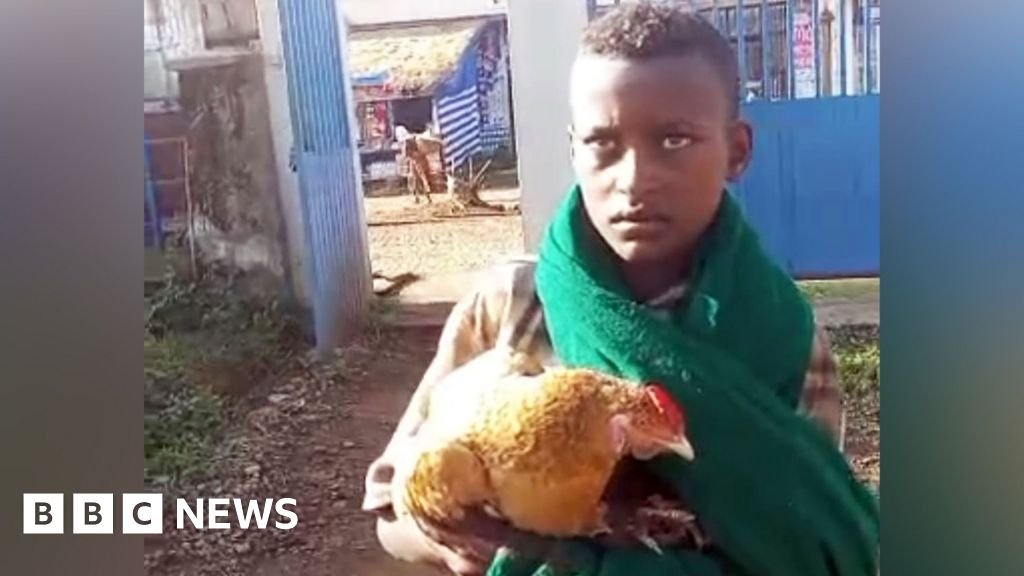
At Denbecha Primary Hospital in Ethiopia's Amhara region, a quiet Thursday morning turned into an unforgettable scene when 12-year-old Markos Abaye walked through the doors cradling a sick chicken in his arms. The boy approached the front desk with a look of genuine distress, his feathered friend wheezing softly against his chest. Nurse Umer Chane looked up from her work and recognised immediately that this was not an ordinary consultation.
"She is wheezing," Markos told the nurse, his voice carrying the weight of genuine fear for his beloved hen. Nurse Chane responded with remarkable gentleness: "Listen, there are doctors who treat animals. You have to take her there. This is a hospital for humans. Okay, dear?" Rather than turning the boy away with impatience, she took out her phone and recorded the moment — a decision that would soon introduce Markos and his chicken to hundreds of thousands of people across Ethiopia and beyond.
The video, shared on TikTok, racked up more than 770,000 views. Viewers across the country were struck by the boy's earnest compassion and the nurse's tender handling of the situation. What could have been a moment of embarrassment for Markos instead became a story beloved by a nation.
Markos Abaye at Denbecha Primary Hospital with his chicken (Source: Umer Chane/BBC)
From Conflict to a New Home
To understand why a chicken means so much to Markos, one must understand the circumstances that brought him to his uncle's home in Denbecha. In August 2023, conflict erupted in Ethiopia's Amhara region as the national army began fighting local militias known as Fano. The violence upended countless lives, including Markos's. His grandparents, who had been caring for him, began to fear for his safety amid the escalating unrest.
They made the difficult decision to send their grandson to live with his uncle, Kelemework Amogne, in a safer area. As a parting gift — something to comfort him in his new surroundings — they gave Markos a chicken. That single bird became more than just a pet. It became a living thread connecting him to the home and family he had left behind, a familiar presence in unfamiliar territory, and a source of unwavering companionship during a turbulent transition.
Kelemework told the BBC that Markos had always loved animals deeply, and the chicken quickly became the centre of his world in Denbecha. The uncle watched as his nephew poured his attention into the bird, finding in its daily rhythms a sense of stability and normalcy that the adult world around him could not always provide.
A Bond Measured in Small Acts of Devotion
The depth of Markos's attachment to his chicken reveals itself in quiet, consistent gestures that would be remarkable for any child. Kelemework describes how Markos watches the chicken carefully whenever she walks, studying her footprints in the dirt as though reading a language only he understands. When he notices holes in the ground that might pose a risk to his hen, he builds small bridges across them so she can pass safely.
These are not the actions of a child who sees a chicken as merely a source of eggs or meat. They are the actions of a boy who sees a living being worthy of protection, care, and dignity. When the chicken fell ill, Markos stopped eating. He stopped studying. The worry consumed him in ways that only those who have loved an animal deeply can fully understand. He had saved 12 eggs, waiting for the right moment to give them to his hen so she could hatch them — a hopeful plan that spoke to his faith in her recovery.
His devotion extended beyond his own bird. According to Kelemework, Markos loves chickens so much he even feeds the neighbours' birds. In a village where poultry are common but rarely treated with such individual attention, Markos stands out as a boy who sees each chicken as a distinct personality deserving of care. Nurse Chane, who has remained in contact with the family since the video went viral, told the BBC: "I could see the kindness in his face. He hugged the chicken tightly, worried about her condition, even as others tried to make fun of him."
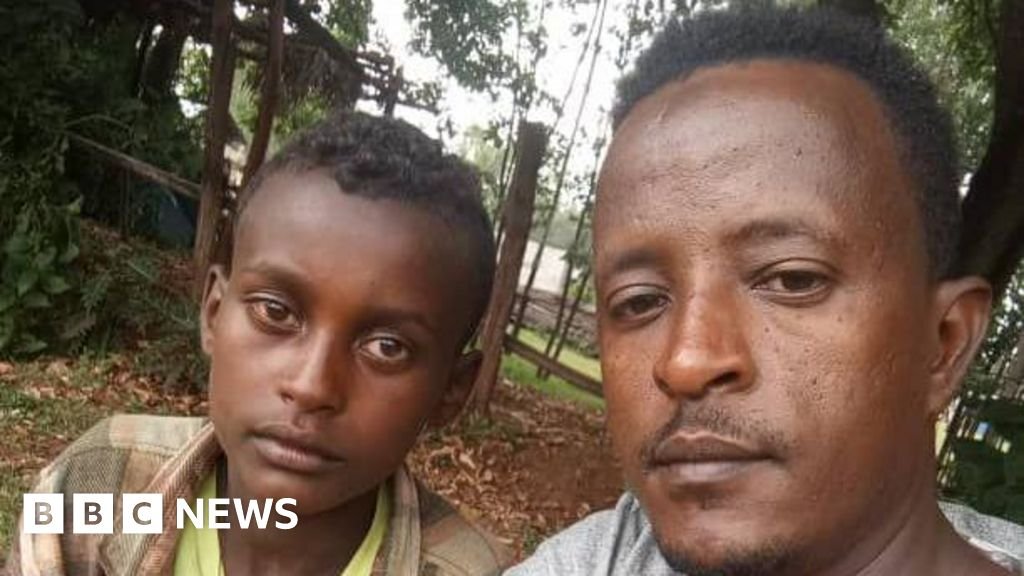
Markos with Nurse Umer Chane, who recorded the viral moment (Source: Umer Chane/BBC)
Digital Waves of Kindness Across the Continent
The video of Markos Abaye carrying his sick chicken into Denbecha Primary Hospital quickly spread across TikTok, surpassing 770,000 views and sparking conversations throughout Ethiopia and wider African online communities. Viewers responded not with mockery but with admiration for the boy's evident concern, sharing the clip as an example of genuine empathy that resonates deeply in digital spaces often dominated by other narratives. Nurse Umer Chane's gentle redirection toward animal care, captured in the recording, further amplified the positive tone, showing how small acts of patience can inspire collective appreciation.
This widespread engagement reveals much about Ethiopian and broader African values expressed online, where stories of kindness toward animals and children frequently gain traction. The 770,000 views reflect a continent eager to celebrate compassion, particularly when it emerges from rural settings amid everyday challenges. Rather than focusing solely on hardship, audiences embraced Markos's devotion as a reminder of shared humanity, turning a simple hospital encounter into a viral affirmation of tenderness that crosses borders and generations.
Practical Support from Local Enterprise
Following the video's circulation, a local poultry company stepped forward with a tangible response, donating 100 chickens along with farming training to Markos and his family. This intervention transformed the public's emotional reaction into concrete opportunity, equipping the household with resources to expand their poultry activities beyond the single hen that had captured so much attention. The company's involvement highlighted how community businesses can respond to individual stories of care with scalable support.
The donation arrived after the original chicken recovered through treatment at a veterinary facility, allowing Markos to focus on new possibilities. Training in poultry farming provided skills that align with longstanding rural practices, turning compassion into sustainable livelihood. Such actions demonstrate the potential for private sector engagement to build on moments of public goodwill, offering families like Markos's tools for greater self-reliance while honoring the boy's dedication to animal welfare.
Lessons in Care from Village Traditions
From a Senegalese perspective, the bond between children and animals in rural African life echoes patterns seen across the continent, where poultry raising forms an integral part of daily village routines. In Ethiopia's Amhara region, as with many Senegalese communities, chickens serve not only as sources of eggs and meat but as living companions that teach young ones the rhythms of responsibility. Markos's habit of feeding neighbors' birds alongside his own illustrates this shared cultural emphasis on collective stewardship within tight-knit settings.
Traditional poultry practices instill patience and an understanding of the circle of life, as children observe hatching, growth, and care cycles firsthand. Markos saved 12 eggs with the hope of future chicks, a gesture rooted in these values that connects personal affection to practical continuity. Such experiences foster respect for living creatures and prepare youth for broader duties, reminding observers that African village life often nurtures quiet virtues through interactions with animals that adults sometimes overlook in favor of more visible concerns.
Stability Amid Displacement and Upheaval
Markos Abaye's arrival in Denbecha followed the outbreak of conflict in the Amhara region in August 2023, when he fled with his grandparents' parting gift of a chicken to live under the guardianship of his uncle, Kelemework Amogne. The bird became a focal point for coping during this period of upheaval, offering consistent companionship when familiar surroundings had been left behind. Markos's routines of building small bridges over holes for the chicken to cross safely provided structure and purpose amid uncertainty.
Animal companionship proved especially stabilizing for a child navigating such transitions, as the hen's needs anchored Markos's days and helped maintain emotional balance. When the chicken fell ill, his withdrawal from eating and studying underscored the depth of this connection, yet the subsequent recovery through veterinary care restored a measure of normalcy. In contexts of regional instability, these bonds highlight how simple responsibilities toward animals can serve as anchors, helping displaced children like Markos process change while preserving a sense of agency and care.
Compassion Beyond the Headlines
This story illuminates an Africa that thrives beyond frequent reports of conflict and crisis, revealing instead a deep reservoir of everyday compassion that defines much of continental life. Markos's innocent determination to seek help for his chicken at a human hospital captures the unfiltered kindness of childhood, unburdened by cynicism and focused purely on alleviating suffering in another living being. The viral response across platforms further affirms that such moments resonate widely, drawing attention to the continent's capacity for empathy rather than division.
Adults can draw meaningful lessons from a boy who simply wanted to save his chicken, recognizing in his actions reminders of responsibility, patience, and the value of small interventions. The poultry company's donation of 100 birds and training extends this narrative into practical hope, showing how individual compassion can ripple outward into community benefit. Ultimately, Markos's experience points toward an Africa rich in quiet resilience and human connection, where the innocence of youth offers guidance for navigating both personal and collective challenges with greater tenderness.
By Amara Diop, Staff WriterThis article was produced with AI-assisted research and editorial support. Reporting is based on sources cited in the article.
What's Your Reaction?
 Like
0
Like
0
 Dislike
0
Dislike
0
 Love
0
Love
0
 Funny
0
Funny
0
 Wow
0
Wow
0
 Sad
0
Sad
0
 Angry
0
Angry
0

Canada Correspondent at Global1.News. Based in Toronto, covering Canadian politics, energy, trade, and US-Canada relations. Provides the Canadian perspective on North American and global affairs.













Comments (0)