
Typhoon Bavi: 1,000-Kilometre Superstorm Threatens Taiwan, China, and the Asia-Pacific
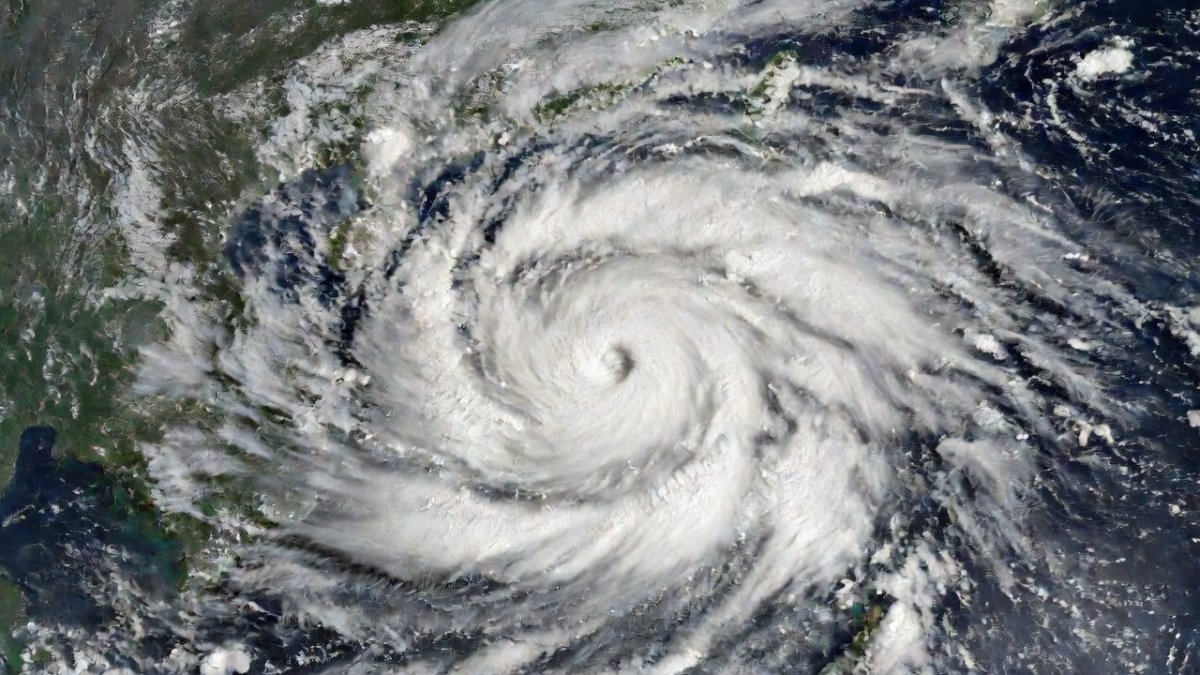
Storm Scale and Historical Significance Typhoon Bavi presents an extraordinary meteorological phenomenon whose physical dimensions alone distinguish it from typical Pacific cyclones. Measuring 1,000 kilometres across at its widest point, the storm equals the breadth of France and represents the largest system by areal extent to approach Taiwan since 1987. Taiwan’s Central Weath
Storm Scale and Historical Significance
Typhoon Bavi presents an extraordinary meteorological phenomenon whose physical dimensions alone distinguish it from typical Pacific cyclones. Measuring 1,000 kilometres across at its widest point, the storm equals the breadth of France and represents the largest system by areal extent to approach Taiwan since 1987. Taiwan’s Central Weather Administration has confirmed this scale benchmark, underscoring that no comparable event has occurred in nearly four decades. The sheer horizontal reach implies that rainfall bands, wind fields, and associated storm surges will affect multiple jurisdictions simultaneously, stretching from the northern and eastern coasts of Taiwan across remote Japanese islands before reaching south-eastern China. Such breadth transforms the typhoon from a localized threat into a transnational hazard whose impacts cannot be contained within a single administrative boundary.
The projected trajectory begins with residual effects already felt in the southern Philippines, where landslides triggered by outer rain bands have claimed at least fifteen lives. From there the system is forecast to deliver heavy precipitation to Taiwan’s northern and eastern regions, then skirt Japanese territory before making landfall in south-eastern China on Saturday. Chinese authorities have explicitly warned of the possibility of two separate landfalls, a scenario that would prolong exposure for coastal provinces already saturated by previous systems. This path traverses some of the most densely populated and economically vital corridors in East Asia, amplifying both humanitarian and strategic stakes. The 1,000-kilometre span ensures that preparation timelines are compressed for every jurisdiction along the route, leaving limited windows for evacuation or reinforcement of critical infrastructure.
Local testimony captures the deceptive calm that often precedes such events. Fisherman Chen Ming-hui observed that current pleasant conditions should not mislead residents, stating that a storm of this magnitude “could be the most terrifying.” His remarks reflect generational knowledge of how rapidly conditions deteriorate once the core circulation arrives. Because Bavi’s size exceeds recent memory, standard response protocols calibrated to smaller typhoons may prove insufficient, particularly regarding the simultaneous activation of shelters, transport restrictions, and agricultural protections across wide geographic zones. The historical comparison to 1987 therefore serves not merely as a statistical marker but as a reminder that institutional memory has faded and that contemporary infrastructure has never been tested by a system of equivalent extent.
From the vantage of China’s broader strategic interests, the unprecedented scale carries implications for regional stability and cross-border coordination. A storm whose footprint rivals an entire nation-state challenges assumptions embedded in existing disaster-management frameworks that were designed around more compact events. The requirement to monitor and respond across Taiwan, Japan, and multiple Chinese provinces simultaneously tests communication channels and resource-sharing mechanisms that have rarely been exercised at this geographic breadth. Consequently, Bavi functions as a live stress test for the Asia-Pacific’s collective capacity to manage extreme weather at a scale previously considered exceptional rather than routine.
Compounding Crisis: Bavi Follows Maysak's Destruction
The arrival of Typhoon Bavi occurs against the backdrop of recent devastation wrought by Typhoon Maysak, which left at least thirty-nine people dead and prompted the evacuation of 130,000 residents from vulnerable areas in southern China. Maysak’s passage produced dam bursts and tornadoes in Hubei province, compounding flooding that already strained local emergency services. Southern provinces are still engaged in recovery operations when Bavi’s outer bands begin to influence the same coastline, creating a compressed recovery window that heightens cumulative risk. The sequential nature of these events transforms what might have been manageable individual disasters into a protracted compound crisis whose total economic and social costs exceed the sum of isolated impacts.
Chinese officials have highlighted the particular vulnerability of northern provinces that possess limited institutional experience with typhoon landfalls. Ma Jun, director of China’s Institute of Public and Environmental Affairs, has urged these jurisdictions to “strengthen preparations,” noting that their relative unfamiliarity with such systems could lead to underestimation of required measures. This warning carries weight because Bavi’s trajectory may push rainfall and wind impacts farther north than typical typhoon tracks, exposing populations whose infrastructure and response doctrines were calibrated primarily for temperate weather hazards. The combination of recent southern trauma and northern inexperience therefore creates an uneven national preparedness landscape that central authorities must address rapidly.
Back-to-back super typhoons also strain national resource allocation. Military and civilian emergency stocks depleted during Maysak response operations must be replenished while Bavi approaches, forcing simultaneous logistics chains to operate under time pressure. The forecast of up to one metre of rainfall in affected zones raises the prospect of renewed landslides, riverine flooding, and urban inundation in areas whose soils remain saturated. Such hydrological conditions reduce the margin for error in reservoir management and evacuation timing, elevating the probability of cascading failures across interconnected infrastructure networks.
Strategically, the compounding sequence underscores China’s exposure to clustered extreme-weather events that can disrupt both domestic stability and regional supply routes. The need to coordinate military assets, provincial governments, and specialized agencies across multiple simultaneous fronts tests the integrated emergency-management architecture developed in recent years. Failure to synchronize these efforts could produce localized breakdowns whose political and economic reverberations extend beyond immediate humanitarian concerns, affecting perceptions of governmental competence in an era of increasing climate volatility.
Economic Disruption Across the Region
Transportation networks have already registered substantial interruptions as airlines adjust schedules to Bavi’s approach. Japan Airlines has cancelled more than one hundred flights, while ANA has grounded over one hundred sixty, each carrier affecting nearly twenty thousand passengers. Thai Airways and Malaysia Airlines have similarly suspended services to Taipei, producing a cumulative passenger impact exceeding forty thousand individuals. These cancellations ripple through regional aviation hubs, delaying cargo shipments and business travel at a moment when manufacturing calendars in Taiwan and coastal China remain tightly synchronized with global demand cycles. The scale of disruption illustrates how a single meteorological event can instantaneously sever connectivity across the Asia-Pacific aviation grid.
Agricultural and fisheries sectors face direct physical threats. Farmers across Taiwan and south-eastern China have accelerated harvesting or implemented protective measures for standing crops, while fishing fleets have been ordered to secure vessels in port. The 1,000-kilometre wind field ensures that these precautions must be enacted across wide coastal belts simultaneously, compressing labour availability and raising the risk of post-storm spoilage. Because many of these crops feed both domestic markets and export supply chains, losses will transmit price signals through regional food systems and potentially affect downstream processing industries.
Manufacturing clusters in Fujian province and Taiwan’s technology corridors are particularly sensitive to prolonged power outages and transport halts. Component flows between these locations underpin global electronics and automotive supply chains; any sustained interruption risks inventory shortages that propagate internationally. The dual-landfall scenario warned of by Chinese authorities could extend these disruptions over several days, amplifying inventory drawdowns and forcing contingency production shifts that carry their own cost premiums.
From a macroeconomic perspective, the aggregate effect of flight groundings, agricultural damage, and industrial slowdowns adds frictional costs to an economy already navigating post-pandemic recovery. Insurance claims, reconstruction expenditures, and temporary labour reallocations will register in quarterly national accounts, while the psychological impact on investor confidence may influence short-term capital allocation decisions. The episode therefore demonstrates the tight coupling between meteorological extremes and the stability of trade-dependent growth models that characterize East Asia.
Climate Change and the Shifting Typhoon Risk
China’s exposure to extreme weather has intensified as typhoon tracks exhibit a measurable northward migration, bringing historically southern hazards into latitudes previously considered lower risk. Bavi’s projected reach into northern provinces exemplifies this shift, requiring disaster-management doctrines to be recalibrated beyond traditional coastal zones. The agriculture sector, which underpins food security for the world’s most populous nation, confronts heightened variability in precipitation and wind damage that can erase seasonal gains within days. Infrastructure investments in drainage, sea walls, and early-warning systems must therefore expand geographically and increase in technical sophistication to match the evolving hazard envelope.
Resilience measures already undertaken, including extensive river-basin management projects and meteorological satellite networks, provide a foundation for response. Yet the compound arrival of Maysak followed by Bavi reveals residual gaps in surge capacity and inter-provincial coordination. Northern jurisdictions lacking decades of typhoon-specific engineering standards now require accelerated retrofitting, a process that competes with other development priorities for fiscal and technical resources. The scale of Bavi further tests whether existing redundancies in power grids and transport corridors can absorb simultaneous stresses across multiple provinces.
Historical context illuminates the novelty of the present challenge. Earlier typhoon regimes allowed southern provinces to develop specialized expertise while northern regions focused on different climatic threats. The contemporary poleward expansion of tropical cyclone activity erodes this geographic specialization, compelling a nationwide reallocation of preparedness investments. China’s strategic interest in maintaining agricultural output and industrial continuity therefore intersects directly with the imperative to adapt physical and institutional infrastructure to a broader hazard footprint.
Long-term implications extend to the design of urban and rural landscapes. Future zoning regulations, building codes, and insurance frameworks will need to incorporate the statistical reality of larger, slower-moving, or more northerly systems. The current episode supplies empirical data that can inform these revisions, yet the window for implementation narrows as the frequency of such events appears to rise. Effective adaptation thus becomes both a domestic resilience imperative and a component of China’s broader geopolitical positioning as a leader in climate-risk management.
Strategic Implications for the Asia-Pacific
Cross-strait dynamics acquire added complexity when disaster response requires simultaneous mobilization on both sides of the Taiwan Strait. Taiwan has placed 29,000 soldiers on standby, reflecting the island’s recognition that military assets are indispensable for rapid debris clearance, shelter operation, and logistics support. China’s emergency-management systems, refined through successive national reforms, must now demonstrate their capacity to integrate provincial commands with central directives while monitoring developments in Taiwan and Japan. The shared threat creates de facto channels for information exchange even in the absence of formal political agreements, illustrating how environmental stressors can generate pragmatic cooperation.
Regional cooperation mechanisms, including existing typhoon-warning networks and ASEAN-plus frameworks, face a practical test of their interoperability. Data sharing on rainfall totals, wind observations, and evacuation timelines can reduce redundant efforts and accelerate mutual assistance. Yet the absence of unified command structures means that each jurisdiction retains sovereign decision authority, potentially producing misalignments in timing or resource prioritization. Bavi’s transnational footprint therefore highlights both the value and the limits of current multilateral arrangements for climate-driven disasters.
Strategically, the episode reinforces the linkage between climate resilience and national security calculations. States that can protect populations and maintain economic functions during extreme events enhance their relative position within the regional order. Conversely, visible shortcomings in preparedness can erode public trust and invite external narratives about governance capacity. For China, successful management of Bavi alongside recovery from Maysak would affirm the effectiveness of centralized emergency systems; shortfalls could prompt internal reviews and external commentary.
Looking ahead, the Asia-Pacific’s climate future will be shaped by the frequency and scale of events like Bavi. Continued warming is expected to sustain the conditions that allow larger, more persistent typhoons to form and track farther north. Investment in resilient infrastructure, diversified supply chains, and cooperative early-warning architectures therefore constitutes not only prudent risk management but also a strategic hedge against future instability. The present convergence of meteorological scale, sequential impacts, and geopolitical sensitivities offers a preview of the governance challenges that will define the coming decades.
By Prof. Marcus Chen, Staff WriterThis article was produced with AI-assisted research and editorial support. Reporting is based on sources cited in the article.
What's Your Reaction?
 Like
0
Like
0
 Dislike
0
Dislike
0
 Love
0
Love
0
 Funny
0
Funny
0
 Wow
0
Wow
0
 Sad
0
Sad
0
 Angry
0
Angry
0

World Politics Analyst at Global1.News. Based in Beijing, covering US-China relations, global trade, and geopolitical strategy. Brings deep analytical perspective to the power dynamics shaping international affairs.













Comments (0)