
An Oil Spill in the Gulf of Paria Prompts Formal Exchanges Between Neighbours
An Oil Spill in the Gulf of Paria Prompts Formal Exchanges Between Neighbours An Oil Spill, Two Narratives, One Shared Gulf The Gulf of Paria remains a vital body of water for both Trinidad and Tobago and Venezuela, serving as an important oil and gas producing zone while also supporting fishing communities on both sides. On 1 May 2026 at 07:25 hrs, state-owned Heritage Petrole
An Oil Spill, Two Narratives, One Shared Gulf
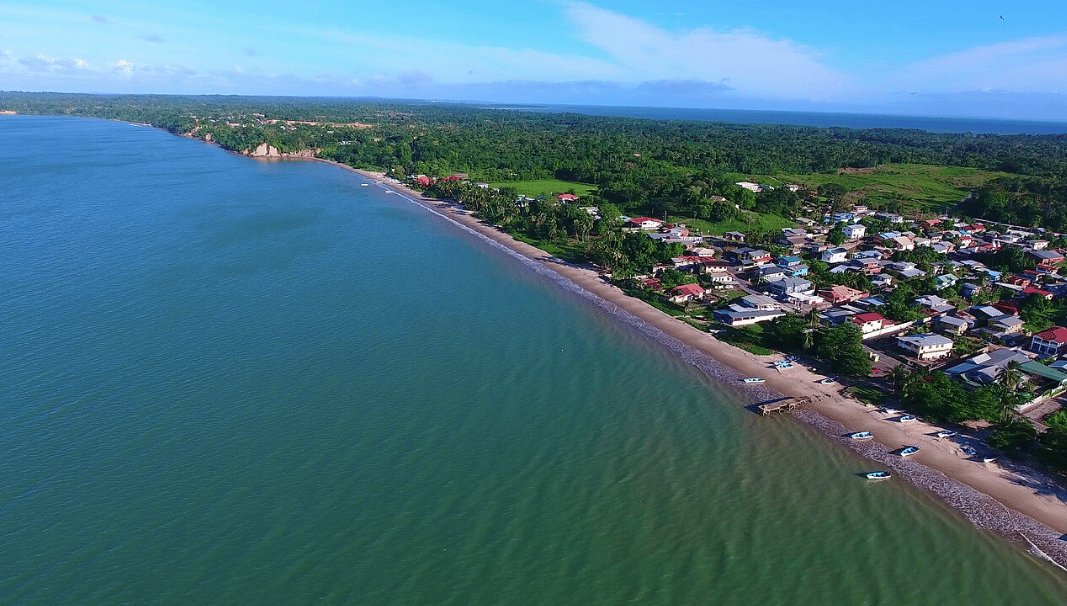
The Gulf of Paria remains a vital body of water for both Trinidad and Tobago and Venezuela, serving as an important oil and gas producing zone while also supporting fishing communities on both sides. On 1 May 2026 at 07:25 hrs, state-owned Heritage Petroleum Company Ltd detected an incident in the Main Field. Trinidad and Tobago reported an estimated 10 barrels of oil released, with the leak source repaired the following day on 2 May. Chemical dispersants were deployed between 6 and 8 nautical miles from the maritime border. Trinidad and Tobago stated that these measures effectively broke up the hydrocarbon, and subsequent drone and vessel inspections found no visible hydrocarbons remaining. Trajectory modelling indicated that hydrocarbons could have crossed the border if left untreated. Venezuela, however, presented a different account during a 19 May press conference led by Foreign Minister Yvan Gil, who displayed satellite images dated 28 April showing an oil slick originating from Trinidad. Venezuela maintains that the volume, origin and type of hydrocarbon are still unknown and that Trinidad and Tobago is obligated to immediately report any oil spill, with no information shared in this instance. These differing accounts highlight the shared nature of the Gulf and the need for clear communication between the two countries whose coastal communities depend on its waters.
What Trinidad Says Happened on May 1
Energy Minister Dr Roodal Moonilal described the incident as minor, noting the 10 barrels were contained the same day. Heritage Petroleum Company Ltd, the state-owned successor to Petrotrin, detected the release at 07:25 hrs on 1 May 2026 in the Main Field. The company repaired the leak source on 2 May and applied chemical dispersants 6 to 8 nautical miles from the maritime border. Trinidad and Tobago reported that the dispersants effectively broke up the hydrocarbon, after which drone and vessel inspections confirmed no visible hydrocarbons remained. Trajectory modelling conducted by Trinidad and Tobago showed that the hydrocarbons could have crossed into Venezuelan waters if the response had not occurred promptly. The Ministry of Energy and Energy Industries has committed to working with Venezuelan counterparts on a structured framework to manage future incidents. Trinidad and Tobago disputes the scale and alleged damage claimed by the other side, maintaining that the event remained a contained 10-barrel release. Local fishing communities in Trinidad understand how quickly small releases can affect livelihoods, which is why the rapid containment and verification steps were emphasised in official statements. The Gulf of Paria’s dual role as an energy production area and fishing ground means any incident draws close attention from those who work its waters daily.
Venezuela's Case: Satellite Images, 1,625 Square Kilometres, and 500 Fishermen
Foreign Minister Yvan Gil addressed the matter in a 19 May press conference, asserting that the spill caused serious environmental damage in coastal areas of Sucre and Delta Amacuro states as well as the Gulf of Paria. Venezuela warned that 1,625 square kilometres across 12 strategic wetland systems could be affected and that more than 500 fishermen’s livelihoods were at risk. Satellite images dated 28 April were presented, showing an oil slick that Venezuela states originated from Trinidad. Venezuela maintains that the volume, origin and type of hydrocarbon remain unknown and that Trinidad and Tobago failed to share information as required. The absence of immediate reporting is presented as a breach of obligation between the two countries that share the Gulf. Communities along Venezuela’s coast rely on the same marine resources that support Trinidad and Tobago’s southern fishing villages, making any cross-border movement of hydrocarbons a direct concern for families who depend on daily catches. The figures cited by Venezuela—1,625 square kilometres and more than 500 fishermen—underscore the potential reach of even a limited release when currents and wetlands are involved. Trinidad and Tobago continues to dispute these assessments, reiterating that its inspections found no remaining hydrocarbons after the 2 May response.
The Environmental Stakes in the Gulf of Paria
The Gulf of Paria functions as both a significant oil and gas producing zone and an ecologically sensitive fishing area for communities in Trinidad and Tobago and Venezuela. Concerns centre on mangroves, wetlands and marine ecosystems that support fish stocks and protect coastlines. The 1 May 2026 detection by Heritage Petroleum Company Ltd led to a response involving chemical dispersants applied 6 to 8 nautical miles from the maritime border. Trinidad and Tobago reported that these dispersants effectively broke up the hydrocarbon and that later inspections found no visible hydrocarbons. Venezuela’s 19 May statements highlighted risks to 1,625 square kilometres of wetland systems and the livelihoods of more than 500 fishermen in Sucre and Delta Amacuro states. Trajectory modelling by Trinidad and Tobago indicated potential cross-border movement if the spill had not been addressed. Both countries recognise that the Gulf’s mangroves and wetlands serve as nurseries for marine life that sustain local markets and household incomes. The shared waters mean that any hydrocarbon movement affects the same ecological systems relied upon by fishers from both nations. Trinidad and Tobago’s account stresses the contained nature of the 10-barrel release, while Venezuela calls for further clarification on volume and type. These environmental realities connect directly to the daily realities of coastal villages that have long balanced energy activity with fishing traditions.
Energy Politics: Heritage, the Gulf and Regional Diplomacy
Heritage Petroleum Company Ltd, as the state-owned operator succeeding Petrotrin, detected the release in the Main Field on 1 May 2026. Trinidad and Tobago views the incident as a contained 10-barrel event repaired on 2 May with dispersants deployed 6 to 8 nautical miles from the border. Venezuela’s Foreign Minister Yvan Gil, speaking on 19 May, presented satellite imagery and raised questions about reporting obligations. The Ministry of Energy and Energy Industries has stated its willingness to develop a structured framework with Venezuelan counterparts for managing future incidents. The Gulf of Paria’s importance as an oil and gas zone alongside its role in supporting fishing communities creates ongoing overlap between energy operations and local livelihoods. CARICOM provides a regional context in which such cross-border matters can be discussed, though no specific agreements or monitoring mechanisms have been detailed in relation to this event. Trinidad and Tobago disputes the extent of damage claimed by Venezuela, while Venezuela maintains that information sharing did not occur as expected. Both sides operate within the same body of water where energy infrastructure and fishing grounds exist side by side, making clear communication essential for the communities that depend on steady access to marine resources.
What Happens Next
Trinidad and Tobago has expressed readiness to work with Venezuela on a structured framework for handling future incidents in the Gulf of Paria. Venezuela continues to seek compensation and further details following the 19 May statements by Foreign Minister Yvan Gil. The 1 May 2026 detection by Heritage Petroleum Company Ltd and the subsequent 2 May repair remain the core timeline cited by Trinidad and Tobago, which maintains that inspections confirmed no visible hydrocarbons after dispersant application. Venezuela’s position includes reference to satellite images from 28 April and warnings about 1,625 square kilometres of wetlands and more than 500 fishermen. Trajectory modelling by Trinidad and Tobago indicated possible border crossing if untreated. The Ministry of Energy and Energy Industries has reiterated its commitment to dialogue while disputing the scale of alleged damage. Communities on both sides of the Gulf continue to monitor developments, aware that the shared waters support both energy production and traditional fishing. Any future framework would need to address reporting procedures and verification methods to reduce uncertainty for those whose daily work depends on the Gulf’s condition. The formal exchanges between the two countries reflect the ongoing need for practical cooperation in these shared waters. By Sharon Sahatoo, Staff Writer
This article was produced with AI-assisted research and editorial support. Reporting is based on sources cited in the article.
What's Your Reaction?
 Like
0
Like
0
 Dislike
0
Dislike
0
 Love
0
Love
0
 Funny
0
Funny
0
 Wow
0
Wow
0
 Sad
0
Sad
0
 Angry
0
Angry
0

Caribbean Correspondent at Global1.News. Based in Port of Spain, Trinidad, covering Caribbean politics, economy, energy, climate, and culture. Amplifying the voices and stories of the Caribbean region.













Comments (0)