
Russia's Fuel Crisis: Odd-Even Gasoline Rationing Spreads
Russia's domestic fuel supply has buckled under the weight of sustained Ukrainian drone strikes, forcing at least six regions into an unprecedented odd-even gasoline rationing system that restricts purchases based on license plate numbers. The rationing, first introduced in the Oryol region last month, has now spread to Nizhny Novgorod, Mordovia, Astrakhan, Pskov, Lipetsk, and
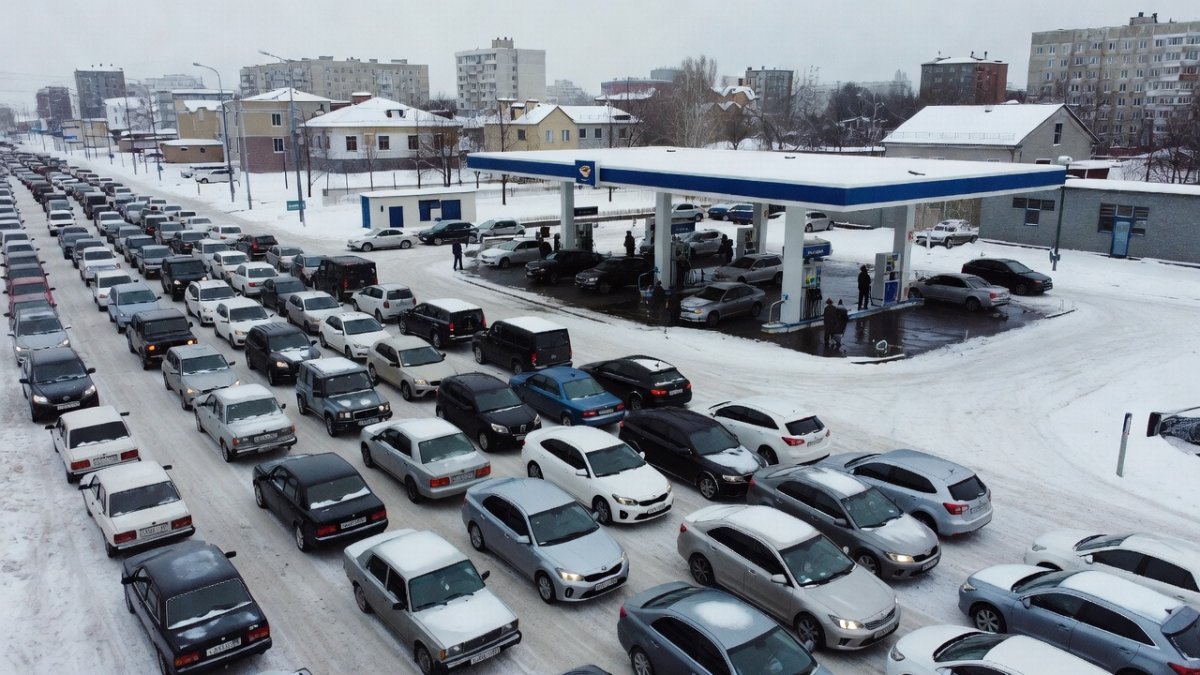
Russia's domestic fuel supply has buckled under the weight of sustained Ukrainian drone strikes, forcing at least six regions into an unprecedented odd-even gasoline rationing system that restricts purchases based on license plate numbers. The rationing, first introduced in the Oryol region last month, has now spread to Nizhny Novgorod, Mordovia, Astrakhan, Pskov, Lipetsk, and Kirov — with Ivanovo, Tambov, and Yaroslavl weighing similar measures. Drivers with odd-numbered plates may refuel only on odd-numbered days; those with even plates, including zero, on even days. This is not a temporary inconvenience for a handful of regions — it is a structural symptom of a refining sector under sustained military pressure, and one that President Vladimir Putin has acknowledged as a "certain shortage" directly linked to Ukrainian drone campaigns.
The scale of the crisis extends beyond isolated shortages. Multiple regions now operate under coordinated restrictions enforced at the pump through local traffic police and fuel station operators, creating predictable but disruptive patterns of vehicle movement. Commuters and commercial fleets must plan journeys days in advance, while agricultural operations in grain-producing districts face delays in equipment refueling that threaten harvest timelines. The Ministry of Energy has been tasked with daily monitoring of stock levels across these areas, underscoring that the problem is viewed as systemic rather than episodic.
For ordinary Russians the measures translate into altered daily routines and heightened anxiety about mobility. Families in smaller cities report rearranging work schedules around plate parity, while taxi drivers and delivery services absorb added costs from idling in queues or seeking alternative stations. The psychological weight is palpable: what began as a distant conflict now dictates when and where citizens can fill their tanks, eroding the sense that the war remains contained to the front lines.
Politically, the spread of rationing tests the Kremlin’s narrative of resilience. Putin’s public reference to a “certain shortage” marks a rare admission that Ukrainian strikes have produced measurable domestic effects. Regional governors must now balance loyalty to Moscow with pressure from local businesses and voters, raising questions about whether the central government can maintain unified messaging as fuel constraints widen.
Russia's Fuel Crisis Deepens: Odd-Even Gasoline Rationing Spreads as Ukrainian Drone Strikes Cripple Refineries
Moscow – In recent days the odd-even system has moved from experimental status in Oryol to a de facto policy across a widening belt of central and southern Russia. Regional administrations coordinate with the Ministry of Energy to publish daily compliance guidelines, while fuel retailers adjust operating hours to manage demand spikes on permitted days. The result is a patchwork of rules that nonetheless share the same core mechanism: license-plate parity determining access to gasoline.
Traffic police in affected regions have been instructed to verify plate numbers at station entrances, adding an enforcement layer that slows service further. In Nizhny Novgorod and Astrakhan, authorities report that some stations voluntarily close on non-permitted days to conserve limited reserves. These steps reflect an attempt to stretch existing supplies until refinery output recovers or alternative imports arrive.
The political implications are immediate. Governors in the newly restricted regions must explain the measures to populations accustomed to unrestricted fuel access, while avoiding any direct criticism of federal defense priorities. This balancing act reveals the growing friction between military objectives and civilian economic stability.
The Spread of Rationing: From Oryol to the Volga
Oryol became the first region to implement the odd-even rule last month after local stocks fell below critical thresholds. Officials there limited sales to 20 liters per vehicle on permitted days and required proof of residency for commercial operators. The policy quickly stabilized queues but created secondary effects on cross-regional travel, prompting neighboring administrations to prepare similar frameworks.
On Thursday the wave reached Nizhny Novgorod, Mordovia, and Astrakhan simultaneously. Each introduced plate-based restrictions with minor local variations: Mordovia added a requirement for advance registration of commercial vehicles, while Astrakhan focused enforcement on highway-adjacent stations. The coordinated rollout suggested central guidance from the Ministry of Energy to prevent panic buying in adjacent territories.
Friday brought Pskov into the system, extending restrictions into the northwest. By Saturday, Lipetsk and Kirov had followed, completing the current roster of six regions. In each case, station operators received updated software to flag non-compliant plates at the pump, reducing the scope for manual discretion.
Lines at permitted stations now routinely stretch for blocks, with waits averaging 45 minutes during peak hours. Rural drivers face longer trips to the nearest compliant station, while urban commuters have begun carpooling across plate parities. Enforcement remains uneven, with some stations turning a blind eye to small violations to avoid confrontations.
Ivanovo, Tambov, and Yaroslavl continue to monitor stock levels and may adopt the system within days. Their hesitation reflects concern over enforcement capacity and the risk of accelerating demand once restrictions are announced.
Ukrainian Drone Campaign: Targeting Russia's Refining Backbone
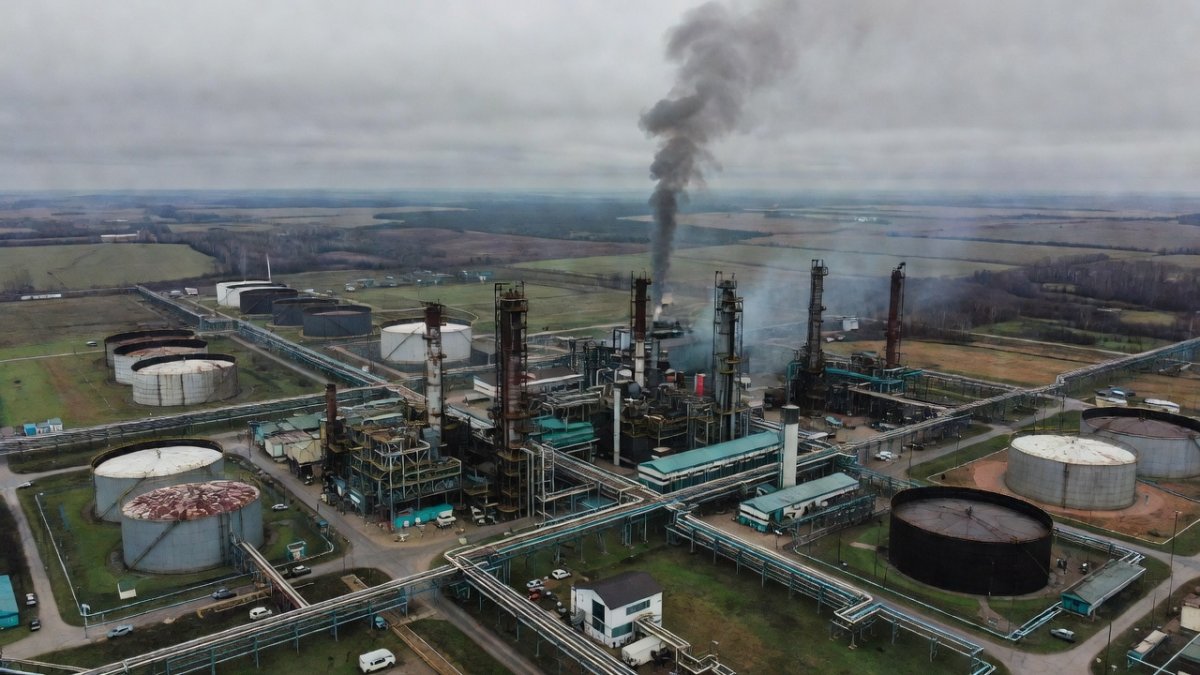
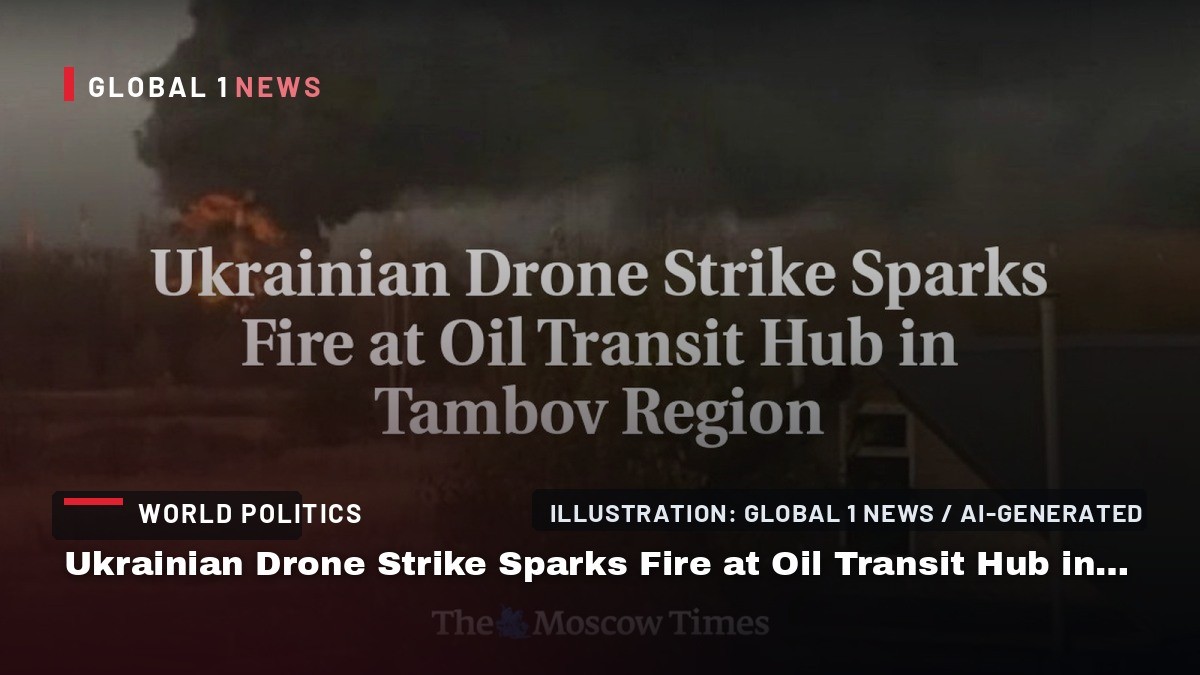
Since spring, Ukrainian forces have conducted repeated long-range drone operations against Russian oil infrastructure. The strikes have focused on facilities that supply domestic markets rather than export terminals, producing measurable shortfalls in gasoline and diesel available inside Russia. The Moscow Times has documented the cumulative effect on regional supply chains, noting that several refineries have operated at reduced capacity for weeks.
The campaign represents a deliberate shift toward raising the domestic cost of the conflict. By disrupting refining rather than crude production, Ukraine targets the fuel that powers both military logistics and civilian transport. Each successful strike forces the Kremlin to divert resources toward repairs and air defense while simultaneously managing public expectations.
Production losses have been concentrated in central Russia, where pipeline networks feed the regions now under rationing. The absence of immediate large-scale imports has left local markets dependent on whatever volumes the remaining operational refineries can deliver. This vulnerability was not anticipated in pre-war planning that assumed dispersed capacity would protect against single-point failures.
Analysts note that the strategy exploits Russia’s limited ability to rapidly relocate refining assets or harden every facility against drone threats. The result is a slow attrition of domestic fuel availability that cannot be offset solely through export bans or diplomatic pressure.
Kremlin's Response: Export Bans, Foreign Imports, and Public Acknowledgment
President Putin’s June acknowledgment of the shortage marked the first official linkage between Ukrainian strikes and domestic fuel scarcity. The statement came during a meeting with regional leaders and was followed by temporary export bans on gasoline, diesel, and jet fuel. These measures aim to retain domestic volumes but have not yet restored normal supply levels in the affected regions.
The Ministry of Energy has coordinated emergency shipments from Belarus and explored larger purchases from India. The irony of Russia, a traditional energy exporter, becoming a net importer of refined products for its own market has not gone unnoticed in domestic commentary. Officials frame the imports as a short-term bridge until domestic refining rebounds.
Public messaging emphasizes that the restrictions are temporary and tied directly to external aggression. At the same time, the Kremlin has avoided detailed timelines for lifting the odd-even rules, signaling that further Ukrainian strikes could prolong the measures. Regional administrations have been instructed to maintain calm while preparing contingency stocks for winter.
The episode highlights structural exposure in Russia’s energy system. Even with vast crude reserves, the country’s refining geography and air-defense priorities leave domestic consumers vulnerable when strikes target specific nodes.
Life Under Rationing: Impact on Ordinary Russians
Commuters in Nizhny Novgorod now schedule refueling around plate parity, often arriving at stations before dawn on permitted days. Small businesses that rely on daily deliveries report higher costs passed on to customers, while farmers in Lipetsk and Kirov delay equipment maintenance to conserve fuel for essential fieldwork.
Rural areas experience sharper effects because distances between stations are greater and public transport options fewer. Urban centers have seen a modest rise in ridesharing and public transit use, yet many workers still require personal vehicles for shift work outside city centers.
Psychologically, the restrictions bring the war into everyday logistics. Citizens accustomed to viewing fuel as abundant now confront visible evidence that military developments directly shape civilian life. Rising black-market premiums for off-schedule refueling have appeared in some cities, though authorities have warned against such activity.
Outlook: Recovery Timeline and Persistent Risks
Industry sources anticipate gradual improvement in late July once damaged refinery units return to service. Maintenance schedules have been accelerated, and the Ministry of Energy has prioritized domestic allocations over export commitments. These steps could ease pressure on the six restricted regions if no further strikes occur.
However, sustained Ukrainian drone operations could reset any recovery. Facilities that resume partial production remain vulnerable, and air-defense resources are stretched across a wide geography. Analysts warn that a single additional wave of successful strikes could force additional regions into rationing.
Should the crisis reach Moscow or St. Petersburg, the political stakes would rise sharply. Both capitals have so far been spared direct restrictions, but supply chains serving them overlap with affected regions. Long-term questions persist about whether Russia will disperse refining capacity or invest further in air defense to protect existing plants.
Analysis and Implications
The fuel crisis reveals how sustained pressure on refining infrastructure can erode a major power’s domestic energy security without striking export infrastructure. Export revenues remain intact for now, yet the need to import refined products signals an inversion of Russia’s traditional energy posture.
Winter heating season adds urgency. Many regions rely on the same diesel stocks for both transport and backup power generation. Any shortfall that persists into autumn could compound into broader energy shortages affecting households and industry alike.
The episode also raises questions about the sustainability of military operations when domestic fuel supply becomes contested. While Russia retains substantial crude production, the refining bottleneck demonstrates that modern warfare can impose asymmetric costs on the home front even when conventional front lines remain stable.
Ultimately, the spread of odd-even rationing illustrates the expanding reach of Ukrainian strikes and the Kremlin’s limited short-term options for shielding civilians from their consequences. How long these measures remain in place will depend on both battlefield developments and the pace of refinery repairs.
By Irina Volkov, Staff Writer
This article was produced with AI-assisted research and editorial support. Reporting is based on sources cited in the article.
What's Your Reaction?
 Like
0
Like
0
 Dislike
0
Dislike
0
 Love
0
Love
0
 Funny
0
Funny
0
 Wow
0
Wow
0
 Sad
0
Sad
0
 Angry
0
Angry
0
Russia/Eastern Europe Correspondent at Global1.News. Covering Russian politics, energy, security, and the shifting dynamics of the post-Soviet space. Provides clear-eyed analysis on one of the world's most opaque regions.










Comments (0)