
US-Iran Escalation and the Diplomatic Path Forward: Insights from Trita Parsi
In a recent CGTN report, Anand Naidoo speaks with Trita Parsi, executive vice president of the Quincy Institute for Responsible Statecraft, about the fragile state of US-Iran negotiations in July 2026. The discussion highlights how a brief diplomatic opening collapsed amid renewed military action and economic pressure. The Fragile Pause That Wasn't The June 14, 2026 memorandum
The Fragile Pause That Wasn't
The June 14, 2026 memorandum of understanding on oil-sales waivers between the United States and Iran represented a narrow attempt to de-escalate tensions following the February 28 assassination of Supreme Leader Ayatollah Ali Khamenei. That agreement unraveled within weeks over divergent readings of language concerning the Strait of Hormuz. President Trump declared the arrangement over, citing Iranian actions against maritime traffic. Parsi notes that such interpretive disputes often mask deeper strategic mistrust, where each side views the other's compliance as conditional on maximalist demands.
Domestic political signals further eroded the pause. The July 9 funeral of Khamenei in Mashhad featured public calls for action against Trump, prompting immediate threats of additional strikes. Iran's economy, already under sustained sanctions, faced acute strain as oil prices rose approximately 60 percent. These developments illustrate how internal pressures can override external diplomatic overtures, leaving little room for sustained engagement.
The Strait of Hormuz: A Chokepoint Weaponized
Iran's early July attacks on a Qatari LNG carrier and two additional tankers triggered a sharp US response, with strikes on roughly 90 targets along Iran's southern coast. Approximately 20 percent of global oil transit remains blocked, demonstrating the strait’s continued leverage as a pressure point. Parsi emphasizes that control over this waterway serves both defensive and coercive purposes for Tehran, forcing external actors to recalibrate their calculations.
The resulting disruption extends beyond immediate energy markets. Shipping rerouting increases costs and delays, while insurance premiums rise sharply. For energy-importing economies, the blockage underscores vulnerabilities in supply chains that predate the current crisis. The episode also reveals how maritime incidents can rapidly internationalize a bilateral conflict.
Diplomacy's Narrow Window
Parsi argues that meaningful negotiations require addressing core security concerns rather than temporary economic relief. The collapsed MOU showed that partial measures without mutual recognition of red lines tend to fail under stress. Both Washington and Tehran possess limited domestic space for compromise, with hardliners on each side ready to frame concessions as weakness.
Historical patterns suggest that external shocks, such as the assassination and subsequent funeral unrest, compress the time available for talks. Without parallel confidence-building steps, such as verified de-escalation along the coast, any renewed agreement risks repeating the same cycle of interpretation disputes and retaliatory moves.
China's Role: Mediator or Bystander?
US officials, including Secretary of State Marco Rubio and Treasury Secretary Scott Bessent, have urged Beijing to press Iran toward reopening the Strait of Hormuz. China’s energy security interests align with stable transit through the waterway, yet its diplomatic posture remains cautious. Beijing has historically favored multilateral frameworks that avoid direct entanglement in US-Iran disputes.
From China’s perspective, involvement could support broader objectives of regional stability and diversified energy routes. However, active mediation risks drawing Beijing into a conflict where its leverage is asymmetric. Parsi observes that China’s influence operates more through economic incentives than coercive diplomacy, limiting its immediate utility as an enforcer of US preferences.
The Regional Fallout
The 12-day air campaign launched by Israel in June 2026, with US participation, has reshaped threat perceptions across the Middle East. Neighboring states face heightened risks of spillover, including missile strikes and disrupted trade. ASEAN economies dependent on Gulf energy supplies confront secondary price shocks, while European Union members weigh renewed sanctions coordination against energy diversification needs.
For the Global South, the crisis highlights the uneven distribution of costs from great-power confrontations. Countries with limited voice in the negotiations absorb higher import bills and supply uncertainty. Parsi notes that these second-order effects may encourage alternative diplomatic alignments that bypass traditional US-led channels.
What Comes Next
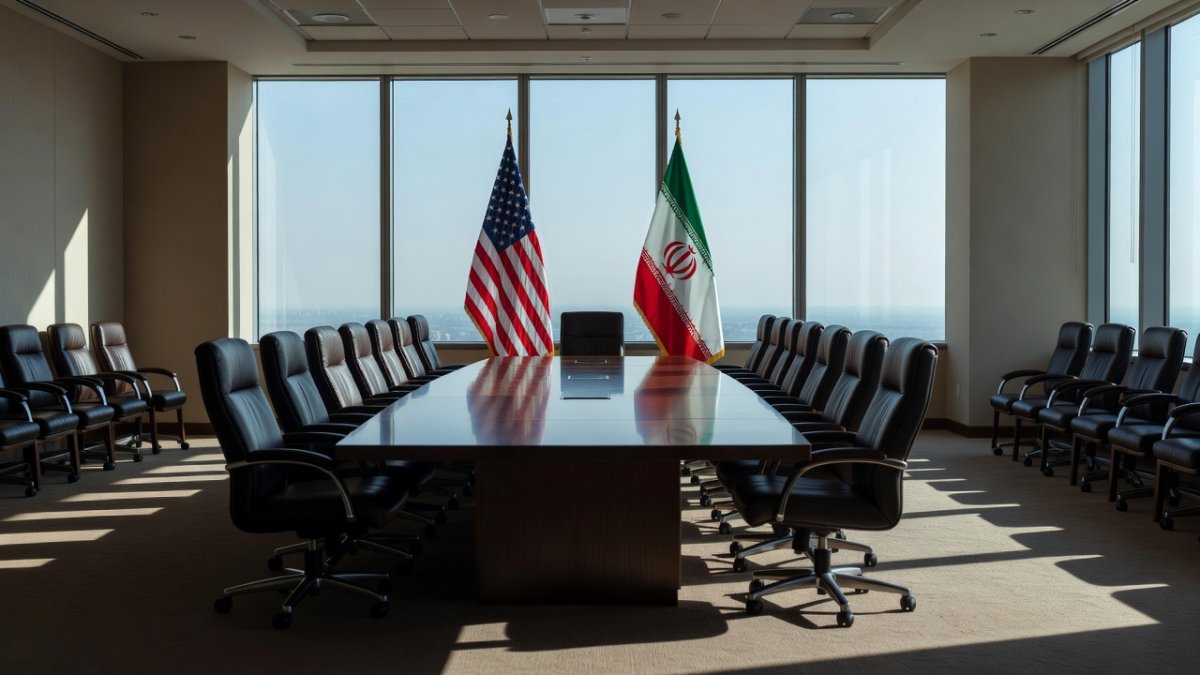
Prospects for renewed talks hinge on whether both sides can establish verifiable steps to restore maritime access without conceding core positions. Parsi cautions that further escalation, including potential additional US strikes, would further narrow the diplomatic space. External actors such as China may facilitate quiet contacts but are unlikely to impose outcomes.
Longer-term stability requires addressing the underlying security dilemma that predates the 2026 events. Without mechanisms to manage mutual threat perceptions, periodic crises will continue to interrupt energy flows and strain international institutions. The current impasse illustrates how quickly localized disputes can acquire global economic consequences.
By Prof. Marcus Chen, Staff WriterThis article was produced with AI-assisted research and editorial support. Reporting is based on sources cited in the article.
What's Your Reaction?
 Like
0
Like
0
 Dislike
0
Dislike
0
 Love
0
Love
0
 Funny
0
Funny
0
 Wow
0
Wow
0
 Sad
0
Sad
0
 Angry
0
Angry
0

World Politics Analyst at Global1.News. Based in Beijing, covering US-China relations, global trade, and geopolitical strategy. Brings deep analytical perspective to the power dynamics shaping international affairs.










Comments (0)