
Manitoba Flooding: 30+ Communities in State of Emergency, Premier Kinew Asks Ottawa for Military Help
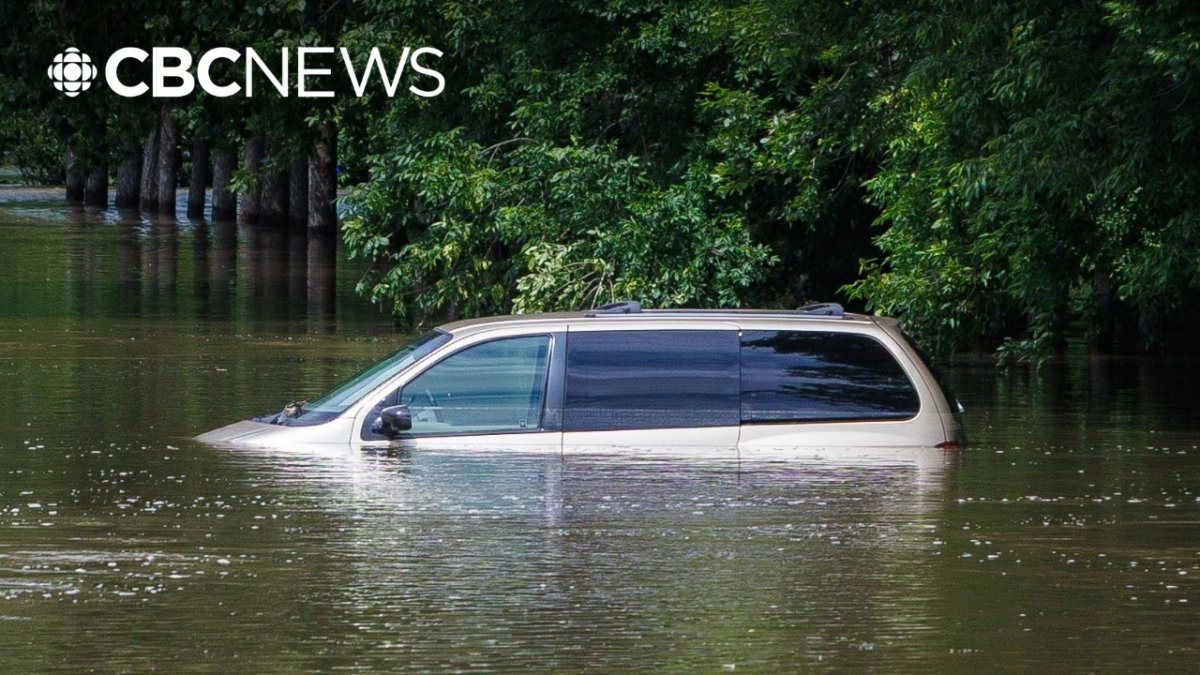
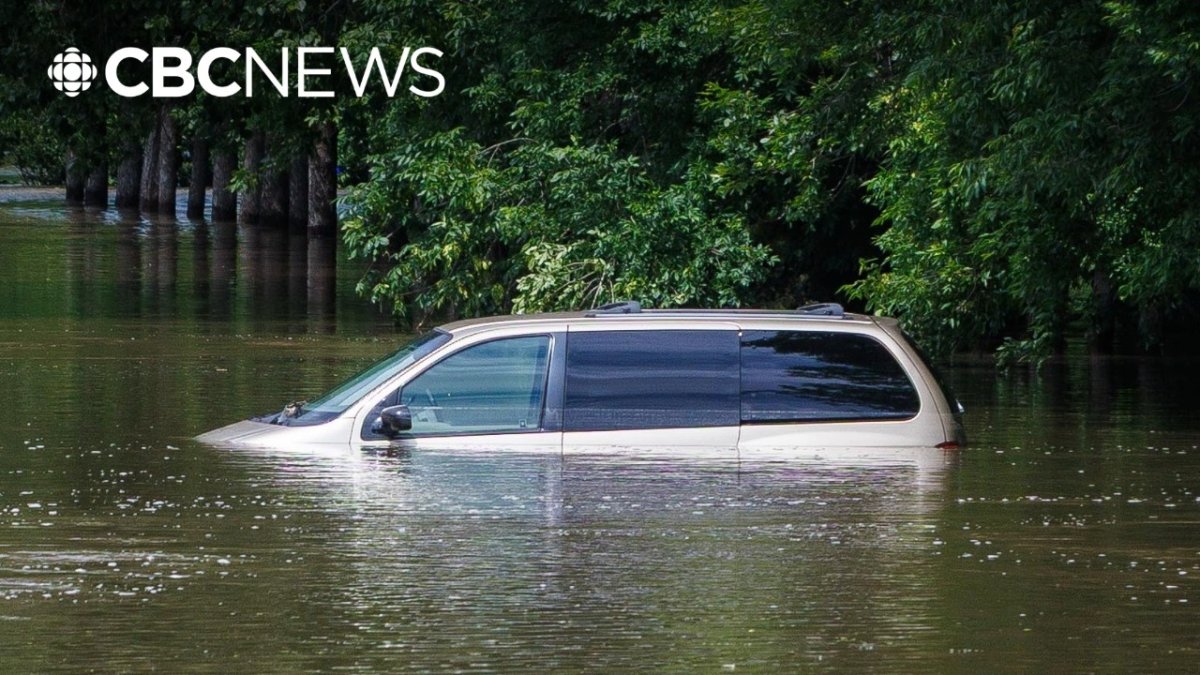
The CBC News video titled "Manitoba asks Ottawa for help as severe flooding puts dozens of communities in state of emergency" captures the scale of the crisis unfolding across the Parkland region. More than 30 communities have declared local states of emergency as floodwaters from record June rainfall overwhelm roads, homes and critical services. Premier Wab Kinew toured affect
The CBC News video titled "Manitoba asks Ottawa for help as severe flooding puts dozens of communities in state of emergency" captures the scale of the crisis unfolding across the Parkland region. More than 30 communities have declared local states of emergency as floodwaters from record June rainfall overwhelm roads, homes and critical services. Premier Wab Kinew toured affected areas on July 2 and described scenes of adults crying amid widespread frustration, noting that residents who have been battling rising water for weeks are exhausted and in need of reinforcements.
Federal Government Called In
Manitoba Premier Wab Kinew formally requested military assistance from the federal government on July 2 to support flood response operations across the Parkland region. The request highlights the federal-provincial dynamics that govern disaster management under Canada's constitution, where provinces retain primary responsibility for emergency services while Ottawa provides resources when local capacity is exceeded — a threshold that has clearly been reached in western Manitoba.
Federal Emergency Management Minister Eleanor Olszewski confirmed that Ottawa remains actively engaged with the province on determining the best methods of support. In a statement to CBC News, Olszewski said the federal government is working closely with Manitoba officials to assess what resources are needed most urgently. This engagement follows established protocols for intergovernmental coordination during natural disasters that affect multiple jurisdictions.
The request for military support arrives after the province had already advanced $5 million in disaster financial assistance specifically for this flooding event. That figure builds on roughly $18 million provided after last month's severe flooding in the same region, bringing the cumulative provincial commitment to $23 million before the cleanup from this week's disaster has even begun. Kinew acknowledged that the final fiscal impact will be substantially higher once damage assessments are complete, particularly for transportation infrastructure and municipal services.
"You're talking about tens of millions of dollars already, and we're not into the cleanup phase for some of the worst-impacted areas," Kinew said. "So, there's definitely going to be a fiscal impact." These transfers demonstrate how federal and provincial governments share fiscal responsibility for recovery in line with Canadian values of collective support during times of crisis.
Dauphin Under Water
Dauphin, a community of approximately 8,300 residents situated roughly 300 kilometres northwest of Winnipeg, declared a local state of emergency on July 1 after recording about 115 millimetres of rain since the previous Sunday night. Mayor David Bosiak stated that the flooding ranks among the worst he has witnessed in his lifetime. "In my lifetime, there's been four or five major floods," Bosiak told CBC News. "This is probably — from a city point of view — as bad as I've ever seen it in the city of Dauphin."
June 2026 brought 211 millimetres of precipitation to the city, making it the second-wettest June on record behind only the 216 millimetres measured in 1953. Environment Canada data shows that the relentless rainfall saturated the ground well before this week's storm system arrived, leaving little capacity for the additional deluge. The Vermillion River spilled its banks and flooded Vermillion Park before sending water cascading into Dauphin's city centre. The north end of the city, being the lower-lying part of the community, suffered the most significant overland flooding and basement damage.
Officials closed the Buckwold Bridge, also known as the Fourth Avenue SW Bridge, to both pedestrian and vehicle traffic as a safety precaution. The Dauphin Regional Health Centre relocated a few dozen patients because of rising water levels inside the facility — a move that Kinew said underscored the seriousness of the situation. City officials cancelled the annual Canada Day Party in the Park, even after exploring potential indoor alternatives. An evacuation centre opened at the Credit Union Place recreation complex to shelter displaced residents, with command operations established at city hall.
The city asked residents to avoid all non-essential travel and limit water usage, as local wastewater systems came under extraordinary strain. Mayor Bosiak specifically urged people not to drive through standing water or to tour affected areas simply to observe the damage. "If you don't need to be out, please don't," Bosiak said. "Stay at home, look after your property, help your neighbour." Deputy Mayor Christian Laughland reported that nearly every resident in Dauphin has been affected in some capacity, with basements ranging from damp to containing a foot or more of water.
Swan Valley Under Evacuation
Swan River, home to roughly 4,000 people and situated about 380 kilometres northwest of Winnipeg, operates under a mandatory evacuation order after highway access was completely severed by floodwaters. Authorities have warned that fuel and food supplies may require airlifting if road conditions do not improve in the coming days. Nearly 270 millimetres of rain fell in the Swan River area during June alone, according to Environment Canada, saturating the region well before this week's storms.
Mayor Lance Jacobson reported that the Swan River rose approximately three metres above its normal level — an unprecedented rise that he said has left residents in shock. "In my lifetime … we've never seen this amount of water that moved onto the Swan River," Jacobson said. He described surveying the damage and spending time with community members who have lost their homes. "It just tears you apart to see the damage that this river can do. I could never imagine that this would have ever happened. It's horrible, and it's going to take some time to rebuild."
Jacobson formally requested 100,000 sandbags along with additional water pumps from the provincial government. Approximately 150 people have already been displaced by flash flooding throughout the Swan Valley, with some residents losing virtually everything. The town's drinking water system and wastewater infrastructure have so far held up under the stress, Jacobson said, but roads and highways outside the community remain impassable and will require significant reconstruction by provincial transport officials. Reeve Bill Gade of the RM of Swan Valley West stated that the current flooding exceeds the severity of the June event and has affected the entire western side of Manitoba. "This time it's all that area … plus the entire western side of Manitoba. It's bad everywhere," Gade said.
First Nations Communities Cut Off
Minegoziibe Anishinabe First Nation, also known as Pine Creek, declared a local state of emergency after road access was completely severed, leaving the community landlocked. The First Nation, located about 320 kilometres northwest of Winnipeg on the western shore of Lake Winnipegosis, relies on Highway 20 to connect to Dauphin and the town of Camperville — both now compromised by flood damage. Chief Derek Nepinak described the situation as precarious and noted that the local gas bar had run out of fuel.
"We are landlocked in place without reliable road access," Nepinak wrote in a letter to community members. The First Nation planned to open a drop-in emergency centre at its community hall, which has backup power in case of an outage. While evacuations were not immediately ordered, Nepinak said that could change based on any escalation of the weather crisis. The community was working with fuel suppliers to arrange deliveries, though road closures made logistics extremely difficult. Nepinak confirmed that diesel fuel remained available for essential water and septic service trucks.
The isolation of Minegoziibe Anishinabe First Nation illustrates the particular vulnerabilities faced by Indigenous communities during extreme weather events. Access to essential services — health care, fuel, food supply — remains a central concern in ongoing federal-provincial-Indigenous relations under frameworks such as the Truth and Reconciliation process and UNDRIP implementation. Up to 50 roads across the region have been damaged, washed out or covered by water, including a section of Highway 10 near Pine River captured in drone footage showing the roadway completely torn apart by floodwaters.
Infrastructure Damage and Financial Aid
Provincial transportation officials reported that up to 50 roads have been damaged, washed out or covered by water across the Parkland region. A section of Highway 10 near Pine River was completely washed out, as documented in drone photography shared by local officials. The extent of the road damage has effectively divided the region, with travel restricted from Russell north to Mafeking and from Dauphin Lake west to the Saskatchewan border. Even roads that appear passable remain dangerous, Kinew warned, as hidden road failures beneath standing water pose serious safety risks.
The province advanced $5 million in disaster financial assistance specifically for this flooding event through a new municipal assistance program announced after the June storms. This amount adds to the roughly $18 million already allocated after last month's flooding, which resulted from a similar weather system that overwhelmed the same communities. The combined $23 million in provincial aid represents a significant fiscal commitment, but Kinew acknowledged this is only the beginning — the cleanup and reconstruction phase will require substantially more resources from both provincial and federal coffers.
Kinew toured the affected region on July 2, flying into Dauphin and Swan River to see the damage first-hand. He met with Mayor Jacobson, Reeve Gade, and residents who described their experiences. "People are frustrated. There's a lot of emotion, adults crying," Kinew said. "So, there's definitely a need for more help." The premier emphasised that future infrastructure renewal efforts must focus on reconstruction with greater flood resilience, reflecting the reality that extreme weather events are becoming more frequent and severe — a pattern consistent with climate change projections for the Canadian Prairies.
Community Response and What Comes Next
The Canadian Red Cross has been activated by the Manitoba government to provide registration services for displaced residents, working alongside Indigenous leadership and local governments to coordinate support. An evacuation centre at Swan River's Veterans Community Hall is providing food and temporary shelter, with officials asking evacuees to register in person or by text so the town can assess immediate needs. Evacuees who have found alternative accommodation are still asked to report their location for planning purposes.
Volunteer farmer Johnny Wintoniw worked frantically to move his small herd of cows, goats and pigs as floodwaters rose around his property near Swan River. "This is unheard of for water to ever reach this high on the property," Wintoniw said. His wife called for help on a local Facebook page, and within minutes the call was shared dozens of times, enabling Wintoniw to truck the animals to a safe pasture. "This community is by far an amazing community, and willing to step up and help anybody, anywhere, anytime," he said. In Swan River, the local Home Hardware store sold out of large hoses used for sump pumps, and staff members — whom owner Rachel Schindler called "rock stars" — have been working overtime and opening after hours for residents in urgent need, including a senior who received a personal visit for a hands-on sump pump demonstration.
Mayor Lance Jacobson noted that volunteers who have been sandbagging for weeks are now burned out. "They've been doing this for a month already, and we're tired and we need help," he said. "It's time for the federal government to listen to our call." Environment Canada forecasts additional showers and thunderstorms that could prolong the current crisis across the Parkland region, with a 60 per cent chance of further precipitation that threatens to delay the critical cleanup phase.
Premier Kinew stated that infrastructure renewal will prioritise reconstruction designed for greater flood resilience, with the recognition that rebuilding to previous standards is no longer sufficient given the changing climate. These efforts connect directly to broader Canadian discussions on climate adaptation, the reform of federal disaster assistance programs, and the protection of communities that contribute to the nation's agricultural and resource-based economy. For now, the immediate priority remains getting more boots on the ground to relieve exhausted residents and volunteers who have been fighting rising water for weeks without respite.
By Alex Thompson, Staff WriterThis article was produced with AI-assisted research and editorial support. Reporting is based on sources cited in the article.
What's Your Reaction?
 Like
0
Like
0
 Dislike
0
Dislike
0
 Love
0
Love
0
 Funny
0
Funny
0
 Wow
0
Wow
0
 Sad
0
Sad
0
 Angry
0
Angry
0

Canada Correspondent at Global1.News. Based in Toronto, covering Canadian politics, energy, trade, and US-Canada relations. Provides the Canadian perspective on North American and global affairs.














Comments (0)