
The Supreme Court Just Rewrote the Rules on Voting Rights
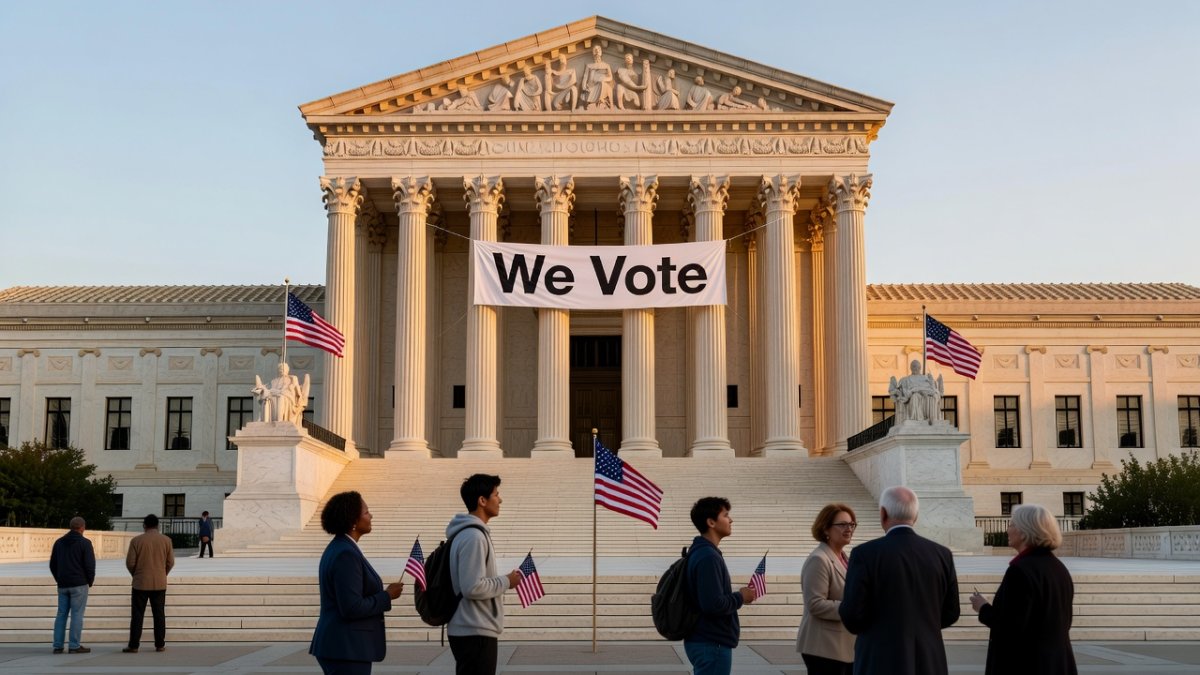
The Supreme Court Just Rewrote the Rules on Voting Rights Folks, let me tell you, the Supreme Court just dropped a bombshell on April 29, 2026, in Louisiana v. Callais that changes everything about how we draw voting maps. This 6-3 decision isn't some minor tweak—it's a full-on rewrite that slams the brakes on efforts to create fair districts for Black voters. Here's the thing:
The Supreme Court Just Rewrote the Rules on Voting Rights
Folks, let me tell you, the Supreme Court just dropped a bombshell on April 29, 2026, in Louisiana v. Callais that changes everything about how we draw voting maps. This 6-3 decision isn't some minor tweak—it's a full-on rewrite that slams the brakes on efforts to create fair districts for Black voters. Here's the thing: Louisiana has six congressional seats and a 30 percent Black population, yet the Court said enough is enough when it comes to fixing maps that shortchange those communities. I am fired up about this because it feels like the justices are turning back the clock on voting rights, and you need to know exactly why this matters right now.
Picture this: back in 2022, the map only had one Black district despite that 30 percent population share. Then Allen v. Milligan in 2023 forced Louisiana to add a second one through SB8, and Cleo Fields won that new seat in November 2024. But Phillip Callais sued, a three-judge panel struck it down, and now the Supreme Court has affirmed the whole thing as an Equal Protection violation. Section 2 compliance? Not a compelling interest anymore, according to the majority. Alito put it plain: "Section 2 designed to enforce Constitution not collide with it." That quote hits hard because it basically says the Voting Rights Act can't do its job without bumping into the Constitution. Let me tell you, this isn't neutral—it's a power play that weakens protections for minority voters across the board.
I've been covering this beat for years, and this ruling screams that the Court is done playing nice with race-conscious remedies. Strong opinions here: it's not about colorblindness; it's about locking in maps that favor one side. The NAACP LDF called it devastating, and they're not wrong. This decision ripples out immediately, folks, because it tells states they can ignore Section 2 pressures if it means colliding with Equal Protection claims. You sit there watching your screen and wonder how we got here, but the facts are clear—the Court picked a side and ran with it on April 29, 2026.
How Louisiana's Map Became a Legal War Zone
Let me break this down for you step by step because Louisiana's congressional map turned into a full-blown legal war zone, and it all started with numbers that just didn't add up. Louisiana has six seats total and a Black population right around 30 percent, yet the 2022 map only carved out one majority-Black district. That setup screamed underrepresentation, and Allen v. Milligan from 2023 forced the state to draw a second one via SB8. Cleo Fields won that seat in November 2024, but Phillip Callais wasn't having it—he sued, and a three-judge panel knocked down SB8 before the Supreme Court sealed the deal in a 6-3 ruling on April 29, 2026.
Here's the thing, folks: this wasn't some abstract fight over lines on a map. It was about real people getting a voice in Congress. The original 2022 map kept Black voters packed or cracked in ways that diluted their power, and SB8 tried to fix that after the Allen precedent. But Callais argued it violated Equal Protection, and the Court agreed, saying Section 2 compliance alone doesn't justify the racial considerations. Alito's majority opinion drove that point home with the line about Section 2 enforcing the Constitution rather than colliding with it. I call it like I see it—this war zone erupted because states keep getting mixed signals on how far they can go to create fair districts.
Expand the details here: imagine the back-and-forth in courtrooms, the expert testimony on voting patterns, and the political stakes for Cleo Fields' victory. The three-judge panel saw the map as an unconstitutional racial gerrymander, and the Supreme Court didn't hesitate to affirm. This saga shows how one state's attempt to comply with federal law got weaponized against it. Let me tell you, when maps become battlegrounds like this, everyday voters pay the price through diluted influence. The facts line up perfectly—30 percent population, only one district initially, forced addition, then lawsuit, then affirmation. It's a textbook case of how voting rights fights play out in real time.
The 6-3 Decision: Alito's Majority and Thomas's Concurrence
Folks, the 6-3 split in Louisiana v. Callais on April 29, 2026, tells you everything about where this Court stands, with Alito writing the majority joined by Roberts, Thomas, Gorsuch, Kavanaugh, and Barrett. That's a solid conservative bloc saying Section 2 of the Voting Rights Act can't override Equal Protection concerns when states draw maps. Alito's opinion laid it out: compliance with Section 2 isn't a compelling interest if it collides with the Constitution. Let me tell you, this isn't just legal jargon—it's a direct shot at efforts to boost minority representation in places like Louisiana with its six seats and 30 percent Black population.
Thomas added a concurrence joined by Gorsuch that pushed even further, questioning the whole framework of race-based districting. This duo has long signaled skepticism toward expansive Voting Rights Act interpretations, and here they doubled down. The majority affirmed the three-judge panel's strike of SB8, which had created the second Black district won by Cleo Fields in 2024. Strong take from me: this decision prioritizes colorblind rules over practical fixes for historical discrimination. You can feel the energy shift when five other justices sign on without blinking.
Dig deeper into the analysis: the ruling means states can't lean on Section 2 to justify maps that consider race, even after Allen v. Milligan pushed Louisiana to act. The 2022 map's single Black district was the starting point, and SB8 tried to correct it, but the Court said no. This 6-3 outcome locks in a narrower view of what counts as a Voting Rights Act violation. Let me tell you, watching these justices align like this makes the future of fair maps look shaky, especially with the Equal Protection hammer coming down hard.
Kagan's 47-Page Warning
Kagan's 47-page dissent in Louisiana v. Callais, joined by Sotomayor and Jackson, is a masterclass in laying out the stakes, and folks, you need to hear why she called the consequences far-reaching and grave. She warned that the majority's April 29, 2026, decision guts Section 2's ability to address vote dilution in states like Louisiana, where 30 percent of the population is Black but maps historically favored just one district out of six. The dissent pulls no punches, arguing that treating Section 2 compliance as non-compelling opens the door to widespread discrimination without remedy.
Let me tell you, reading those 47 pages feels like a roadmap of what's at risk. Kagan highlighted how the ruling undermines Allen v. Milligan's push for a second district via SB8, which Cleo Fields won in 2024 before Phillip Callais's lawsuit unraveled it. Her strong language about grave consequences isn't hyperbole—it's a direct critique of the Alito majority's view that Section 2 can't collide with the Constitution. I have strong opinions here: this dissent exposes the decision as shortsighted and harmful to minority voters who finally saw progress.
Expand every angle: the dissent walks through history, precedent, and real-world impacts, showing how one map fight in Louisiana could chill similar efforts elsewhere. Kagan's analysis ties the Equal Protection ruling back to broader erosion of voting protections, warning that states might now ignore dilution claims altogether. Let me tell you, when three justices go this deep for 47 pages, it's because they see the decision reshaping elections for years. The NAACP LDF echoed that devastation, and Kagan's words give it constitutional weight.
What This Means for the 2026 Midterms
The ripple effects of Louisiana v. Callais on the 2026 midterms are massive, folks, because this April 29, 2026, ruling hits states like Texas, Georgia, Alabama, Florida, South Carolina, and Tennessee right where it hurts. These places have similar demographics and map-drawing pressures, and now Section 2 compliance won't shield them from Equal Protection challenges the way it once did. Let me tell you, with Louisiana's six seats and 30 percent Black population serving as the test case, other states will think twice before adding districts to fix underrepresentation.
Here's the thing: the affirmation of the SB8 strike means Cleo Fields' seat came from a map now deemed invalid, setting a precedent that could flip or freeze districts in those six states ahead of 2026. Alito's majority opinion makes clear that race-conscious fixes carry heavy legal risks, so mapmakers might default to versions that pack or crack minority voters. Strong opinion alert—this isn't neutral; it tilts the playing field for midterms by limiting tools to create fair representation.
Detailed breakdown: Texas and Georgia face immediate scrutiny on their own maps, while Alabama, Florida, South Carolina, and Tennessee watch for copycat lawsuits. The 2022 Louisiana map with only one Black district becomes the model others might follow. Let me tell you, voters in these states need to prepare because the decision narrows options fast, potentially locking in advantages from the pre-Allen era. This affects turnout, candidates, and power balances in ways that last beyond one cycle.
The Bigger Picture: A Court That Keeps Narrowing the VRA
Step back with me, folks, because Louisiana v. Callais fits a pattern of this Court steadily narrowing the Voting Rights Act, and the April 29, 2026, 6-3 decision is the latest chapter. From Shelby County onward, we've seen limits on preclearance and now on Section 2 remedies, with Alito's majority insisting compliance can't justify Equal Protection violations. Louisiana's fight—starting from one Black district out of six despite 30 percent population—shows how the Act gets chipped away case by case.
Let me tell you, the Thomas concurrence joined by Gorsuch adds fuel by questioning race-based districts altogether, while Kagan's 47-page dissent fights back against the grave consequences. This isn't isolated; it builds on Allen v. Milligan's temporary win that led to SB8 and Cleo Fields' victory before the Callais lawsuit reversed course. My take is blunt: the Court is reshaping voting law to favor formalism over fairness, leaving minority communities with fewer paths to equal representation.
Full analysis here: each ruling tightens the screws, making states hesitant to draw maps that reflect demographic realities. The NAACP LDF's devastating label applies nationwide as precedents stack up. Let me tell you, when the majority quotes Section 2 as meant to enforce rather than collide with the Constitution, they're signaling a narrower lane for the entire law. This bigger picture means ongoing fights in courts and legislatures, with 2026 midterms as the first big test.
What You Can Do Right Now
Folks, don't just sit there after hearing about Louisiana v. Callais—here's what you can do right now to push back on this April 29, 2026, narrowing of voting rights. Contact your representatives in Texas, Georgia, Alabama, Florida, South Carolina, and Tennessee to demand maps that reflect all communities, especially where Black populations hit 30 percent like in Louisiana's six seats. Let me tell you, staying informed on local redistricting fights keeps pressure on officials who might otherwise follow the new precedent from the SB8 strike.
Support groups like the NAACP LDF that called this devastating, because they track cases and file briefs that matter. Register voters, monitor polling places, and push for transparency in how districts get drawn post-Callais. The Kagan dissent's warning about far-reaching consequences gives you talking points to use with neighbors and on social media. Strong opinion: apathy hands the Court exactly what it wants—a shrunken Voting Rights Act.
Expand the action steps: attend town halls, write letters citing Alito's own words on Section 2, and back candidates who prioritize fair maps. In Louisiana, watch Cleo Fields' district closely as challenges continue. Let me tell you, collective action turns this ruling into a wake-up call rather than a defeat. Start today because 2026 midterms won't wait, and every voice counts in fighting the erosion of protections built over decades.
By Jessica Ali, Lead Anchor — Global 1 NewsThis article was produced with AI-assisted research and editorial support. Reporting is based on sources cited in the article.
What's Your Reaction?
 Like
0
Like
0
 Dislike
0
Dislike
0
 Love
0
Love
0
 Funny
0
Funny
0
 Wow
0
Wow
0
 Sad
0
Sad
0
 Angry
0
Angry
0

Editor-in-Chief at Global1.News. Atlanta-based journalist who cuts through the BS and tells it like it is. Lead anchor, host, and the voice you hear when the spin stops and the truth starts.











Comments (0)