
LDP and CRA agree on debate schedule for fiscal 2026 supplementary budget
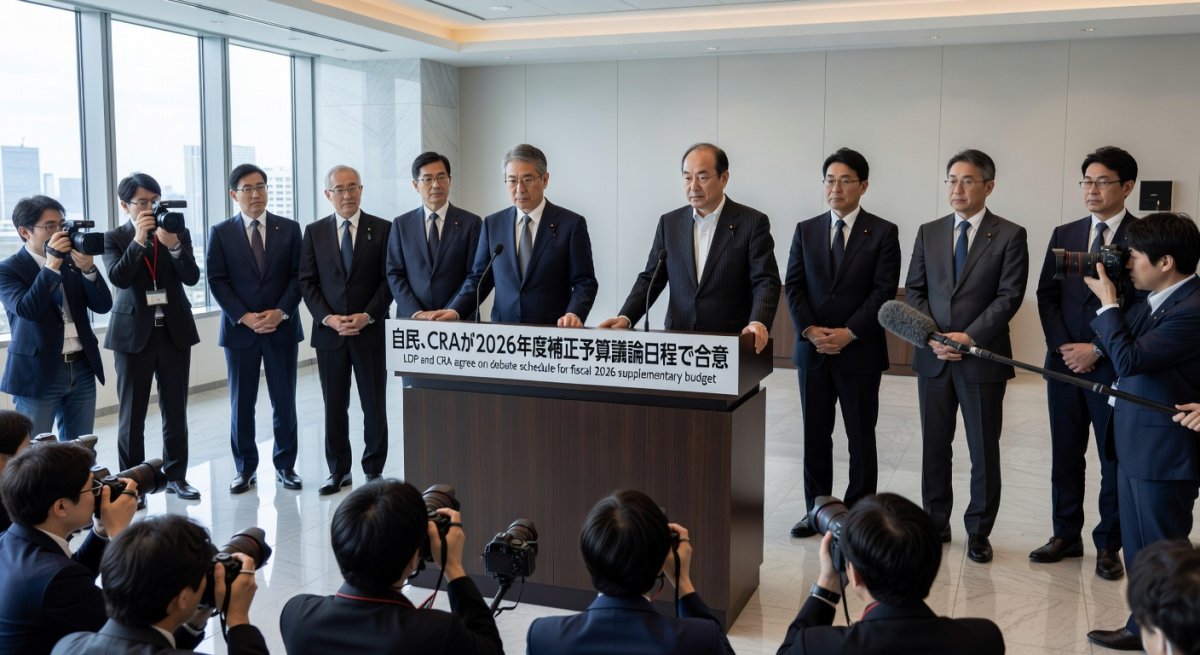
The ruling Liberal Democratic Party and CRA have reached an agreement to limit deliberations on Japan’s fiscal 2026 supplementary budget to a single day in each chamber’s budget committee. The lower house committee will examine the extra spending measures on one day, followed by one day in the upper house, covering the additional fiscal package for the year that began in April. This compressed schedule signals a deliberate push to move the supplementary budget through the Diet quickly, allowing funds to be deployed amid ongoing economic pressures and ahead of potential autumn political developments.
The decision underscores how supplementary budgets have become a routine but high-stakes tool for fine-tuning Japan’s fiscal response. With the main budget already in place since April, the extra measures typically address emerging needs such as disaster recovery, energy price adjustments, or targeted economic support. By agreeing to one-day reviews in both houses, the parties have effectively prioritized speed over extended scrutiny, a choice that carries implications for legislative oversight and the pace of public spending.
Details of the Agreed Schedule
Under the accord, the House of Representatives Budget Committee will dedicate one full day to questioning ministers and officials on the supplementary budget’s contents. The House of Councillors Budget Committee will then follow with its own single-day session. No additional committee days have been allocated, and the timeline does not include extended floor debates beyond what is procedurally required for passage. This structure mirrors past instances where ruling and opposition parties coordinated on abbreviated reviews when the supplementary package was viewed as largely non-controversial or time-sensitive. The fiscal 2026 package focuses on measures tied to the current fiscal year’s early performance, including adjustments that became necessary after initial budget assumptions were set. The one-day format reduces opportunities for prolonged opposition questioning while still satisfying the minimum procedural requirements for Diet approval.Political Dynamics Behind the Accord
The agreement reflects a pragmatic understanding between the LDP and CRA at a moment when both sides have incentives to avoid drawn-out budget fights. For the LDP, swift passage helps demonstrate administrative competence and keeps fiscal policy on track. For CRA, accepting the limited schedule may preserve negotiating capital for other legislative priorities or signal willingness to cooperate on economic matters. Japan’s parliamentary calendar adds pressure. With the fiscal year already underway, delays in supplementary spending can affect local governments, contractors, and households expecting support measures. The one-day format also limits the risk of procedural disruptions that could spill into the broader Diet session. Observers note that such agreements often emerge when the supplementary budget’s scale and purpose do not trigger fundamental partisan divides, allowing both parties to focus resources elsewhere.Economic Context and Timing Considerations
Supplementary budgets in Japan frequently serve as mid-year corrections to the initial fiscal framework. Because the main budget for fiscal 2026 was compiled months earlier, new data on inflation trends, regional recovery needs, or external shocks can prompt additional allocations. The current package addresses requirements that surfaced after April, making timely enactment important for maintaining policy responsiveness. The compressed review period carries mixed implications for economic actors. Faster approval can accelerate disbursement of funds to targeted sectors, supporting short-term demand. At the same time, the abbreviated committee sessions reduce the volume of public explanation and cross-examination that normally accompanies major spending decisions. This trade-off between speed and transparency is a recurring feature of Japan’s supplementary budget process and shapes expectations among businesses and investors monitoring fiscal signals.Background on Japan’s Supplementary Budget Practices
Supplementary budgets have been a standard feature of Japanese fiscal management for decades. They allow the government to respond to developments that could not be fully anticipated during the regular budget cycle, such as natural disasters, sharp changes in global commodity prices, or revised revenue forecasts. The Diet has historically treated these packages with varying degrees of scrutiny depending on their size and political sensitivity. In recent years, the frequency and scale of supplementary budgets increased as authorities addressed successive economic challenges. The procedural norm of allocating limited committee time when packages are viewed as routine has become more common, particularly when the ruling coalition holds a stable majority and opposition parties see limited political gain in extended confrontation. The fiscal 2026 case fits this pattern, with both the LDP and CRA opting for efficiency over extended debate.Implications for Legislative Oversight
One-day deliberations per chamber inherently constrain the depth of examination. While ministers remain available for questions, the format leaves less room for detailed follow-up or exploration of secondary effects. Critics argue that this can weaken the Diet’s role in scrutinizing public expenditure, especially when supplementary budgets involve substantial sums. Supporters counter that the main budget already received extensive review and that supplementary measures often represent incremental adjustments rather than new policy departures. The current agreement illustrates the balance parties strike between oversight and governability. By securing CRA’s consent to the schedule, the LDP avoids the possibility of procedural delays that could push implementation into later months. CRA, in turn, maintains a cooperative posture that may prove useful in future negotiations on other bills.What Happens Next
With the committee schedule set, attention now turns to the actual sessions and subsequent floor votes. Once both houses complete their one-day reviews, the supplementary budget is expected to move to final passage without further committee intervention. Implementation of the approved measures will then fall to the relevant ministries and agencies, with disbursement timelines dependent on the specific programs included. Market participants and local governments will monitor the outcome for any last-minute adjustments. The compressed process suggests that the government aims to have the additional funding available well before the end of the calendar year, aligning with seasonal spending patterns and potential policy needs that may arise later in 2026. Future supplementary packages, should they become necessary, will likely follow similar coordination patterns unless political conditions shift.By Kenji Tanaka, Staff Writer
This article was produced with AI-assisted research and editorial support. Reporting is based on sources cited in the article.
What's Your Reaction?
 Like
0
Like
0
 Dislike
0
Dislike
0
 Love
0
Love
0
 Funny
0
Funny
0
 Wow
0
Wow
0
 Sad
0
Sad
0
 Angry
0
Angry
0

Kenji Tanaka
Japan Correspondent at Global1.News. Tokyo-based voice covering Japanese politics, technology, economy, and culture. Tracks the intersection of tradition and innovation in one of the world's most dynamic societies.















Comments (0)