
Beaufort Fortress: IDF Seizes Hezbollah Tunnel Network
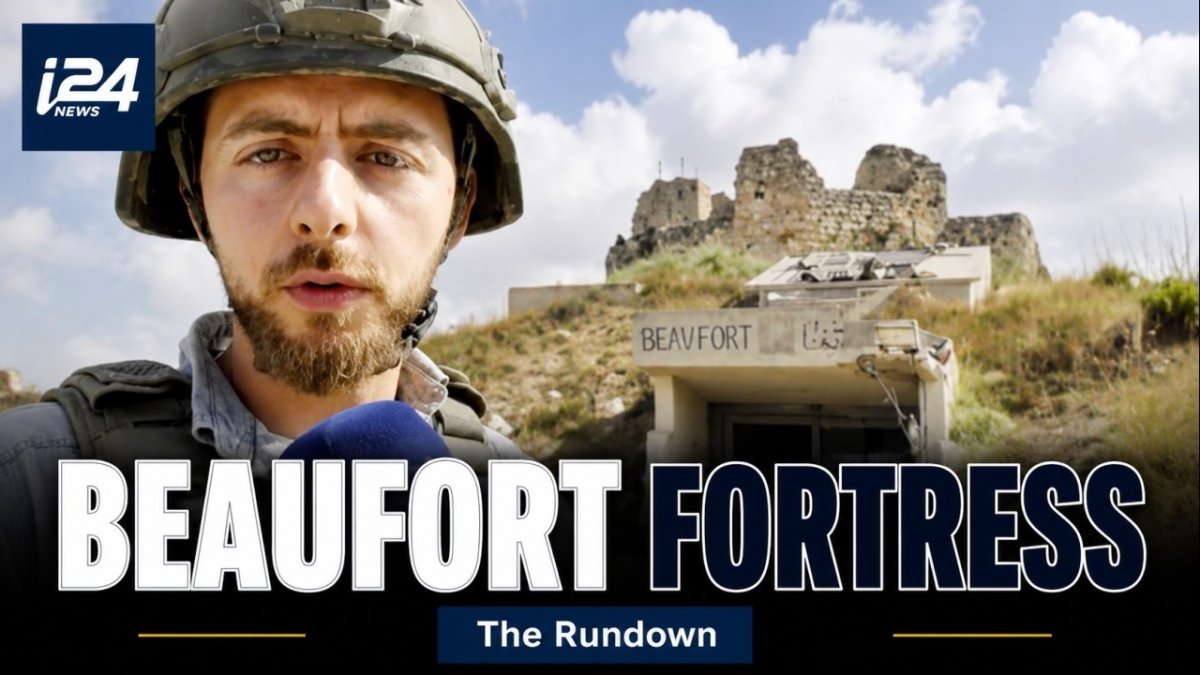
<p>In a recent i24NEWS report, Beaufort Fortress has emerged as a central position in the IDF campaign against Hezbollah in southern Lebanon. The Crusader fortress, located just kilometers from the Israeli border, was recaptured by Israeli forces in May 2026 and now anchors operations along the Litani River overlooking the Galilee Panhandle communities including Metula. IDF Chief of Staff Lt. Gen. Eyal Zamir confirmed that Israeli forces have gained operational control of Hezbollah's underground

In a recent i24NEWS report, Beaufort Fortress has emerged as a central position in the IDF campaign against Hezbollah in southern Lebanon. The Crusader fortress, located just kilometers from the Israeli border, was recaptured by Israeli forces in May 2026 and now anchors operations along the Litani River overlooking the Galilee Panhandle communities including Metula. IDF Chief of Staff Lt. Gen. Eyal Zamir confirmed that Israeli forces have gained operational control of Hezbollah's underground tunnel network beneath the strategic Beaufort Ridge.
Beneath Beaufort's Stones: IDF Gains Control of Hezbollah's Underground Lair as Fortress Becomes Key Front
Jerusalem – July 13, 2026 — The IDF's 36th Division has secured operational control of one of Hezbollah's most extensive underground tunnel networks, hidden for 15 years beneath the historic Beaufort Fortress in southern Lebanon. The discovery, documented in a recent i24NEWS report, reveals the scale of Iranian-backed preparations just kilometers from Israeli communities.
The IDF captured Beaufort Castle in 1982 during operations to push Palestinian terrorists from southern Lebanon. Israeli forces withdrew from the site in 2000, a departure chronicled in the award-winning film "Beaufort." The fortress was then seized by Hezbollah, which spent the next two decades fortifying the position as a strategic stronghold overlooking the Galilee Panhandle.
IDF 36th Division Captures Fortress and Tunnel Network
Israeli engineering forces opened approximately 32 kilometers of new routes through the rugged terrain to enable the 36th Division's May 2026 assault. The Golani Brigade directly stormed the Beaufort Fortress while the Givati Brigade conducted a deception operation that misled Hezbollah fighters and enabled the first crossing of the Litani River. These coordinated actions allowed the division to establish control over the ridge.
Inside the mountain, IDF forces discovered an underground complex extending more than a kilometer beneath Beaufort Ridge. The tunnel system includes electricity, water, sewage, and drainage infrastructure designed for prolonged occupation lasting several months. Hezbollah constructed the network over approximately 15 years with direct Iranian funding and guidance.
36th Division commander Brig.-Gen. Yiftach Norkin stated that Hezbollah is currently refreshing its forces and attempting to remove weapons from the combat zone. "We are watching it," Norkin said, "and when necessary, we will know how to strike those forces."
Underground Operating Rooms and Weapons Depots
Inside the tunnels, IDF forces uncovered vast weapons depots containing anti-tank missiles, anti-aircraft launchers, heavy machine guns designed for engaging helicopters, Kalashnikov rifles, grenades, combat vests, and artillery shells. These stockpiles formed part of Hezbollah's preparations for a sustained conflict along the northern border.
The tunnels also contained underground operating rooms equipped with medical equipment, intensive care kits, syringes, disinfectants, and bandages. Food stockpiles were stored throughout the complex, supporting the infrastructure's design for fighters to remain underground for extended periods without surfacing. The IDF described these as capabilities mirroring those found in Hamas's tunnel networks beneath Gaza.
Capt. B. of the Yahalom combat engineering unit described the entire infrastructure as "part of an Iranian project, with Hezbollah as the contractor." He noted that the tunnels contained "high-end and unique weapons, including rare Hezbollah anti-tank missiles and anti-aircraft launchers" used to fire at the Israeli community of Metula.
Lebanese Army and UNIFIL Failures Exposed
Lt. Col. H., commander of S Company 1 in the Yahalom unit, reported that the Lebanese Armed Forces conducted a short tour of the tunnels earlier this year but did not destroy the asset. "At first, the Lebanese army came here as part of our desire for them to deal with the tunnels. They conducted a short tour and, of course, did not destroy the asset. So we had to return here to complete the mission ourselves," he said.
The discovery raises serious questions about UNIFIL's effectiveness in southern Lebanon. Established in 1978 following Israel's Litani operation, UNIFIL was mandated to monitor the Israeli withdrawal and help Lebanon reestablish its authority. The tunnel network beneath Beaufort Ridge, built over 15 years with heavy machinery and construction materials, evaded detection by dozens of UNIFIL observation posts scattered across the region.
Jerusalem Post analyst Seth J. Frantzman noted that UNIFIL's presence may have been "counterproductive, because the illusion of UNIFIL meant that the international community could pretend Hezbollah wasn't a problem." The Lebanese government similarly used UNIFIL's presence to avoid its obligations to control territory in the south.

Strategic Significance for Northern Border Security
Beaufort Fortress sits just a few kilometers from the Israeli border, dominating the landscape above the Litani River valley. The position directly overlooks the Galilee Panhandle communities of Metula, Misgav Am, and Kfar Giladi, which have faced years of Hezbollah rocket and anti-tank fire from positions on and around the ridge.
The IDF's initial operational objective — pushing Hezbollah beyond anti-tank missile range of Israeli communities — has been achieved. However, Brig.-Gen. Norkin acknowledged that the ceasefire framework has been violated multiple times, and no comprehensive diplomatic arrangement is currently on the horizon. Hezbollah continues to maintain a presence in the Nabatieh area north of Beaufort and is attempting to reposition weapons caches.
The 36th Division's operations at Beaufort represent the deepest IDF ground maneuver in Lebanon since the 2006 Second Lebanon War. Unlike that conflict, which ended with UN Security Council Resolution 1701 and Hezbollah's subsequent rearmament, the current campaign has involved sustained ground occupation of key strategic terrain.
What This Means for Israel's Northern Front
The discoveries at Beaufort — the underground operating rooms, the Iranian-funded infrastructure, the weapons sufficient for prolonged conflict — illustrate the scale of Hezbollah's military buildup over the past two decades. The tunnel network alone represents an investment of hundreds of millions of dollars, directed from Tehran through Hezbollah's construction and military wings.
For Israeli defense officials, the Beaufort operation validates the approach of seizing and holding strategic terrain rather than relying on air power or remote strikes to degrade Hezbollah capabilities. The fortress now serves as a forward operating base for continued operations to clear remaining tunnel systems and prevent Hezbollah from reestablishing positions close to the border.
Residents of the Galilee Panhandle, many of whom have been evacuated since October 2023, are watching the Beaufort developments closely. The question of when they can return home depends not only on the IDF's operational success but on whether a diplomatic framework can be established that prevents Hezbollah from rebuilding what Israeli forces have dismantled beneath the ancient fortress.
By Hannah Berg, Staff Writer
What's Your Reaction?
 Like
0
Like
0
 Dislike
0
Dislike
0
 Love
0
Love
0
 Funny
0
Funny
0
 Wow
0
Wow
0
 Sad
0
Sad
0
 Angry
0
Angry
0










Comments (0)