
AI Transforms Japanese Railways: 2025 Innovation Highlights
AI Takes Center Stage at Mass-Trans Innovation Japan 2025 The biennial Mass-Trans Innovation Japan 2025 exhibition at Makuhari Messe in Chiba Prefecture drew 616 companies and organizations showcasing railway technologies. AI applications featured prominently across passenger services, safety systems and maintenance. Demonstrations highlighted how operators combine AI with exis
AI Takes Center Stage at Mass-Trans Innovation Japan 2025
The biennial Mass-Trans Innovation Japan 2025 exhibition at Makuhari Messe in Chiba Prefecture drew 616 companies and organizations showcasing railway technologies. AI applications featured prominently across passenger services, safety systems and maintenance. Demonstrations highlighted how operators combine AI with existing data to improve operations amid Japan's declining workforce and aging infrastructure.
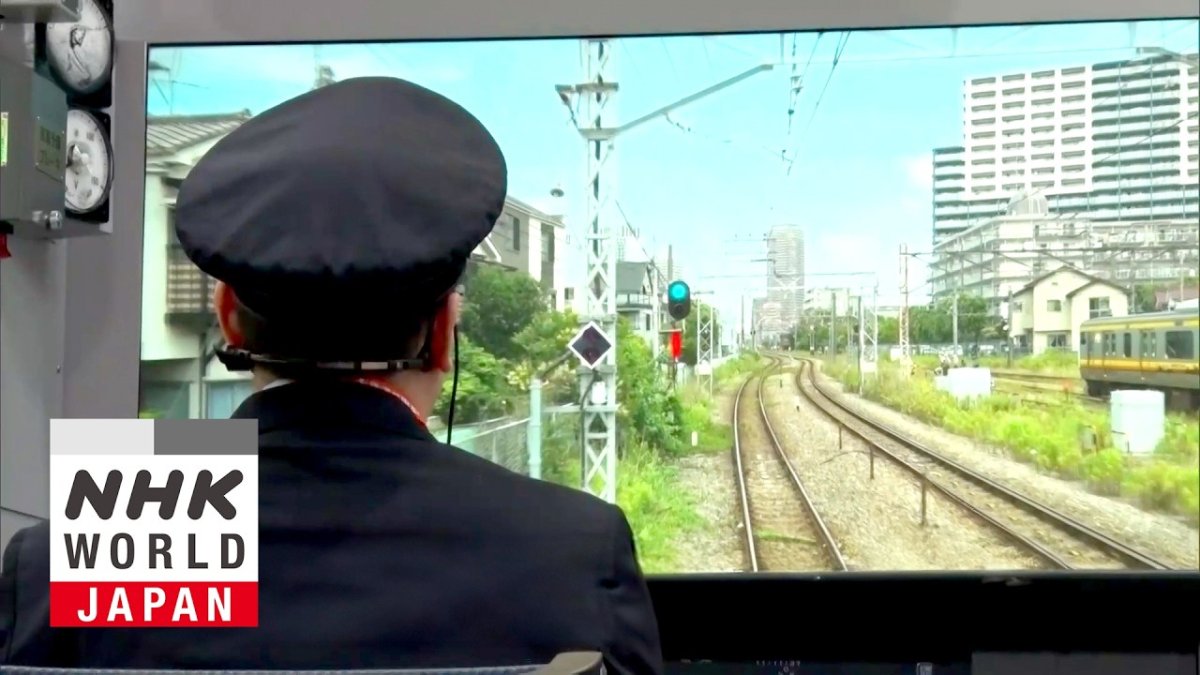
Exhibits included a humanoid robot for overhead line work, driver simulators used by JR East staff, and Thermit Head Repair welding demonstrations. The focus remained on practical AI deployments already in trial or early use by major operators.
Real-Time Congestion Data Improves Passenger Experience
Tokyo Metro, which operates nine lines serving approximately 6.84 million passengers daily, introduced an industry-first AI system that measures crowding in individual train cars. The operator previously relied on car weight and ticket gate data, but through-services with other companies made these sources unreliable for real-time information.
Tokyo Metro collaborated on a depth camera system installed at trackside locations. The cameras capture images through train windows, converting distances into color gradients where blue indicates proximity to the camera. AI processes these images within four seconds to determine congestion levels, which are then displayed in a smartphone app and at station concourses since December 2024.
Passengers receive color-coded information showing available seats in specific cars. Feedback has been positive, with riders using the data to select less crowded options. The system supports Tokyo Metro's goal of enhancing comfort during peak hours while reducing reliance on manual data collection.
AI Strengthens Safety at Level Crossings and Stations
Seibu Railway, operating 176.6 kilometers of lines from central Tokyo into Saitama Prefecture, has installed AI-based detection at six smaller pedestrian crossings since November 2022. Traditional crossings use lasers, but smaller sites previously depended on bystanders pressing emergency buttons when detection was delayed.
The AI system uses cameras and image recognition to monitor crossings. It marks individuals with colored ovals that change from green to magenta when someone lingers inside the barriers, triggering alerts to approaching train drivers. The technology processes up to 100 people per minute at barrier-free facial recognition gates also displayed at the exhibition.
Developers are extending the same AI to detect white canes and wheelchairs via existing station security cameras. This allows staff to provide faster assistance to passengers with disabilities, addressing situations where personnel are occupied in back-office duties.
Automated Inspections Reduce Maintenance Workloads
JR Central began trial operations in 2025 of an AI camera system to inspect approximately 8,000 obstruction warning signals along its network. Overgrown vegetation often obscures these signals, requiring workers to walk tracks or review footage manually. Onboard high-performance AI cameras enable more frequent checks while lowering labor demands, with full deployment planned for fiscal 2026.
A separate robotic camera system inspects train bogie frames by capturing detailed images analyzed by dedicated AI software. This automates processes previously performed manually, maintaining inspection quality while reducing human error and detecting both visible and hidden damage.
HMAX Platform Expands Data-Driven Infrastructure Management
The HMAX system, or Hyper Mobility Asset Expert, centralizes management of trains, tracks, signals and facilities through AI-driven analysis. Sensors mounted on bogies collect vibration data that AI evaluates for early signs of problems in bogies and tracks. Additional cameras monitor rails and overhead lines during regular operations.
Exterior monitoring systems automate visual inspections of roofs, pantographs and undercarriages, cutting workload by 40 percent compared with staff walking around vehicles. HMAX is already deployed on more than 2,000 train sets in Europe and the United Kingdom. Tobu Railway, which runs twelve lines in the Greater Tokyo area, is preparing full implementation in cooperation with the developer.
Addressing Labor Shortages Through Standardized Data and AI
Japan's railway sector faces acute challenges from an aging workforce and shrinking labor pool. AI offers versatility to adapt to varying station and track conditions while processing large volumes of operational data. Experts at the exhibition noted that standardizing data across organizations would expand usable datasets, particularly for maintenance applications where early fault detection prevents failures.
These developments align with national priorities around digital transformation and infrastructure resilience. By automating routine inspections and enabling predictive maintenance, operators can sustain safe, stable service despite fewer available skilled workers. The exhibition demonstrated concrete progress toward these objectives through named deployments rather than theoretical concepts.
By Kenji Tanaka, Staff Writer
This article was produced with AI-assisted research and editorial support. Reporting is based on sources cited in the article.
What's Your Reaction?
 Like
0
Like
0
 Dislike
0
Dislike
0
 Love
0
Love
0
 Funny
0
Funny
0
 Wow
0
Wow
0
 Sad
0
Sad
0
 Angry
0
Angry
0

Japan Correspondent at Global1.News. Tokyo-based voice covering Japanese politics, technology, economy, and culture. Tracks the intersection of tradition and innovation in one of the world's most dynamic societies.















Comments (0)