
Kioxia Surpasses Toyota as Japan's Most Valuable Company
The Milestone: Kioxia Surpasses Toyota as Japan’s Most Valuable Company Kioxia Holdings Corp. (ticker: 285A) became Japan’s most valuable company by market capitalization on June 12, 2026. Shares rose 7.6 percent that day, pushing the company’s market value above ¥44 trillion ($274 billion). This figure exceeded Toyota Motor Corp., which had occupied the top position for years.
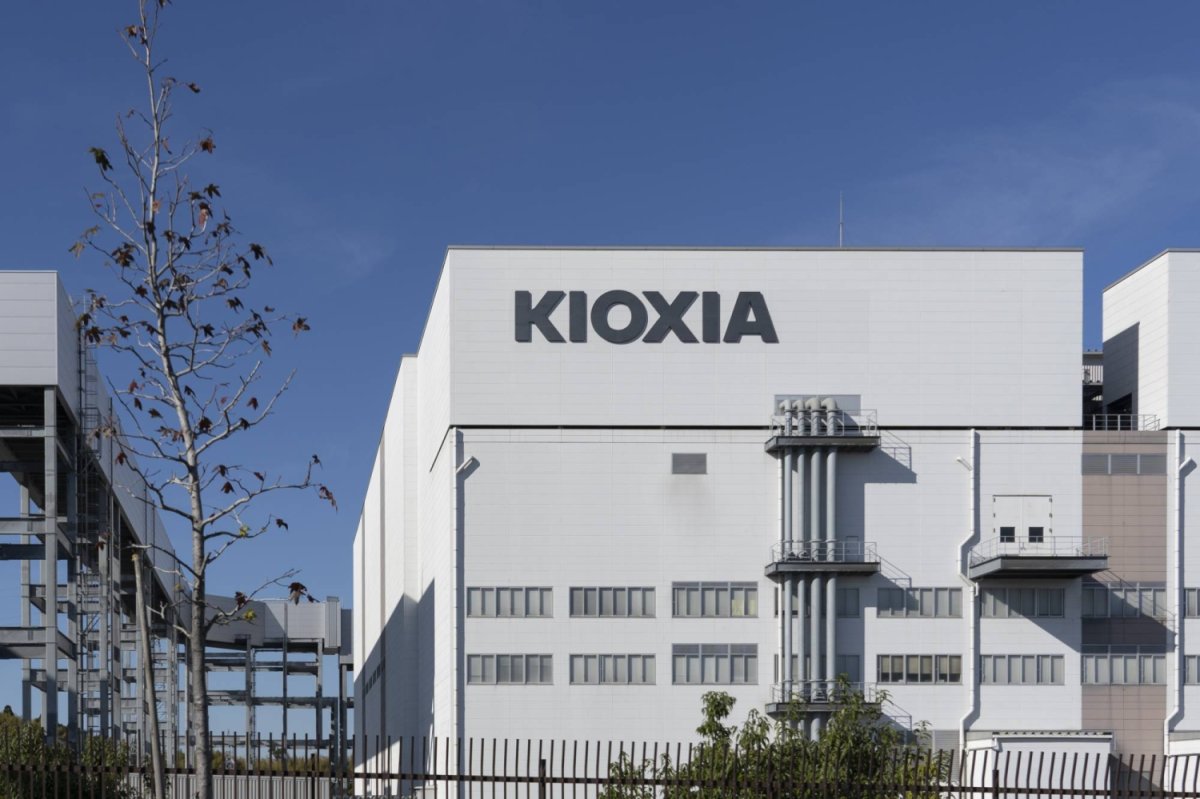
The Milestone: Kioxia Surpasses Toyota as Japan’s Most Valuable Company
Kioxia Holdings Corp. (ticker: 285A) became Japan’s most valuable company by market capitalization on June 12, 2026. Shares rose 7.6 percent that day, pushing the company’s market value above ¥44 trillion ($274 billion).
This figure exceeded Toyota Motor Corp., which had occupied the top position for years. The milestone occurred just 18 months after Kioxia’s initial public offering on December 18, 2024, on the Tokyo Stock Exchange Prime Market.
At the IPO, shares were priced at ¥1,455, raising approximately $800 million at a valuation of roughly $5.2 billion. The current market capitalization represents an increase of approximately 53 times from that level.
The AI Boom Driving Demand for NAND Flash Memory
Explosive growth in artificial intelligence infrastructure is the primary driver behind Kioxia’s valuation surge. AI data centers require vast quantities of high-capacity NAND flash memory and solid-state drives for training large language models and storing massive datasets.
Kioxia, a leading producer of NAND flash, has seen order volumes rise sharply as hyperscale cloud providers expand their facilities. The company’s products are integral to the storage layers that support rapid data access in AI workloads.
Reuters reported on May 15, 2026, that Kioxia expects operating profit of ¥1.3 trillion ($8.2 billion) for the April-June 2026 quarter. This projection directly reflects the scale of AI-related demand currently reshaping procurement patterns across the semiconductor supply chain.
Kioxia’s Remarkable Journey from Toshiba Spin-Off to Market Leader
Kioxia traces its origins to Toshiba Memory Corporation, which was spun off from Toshiba in 2017. The memory business was sold to a Bain Capital-led consortium in 2018 for $18 billion. In October 2019 the company was renamed Kioxia.
Under President and CEO Nobuo Hayasaka, headquartered in Tokyo, Kioxia focused on scaling production of advanced NAND technology. The December 2024 IPO marked the return of the memory specialist to public markets after years of private ownership.
The company briefly surpassed Toyota in early June 2026 before achieving a definitive lead on June 12. This rapid ascent illustrates how specialized technology firms can achieve outsized valuations when aligned with structural demand shifts.
Comparison with Toyota and Japan’s Economic Transformation
Toyota’s long-standing position as Japan’s largest company by market value reflected the dominance of the automotive sector in the postwar economy. Kioxia’s rise signals a shift toward high-technology components that power digital infrastructure.
While Toyota continues to generate substantial revenue from vehicle sales and hybrid technology, Kioxia’s valuation multiple is driven by expectations of sustained AI-related earnings growth. The contrast highlights how global demand for data storage is altering the composition of Japan’s corporate elite.
Japanese government ministries, including METI, have long promoted semiconductor self-sufficiency. Kioxia’s performance provides a concrete example of how private-sector innovation in memory technology contributes to national industrial strategy objectives.
Implications for Japanese Investors and the Tokyo Stock Exchange
The re-ranking of Japan’s largest company by market capitalization has immediate consequences for index-tracking funds and institutional portfolios. Many domestic equity funds maintain heavy weightings in traditional manufacturers and must now adjust allocations toward semiconductor names.
The Tokyo Stock Exchange Prime Market has seen increased trading volumes in technology shares since Kioxia’s IPO. The listing has also drawn renewed attention from overseas investors seeking exposure to Japan’s memory-chip supply chain.
Market participants note that Kioxia’s performance may encourage other Japanese technology subsidiaries to consider public listings, potentially broadening the range of investable assets on the exchange.
What to Watch: Competition, AI Demand Sustainability, and Global Semiconductor Landscape
Going forward, investors will monitor whether AI capital expenditure by major cloud providers remains at current levels. Any moderation in data-center buildouts could affect NAND pricing and Kioxia’s profit trajectory.
Global competitors in the NAND market continue to expand capacity. Supply additions from South Korean and U.S. manufacturers represent a key variable that could influence pricing power in the second half of 2026 and beyond.
Japanese policymakers and corporate Japan will also track export-control developments and technology alliances. Kioxia’s ability to maintain technological leadership in next-generation memory nodes will determine whether the company sustains its position at the top of Japan’s corporate rankings.
Tags: Kioxia Holdings, Japan most valuable company, AI NAND demand, Toyota market cap, Tokyo Stock Exchange IPO, semiconductor Japan
By Kenji Tanaka, Staff Writer
This article was produced with AI-assisted research and editorial support. Reporting is based on sources cited in the article.
What's Your Reaction?
 Like
0
Like
0
 Dislike
0
Dislike
0
 Love
0
Love
0
 Funny
0
Funny
0
 Wow
0
Wow
0
 Sad
0
Sad
0
 Angry
0
Angry
0

Japan Correspondent at Global1.News. Tokyo-based voice covering Japanese politics, technology, economy, and culture. Tracks the intersection of tradition and innovation in one of the world's most dynamic societies.














Comments (0)