
Kazakhstan's Retreat from Direct Akim Elections: Implications for Central Asian Governance and Korean Engagement
Kazakhstan's Retreat from Direct Akim Elections: Implications for Central Asian Governance and Korean Engagement The Reversal of District-Level Electoral Reforms Kazakhstan has reversed course on direct elections for district akims less than three years after launching pilot direct elections. A recent amendment to two laws — "On Local Public Administration and Self-Government"
The Reversal of District-Level Electoral Reforms
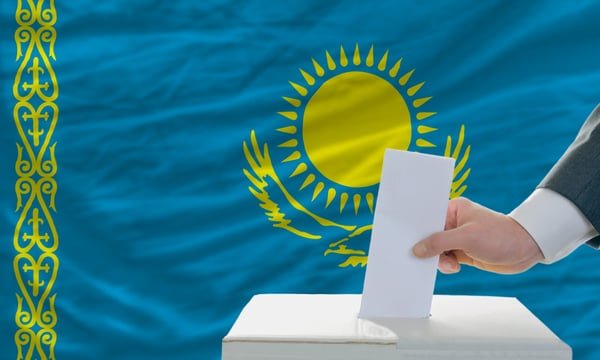
Kazakhstan has reversed course on direct elections for district akims less than three years after launching pilot direct elections. A recent amendment to two laws — "On Local Public Administration and Self-Government" and "On Elections" — alters the selection procedure at the district and "cities of regional significance" level, doing away with direct elections.
Instead, akims for districts and cities of regional significance will be appointed by the regional akim with the consent of the local maslikhat. Regional akims remain appointed by the president. Village akims are still directly elected. This adjustment reflects a deliberate recalibration of the pace of local electoral expansion.
Kazakhstan President Kassym-Jomart Tokayev. The reversal of direct elections for district akims marks a significant recalibration of the country's political reform trajectory. (Global 1 News)
Timeline of Pilot Implementation and Subsequent Adjustment
In 2021, Kazakhstan introduced direct elections for village akims. President Kassym-Jomart Tokayev called this "a sign of sufficient maturity of our political system" and "a serious step in the democratic development of our society." In September 2023, the Central Election Commission announced pilot elections for small towns and provincial districts. In 2024, Tokayev announced district and city akims would all be directly elected going forward.
By November 2025, Tokayev suggested abolishing district akim elections, explaining that "there are too many elections in the country, and citizens are growing tired of political campaigns." The amendments now formalize this shift, illustrating how pilot programs can be scaled back when administrative fatigue emerges.
Electoral Outcomes and Party Dynamics in Early Rounds
In 2021 village elections, 85% of winners were members of the ruling party Nur-Otan (later Amanat). Only 38% ran with party affiliation. In 2023 pilot elections, Amanat-affiliated candidates won 37 of 45 races (82%). These results indicate that even under direct voting, candidates aligned with the dominant party secured overwhelming majorities at the local level.
The data underscore the limited immediate diversification of political representation despite the introduction of competitive ballots. Such patterns provide concrete evidence of how institutional legacies shape outcomes during incremental reforms.
Comparisons to Korea's Local Autonomy Reforms Since 1995
Korea introduced its local autonomy system in 1995 as part of the broader democratic consolidation that followed the 1987 transition. Direct elections for local executives and councils were phased in gradually, allowing central authorities to retain oversight while expanding citizen participation. Kazakhstan's brief experiment with district akim elections and its subsequent reversal invite comparison with Korea's measured approach, where local autonomy expanded without rapid nationwide proliferation of electoral contests.
The Korean experience demonstrates that successful decentralization often requires sustained institutional capacity-building alongside electoral mechanisms. Kazakhstan's adjustment, by contrast, highlights the challenges of managing voter fatigue in a system still transitioning from centralized appointment traditions.
Economic Linkages and Korea-Central Asia Investment Interests
Korea maintains major economic investments in Kazakhstan through chaebol such as Samsung, Hyundai, and LG. These firms operate across energy, manufacturing, and infrastructure sectors that depend on stable local administrative frameworks. The appointment-based system for district akims, now restored through regional oversight, may offer predictability for project approvals and regulatory coordination.
At the same time, the retention of direct elections at the village level preserves a channel for community-level engagement that could indirectly affect labor relations and small-scale commercial environments where Korean enterprises maintain supply chains. The policy shift therefore carries practical implications for the operational environment surrounding Korean capital in Central Asia.
Strategic Significance for Northeast Asian Diplomacy
Kazakhstan's recalibration of local electoral procedures intersects with Korea's broader diplomatic engagement in Central Asia, a region viewed as a corridor for energy security and diversified trade routes. The emphasis on administrative efficiency over expanded direct elections may align with Korean preferences for stable governance that facilitates long-term investment planning.
Within Northeast Asian diplomacy, this development also informs how Seoul positions its support for gradual institutional reforms in partner states. Korea's own post-1995 experience of balancing central coordination with local autonomy offers a reference point for dialogue on sustainable decentralization models, potentially strengthening bilateral policy exchanges without imposing prescriptive templates.
By Prof. David Park, Staff WriterThis article was produced with AI-assisted research and editorial support. Reporting is based on sources cited in the article.
What's Your Reaction?
 Like
0
Like
0
 Dislike
0
Dislike
0
 Love
0
Love
0
 Funny
0
Funny
0
 Wow
0
Wow
0
 Sad
0
Sad
0
 Angry
0
Angry
0

East Asia/Technology Correspondent at Global1.News. Seoul-based voice covering Korean politics, technology, business, and culture. Analyzes how technology and geopolitics intersect across East Asia.















Comments (0)