
UK Issues Rare Red Extreme Heat Warning for June 2026
The Met Office Issues Its Second-Ever Red Extreme Heat Warning The Met Office has issued its second-ever Red Extreme Heat Warning, effective from 9am on Wednesday 24 June to 9pm on Thursday 25 June 2026. This marks only the second occasion such an alert has been declared, following the precedent set in July 2022. The warning covers London, the South East, South West, East Midla
The Met Office Issues Its Second-Ever Red Extreme Heat Warning
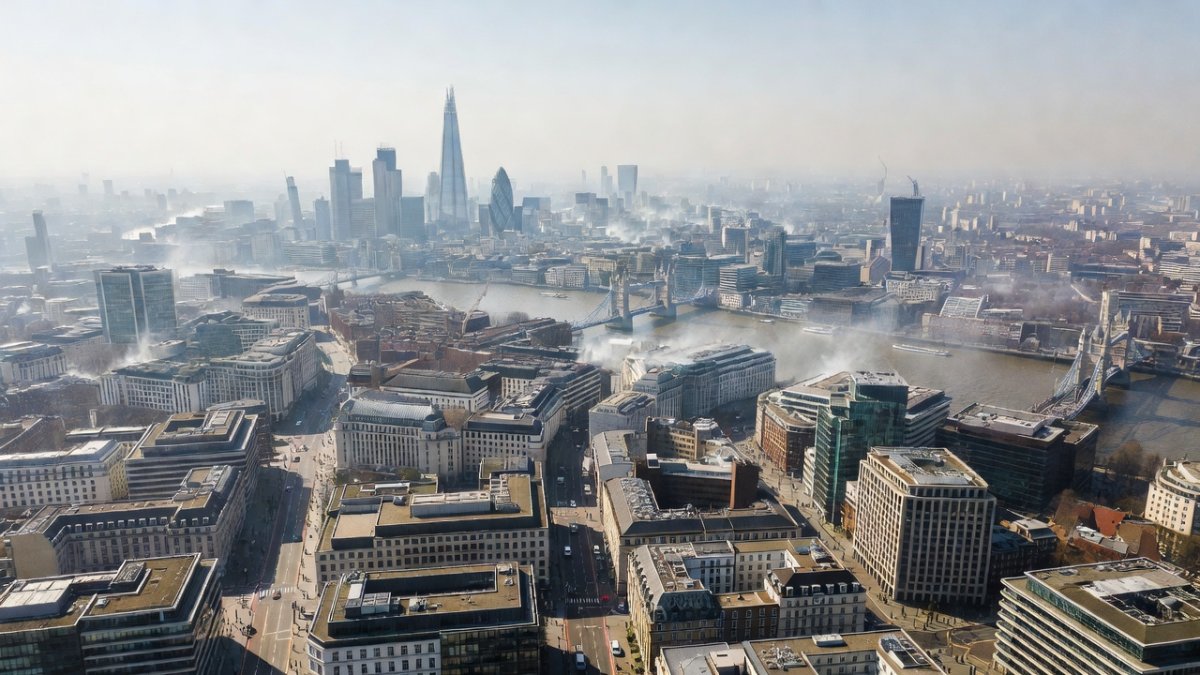
The Met Office has issued its second-ever Red Extreme Heat Warning, effective from 9am on Wednesday 24 June to 9pm on Thursday 25 June 2026. This marks only the second occasion such an alert has been declared, following the precedent set in July 2022. The warning covers London, the South East, South West, East Midlands, West Midlands, East of England and South Wales as far as Swansea.
Deputy Chief Forecaster Mark Sidaway described the decision as reserved for the most severe events, noting that severe and significant impacts are expected. Amber warnings already in place for Monday 22 and Tuesday 23 June will transition directly into the red alert, creating an extended period of exceptional risk. This is the second official heatwave of 2026, arriving as a broader European heatwave affects France and neighbouring countries.
Local resilience forums across England and Wales have been activated, with NHS emergency cooling protocols implemented in hospitals from Southampton to Birmingham. Outreach teams are prioritising rough sleepers in London and care home residents in the Midlands, where overnight temperatures may remain dangerously elevated.
What a Red Warning Means for Millions Across England and Wales
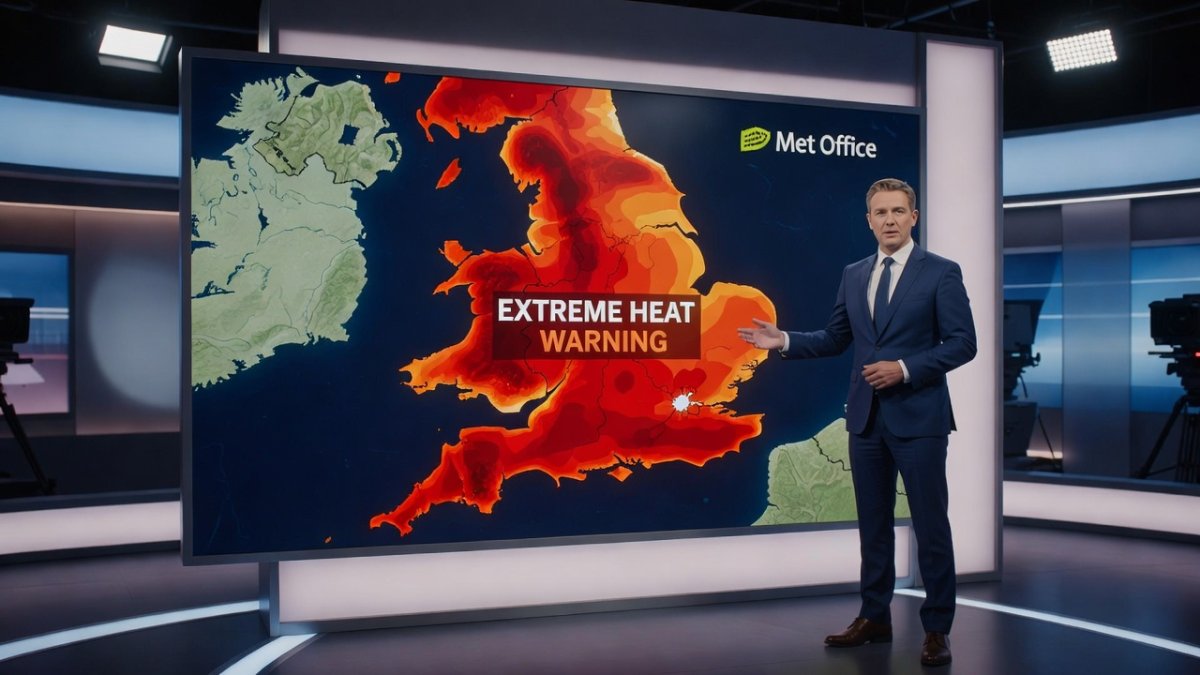
A Red Extreme Heat Warning signals that the heat poses a threat to life even for healthy individuals. Millions of residents in London, Bristol, Birmingham, Cardiff and surrounding regions face direct risks to health, daily routines and essential services. The warning encompasses six English regions under a simultaneous UKHSA red heat health alert.
Public Health England data from previous events show excess deaths rise sharply once temperatures exceed 30°C for consecutive days. With high humidity forecast, the physiological strain will be greater than during the drier 2022 episode. Communities in the East of England and South Wales are particularly exposed because many homes lack adequate insulation or ventilation.
Local authorities in Gloucester and Warminster have already begun distributing additional water supplies and opening cooling centres. The alert forces a fundamental shift in how residents, employers and emergency services operate, moving beyond inconvenience to coordinated life-safety measures.
Record-Breaking Forecasts and Tropical Nights
Forecasters predict daytime highs of 38–40°C, which would surpass the existing UK June record of 35.6°C set in Southampton in 1976 and equalled in London in 1957. Wales's June record of 33.7°C, established in 2000, is also expected to fall. High humidity will intensify the perceived temperature, creating conditions rarely experienced in the British Isles.
Tropical nights, defined as minimum temperatures remaining above 20°C, are forecast across much of the warned area. Such nights prevent the human body from recovering from daytime heat stress, elevating risks of heatstroke and cardiovascular events. The Met Office has emphasised that the combination of extreme daytime heat and persistently warm nights distinguishes this event from previous heatwaves.
These conditions arrive amid a wider European heatwave, with models indicating the jet stream remains locked in a position that funnels hot air from the continent. Historical comparisons with 2022 show this episode carries greater humidity, increasing the public health burden.
UKHSA Red Alert: Risk to Life Even for the Healthy
The UK Health Security Agency has issued a red heat health alert for six English regions, stating there is a risk to life for even the healthy population. This is the highest level of alert and triggers enhanced surveillance by NHS trusts and local authorities. Hospitals in London and the Midlands have activated emergency cooling protocols, including additional fans, shaded wards and revised staffing rotas.
Previous red alerts correlated with sharp rises in ambulance call-outs and hospital admissions for heat-related illness. The current warning explicitly includes people without pre-existing conditions, reflecting the unprecedented combination of temperature and humidity. Care homes in the West Midlands have received targeted guidance on hydration monitoring and relocation of residents to cooler areas.
Outreach programmes for rough sleepers have been expanded in Bristol and Birmingham, where street populations face the greatest exposure. The UKHSA alert remains in force alongside the Met Office red warning, creating a unified national response framework.
Schools and Daily Life Disrupted by Extreme Temperatures
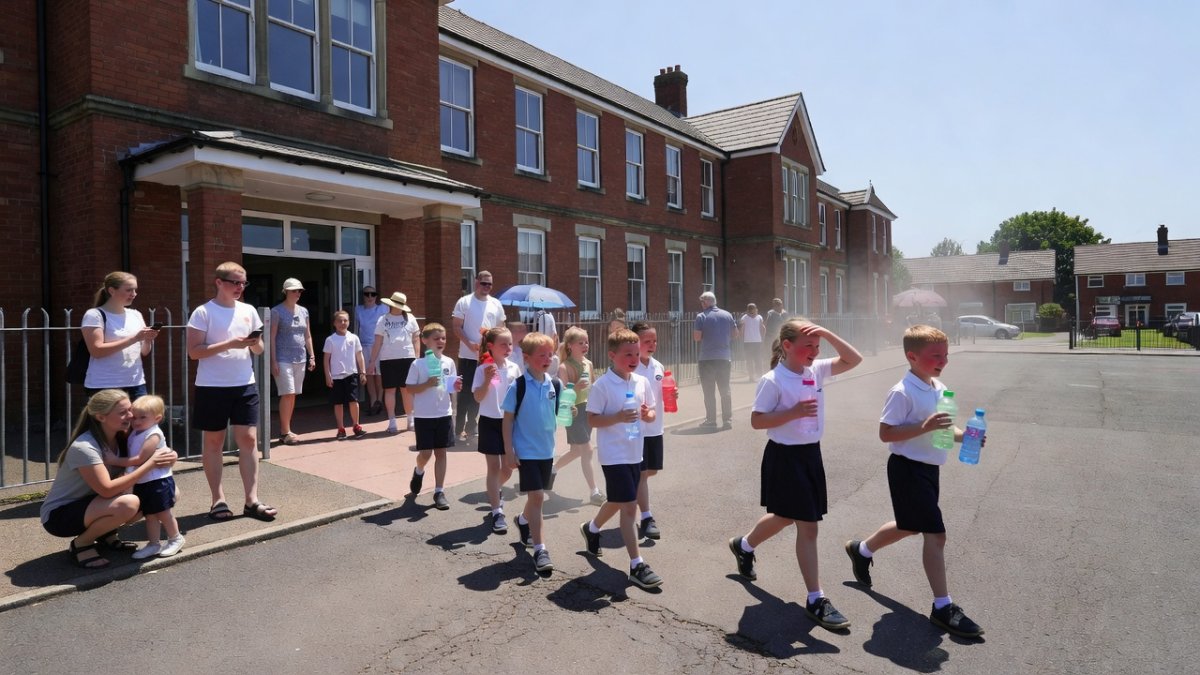
Schools across the affected regions are implementing early closures and modified timetables. Kingdown School in Warminster will finish at 12:25pm, while Kingsholm CofE Primary in Gloucester will end lessons at 1:30pm. Uniform rules have been relaxed and physical education lessons curtailed or moved indoors. Extra water stations have been installed in playgrounds and classrooms.
Paul Whiteman of the National Association of Head Teachers confirmed that schools are taking every possible measure, yet noted there remains no legal upper temperature limit for classrooms. This regulatory gap leaves headteachers navigating extreme conditions without statutory backing. Parents in the South East have reported children struggling with concentration and some experiencing dizziness during the morning commute.
Daily life for families in the East of England is further complicated by the absence of widespread air conditioning in homes and workplaces. Many parents are rearranging work schedules or taking annual leave to supervise children during the shortened school day.
Transport, Energy and Infrastructure Under Strain
Network Rail has imposed speed restrictions across lines serving London, the Midlands and South Wales to prevent track buckling. Commuters on routes from Southampton to Birmingham face widespread cancellations and delays. Power cables are at risk of sagging under thermal expansion, threatening electricity supply during peak demand periods.
Professor Bill McGuire of UCL warned that the UK's health, energy and transport infrastructure was never designed for these conditions. He highlighted the potential for thousands of residents to sleep in streets if poorly insulated homes become unbearable heat traps. Local transport hubs in Cardiff and Bristol have opened additional shaded waiting areas.
Energy suppliers have activated demand-management protocols, urging households to reduce usage between 4pm and 7pm. The cumulative strain on the grid coincides with the second heatwave of the year, testing resilience already weakened by earlier warm spells.
Climate Scientists Warn of Inadequate Adaptation
Dr Friederike Otto of Imperial College London stated that the UK's first 40°C day was supposed to serve as a wake-up call, yet clearly someone hit snooze. She described the current heat as a growing public health threat rather than a mere inconvenience. Scientists at both Imperial and UCL argue that adaptation measures remain piecemeal and insufficient for the frequency of such events.
The absence of mandatory maximum workplace and classroom temperatures, limited funding for retrofitting social housing, and slow progress on urban greening all contribute to heightened vulnerability. European neighbours have implemented more systematic cooling strategies, leaving the UK lagging in comparative resilience.
These warnings arrive as climate models project further increases in the frequency of extreme heat episodes across northern Europe. The current event underscores the gap between scientific projections and practical policy responses at national and local levels.
The Bottom Line — What Comes Next
The Red Extreme Heat Warning will remain in force until 9pm on Thursday 25 June 2026, after which amber alerts are expected to continue into the weekend. Residents across England and Wales must prioritise hydration, limit outdoor exertion and check on vulnerable neighbours. Emergency services anticipate sustained pressure on resources throughout the period.
Longer-term, the episode reinforces the urgent need for legislative change on indoor temperature standards and accelerated investment in climate-resilient infrastructure. Without such measures, future heatwaves will continue to expose systemic weaknesses in the UK's preparedness.
By Erica Thornton, Staff Writer
This article was produced with AI-assisted research and editorial support. Reporting is based on sources cited in the article.
What's Your Reaction?
 Like
0
Like
0
 Dislike
0
Dislike
0
 Love
0
Love
0
 Funny
0
Funny
0
 Wow
0
Wow
0
 Sad
0
Sad
0
 Angry
0
Angry
0

US Politics and Policy Correspondent at Global1.News. Based in Washington DC, covering American politics, policy, elections, and the courts. Knows how the system works and tells you what it actually means.














Comments (0)