
Trump: 20% Hormuz Cargo Toll, Iran Blockade Reinstated
In a recent BBC News report, the world watched as President Donald Trump dramatically escalated the ongoing US-Iran conflict by announcing a reinstated naval blockade of Iranian ports and demanding a 20 percent toll on all cargo passing through the strategic Strait of Hormuz. In a series of Truth Social posts on Monday, Trump declared the United States the self-appointed "guard
In a recent BBC News report, the world watched as President Donald Trump dramatically escalated the ongoing US-Iran conflict by announcing a reinstated naval blockade of Iranian ports and demanding a 20 percent toll on all cargo passing through the strategic Strait of Hormuz. In a series of Truth Social posts on Monday, Trump declared the United States the self-appointed "guardian" of the waterway — a move that immediately drew fire from Tehran, the United Nations, and even contradicted his own administration's stated position on international maritime law.
Trump Demands 20% Toll on All Cargo Through Strait of Hormuz, Reinstates Iran Naval Blockade
Washington, DC – 14 July 2026 — President Donald Trump has reinstated the US naval blockade of Iranian ports and announced a controversial 20% charge on all cargo transiting the Strait of Hormuz, declaring the United States the "guardian" of the strategic waterway. The move, announced on Truth Social on Monday evening, marks the most significant unilateral assertion of US authority over international shipping lanes in decades and has drawn swift condemnation from Iran, the United Nations shipping agency, and international legal experts.
The Blockade Returns: A New Phase in the Hormuz Crisis
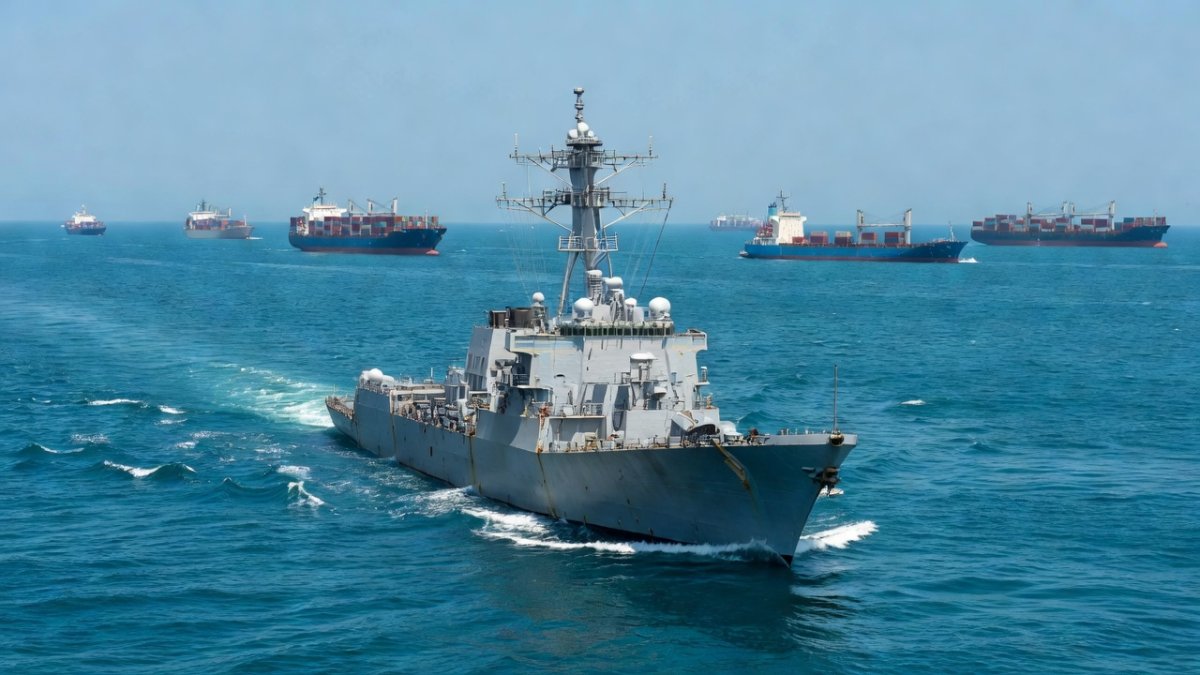
Trump's announcement on Monday represents the second time he has imposed a naval blockade on Iranian ports since the US-Iran war erupted on 28 February. The previous blockade, implemented in April and lasting three months, saw the US military fire on at least nine vessels that refused to comply with naval directives. Under the new measures, which CENTCOM confirmed will take effect at 16:00 Eastern Time (20:00 GMT) on Tuesday, US naval forces will prevent "Iran's ships or customers" from entering or leaving the Strait of Hormuz, while promising "fair and open use" to all other nations.
The timing is significant. Trump formally notified Congress on 10 July — in a letter to Senator Chuck Grassley, president pro tempore of the Senate — that US military activities against Iran resumed on 7 July, as required under the War Powers Resolution. The letter, obtained by BBC News White House correspondent Cai Pigliucci, described the strikes as "limited, measured, planned, and executed in a manner designed to minimize civilian casualties." This week's blockade announcement effectively confirms that the fragile ceasefire and the US-Iran Memorandum of Understanding signed in June have collapsed entirely.
The 20% Toll: International Law or Executive Overreach?
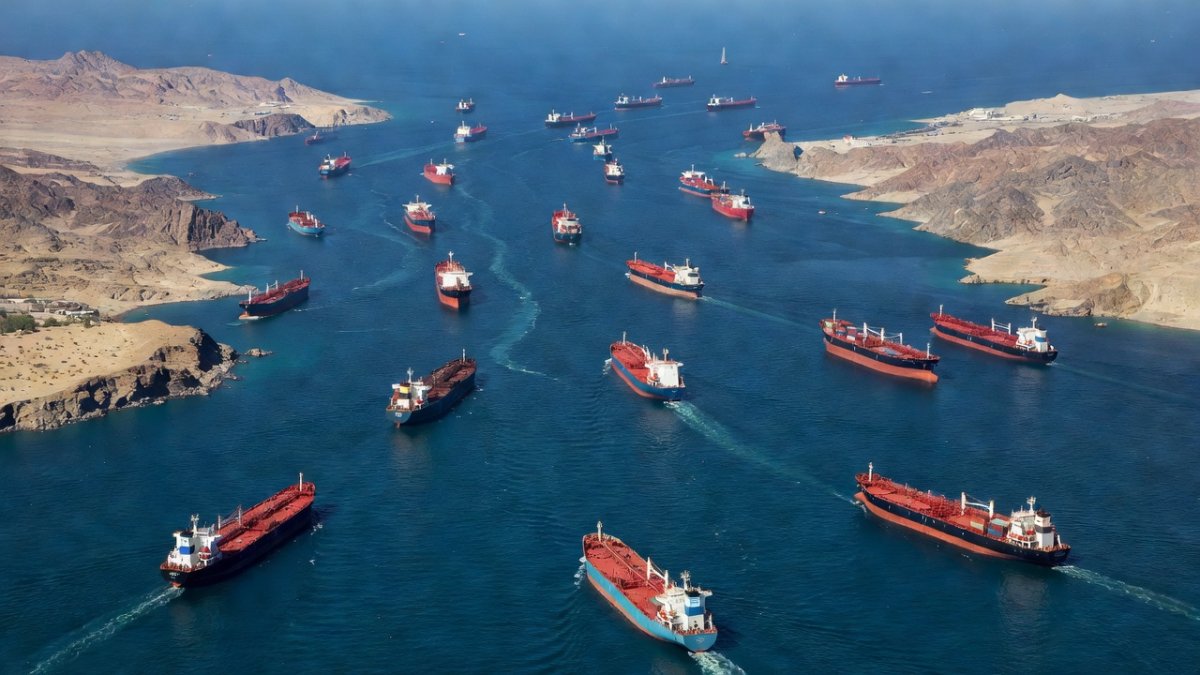
The centerpiece of Trump's announcement — a 20% charge on all cargo shipped through the Strait of Hormuz — has created a diplomatic firestorm even before implementation. The US president framed the toll as reimbursement for American military expenditure in securing the waterway, writing on Truth Social that the fee would "cover any and all costs of providing safety and security in this volatile region." However, the proposal directly contradicts the stated position of his own Secretary of State, Marco Rubio, who told reporters in early July that "no country is allowed to charge tolls or fees on an international waterway. That's existing international law. That's the way it is in international waterways all over the world, and that's the way we expect it'll be here."
The International Maritime Organization, the UN agency responsible for shipping regulation, was swift to respond. A spokesperson told the BBC on Monday that the IMO "stands firmly against charging fees for passage through straits used for international navigation," adding that "there is no legal basis through which to introduce mandatory tolls simply to transit through a strait." The agency confirmed it was aware of Trump's announcement and was "awaiting more information" — a diplomatic signal that the US has not coordinated this move with international maritime bodies. Arsenio Dominguez, IMO Secretary-General, has emphasized that any such toll would require multilateral agreement, not unilateral decree.
Tehran's Mocking Response: "20% Is Too Much. We Will Be Fair."
Iranian Foreign Minister Abbas Araghchi delivered a characteristically sardonic response to Trump's announcement, posting on X: "POTUS is absolutely right. Whoever provides secure and safe passage of commercial vessels through the Strait of Hormuz should be compensated for this service. Iran has always been the GUARDIAN of the Strait and will remain so FOREVER. 20% is of course too much. We will be fair."
The foreign minister's wordplay — adopting Trump's "guardian" terminology while mocking the proposed fee — reflects a calculated diplomatic strategy. By accepting Trump's premise that the guardian of the strait deserves compensation, Araghchi positions Iran as the legitimate custodian of the waterway while painting the US as an overcharging interloper. The message is clear: Iran has controlled the strait for decades, and no amount of American naval power changes that reality. Iranian parliamentarian Ebrahim Rezaei reinforced this stance, declaring that "We don't need foreign workers to protect the strait!"
Military Escalation: Third Consecutive Night of US-Iran Strikes
The political drama unfolded against a backdrop of sustained military escalation. The US Central Command confirmed it had struck multiple Iranian military targets overnight, including a submarine and a ship maintenance facility, in what it described as a direct response to Iranian attacks on commercial vessels in the strait. These strikes represent the third consecutive night of US military operations against Iranian positions, signaling that Washington has abandoned any pretense of maintaining the June ceasefire.
Iran responded in kind, striking US military bases in Kuwait, Jordan, and Bahrain, as well as targeting radar systems in Oman. Bahrain has accused Iran of deliberately targeting civilians in its strikes, a charge that could have significant diplomatic repercussions given Bahrain's status as a US ally and home to the US Navy's Fifth Fleet. The cross-border nature of the strikes — spanning multiple Gulf states — raises the specter of a broader regional conflict that could draw in additional players and further destabilize an already volatile region.
Oil Markets and Global Energy Security
The economic consequences of the escalating Hormuz crisis were felt immediately. Oil prices surged on Monday following Trump's announcement, with analysts warning that the combined effect of the blockade and the proposed toll could drive energy costs significantly higher for importing nations. The Strait of Hormuz normally carries approximately 20 million barrels of oil and oil products per day — about 20% of the world's total oil and liquefied natural gas supply — making it the single most critical chokepoint for global energy markets.
Ship tracking data from MarineTraffic shows that only a small number of vessels are currently moving through the waterway, with traffic remaining severely restricted. Two ships were observed sailing east into the Gulf of Oman on Monday, while two others stopped transmitting their locations — a pattern consistent with vessels avoiding confrontation or hiding their movements. The Joint Maritime Information Centre has issued an advisory warning mariners to expect a "sustained naval presence, increased IRGC hailing and monitoring along transit routes," and advised compliance with blockading forces' directions. Gulf states including Saudi Arabia and the UAE have expressed private concerns over supply disruptions affecting their exports.
Regional Fallout: Houthi Escalation and the Sanaa Airport Incident
The crisis has already begun to spill into neighbouring conflicts. The Iran-backed Houthi group in Yemen claimed responsibility for targeting Saudi Arabia's Abha International Airport with ballistic missiles and drones on Monday, with spokesperson Yahya Saree describing the attack as retaliation for "Saudi aggression that targeted Sanaa International Airport." Earlier in the day, Yemen's armed forces had reportedly targeted the runway at Sanaa airport to prevent an Iranian aircraft from landing — a move condemned by Iran's Foreign Ministry spokesperson Esmail Baghaei as a "blatant violation of international aviation law."
Despite the runway damage, Houthi media subsequently claimed that the Iranian plane had landed safely. The incident represents the most significant escalation in the largely dormant Yemen conflict in years, raising the possibility that the Hormuz crisis is catalyzing a broader realignment of Iran-aligned forces across the region. The Houthis have already demonstrated their capacity to disrupt Red Sea shipping; if they extend their operations into the Arabian Sea in coordination with Iran's Hormuz strategy, the maritime security picture for the entire region becomes significantly more dangerous.
Russia's Strategic Calculus Amid Rising Energy Prices
From Moscow's perspective, the Hormuz crisis offers both immediate economic gains and longer-term geopolitical risks. Surging oil prices directly benefit Russian energy exports, particularly as Western sanctions continue to limit access to traditional markets. Russian officials have remained publicly measured, with the Kremlin emphasizing the need for de-escalation while quietly positioning state energy firms to capture higher revenues from European and Asian buyers seeking alternatives to Gulf supplies. This dynamic strengthens Russia's hand within BRICS energy discussions and reinforces its role as a reliable supplier during periods of global instability.
Yet the broader destabilization of Gulf security complicates Russia's strategic position. Moscow maintains longstanding ties with Tehran and has no interest in seeing the conflict expand into a wider war that could threaten its own interests in Syria and the Caucasus. Analysts suggest this marks a delicate balancing act for the Kremlin, which must navigate higher energy revenues against the risk of supply chain disruptions affecting its own exports through the Black Sea and beyond.
Analysis — The Strategic Calculus Behind Trump's Hormuz Gamble
Trump's decision to impose a toll on international shipping represents a dramatic departure from established norms of maritime law — and a calculated political gamble. By framing the Strait of Hormuz as a US-protected asset rather than an international waterway, Trump is attempting to achieve what decades of American diplomacy have not: forcing the international community to pay directly for Washington's military presence in the Gulf. The "guardian" framing is particularly significant: it positions the US as the de facto sovereign of the strait, a claim with no basis in the UN Convention on the Law of the Sea and one that Washington's own allies are likely to reject.
The contradiction with Secretary Rubio's earlier statement on tolls exposes a deeper tension within the administration's Iran policy. On one hand, Trump's team has consistently argued that no nation should unilaterally control international waterways; on the other, the president is now doing precisely that. This inconsistency could undermine US credibility with allies — particularly Gulf states like Saudi Arabia and the UAE, whose oil exports depend on the strait and who have already suffered from months of disruption. For Moscow, the Hormuz crisis presents both a challenge and an opportunity: higher oil prices benefit Russian energy exports, but the broader destabilization of Gulf security complicates Russia's strategic calculus in the Middle East.
The coming days will reveal whether Trump's gamble pays off. With a "Speech to the Nation" scheduled for Thursday, the president may use the address to lay out a broader strategy — or to escalate further. Either way, the Strait of Hormuz has become the central arena of the US-Iran conflict, and the 20% toll has transformed it from a military flashpoint into a test of international law itself. BBC correspondent Barbara Plett Usher noted that neither side appears to want full-scale war, while White House reporter Bernd Debusmann Jr. highlighted the internal contradictions in the administration's messaging.
By Irina Volkov, Staff Writer
This article was produced with AI-assisted research and editorial support. Reporting is based on sources cited in the article.
What's Your Reaction?
 Like
0
Like
0
 Dislike
0
Dislike
0
 Love
0
Love
0
 Funny
0
Funny
0
 Wow
0
Wow
0
 Sad
0
Sad
0
 Angry
0
Angry
0
Russia/Eastern Europe Correspondent at Global1.News. Covering Russian politics, energy, security, and the shifting dynamics of the post-Soviet space. Provides clear-eyed analysis on one of the world's most opaque regions.











Comments (0)