
Tnuva Warehouse Crisis: Dairy Shortage Expands to White Cheese as German Technicians Stay Away
Israel's dairy supply chain is facing an escalating crisis as a prolonged technical failure at Tnuva's flagship automated warehouse blocks distribution of white cheese, even as production lines run at full tilt. The standoff stems from a computer malfunction compounded by German technicians' refusal to travel amid heightened security risks, leaving retailers and consumers scrambling.
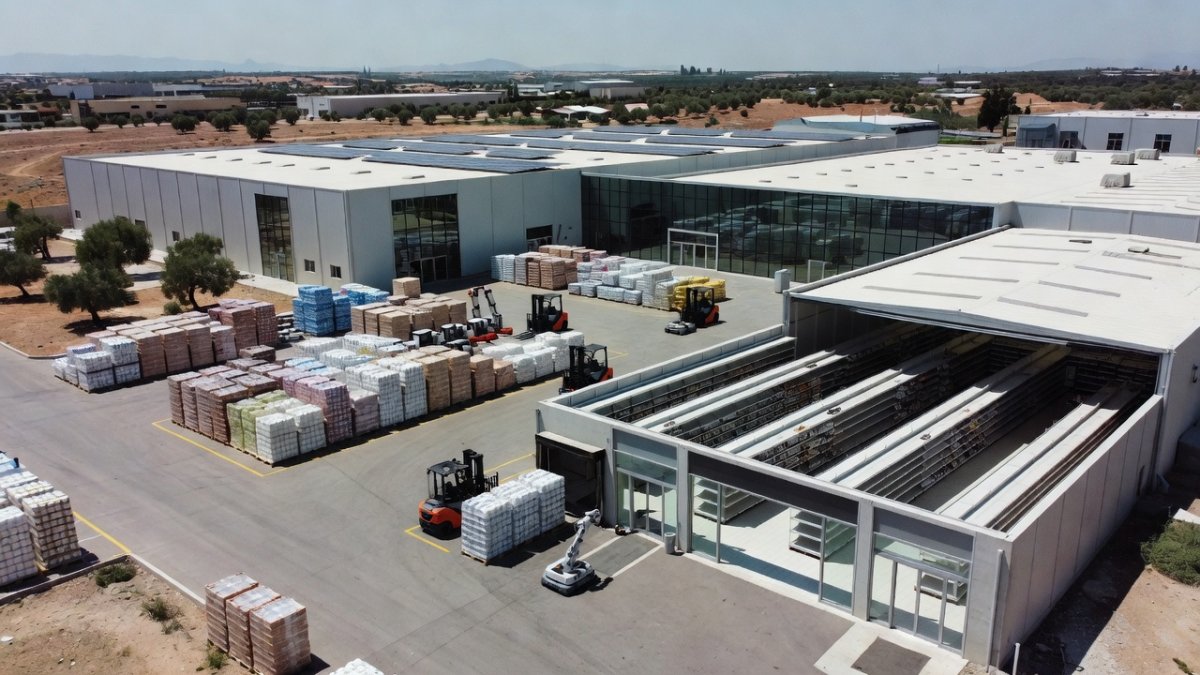
Israel's dairy supply chain is facing an escalating crisis as a prolonged technical failure at Tnuva's flagship automated warehouse blocks distribution of white cheese, even as production lines run at full tilt. The standoff stems from a computer malfunction compounded by German technicians' refusal to travel amid heightened security risks, leaving retailers and consumers scrambling. This disruption exposes deep vulnerabilities in the country's reliance on foreign automation for essential goods.
Tnuva Warehouse Crisis: Dairy Shortage Expands to White Cheese as German Technicians Stay Away
Tel Aviv, Israel — The shortage that began with cottage cheese at Tnuva has now reached white cheese products across Israeli supermarket shelves. A computer malfunction at the company's automated warehouse in Alon Tavor has prevented normal dispatch for more than two months. Retailers report receiving far less than ordered, and consumers in peripheral areas sometimes find only single units available.
The Expanding Dairy Shortage
The automated system, supplied by German company Dematic, controls pallet movement inside the warehouse and loading onto distribution trucks. Production of both cottage cheese and white cheese continues at normal or increased rates, yet finished goods remain inside the facility. Tnuva employees have shifted to partial manual operations, but these measures have not restored full throughput.
Tnuva’s Alon Tavor facility, inaugurated in 2018 following a NIS 700 million investment, stands as one of the largest automated dairy plants in the Middle East. Its core is a Dematic-supplied automated storage and retrieval system (AS/RS) integrated with a warehouse management system that governs every pallet’s movement from production lines to outbound trucks. A programmable logic controller (PLC) or software glitch in this tightly coupled architecture can halt the entire dispatch sequence, leaving finished goods stranded even when production continues at elevated rates. Partial manual overrides have proven insufficient because the system’s safety interlocks and routing algorithms remain inaccessible without full diagnostic access.
Similar dependencies appear across Israeli industry. Intel’s Fab 28 in Kiryat Gat and Teva’s logistics hubs rely on comparable foreign automation stacks, creating single points of failure when remote support is constrained. Industry analysts note that these installations were designed for maximum efficiency rather than graceful degradation, a trade-off now exposed by the prolonged outage. As Israel pushes forward with its innovation-driven economy, such incidents underscore the tension between rapid technological adoption and the need for sovereign maintenance capabilities.
Technical Failure at Alon Tavor
German technicians have declined to travel to Israel following the security developments tied to Operation Lion's Roar. Dematic staff continue to provide support through phone calls and video conferences. This remote arrangement has limited the speed at which the malfunction can be diagnosed and corrected. In parallel, local engineers are documenting every attempted workaround to build institutional knowledge that could reduce future dependence on overseas specialists.
Dematic's Remote Assistance Amid Security Concerns
Chains such as Shufersal have seen orders for ten crates fulfilled with roughly half that quantity. Shoppers describe visiting multiple branches without locating white cheese. The situation has prompted increased hoarding, which further reduces availability for regular purchases.
Cottage cheese remains subject to Israel’s target-price mechanism, capped at roughly NIS 5.35 per 250-gram tub, making it a staple whose scarcity quickly registers with households. Per-capita consumption stands near 12 kg annually—one of the highest rates worldwide—amplifying the visibility of empty shelves. Shoppers at Shufersal and Rami Levy branches report visiting three or four locations in a single day, only to find single units or none at all. Social-media posts document rising frustration, with some consumers describing the shortage as “the cottage-cheese crisis all over again.”
Retail chains have responded by imposing informal purchase limits, yet hoarding dynamics persist. When availability drops below 50 percent of ordered volumes, households accelerate purchases of whatever stock appears, further distorting replenishment cycles. Smaller peripheral stores, already receiving fractional deliveries, bear the brunt, widening the gap between central and outlying regions. This uneven distribution threatens to deepen regional inequalities at a time when national cohesion remains a priority.
Retailers and Consumer Impact
Tnuva and Strauss both state that manufacturing lines are running as usual and have been adjusted upward to meet higher demand. Industry sources have rejected suggestions that Tnuva deliberately restricted supply. Tnuva remains the largest producer of white cheese in Israel, while Strauss accounts for approximately thirty percent of the market. Government monitors continue to verify these output figures through independent audits to maintain public trust.
Production Claims Versus Supply Realities
The refusal of on-site visits by Dematic personnel reflects ongoing caution linked to the security environment. Similar constraints have affected other foreign technical teams working with Israeli automation systems. The result is greater reliance on local staff and remote troubleshooting for critical infrastructure.
Operation Lion’s Roar, launched in spring 2026, triggered renewed caution among European technology firms, prompting Dematic and peer companies to suspend on-site visits. The economic cost extends beyond dairy: semiconductor equipment vendors, medical-imaging technicians, and aviation-maintenance crews have similarly curtailed travel, forcing Israeli operators to rely on remote diagnostics or local teams still building specialized skills.
In response, several ministries have accelerated programs to cultivate indigenous maintenance capabilities. Parallel patterns appear in the semiconductor clean-room sector and hospital radiology departments, where foreign expert access has become intermittent. Policymakers now treat the Alon Tavor episode as a stress test for critical-infrastructure resilience under sustained security constraints. These efforts align with broader national strategies to strengthen technological self-reliance while preserving Israel's edge in high-tech exports.
Security Situation and Travel Restrictions
The episode highlights vulnerabilities in Israel's automated logistics networks, which depend on specialized foreign equipment. Demand for dairy products has risen by roughly four percent since the beginning of the year, partly because fewer Israelis have traveled abroad. The combination of higher consumption and disrupted distribution has placed additional pressure on existing capacity.
Israel’s automated logistics networks depend heavily on a handful of foreign vendors, chiefly Dematic (KION Group) and Swisslog. The Israel Innovation Authority has sought to nurture local industrial-automation startups, yet most mission-critical warehouse systems still originate abroad. Post-October 7 assessments by the Ministry of Economy’s food-security task force highlighted precisely these exposure points, noting that even modest technical faults can cascade when on-site expertise is unavailable.
Past crises offer partial lessons. The 2021 global shipping disruptions prompted some importers to diversify suppliers, but warehouse automation was largely overlooked. Current discussions inside the Innovation Authority now emphasize redundancy protocols and domestic maintenance cadres, though implementation timelines remain uncertain. New funding calls are expected to prioritize startups developing modular, locally serviceable automation components.
Supply Chain Resilience in Focus
Discussions within the Ministry of Economy and the Israel Innovation Authority are expected to examine how automation dependencies can be managed more effectively. Companies such as Osem and other food producers that rely on similar warehouse systems are monitoring developments at Alon Tavor. The current disruption underscores the need for robust contingency measures in high-volume distribution centers. Industry roundtables are already exploring shared spare-parts pools and cross-training initiatives among competing firms.
Looking Ahead for Israel's Dairy Sector
What This Means
The Tnuva warehouse outage carries significant economic implications for Israel's food sector and broader economy. With dairy consumption among the highest globally, sustained shortages could drive informal price premiums in secondary markets and strain household budgets, particularly in lower-income and peripheral communities. Projections indicate that if the disruption extends another month, consumer spending on dairy alternatives may rise 8-12 percent, while retailers absorb margin compression from emergency sourcing. On the innovation front, the episode accelerates policy momentum toward domestic automation talent pipelines, potentially unlocking new NIS 200-300 million in targeted grants over the next two years. For businesses, the lesson is clear: resilience now requires deliberate investment in redundant systems and local expertise, turning a supply-chain vulnerability into an opportunity for Israeli startups to export maintenance solutions worldwide. Long-term, this could reshape how the country balances its celebrated technological openness with strategic autonomy in critical infrastructure.
By Hannah Berg, Staff WriterThis article was produced with AI-assisted research and editorial support. Reporting is based on sources cited in the article.
What's Your Reaction?
 Like
0
Like
0
 Dislike
0
Dislike
0
 Love
0
Love
0
 Funny
0
Funny
0
 Wow
0
Wow
0
 Sad
0
Sad
0
 Angry
0
Angry
0

Israel Correspondent at Global1.News. Based in Tel Aviv, covering Israeli politics, security, technology, and society. Provides balanced, deeply-sourced reporting on one of the most closely-watched regions in the world.















Comments (0)