
Japan's H3 Rocket Achieves Full Configuration Lineup with Successful Launch
**Meta Title:** Japan's H3 Rocket Achieves Full Configuration Lineup **Meta Description:** Japan's H3 Rocket No. 6 launched successfully on June 12, 2026, from Tanegashima, validating a low-cost three LE-9 engine design without boosters. The flight ... **Keywords:** Japan H3 rocket, JAXA, Mitsubishi Heavy Industries, Tanegashima Space Center, LE-9 engine, space debris removal,
Launch Execution and Operational Precision
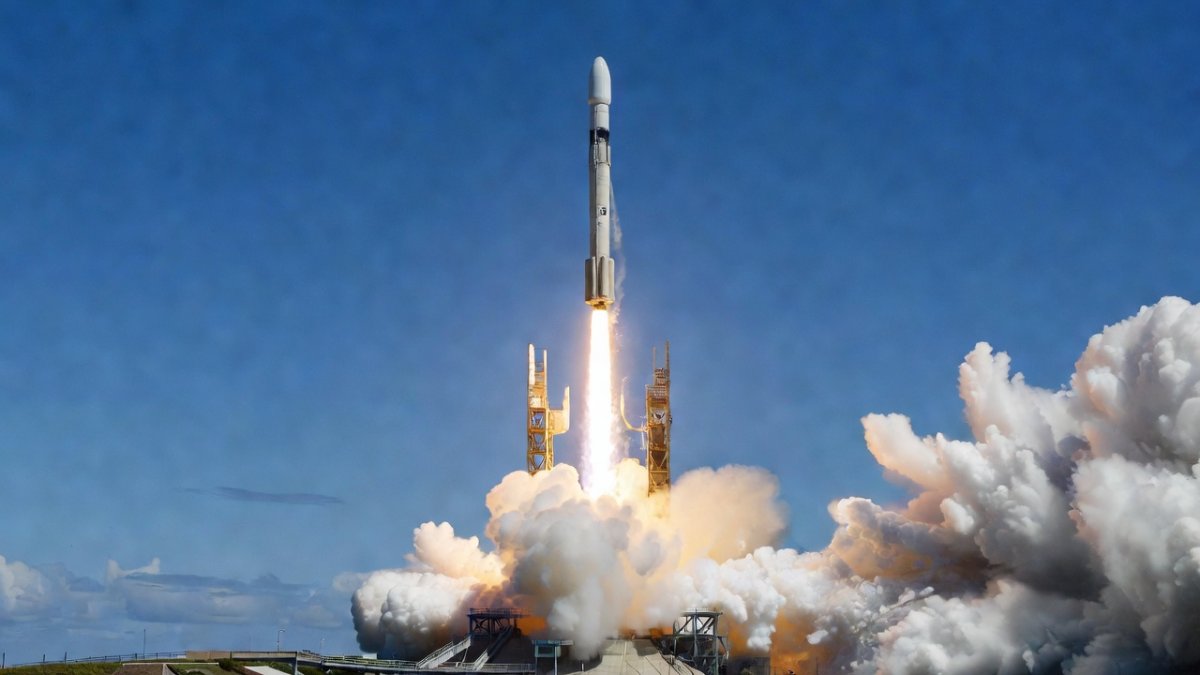
The H3 Rocket No. 6 executed a flawless ascent under clear conditions after a two-day weather delay, underscoring the operational discipline required for reliable space access. Tanegashima Space Center personnel coordinated the countdown with precision, confirming all three LE-9 engines performed within expected parameters throughout the boost phase. NHK WORLD-JAPAN provided live coverage that highlighted the vehicle's streamlined design and its departure from earlier configurations reliant on solid boosters. This outcome reinforced confidence in the revised launch procedures developed after previous setbacks.
Ground teams monitored telemetry in real time, verifying stage separation and payload deployment sequences without anomaly. The absence of solid rocket boosters reduced complexity and aligned with cost-reduction targets set by corporate Japan and government planners. Observers noted that the lighter vehicle mass contributed directly to improved efficiency metrics during the initial flight segment. Such operational data will inform future missions scheduled under the existing Space Basic Plan framework.
Post-launch analysis confirmed orbital insertion parameters met all mission objectives for the six small satellites aboard. This achievement occurred within Japan's broader technology policy emphasizing reliable domestic launch capacity. The timing also coincided with ongoing discussions at METI regarding integration of space infrastructure with national innovation strategies.
Technical Advances in the Low-Cost Configuration
The three LE-9 engine arrangement without solid boosters represents a deliberate engineering shift toward affordability and flexibility. Mitsubishi Heavy Industries optimized the propulsion system to maintain performance while lowering manufacturing and operational expenses. This configuration enables more frequent launches at reduced per-mission costs, supporting expanded access for government and commercial users. Analysts view the design as a pragmatic response to budget constraints outlined in Japan's space funding allocations.
Engineers addressed thermal and structural challenges specific to the booster-free layout during ground testing phases. The resulting vehicle mass reduction improves payload margins for smaller satellites, a growing segment in both domestic and international markets. JAXA documentation emphasizes that these modifications preserve the reliability standards expected from Japanese launch systems. Continued refinement will depend on data collected from this and subsequent flights.
Integration of the LE-9 engines reflects broader corporate Japan efforts to enhance competitiveness in precision manufacturing sectors. The approach mirrors efficiency gains pursued in other high-technology fields supported by METI initiatives. Future iterations may incorporate additional cost-saving measures while maintaining compliance with international safety protocols.
Overcoming Historical Setbacks Through Iteration
The March 2023 maiden flight ended in self-destruct following a second-stage engine failure, prompting extensive redesign and testing protocols. A subsequent December 2025 attempt also failed to achieve orbital placement, highlighting persistent challenges in propulsion reliability. An earlier July 2025 delay stemmed from an engine test anomaly, illustrating the rigorous validation processes now embedded in the program. These experiences shaped the successful June 2026 outcome.
JAXA and Mitsubishi Heavy Industries applied lessons from each incident to strengthen quality assurance across the supply chain. The Space Basic Plan provided sustained funding that enabled iterative improvements without abrupt program termination. Government ministries coordinated oversight to balance innovation speed with safety requirements. This methodical approach has become a hallmark of Japan's space development strategy.
Recovery from these setbacks demonstrates institutional resilience within Japan's aerospace sector. Engineers documented specific failure modes and implemented targeted fixes verified through multiple static-fire tests. The resulting confidence in the H3 family supports long-term planning for both scientific and commercial missions.
Scientific Payloads and Observation Capabilities
The six small satellites deployed during the mission included Institute of Science Tokyo's Umitsubame, equipped with a high-performance camera for ocean observation. This instrument will collect data supporting marine environmental monitoring and resource management efforts aligned with Society 5.0 objectives. Shizuoka University's Shiraito satellite tested technologies for space debris removal, addressing a critical challenge for sustainable orbital operations. Both projects exemplify university-industry collaboration fostered by Japanese research funding mechanisms.
Additional payloads contributed to technology demonstrations in communications and remote sensing. Deployment occurred according to the planned timeline, confirming the upper-stage performance of the new configuration. Data returns from these satellites will inform subsequent missions under the Space Basic Plan. The diversity of experiments underscores Japan's commitment to practical applications of space technology.
These missions advance national priorities in environmental monitoring and orbital sustainability. Researchers anticipate that Umitsubame imagery will integrate with existing satellite networks operated by JAXA. Shiraito's debris removal tests could influence future international standards in this emerging field.
Strategic Partnerships and Market Positioning
Mitsubishi Heavy Industries secured an agreement to provide H3 launches for Eutelsat beginning in 2027, marking an important commercial foothold. This contract validates the vehicle's cost structure and reliability for international customers. The partnership expands Japan's presence in the global launch services market beyond government missions. It also aligns with MOFA objectives of strengthening technological diplomacy.
Japan's space budget allocations continue to prioritize H3 development as a cornerstone of national capability. The completed configuration lineup allows tailored mission profiles for varying payload requirements. Corporate and government stakeholders view this flexibility as essential for competing effectively with established providers. Sustained investment will determine long-term market share.
Coordination between METI and JAXA ensures that launch services support broader industrial strategies, including semiconductor supply chain resilience. The Eutelsat agreement represents a concrete step toward recurring revenue streams for Mitsubishi Heavy Industries. Future contracts may build on this foundation in the Asia-Pacific region and beyond.
Global Competition and Asia-Pacific Implications
Japan's H3 program operates within an increasingly competitive landscape that includes SpaceX reusable vehicles, Arianespace heavy-lift systems, and ISRO's cost-effective offerings. The low-cost H3 configuration positions Japan to capture niche opportunities in small-to-medium satellite deployments. Success on June 12, 2026, narrows the reliability gap with these international rivals. Regional partners in the Asia-Pacific may increasingly consider Japanese launch services for sovereign missions.
Enhanced H3 availability supports Japan's semiconductor strategy by enabling dedicated satellite constellations for supply-chain monitoring. This capability complements Society 5.0 initiatives that integrate space-derived data into terrestrial infrastructure. Neighboring countries observe these developments as they formulate their own space policies. Collaborative frameworks could emerge from demonstrated Japanese technical competence.
The completed H3 family strengthens Japan's role in Asia-Pacific space architecture. Reliable domestic access reduces dependence on foreign providers and enhances strategic autonomy. Continued flights will generate performance data essential for refining competitive positioning against global alternatives.
By Kenji Tanaka, Staff Writer
This article was produced with AI-assisted research and editorial support. Reporting is based on sources cited in the article.
What's Your Reaction?
 Like
0
Like
0
 Dislike
0
Dislike
0
 Love
0
Love
0
 Funny
0
Funny
0
 Wow
0
Wow
0
 Sad
0
Sad
0
 Angry
0
Angry
0

Japan Correspondent at Global1.News. Tokyo-based voice covering Japanese politics, technology, economy, and culture. Tracks the intersection of tradition and innovation in one of the world's most dynamic societies.















Comments (0)