
Araw ng Kalayaan 2026: Marcos Calls on Filipinos to Protect Truth, Restore Trust as Nation Marks 128th Independence Day
Araw ng Kalayaan 2026: Marcos Calls on Filipinos to Protect Truth, Restore Trust as Nation Marks 128th Independence Day Araw ng Kalayaan 2026: Marcos Leads Independence Day With Call for Truth and Unity President Marcos opened the 128th Independence Day observance by urging Filipinos to protect truth from distortion and harness technology wisely while restoring trust amid growi
Araw ng Kalayaan 2026: Marcos Calls on Filipinos to Protect Truth, Restore Trust as Nation Marks 128th Independence Day
Araw ng Kalayaan 2026: Marcos Leads Independence Day With Call for Truth and Unity
President Marcos opened the 128th Independence Day observance by urging Filipinos to protect truth from distortion and harness technology wisely while restoring trust amid growing division. His message stressed that the way the nation responds to these demands will shape the country's future and determine what is passed on to the next generation. The call came as the country marked the day when forebears fought colonial oppression through revolution, reform, and intellectual resistance.
Marcos framed freedom not as a simple inheritance but as a responsibility that every citizen must uphold. He noted that the challenges today differ from those faced more than a century ago, yet the need for unity remains constant. This message resonated with ordinary Filipino families who rely on stable institutions to keep jeepney routes running and sari-sari stores stocked.
The emphasis on truth and trust carries direct weight for barangay residents who depend on accurate information about government programs. When rumors spread unchecked, tricycle drivers and market vendors lose confidence in policies that affect fuel prices and supply chains. Marcos's words therefore asked communities to reject forces that sow chaos and instead work together in the spirit of bayanihan.
By linking historical lessons to present duties, the President reminded citizens that independence requires active participation. For OFWs sending remittances home and for families managing daily expenses, restored trust in leadership can translate into steadier economic conditions and clearer public services.
A Celebration at Rizal Park: Flag-Raising, Parade, and a Nation's Reflection
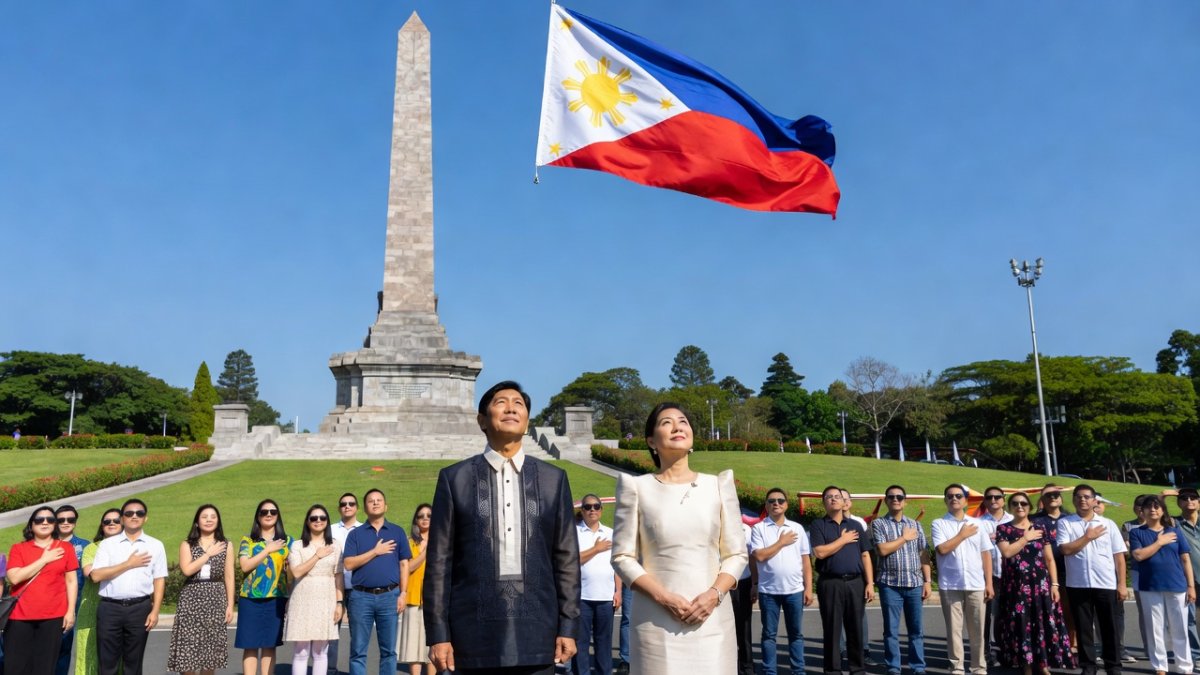
President Marcos, accompanied by First Lady Liza Marcos and their three sons, led the flag-raising and wreath-laying ceremonies at the Rizal Monument in Manila. From Rizal Park the family watched a two-hour Independence Day parade at the Quirino Grandstand under sweltering heat. The event brought together Speaker Faustino Dy III, Senate President Pro Tempore Sherwin Gatchalian, Apostolic Nuncio Charles John Brown, Manila Mayor Isko Moreno, Armed Forces chief Gen. Romeo Brawner Jr., PNP chief Gen. Jose Melencio Nartatez Jr., and Philippine Coast Guard commandant Admiral Ronnie Gil Gavan.
The presence of military and police leaders alongside diplomatic and local officials underscored the broad institutional support for the commemoration. Cabinet members and the diplomatic corps also attended, signaling unity across government branches. For families watching on television or gathered in nearby barangays, the parade offered visible proof that national symbols still command respect.
The ceremonies reminded viewers that freedom involves collective effort. Jeepney drivers who paused routes to listen to the proceedings and market vendors who closed stalls early saw leaders from different sectors standing together. Such moments reinforce the idea that national progress depends on cooperation rather than division.
By holding the event in the historic heart of Manila, organizers connected the day's activities to the sacrifices made at the turn of the twentieth century. Residents in surrounding communities could reflect on how past struggles continue to influence access to education, health services, and livelihood opportunities today.
Lessons From History: Marcos's Challenge to Ordinary Filipinos
At the Quirino Grandstand, Marcos asked what Filipinos have done with the freedom won by their forebears. He stressed that it is not enough to look back at the past; its lessons must serve as a foundation for the present and future. The President noted that history has taught the nation that only through unity can independence be achieved.
Marcos described true leaders as those who sacrifice their own interests for the good of the people. He urged citizens to learn from history while confronting ongoing challenges such as corruption, inequality, poverty, and climate change. These issues directly shape the daily realities of sari-sari store owners struggling with rising costs and tricycle drivers facing unpredictable weather patterns.
The call to apply historical lessons encourages ordinary families to participate in community decisions. When barangay meetings address local flooding or price monitoring, residents see how unity can produce practical results. Marcos's words therefore moved beyond ceremony to ask each citizen to contribute to national resilience.
For OFW households that rely on stable governance, the emphasis on learning from the past offers a framework for demanding accountability. By tying personal responsibility to collective progress, the President invited every Filipino to help build a country where the benefits of independence reach all communities.
Senate Voices: Gatchalian, Hontiveros, and the Call to Set Aside Differences
Acting Senate President Sherwin Gatchalian stated that the Senate joins the country in honoring the courage, sacrifices, and heroism of ancestors who fought to break the chains of foreign oppression. He called on colleagues to settle political differences, unite, and get down to work. Senators Risa Hontiveros, Kiko Pangilinan, and Francis Escudero echoed this message of setting aside divisions.
The statements highlighted the need for legislative focus on matters affecting daily life. When the Senate operates smoothly, laws addressing wages, transportation, and social services move forward more effectively. Jeepney drivers and market vendors depend on such legislation to maintain their livelihoods amid economic pressures.
Allies of Sen. Alan Peter Cayetano used the commemoration to question the Senate's independence from political pressure, while detained Sen. Jinggoy Estrada noted that fighting for independence remains vital amid alleged meddling. These remarks underscored ongoing tensions yet also reinforced the broader call for institutional stability.
For families in the barangay, a functioning Senate means clearer policies on remittances, disaster response, and local infrastructure. Gatchalian's appeal for unity therefore carried implications beyond the chamber, touching the routines of ordinary citizens who need consistent governance to plan their futures.
Speaker Dy and Chief Justice Gesmundo: Freedom Must Reach Every Home
Speaker Faustino Dy III said freedom must always go hand in hand with progress, noting that the promise of independence remains incomplete if its benefits are not felt by every Filipino. He added that the true virtue of freedom lies not only in being free from oppression but in the ability of every Filipino to help build a more progressive, just, and stronger nation.
Dy emphasized that the challenge for the current generation is to ensure freedom is felt in every home and community. This perspective connects national ideals to concrete outcomes such as reliable electricity for sari-sari stores and safe roads for tricycle operators. When progress reaches the barangay level, families experience independence in practical ways.
Chief Justice Alexander Gesmundo, speaking in Filipino at the Museo ng Kasaysayang Panlipunan in Angeles City, stated that the struggle for independence continues more than a century later through various fields and efforts by which Filipinos serve the nation. His remarks reinforced the idea that every profession contributes to the ongoing work of nation-building.
Together, these messages asked citizens to translate historical freedom into present-day improvements. For ordinary Filipino families balancing household budgets, the call to make freedom tangible means advocating for policies that reduce inequality and expand opportunity in their own communities.
Commemorations Across the Archipelago: From Pinaglabanan to Angeles City
Foreign Affairs Secretary Maria Theresa Lazaro and San Juan Mayor Francis Zamora led Independence Day rites at the historic Pinaglabanan Shrine. In Angeles City, Pampanga, Chief Justice Gesmundo delivered his address during local ceremonies. These events complemented the main observance in Manila and showed how different regions honor the same national milestone.
Local commemorations allow communities to connect historical events to their own experiences. Market vendors in San Juan and residents near the Pinaglabanan Shrine could reflect on how past battles influence current access to public services and economic opportunities. Such gatherings strengthen the sense of shared identity across provinces.
The participation of national and local officials at multiple sites demonstrated that Independence Day belongs to the entire archipelago. For OFW families watching from abroad or returning home, these decentralized events highlight that the values of sacrifice and unity remain relevant in every province and city.
By holding rites in places tied to revolutionary history, organizers reminded citizens that independence was achieved through widespread participation. This distributed approach encourages barangay-level reflection on how each community can continue contributing to national progress.
The Political Context: Independence Day Amid Destabilization Rumors and Senate Turmoil
Marcos's remarks occurred amid fresh rumors of a destabilization plot targeting his administration and ongoing leadership instability in the Senate. Malacañang dismissed the rumors yet warned the public against forces of darkness that aim to sow chaos. The President urged citizens to reject such efforts and focus on unity.
Political uncertainty can affect public confidence in institutions that deliver essential services. When rumors circulate, tricycle drivers and sari-sari store owners may hesitate to make long-term plans, fearing sudden policy shifts. The administration's call to protect truth therefore serves as a reminder that stability benefits everyday economic activities.
The Senate's internal tensions, including questions about its independence, added another layer to the day's observances. Gatchalian's appeal for colleagues to settle differences and focus on work addressed the need for legislative continuity. Families across the country rely on predictable governance to manage remittances, education costs, and health needs.
By addressing these issues openly during the Independence Day commemoration, leaders framed political challenges as tests of the nation's commitment to unity. The response from citizens, whether through community discussions or civic participation, will determine how these tensions influence daily life in the barangays.
What Independence Means for Filipino Families: A Continuing Struggle
Marcos asked Filipinos to consider what they have done with the freedom achieved more than a century ago. He stressed that lessons from history must guide present actions against corruption, inequality, poverty, and climate change. These challenges continue to shape the routines of ordinary families who work to secure stable incomes and safe living conditions.
For jeepney drivers navigating rising fuel costs and market vendors adjusting to supply fluctuations, independence means the ongoing effort to sustain livelihoods. Bayanihan practices in the barangay, such as collective disaster preparedness, show how communities apply historical values to current problems. The President's message invited citizens to see these daily acts as part of the larger struggle.
Speaker Dy's call for freedom to reach every home and Chief Justice Gesmundo's reminder that the fight continues in various fields underscored that independence is not a finished project. Families balancing household needs with national uncertainties understand that progress requires sustained participation at every level.
The 128th Independence Day therefore served as both celebration and challenge. By protecting truth, restoring trust, and working together, Filipinos can ensure that the sacrifices of the past continue to support better lives for tricycle operators, sari-sari store owners, and all communities across the country.
By Bella Reyes, Staff WriterThis article was produced with AI-assisted research and editorial support. Reporting is based on sources cited in the article.
What's Your Reaction?
 Like
0
Like
0
 Dislike
0
Dislike
0
 Love
0
Love
0
 Funny
0
Funny
0
 Wow
0
Wow
0
 Sad
0
Sad
0
 Angry
0
Angry
0

Philippines/Southeast Asia Correspondent at Global1.News. Manila-based journalist covering Philippine politics, environment, maritime security, and social issues. Passionate about marine conservation and the communities protecting the Philippines' natural heritage.











Comments (0)