
Japan's Energy Security Hangs in Balance After Hormuz Crisis
Japan's energy security landscape has undergone a fundamental reassessment in 2026 as the closure of the Strait of Hormuz, triggered by the US-Iran conflict that began on February 28, exposed vulnerabilities in a supply chain that previously carried more than 90 percent of the nation's crude oil imports. With the world's third-largest oil importer forced to seek alternative rou
Japan's energy security landscape has undergone a fundamental reassessment in 2026 as the closure of the Strait of Hormuz, triggered by the US-Iran conflict that began on February 28, exposed vulnerabilities in a supply chain that previously carried more than 90 percent of the nation's crude oil imports. With the world's third-largest oil importer forced to seek alternative routes and suppliers, policymakers at the Ministry of Economy, Trade and Industry (METI) have pursued a multi-pronged strategy encompassing diplomatic outreach, reserve management, and accelerated long-term transformation of the energy mix.
Japan's Energy Security Hangs in Balance After Hormuz Crisis
Tokyo, Japan – June 22, 2026 — The fragility of Japan's energy supply chain has been laid bare by the US-Iran conflict that effectively closed the Strait of Hormuz, a chokepoint through which more than 90 percent of the nation's crude oil imports previously transited. NHK World's Endo Yuka reports that there are no easy answers for a country that depends on Middle Eastern crude for the vast majority of its energy needs.
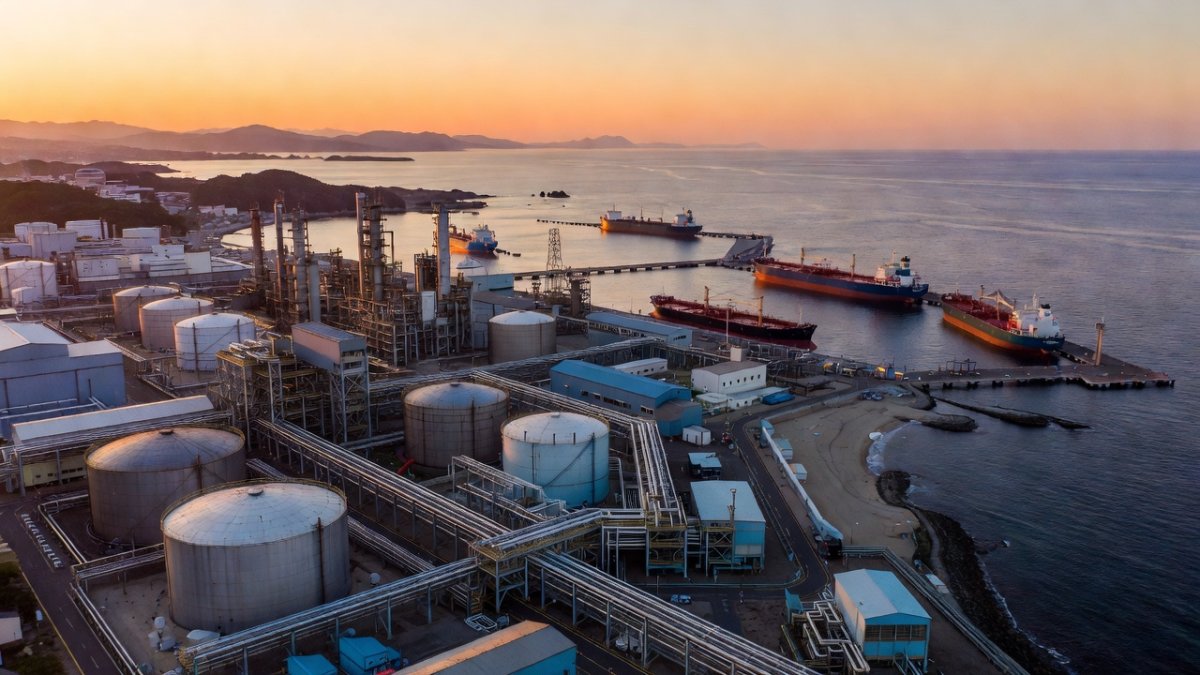
Impact of the US-Iran Conflict on Oil Supplies
The closure of the Strait of Hormuz following the onset of the US-Iran conflict on February 28, 2026, immediately disrupted more than 90 percent of Japan's crude oil imports that previously transited the waterway. As the world's third-largest oil importer, Japan depends heavily on Middle Eastern crude, making the sudden cutoff a direct threat to supply stability and price predictability.
By late spring 2026, the shortfall forced Japanese refiners and utilities to accelerate alternative procurement. The situation highlighted longstanding vulnerabilities in Japan's energy import structure, where geographic concentration in one chokepoint amplifies external shocks. Policymakers at METI began modeling scenarios that assumed prolonged disruption rather than quick resolution.
Diplomatic Outreach to Secure Alternative Crude
In May 2026, METI Minister Akazawa Ryosei met Brazilian Foreign Minister Mauro Vieira in Tokyo to request expanded crude supplies from non-Hormuz sources. The discussions produced concrete commitments, enabling Japan to secure 1.65 million barrels per day for June 2026 — approximately 70 percent of the previous year's import volume from alternative origins.
Japan also pledged $10 billion to assist Southeast Asian nations facing sharp increases in oil prices. This financial support served both humanitarian and strategic purposes, strengthening regional ties while indirectly protecting Japan's own downstream supply chains that rely on stable Southeast Asian refining and logistics networks.
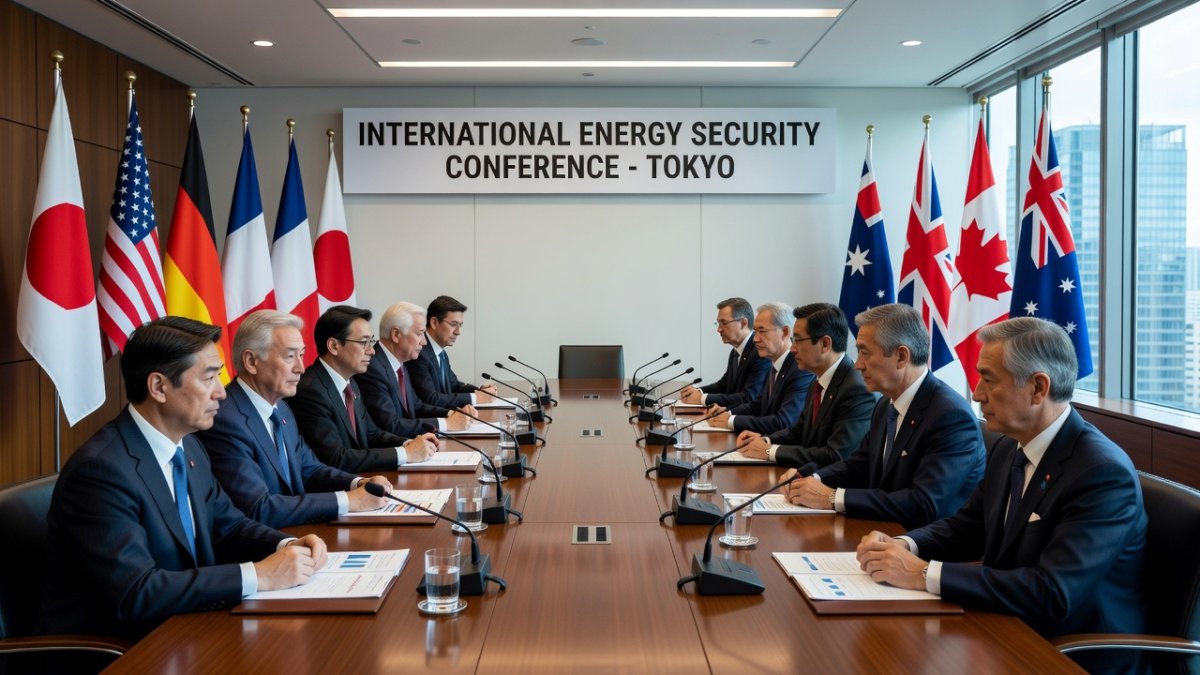
Indo-Pacific Energy Security Forum and Regional Cooperation
On March 15, 2026, METI co-hosted the Indo-Pacific Energy Security Ministerial and Business Forum with the US government. Eighteen countries participated, focusing on coordinated responses to supply disruptions and the development of resilient trade routes. The forum produced actionable working groups on shipping insurance, port access, and joint stockpiling arrangements.
Parallel bilateral progress included a March 2026 Memorandum of Cooperation with Indonesia covering critical minerals and nuclear energy cooperation. These agreements aim to diversify Japan's energy partnerships beyond traditional Middle Eastern suppliers while supporting Indonesia's own infrastructure development.
Strategic Petroleum Reserves and Supply Diversification
Japan continues to maintain strategic petroleum reserves that satisfy the International Energy Agency's 90-day import requirement. Officials have indicated these stocks provide a meaningful buffer, yet they are designed for short-term emergencies rather than sustained shortfalls of the scale experienced in spring 2026.
Efforts to broaden sourcing have intensified, with increased volumes from the Americas, Africa, and other regions under long-term contracts. However, logistics constraints and quality specifications limit the speed at which these alternatives can fully offset Hormuz-dependent volumes. METI continues to stress that diversification must be paired with demand-side measures to remain effective.
Green Transformation Targets and Nuclear Policy
Japan's Green Transformation (GX) policy sets a target of 36-38 percent renewable energy in the power mix by 2030. The recent supply shock has reinforced the urgency of accelerating solar, wind, and hydrogen deployment. At the same time, METI views nuclear restarts as a necessary complement to renewables for achieving both decarbonization and supply security.
Restart decisions remain politically sensitive. Local governments retain significant influence over plant operations, and public opinion continues to weigh safety concerns against energy cost and reliability considerations. Progress has been incremental, with safety reviews and community consultations proceeding on a case-by-case basis.
Outlook Under the Fragile Ceasefire
The US-Iran ceasefire reached in June 2026 has allowed some oil tankers to resume passage through the Strait of Hormuz. Early indications suggest gradual normalization of flows, yet the agreement remains fragile and subject to renewed tensions. Japanese officials have cautioned against assuming a rapid return to pre-February 2026 supply conditions.
Energy security planning now incorporates the possibility of recurring disruptions. METI is updating contingency frameworks that combine diplomatic diversification, reserve management, accelerated GX implementation, and selective nuclear utilization. The experience has underscored that Japan's energy security requires continuous balancing of short-term supply stability with long-term structural transformation.
By Kenji Tanaka, Staff Writer
This article was produced with AI-assisted research and editorial support. Reporting is based on sources cited in the article.
What's Your Reaction?
 Like
0
Like
0
 Dislike
0
Dislike
0
 Love
0
Love
0
 Funny
0
Funny
0
 Wow
0
Wow
0
 Sad
0
Sad
0
 Angry
0
Angry
0

Japan Correspondent at Global1.News. Tokyo-based voice covering Japanese politics, technology, economy, and culture. Tracks the intersection of tradition and innovation in one of the world's most dynamic societies.















Comments (0)