
AI in Politics Grows as Canadian Parties Lack Rules, Experts Warn
In the CBC News video from Prince Edward Island titled AI in politics is growing. Experts say we need clear rules fast, journalists examine how artificial intelligence tools now shape campaign messaging with little oversight from election authorities. The report highlights urgent calls from academics for mandatory disclosure rules before the next federal vote. Prince Edward Isl
In the CBC News video from Prince Edward Island titled AI in politics is growing. Experts say we need clear rules fast, journalists examine how artificial intelligence tools now shape campaign messaging with little oversight from election authorities. The report highlights urgent calls from academics for mandatory disclosure rules before the next federal vote. Prince Edward Island serves as an early example of this regulatory shortfall in a province with just over 170,000 eligible voters.
Prince Edward Island Parties Operate Without AI Policies
Prince Edward Island Progressive Conservatives, Liberals, Greens, and NDP confirmed to CBC News that none maintain formal written policies on artificial intelligence use in campaigns. Officials from each party stated they have not released any internal drafts for public review. This absence leaves campaign teams free to deploy generative tools without internal review processes or voter notification requirements.
The lack of rules directly affects how Islanders encounter political content during provincial and federal elections. With no guidelines in place, parties can generate images, videos, or text without labelling or verification steps. Voters in rural districts such as Kings and Queens may receive AI-produced material through social media feeds without knowing its origin.
Party spokespeople noted that discussions about future policies remain preliminary. No timelines for adoption have been shared with the public or Elections PEI. This situation places Prince Edward Island among the first provinces where the regulatory gap has been documented through direct confirmation from all major parties.
Local candidates rely heavily on digital platforms to reach dispersed communities across the Island. Without AI policies, the risk increases that unlabelled content could influence voter perceptions during tight races. The four parties together represent every seat in the Legislative Assembly, making the absence of rules province-wide.
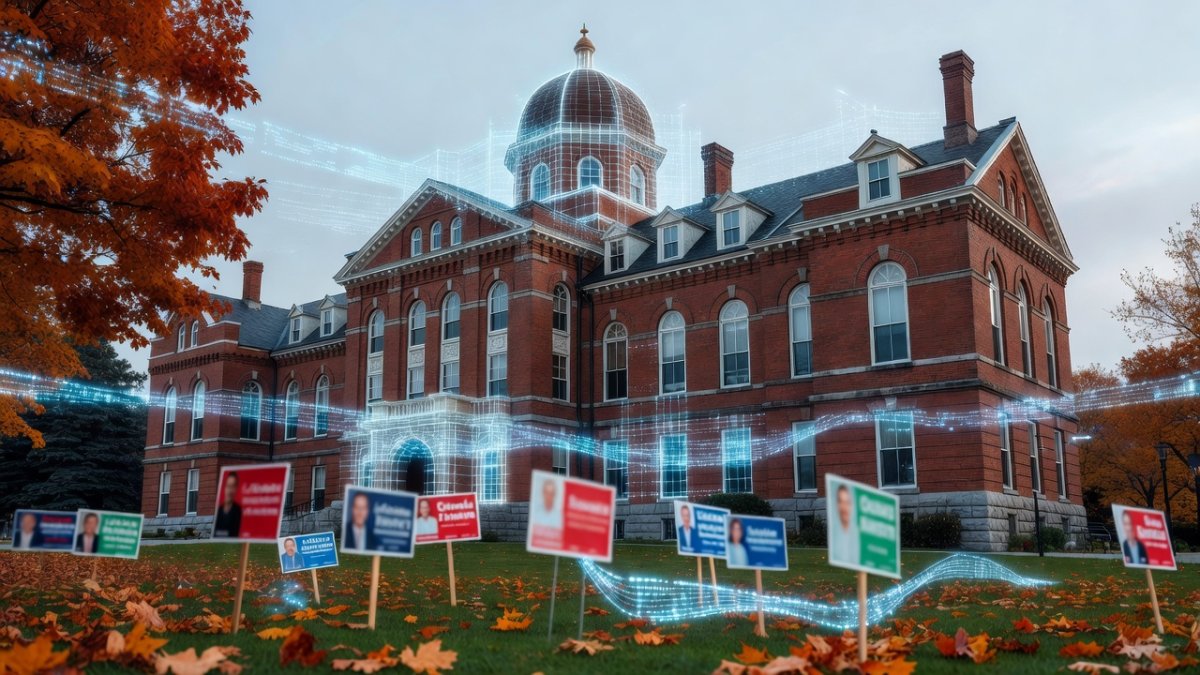
Federal Conservative Ad Spotlights National Regulatory Gap
The Conservative Party of Canada released an advertisement featuring AI-generated footage depicting struggling Canadian households. A small label appeared in the bottom-right corner of the video frame. University of Ottawa professor Elizabeth Dubois observed that such corner labels receive little attention from viewers scrolling quickly through feeds.
This advertisement marked one of the first documented federal uses of AI-generated footage by a major Canadian party in paid advertising. The Canada Elections Act currently contains no requirement for parties to label AI content. Candidates therefore operate under voluntary standards that differ across organisations.
Dubois noted that the absence of mandatory rules allows parties to test generative tools without consistent accountability measures. The ad reached audiences through national television and online platforms simultaneously. Canadian voters in multiple provinces viewed the material before any regulatory body could assess its accuracy.
The federal gap stands in contrast to emerging provincial conversations in Prince Edward Island. Without national standards, parties may continue expanding AI use ahead of the next general election. This approach leaves Elections Canada without enforcement tools when complaints arise about undisclosed synthetic content.
Chief Electoral Officer's Unheeded Warning
Chief Electoral Officer Stéphane Perrault issued a formal recommendation in 2024 calling for Parliament to require clear labelling of AI-generated election material. The proposal sought amendments to the Canada Elections Act that would apply to all registered parties and candidates. Parliament has not enacted the changes.
Perrault emphasised that self-regulation by parties leaves voters exposed to evolving technology. Other democracies including the United Kingdom and several European Union member states have introduced mandatory disclosure rules for political AI content. Canada remains without equivalent legislation at the federal level.
The recommendation outlined specific requirements for visible labels on all synthetic images, videos, and audio used in campaigns. Perrault warned that delays increase the likelihood of misleading content circulating during future elections. No legislative committee has advanced the proposal since its release.
Elections Canada continues to monitor developments while parties retain full discretion over AI practices. The unheeded recommendation highlights a broader pattern of slow federal response to digital campaign innovations. Prince Edward Island parties now operate in the same environment of limited guidance.
Expert Analysis: The Challenge of Meaningful Disclosure
Chris Tenove of the UBC Centre for the Study of Democratic Institutions stated that labelling offers benefits yet faces significant enforcement challenges across platforms. Tenove noted that small disclaimers often fail to reach users on short-form video services. Effective rules require both clear standards and active monitoring by regulators.
Elizabeth Dubois explained that generative AI already alters how Canadians gather information about candidates and policies. Dubois pointed to rapid changes in content creation that outpace existing election laws. She stressed the need for rules that adapt to new tools rather than reacting after misuse occurs.
A 2025 Toronto Metropolitan University study found that right-leaning Canadians were 11 percent more likely to consult AI chatbots for political information than other groups. The research highlighted uneven exposure across ideological lines. This pattern raises questions about how AI shapes voter knowledge differently in various regions of the country.
Small corner disclaimers prove especially ineffective on TikTok and Instagram, where audiences view content without pausing to examine fine print. Experts argue that platform design itself limits the reach of traditional disclosure methods. Canadian regulators must therefore consider new approaches tailored to mobile-first consumption habits.

Global Context: AI Political Content Crosses Borders
Former United States President Donald Trump shared AI-generated images including a portrait of himself alongside Jesus and a video about Gaza that received 670,000 likes on social media. These examples demonstrate how synthetic political content spreads rapidly across international platforms. Canadian users encounter the same material through shared networks.
Similar techniques could migrate into Canadian campaigns because major platforms operate without borders. Populist leaders in multiple countries have shown particular interest in AI tools for direct communication with supporters. The absence of domestic restrictions on imported content leaves Canadian elections open to external influence.
No Canadian law currently limits the use of foreign-generated AI material in domestic political advertising. Parties and independent groups can repurpose international examples without disclosure requirements. This cross-border flow adds complexity to efforts aimed at protecting electoral integrity.
Global examples illustrate the speed at which new AI tactics appear and spread. Canadian officials have limited ability to respond when content originates outside national jurisdiction. Prince Edward Island voters remain as exposed as those in larger provinces to these international trends.
What This Means for Canadian Democracy
Public trust erodes when voters cannot reliably distinguish authentic campaign material from AI-created content. The regulatory vacuum affects every federal and provincial election cycle across the country. Prince Edward Island functions as a microcosm of the national challenge because all major parties operate without AI policies.
Voters in upcoming elections may encounter synthetic images or videos that influence perceptions of candidates and issues. Without mandatory labelling, the burden falls on individuals to verify sources independently. This situation disadvantages those with limited digital literacy or access to verification tools.
Political integrity depends on transparent communication between parties and the electorate. The current absence of rules allows experimentation that could undermine confidence in election outcomes. Canadian democracy requires mechanisms that keep pace with technological change.
Every province and territory faces similar exposure until federal legislation establishes baseline standards. Prince Edward Island's documented gap provides early evidence of the issue that other jurisdictions will likely encounter. The implications extend beyond one election to the long-term health of informed participation.
The Road Ahead: Legislation and Public Education
No federal bills currently before Parliament address mandatory AI disclosure in political advertising. Prince Edward Island parties have indicated they are considering internal policies, yet no adoption timeline has been announced. Experts recommend combining legislation with platform accountability measures and expanded media literacy programs.
Questions remain about which body would enforce future rules, whether Elections Canada or the CRTC. Clear assignment of responsibility would determine how quickly violations could be addressed during active campaigns. Without designated authority, even well-drafted rules may lack practical effect.
Experts call for coordinated action that includes requirements for visible labels, platform reporting obligations, and public education campaigns. Canadians can demand transparency from parties, check for existing labels on content, and verify sources through multiple outlets. These individual steps provide immediate protection while broader reforms develop.
The combination of legislation, enforcement mechanisms, and education offers the most direct path to addressing the documented gaps. Prince Edward Island parties and federal counterparts face the same timeline pressures ahead of future elections. Prompt action would reduce risks to voter information before the next campaign period begins.
By Alex Thompson, Staff WriterThis article was produced with AI-assisted research and editorial support. Reporting is based on sources cited in the article.
What's Your Reaction?
 Like
0
Like
0
 Dislike
0
Dislike
0
 Love
0
Love
0
 Funny
0
Funny
0
 Wow
0
Wow
0
 Sad
0
Sad
0
 Angry
0
Angry
0

Canada Correspondent at Global1.News. Based in Toronto, covering Canadian politics, energy, trade, and US-Canada relations. Provides the Canadian perspective on North American and global affairs.















Comments (0)