
Jamaica's Deportee Transit Deal Sparks Regional Sovereignty Concerns
Jamaica's Deportee Transit Deal Sparks Regional Sovereignty Concerns The Confirmation from Jamaica's National Security Minister In the heart of the Caribbean, where community ties run deep across islands like Trinidad and Tobago and Jamaica, news of this proposed transit arrangement has stirred quiet conversations in homes and rum shops alike. Dr Horace Chang confirmed on June
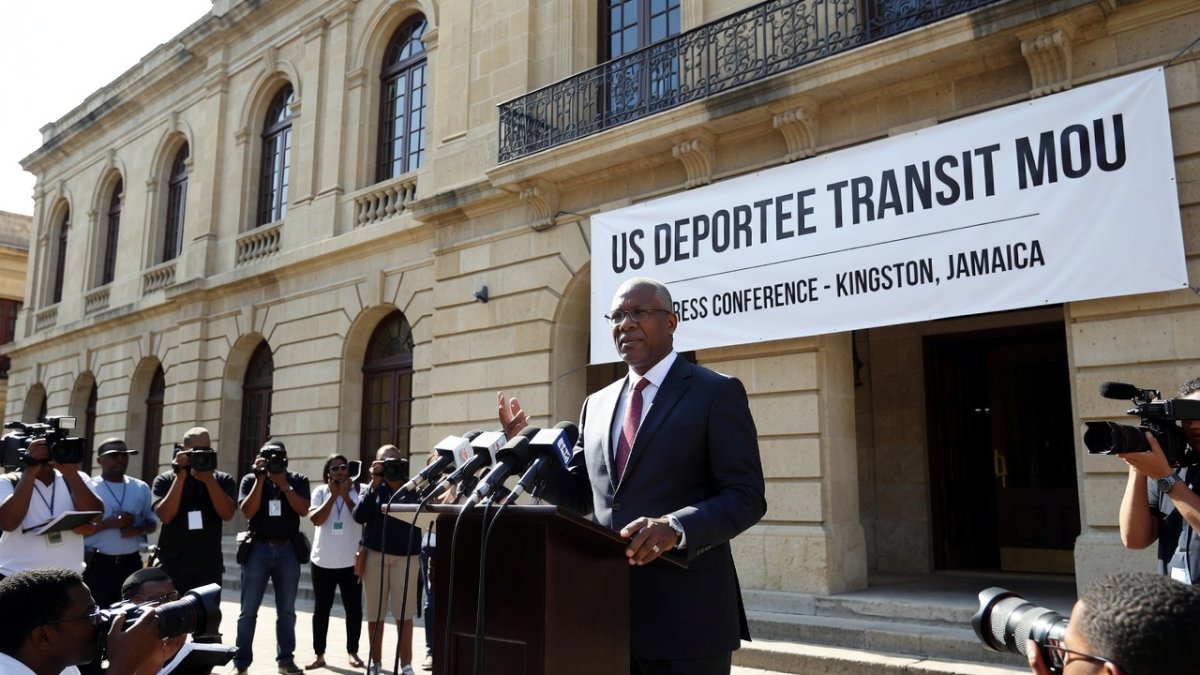
The Confirmation from Jamaica's National Security Minister
In the heart of the Caribbean, where community ties run deep across islands like Trinidad and Tobago and Jamaica, news of this proposed transit arrangement has stirred quiet conversations in homes and rum shops alike. Dr Horace Chang confirmed on June 16, 2026 that talks are underway for a Memorandum of Understanding with the United States. This would permit third-country nationals, meaning non-Jamaican deportees from America, to pass through the island on their way elsewhere. The details emerged from a leaked US Embassy document reported in The Gleaner, bringing the matter into public view and prompting us here in Trinidad to reflect on how such deals affect our shared regional family.
Chang outlined that up to 25 transfers could occur every two weeks, with a strict limit of no more than 10 people present in Jamaica at any single time. The MOU itself is not yet in force, and both sides are proceeding with caution. The United States would give 72 hours' notice for any movement, while Jamaica would respond within 36 hours. Exclusions cover serious criminals, unaccompanied minors, and Jamaican nationals themselves. All costs would fall to the US side, with the International Organisation for Migration helping to arrange onward journeys. These safeguards show an effort to protect Jamaican sovereignty while navigating external pressures.
From a Trinidadian standpoint, this development feels like another layer in the ongoing dance between Caribbean nations and larger powers. We know too well how decisions made far away can ripple through our small economies and tight-knit communities. The confirmation brings clarity but also raises questions about long-term implications for CARICOM unity, especially as similar arrangements already involve countries such as Belize, Dominica, Antigua and Barbuda, St Kitts and Nevis, Grenada, Guyana, and St Lucia.
Mechanics of the Proposed Transit Arrangement
The operational side of this potential deal centres on controlled, limited movements that aim to avoid burdening Jamaican resources. With transfers capped at 25 every two weeks and a maximum of 10 individuals on the ground simultaneously, the framework seeks to keep things manageable. Notice periods of 72 hours from the US side and 36 hours for Jamaican response allow time for proper checks and preparations. This structure reflects careful negotiation rather than rushed implementation, and the MOU remains in the discussion phase only.
Costs being fully covered by the United States removes immediate financial strain from Jamaica, yet the human element still touches our regional conscience. The International Organisation for Migration's role in supporting onward movement adds an international layer that could ease some logistical worries. For communities in Trinidad and Tobago, where many families have relatives across the Caribbean, these details matter because they speak to how we balance hospitality with self-protection in an era of shifting migration patterns.
Annual projections suggest around 600 individuals could transit Jamaica under the arrangement if it proceeds. Neighbouring examples, such as the Dominican Republic handling roughly 30 people per month through a comparable understanding, provide context for scale. Still, the emphasis on exclusions and caps shows Jamaica prioritising its own citizens and security needs above all else.
Regional Sovereignty Questions Across CARICOM
Across the Caribbean, sovereignty remains a precious thread that binds nations like Trinidad and Tobago, Jamaica, Guyana, and Barbados together in CARICOM discussions. This proposed transit deal has sparked concerns that external agreements might gradually erode the ability of individual islands to chart their own courses on sensitive matters such as migration and security. When larger partners propose arrangements that involve third-country nationals passing through, questions naturally arise about who ultimately holds decision-making power in our own backyards.
Leaders in the region have long worked to strengthen collective positions on issues that affect tourism, crime prevention, and diaspora connections. A deal like this could influence how the wider world views Caribbean borders and our capacity to manage flows independently. In Trinidad, where energy sector developments and cost-of-living pressures already dominate daily talk, any hint of outside influence on internal policies draws attention because it touches the same nerves of autonomy we defend in trade and visa matters.
Community voices often remind us that true partnership respects each nation's right to say no or set firm limits. The involvement of multiple CARICOM states in similar discussions highlights a pattern that deserves open regional conversation rather than quiet bilateral steps. Preserving sovereignty means ensuring that agreements serve local interests first, especially when they intersect with crime concerns and the movement of people.
Lessons from the Orville Etoria Precedent
The 2025 case of Orville Etoria, a Jamaican deported to Eswatini despite having no ties there, stands as a reminder of the human complexities that can arise in deportation processes. That situation drew attention to the risks of inadequate preparation and the emotional toll on individuals caught in international systems. It serves as a cautionary example for any new transit arrangements, underscoring why careful exclusions and response times matter in protecting dignity alongside security.
In Trinidadian communities, stories like Etoria's resonate because many families know the pain of separation through migration. We see how such cases can strain social bonds and raise broader questions about fairness in global movement policies. The precedent encourages deeper scrutiny of any MOU to prevent similar outcomes for third-country nationals passing through Jamaica or other islands.
Regional analysts often connect these incidents to larger patterns affecting diaspora communities in the United States and Europe. By learning from past experiences, Caribbean governments can better safeguard their people while engaging with partners. This approach keeps the focus on practical protections rather than abstract promises.
Connections to Tourism, Crime, and Daily Life
Tourism remains a lifeline for many Caribbean economies, including Jamaica and Trinidad and Tobago, yet security arrangements can influence visitor perceptions and local safety dynamics. A transit deal involving deportees from abroad brings these elements into sharper focus, as communities weigh the benefits of controlled movements against potential pressures on policing and social services. Crime concerns already feature heavily in regional conversations, and any new factor requires thoughtful integration with existing efforts by bodies such as the TTPS and CARICOM security mechanisms.
Cost-of-living challenges make every policy decision feel personal in places like Port of Spain and Kingston. When external costs are covered, as proposed here, it eases one burden, but the wider effects on community stability and public confidence still warrant attention. Tourism operators in particular watch how such developments might shape international narratives about the Caribbean as a safe and welcoming destination.
Daily life in our islands revolves around strong family networks and mutual support, which can be tested when migration policies shift. The proposed limits and exclusions aim to minimise disruption, yet open discussion helps ensure that tourism growth and crime reduction efforts continue without unintended consequences for ordinary citizens.
Looking Ahead for Caribbean Unity and Policy
As negotiations continue, the emphasis stays on ensuring that any final agreement respects the autonomy of Jamaica and its CARICOM partners. The phased nature of discussions, with the MOU not yet in force, allows time for wider consultation across the region. Countries such as Guyana and St Lucia, already part of similar arrangements, offer points of reference that could inform collective approaches rather than isolated decisions.
Visa policies and diaspora connections remain central to how Caribbean people experience the wider world. Arrangements that involve transit through our islands must align with the values of fairness and community care that define our culture. In Trinidad, we often speak of standing together on matters that affect us all, from energy sector cooperation to responses on regional security.
Future steps will likely involve further dialogue within CARICOM structures to balance individual national interests with shared regional goals. This measured pace reflects the careful way Caribbean nations have always navigated external partnerships while protecting their core identity and independence.
Source: Caribbean360 By Sharon Sahatoo, Staff WriterThis article was produced with AI-assisted research and editorial support. Reporting is based on sources cited in the article.
What's Your Reaction?
 Like
0
Like
0
 Dislike
0
Dislike
0
 Love
0
Love
0
 Funny
0
Funny
0
 Wow
0
Wow
0
 Sad
0
Sad
0
 Angry
0
Angry
0

Caribbean Correspondent at Global1.News. Based in Port of Spain, Trinidad, covering Caribbean politics, economy, energy, climate, and culture. Amplifying the voices and stories of the Caribbean region.













Comments (0)