
Silicon Valley Bank's Collapse Exposes Deep Fault Lines for Entrepreneurs of Color
Silicon Valley Bank's Collapse Exposes Deep Fault Lines for Entrepreneurs of Color Silicon Valley Bank headquarters in Santa Clara, California — a collapse that disproportionately affected minority-owned startups. (Global 1 News) Arlan Hamilton Steps In to Steady Founders of Color When customers at Silicon Valley Bank rushed to withdraw billions of dollars last month, venture c
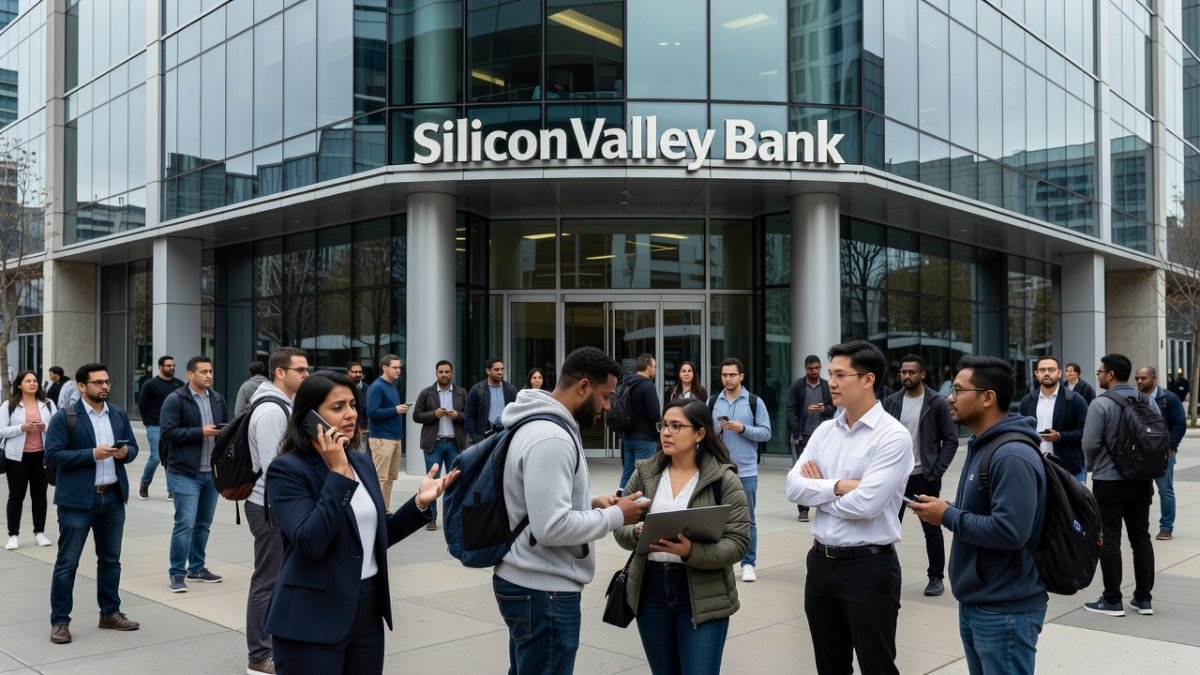
Silicon Valley Bank headquarters in Santa Clara, California — a collapse that disproportionately affected minority-owned startups. (Global 1 News)
Arlan Hamilton Steps In to Steady Founders of Color
When customers at Silicon Valley Bank rushed to withdraw billions of dollars last month, venture capitalist Arlan Hamilton stepped in to help some of the founders of color who panicked about losing access to payroll funds. Her actions highlighted the immediate human stakes behind a banking failure that hit underrepresented entrepreneurs especially hard. Hamilton's outreach provided a lifeline at a moment when many founders faced frozen accounts and mounting operational pressure.
The intervention came as uncertainty spread rapidly through startup networks. Founders who had built their operations around SVB's services suddenly confronted the possibility of missed payments and stalled growth. Hamilton's role underscored how personal networks often fill gaps left by institutional shortcomings during crises. Her efforts focused on those least positioned to absorb sudden liquidity shocks.
This response also drew attention to the thin safety nets available to minority founders. While larger players could pivot quickly, smaller teams relied on individual advocates like Hamilton to bridge critical days. The episode revealed both the strength of community ties and the fragility of relying on them during systemic disruptions.
Observers noted that Hamilton's involvement went beyond temporary relief. It signaled a broader pattern where experienced operators step forward when formal channels falter. Such actions, though vital, cannot substitute for structural reforms that reduce concentration risks in the first place.
Why Minority-Owned Startups Concentrated Deposits at SVB
The bank's failure has drawn renewed attention to the persistent gap in access to capital and banking services for entrepreneurs of color. The collapse disproportionately affected minority-owned startups, many of which had concentrated their cash at SVB due to its reputation as a startup-friendly institution. This concentration stemmed from SVB's long-standing positioning as the primary financial partner for early-stage companies seeking integrated banking and venture support.
Founders of color often faced limited options when selecting banking partners. Mainstream institutions frequently presented higher barriers or less tailored services for venture-backed businesses. SVB's specialized offerings and relationships within the startup community made it a default choice for many navigating an already challenging capital landscape. The result was a clustering effect that amplified exposure when problems emerged.
Historical patterns in venture funding played a role as well. Underrepresented founders frequently operate with thinner margins and fewer diversified relationships. Placing operating capital in one institution reflected both practical convenience and the absence of equally accessible alternatives. This dynamic turned a single point of failure into a widespread threat.
The episode forces examination of how ecosystem incentives shape risk distribution. When one bank becomes synonymous with startup viability, the downstream effects on diverse founders become magnified. Addressing this requires expanding genuine choices rather than assuming uniform access across the sector.
The FDIC Takeover and Its Rapid Timeline
Entrepreneurs of color had to scramble to make payroll and keep their businesses afloat after the FDIC took over SVB on March 10, 2023. The takeover occurred amid accelerating withdrawals that threatened the bank's stability. Regulators moved to contain the fallout, yet the immediate effect left many accounts inaccessible during critical operational windows.
The sequence of events unfolded with unusual speed. Depositors faced days of uncertainty as authorities assessed the situation and determined next steps. For companies already operating on tight cycles, even brief interruptions carried outsized consequences. The FDIC's involvement aimed to protect insured deposits, but the interim period exposed vulnerabilities in real time.
Communication during the takeover remained limited for many affected parties. Founders reported difficulty obtaining clear updates on fund availability. This information gap compounded the operational strain, particularly for teams without large administrative buffers. The episode illustrated how regulatory processes, while necessary, can create short-term friction for smaller entities.
Broader questions emerged about preparedness for concentrated banking risks. The March 10 intervention highlighted the need for clearer contingency planning tailored to startup ecosystems. Without such measures, future disruptions could repeat similar patterns of uneven impact.
Payroll Scramble Threatens Company Survival
Many reported being unable to access their funds for days, threatening the survival of their companies. Payroll obligations could not wait for resolution timelines. Teams faced difficult decisions about which expenses to prioritize while awaiting clarity on account access.
The scramble extended beyond immediate wages. Contractors, vendors, and ongoing operational costs added layers of pressure. Founders described the period as one of constant recalibration, with limited visibility into when normal banking functions would resume. This uncertainty eroded planning capacity at a moment when stability mattered most.
Minority-owned startups often maintain leaner structures, leaving less room for such shocks. The payroll crisis therefore translated directly into questions of business continuity. Some leaders considered temporary measures such as personal loans or delayed hiring to bridge the gap, though these options carried their own risks.
The experience reinforced the importance of diversified banking relationships. Yet building those alternatives takes time and resources that many founders lack during early growth stages. The payroll disruptions served as a stark reminder that financial infrastructure gaps can quickly become existential threats.
Renewed Focus on the Racial Wealth Gap and Financial Inclusion
The incident has sparked broader conversations about the racial wealth gap, financial inclusion, and whether the startup ecosystem's reliance on a single bank was creating hidden vulnerabilities for underrepresented founders. These discussions connect the SVB events to longer-standing disparities in venture access and banking services. The concentration of risk among minority founders reflects systemic patterns rather than isolated choices.
Historical underrepresentation in venture capital has left many founders with fewer established banking ties outside specialized institutions. This narrows options and increases dependence on any single provider that courts startup clients. The resulting exposure becomes visible only when that provider encounters trouble.
Policymakers have begun examining how regulatory frameworks might better account for these concentrated risks. Proposals range from encouraging diversified deposit strategies to supporting alternative financial platforms that serve underrepresented entrepreneurs. The goal is to reduce single-point dependencies that amplify existing inequities.
Lessons from the episode point toward greater emphasis on ecosystem resilience. Expanding access to multiple banking partners and improving transparency around institutional health could mitigate future shocks. Such steps would benefit the entire startup sector while delivering particular advantages to those historically underserved.
Implications for the Startup Ecosystem and Viable Alternatives
The SVB collapse carries lasting implications for how the startup ecosystem manages financial infrastructure. Reliance on a single institution created hidden fragilities that surfaced abruptly. Moving forward, founders and investors alike are reassessing concentration practices to build greater redundancy into operations.
Alternatives under discussion include regional banks with startup programs, fintech platforms offering integrated services, and diversified treasury management approaches. Each option presents trade-offs in terms of convenience, cost, and relationship depth. The key is ensuring these choices remain genuinely available across founder demographics.
Financial inclusion efforts must address both access and risk distribution. Simply directing more capital toward minority founders will not resolve vulnerabilities if banking options remain limited. Coordinated action among regulators, banks, and venture participants could help create a more distributed and equitable foundation.
Ultimately, the events underscore that resilient ecosystems require deliberate design. Reducing the racial wealth gap in venture contexts demands attention to the full stack of financial services, not only initial funding. Building those safeguards now can prevent similar disruptions from repeating their disproportionate effects.
Source: CNN World, original reporting from April 2023 By Jessica Ali, Staff WriterThis article was produced with AI-assisted research and editorial support. Reporting is based on sources cited in the article.
What's Your Reaction?
 Like
0
Like
0
 Dislike
0
Dislike
0
 Love
0
Love
0
 Funny
0
Funny
0
 Wow
0
Wow
0
 Sad
0
Sad
0
 Angry
0
Angry
0

Editor-in-Chief at Global1.News. Atlanta-based journalist who cuts through the BS and tells it like it is. Lead anchor, host, and the voice you hear when the spin stops and the truth starts.














Comments (0)