
I'm the Boss — Trump Signals Ukraine Shift as G7 Summit Closes in Evian
In a recent BBC News report covering the final day of the G7 summit in Evian-les-Bains, France, United States President Donald Trump entered the meeting room and declared "I'm the boss" — a moment that captured the complex power dynamics of the G7 summit and the significant shift that occurred in Western unity over the course of the three-day gathering. "I'm the Boss" — Trump S
In a recent BBC News report covering the final day of the G7 summit in Evian-les-Bains, France, United States President Donald Trump entered the meeting room and declared "I'm the boss" — a moment that captured the complex power dynamics of the G7 summit and the significant shift that occurred in Western unity over the course of the three-day gathering.
"I'm the Boss" — Trump Signals Ukraine Shift as G7 Summit Closes in Evian
Evian-les-Bains, France – 18 June 2026 — The G7 summit concluded this week with an unexpected display of American assertiveness that set the tone for discussions on Ukraine. President Donald Trump arrived late to the final day session and immediately declared his authority upon entering the room. The incident, captured in footage referenced by BBC News, highlighted both the personal dynamics among leaders and the broader realignment taking place on Western policy toward the conflict with Russia. European officials noted the moment reflected a return to direct engagement after months of uncertainty.
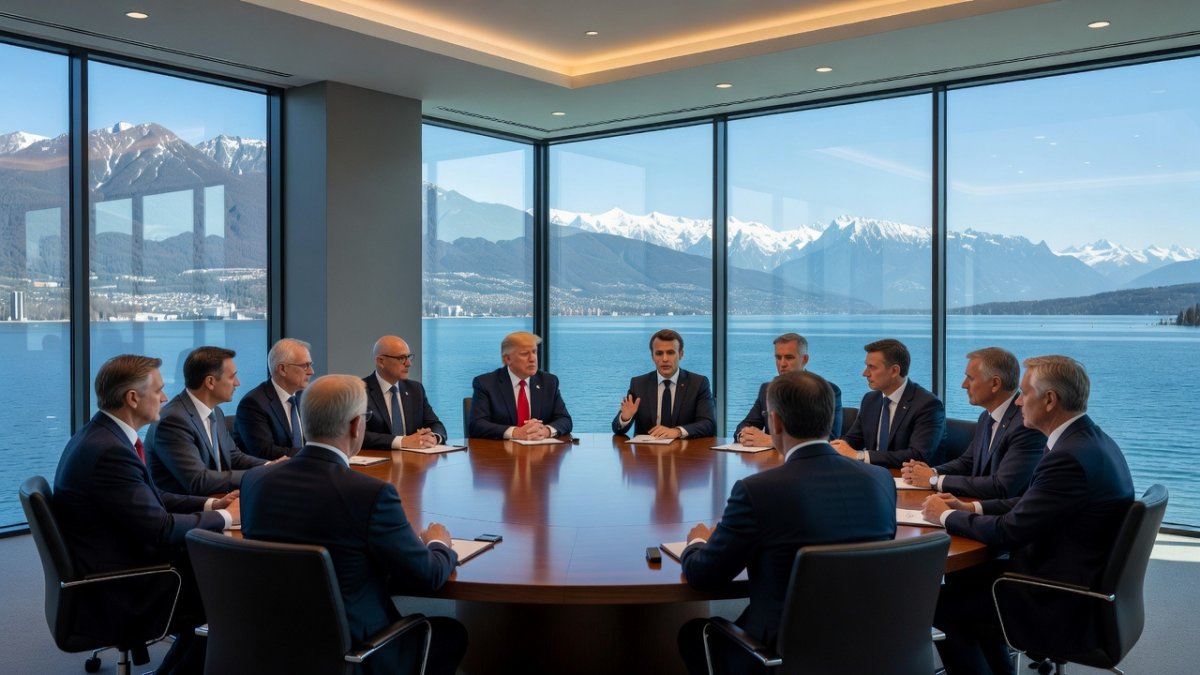
The "I'm the Boss" Moment
President Donald Trump arrived late to the final day session at the G7 summit in Evian-les-Bains. As he entered the meeting room and took his seat next to French President Emmanuel Macron, he declared, "I'm the boss." The remark prompted laughter among the assembled leaders, and Trump responded with a grin. The White House later posted video of the exchange on social media, amplifying its reach. European Council President Antonio Costa later described the atmosphere by saying everyone was "friends again." Trump also addressed reporters directly, stating, "Would you like to stay for the meeting? It's OK with me." The exchange occurred against the backdrop of three days of talks that included multiple bilateral encounters and a joint statement on Ukraine.
German Chancellor Friedrich Merz presented Trump with a German national soccer team jersey during the gathering, an informal gesture that underscored efforts to maintain personal rapport. Canadian Prime Minister Mark Carney and other participants observed the interactions closely. The lighthearted tone contrasted with the serious policy discussions that followed on sanctions and military support. Antonio Costa's comment about renewed friendship came after the leaders had navigated differences on several fronts, including energy policy and approaches to Russia. The episode illustrated how personal exchanges can shape the mood even when substantive disagreements remain unresolved.
Trump's Shift on Ukraine
President Donald Trump described Russia as the "offensive" party in the conflict during the Evian discussions. He also acknowledged that Russia is losing more soldiers than Ukraine. French President Emmanuel Macron stated that Trump showed a "real change in approach" on Ukraine. This assessment came after a series of closed-door exchanges on the final day. Macron's observation reflected the view among several European participants that the United States position had moved closer to that of its allies. The shift was noted in the context of previous statements in which Trump had emphasized distance from the conflict.
Canadian Prime Minister Mark Carney confirmed the adjustment, saying, "There has been a change in position on the part of the United States and President Trump." This confirmation stood in contrast to an earlier remark by Trump that "We have nothing to do with it. It has no impact on us, other than we sell weapons." The evolution in language was tracked by officials from both North America and Europe. Carney's statement aligned with observations from Macron and others who participated in the Ukraine-related sessions. The change occurred alongside Trump's report of a "very good meeting" with Ukrainian President Volodymyr Zelensky at the summit.
Trump insisted he maintains good rapport with both Russian President Vladimir Putin and Ukrainian President Volodymyr Zelensky. He expressed optimism about peace prospects by noting, "I ended eight wars, and to be honest with you, I thought this would have been one of the easier ones, but they're not liking each other too much." The comment reflected his long-standing emphasis on personal diplomacy with the Kremlin while acknowledging the difficulties of the current impasse. European leaders listened to these remarks while preparing the joint statement that would follow. The combination of personal confidence and recognition of battlefield realities marked a departure from earlier public positions.
G7's Unified Commitment to Kyiv
The G7 issued a joint statement that pledged "unwavering support for Ukraine in defending its freedom, sovereignty, and territorial integrity." The document praised Ukraine's "resilience" and "progress on the battlefield." It committed the group to accelerate deliveries of air defence systems and to produce such systems under license inside Ukraine. This marked a concrete step beyond last year's G7 meeting in Canada, which produced no joint stance on Ukraine. The language reflected input from multiple capitals and was finalized after the leaders reviewed battlefield developments reported by Ukrainian officials.
The statement also declared, "We commit to increase the pressure on the Russian war economy. We will strengthen our sanctions, including those on the oil and gas sectors." Trump's reopening of the Strait of Hormuz had stabilized energy markets, creating space for heavier sanctions on Russia without immediate price spikes. This economic context was discussed at length among finance ministers and energy officials present at Evian. The sanctions language targeted key revenue streams for the Kremlin while aiming to limit Moscow's ability to sustain prolonged operations. European and North American officials coordinated the measures to ensure broad implementation across member states.
The Iran Dimension and Geopolitical Horse-Trading
The G7 backed President Trump's Iran memorandum of understanding, describing it as a "historic opportunity." A formal signing ceremony was scheduled in Switzerland on Friday following the Evian gathering. Trump warned that "If I don't like it, if they don't behave, we'll go right back to dropping bombs right smack in the middle of their head." The statement underscored the conditional nature of the agreement and the leverage the United States retained. European leaders viewed the Iran component as a parallel track that could influence broader regional stability discussions.
The G7 also supported an "immediate and robust ceasefire" in Lebanon. This element was tied to efforts to reduce tensions that could otherwise draw additional resources away from the Ukraine theater. Discussions on Lebanon involved coordination with regional actors and reflected concerns about Hezbollah's role. The linkage between the Iran MOU and Lebanon ceasefire language illustrated how multiple files were advanced simultaneously during the three-day summit. Officials from the United States and European Union coordinated messaging to present a coherent front on both issues.
The Iran agreement altered G7 dynamics by allowing European participants to frame sanctions on Russia within a wider context of energy market stabilization, reducing the risk that Moscow could exploit divisions over oil prices. For Russia-Iran relations, the deal introduces new constraints, as Tehran may face pressure to limit arms transfers that have supported Russian operations, potentially complicating Moscow's efforts to offset Western restrictions through alternative supply lines.
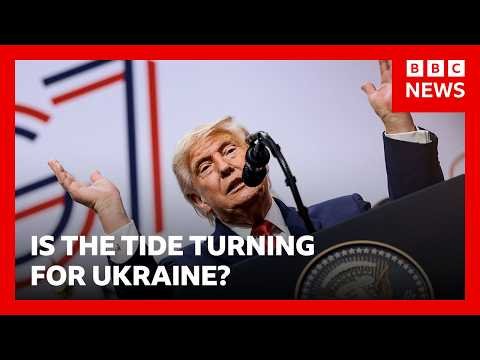
European Relief and Lingering Unease
European leaders expressed relief at the combination of Trump's Iran deal and his adjusted language on Ukraine. The shift reduced immediate friction that had characterized earlier transatlantic exchanges. At the same time, French President Emmanuel Macron was overheard on a hot mic telling Ukrainian President Volodymyr Zelensky that the rest of the G7 had held a "difficult discussion" with Trump. The remark captured the mixed feelings among EU allies who welcomed movement on sanctions yet remained cautious about long-term consistency. Macron's comment circulated among delegations and highlighted the delicate balance struck during the final sessions.
The broader implications for NATO and EU-US relations were discussed in side meetings involving UK Prime Minister Keir Starmer and German Chancellor Friedrich Merz. While the joint statement demonstrated rare unity, questions persisted about the durability of the American position once the summit concluded. Officials from Kyiv monitored developments closely, aware that battlefield realities could shift rapidly. The presence of Indian Prime Minister Narendra Modi added another layer, as discussions touched on incidents involving Indian sailors in the Gulf of Oman. These exchanges illustrated the interconnected nature of security and economic issues facing the group.
Analysis and Implications
The strategic significance of the Evian outcome lies in the potential opening for renewed diplomatic efforts. Trump's acknowledgment of Russia as the offensive party and recognition of higher Russian casualties could create conditions for more substantive talks. For the Kremlin, the strengthened sanctions language and coordinated air defence commitments represent continued pressure on its war economy. Russian decision-making structures, centered around President Vladimir Putin, will now assess whether the G7 measures alter the cost-benefit calculation of prolonged operations. European officials expect Moscow to test the resolve of the new sanctions regime in the coming weeks.
The G7 displayed rare unity in its final statement, yet questions remain about President Trump's sustained commitment once attention shifts to other priorities. The contrast with last year's meeting in Canada underscores how quickly positions can evolve. Ukrainian officials will seek concrete follow-through on air defence deliveries and licensing arrangements. European allies will continue to monitor statements from Washington for signs of consistency. The coming months will reveal whether the Evian framework translates into measurable changes on the ground or remains largely declarative.
From the Kremlin's perspective, the G7 outcome signals sustained economic isolation rather than an immediate breakthrough, prompting Moscow to interpret the sanctions push as an attempt to strain its war economy further through tighter controls on energy exports. This could lead to intensified efforts to reroute oil flows via non-Western partners while preparing domestic adjustments that affect ordinary Russians through higher costs and reduced access to imported goods. On NATO's eastern flank, the reinforced commitments may accelerate defensive planning among frontline states, even as European-Russian energy ties remain strained by the broader sanctions environment. For Ukrainians, the air defence pledges offer incremental relief amid ongoing pressures, though both populations continue to navigate the human costs of prolonged uncertainty.
By Irina Volkov, Staff Writer
This article was produced with AI-assisted research and editorial support. Reporting is based on sources cited in the article.
What's Your Reaction?
 Like
0
Like
0
 Dislike
0
Dislike
0
 Love
0
Love
0
 Funny
0
Funny
0
 Wow
0
Wow
0
 Sad
0
Sad
0
 Angry
0
Angry
0
Russia/Eastern Europe Correspondent at Global1.News. Covering Russian politics, energy, security, and the shifting dynamics of the post-Soviet space. Provides clear-eyed analysis on one of the world's most opaque regions.












Comments (0)