
Israeli Air Force Strikes Target Iranian Air Defenses as Ceasefire Collapses
The fragile April 8 ceasefire between Israel and Iran has shattered. In a dramatic forty-eight-hour escalation, Iran launched ballistic missiles at Israel in retaliation for an Israeli strike on a Hezbollah command center in Beirut, prompting the Israeli Air Force to dispatch dozens of fighter jets across Iranian airspace to dismantle newly restored air defense systems. The exc
The fragile April 8 ceasefire between Israel and Iran has shattered. In a dramatic forty-eight-hour escalation, Iran launched ballistic missiles at Israel in retaliation for an Israeli strike on a Hezbollah command center in Beirut, prompting the Israeli Air Force to dispatch dozens of fighter jets across Iranian airspace to dismantle newly restored air defense systems. The exchanges mark the most serious breakdown of the truce since it was brokered two months ago and raise the specter of a return to full-scale regional war in the Middle East.
Israeli Air Force Strikes Target Iranian Air Defenses as Ceasefire Collapses
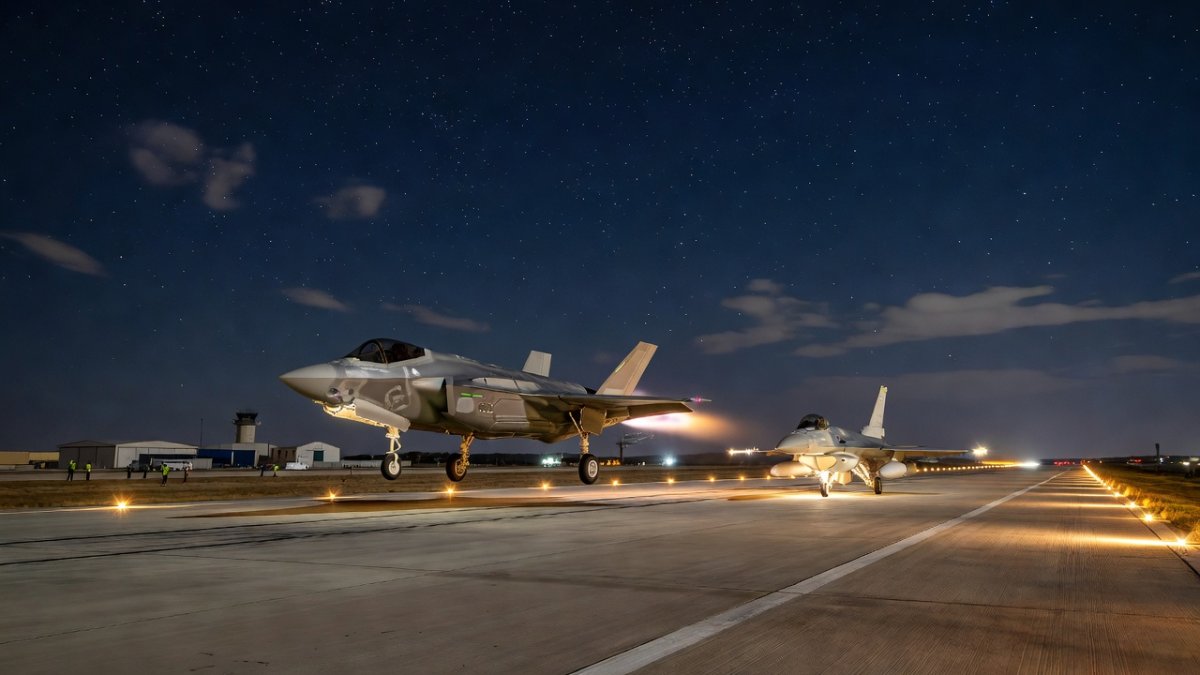
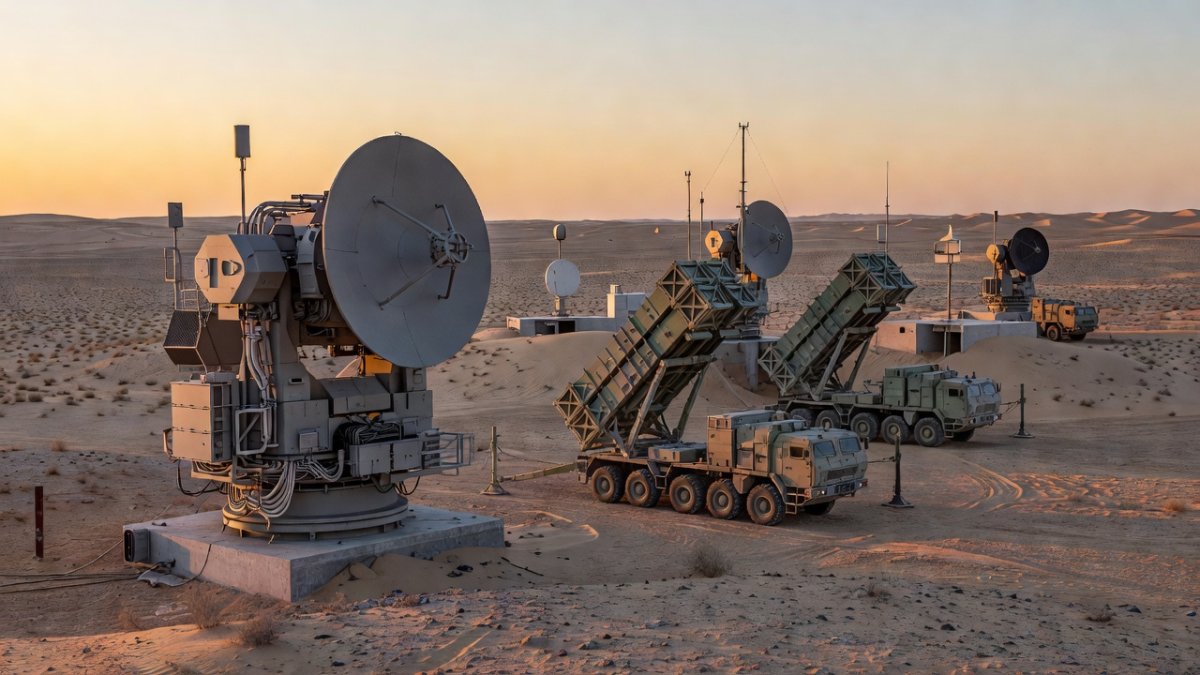
Beirut, Lebanon – June 8, 2026 — The Israel Defense Forces announced Monday that its aircraft had struck and dismantled nine Iranian air defense systems deployed across western and central Iran. The strikes targeted sites near Tehran, Isfahan, Tabriz, Kermanshah, and Karaj, where the Iranian regime had rushed to rebuild detection and interception capabilities degraded during Operation Roaring Lion — the US-Israeli military campaign that began on February 28, 2026. The IDF released video footage confirming precision strikes on radar installations and missile launchers, with the military spokesperson stating that the operation was designed to prevent Tehran from reconstituting a layered defensive shield over its strategic assets.
Background to the Latest Escalation
The chain of events began on June 7 when Israel struck Beirut's southern suburbs — the Dahiyeh district, a known Hezbollah stronghold — destroying a command center used by the Shia militia. At least two people were killed and a dozen wounded, according to Lebanon's state news agency. Axios reported that the strike proceeded despite US objections that it could provoke an Iranian response and derail diplomatic efforts. Iran, which had conditioned its acceptance of the April 8 ceasefire on a halt to Israeli attacks on its regional allies, responded by launching ballistic missiles at northern Israel. The IRGC described the operation as a warning, stating through Fars News Agency: "If aggressions are repeated, the responses will be broader and will include all American-Zionist targets in the region." The message was a deliberate echo of Iran's earlier "True Promise" operations, signaling Tehran's readiness to expand the conflict.
Scope of the Israeli Air Force Operation
In response to the Iranian missile barrage, the IDF mobilized dozens of fighter jets in what it described as a "large-scale strike on strategic defense systems." More than 120 bombs were dropped across the wave of strikes, which targeted both fixed air defense installations and mobile launcher systems. The Israeli military released video footage from cockpit cameras and missile nose-cones showing precision munitions striking Iranian radar installations and missile launchers with surgical accuracy. Beyond the air defense systems, Israeli warheads also hit a petrochemical plant near Mahshahr in Iran's southwestern Khuzestan province — a region critical to Iran's energy infrastructure and export capacity. The strikes deliberately targeted Iran's ability to shield its strategic assets, sending a clear message that Tehran cannot restore its defensive umbrella without consequence. The Kurdistan24 news outlet reported that the operation aimed to "preserve operational freedom as cross-border fire threatens to ignite a broader war."
Iranian Retaliation and IRGC Messaging
Iran's Islamic Revolutionary Guard Corps retaliated against Israeli strikes by launching Sejjil solid-fuel ballistic missiles at industrial sites in Haifa. This marked one of the first confirmed uses of the Sejjil system — a two-stage, solid-fuel missile with a reported range exceeding 2,000 kilometers — in a direct salvo against Israeli territory. The IRGC's Tasnim News Agency identified the strikes as retaliation for the Mahshahr petrochemical plant attack. The IRGC later announced that its military operation had concluded but warned of "harsher measures" if Israel continued attacks on Lebanon. Ben Gurion Airport was temporarily closed as missile warnings sounded across northern and central Israel, while Iranian missiles that fell short landed in the occupied West Bank near Jericho. The New York Times reported that Iran's Supreme National Security Council convened an emergency session following the exchanges.
US Pressure and Regional Mediation Efforts
US President Donald Trump reportedly told Israeli Prime Minister Benjamin Netanyahu to "stop shooting," according to reports from Axios and Israel's Channel 12. The message, delivered directly to the Israeli leader, urged restraint as the escalating exchanges threatened to derail diplomatic efforts and risked drawing the United States deeper into a conflict Washington has sought to contain. Multiple outlets, including The Wall Street Journal, confirmed that Trump delivered the warning personally. Qatar, which maintains diplomatic and financial channels with both Tehran and Washington, held discussions with Iranian Foreign Minister Abbas Araghchi about potential de-escalation measures. The talks reflect Doha's recurring role as a Gulf intermediary in Middle East security crises, a position it has cultivated through its relationships with both Iran and the United States. Turkey also monitors the situation closely, with President Erdoğan's government balancing its NATO obligations against its economic and energy ties with Tehran.
Strategic Calculus for Israel and Iran
Israel's decision to strike newly restored air defense batteries signals a strategic imperative: maintaining unfettered air superiority over Iranian territory even after the February campaign. By systematically degrading Iran's layered defensive shield — radars, missile launchers, and command-and-control nodes — the Israeli Air Force aims to preserve operational freedom for future deep-strike missions. Jerusalem Post analysts noted that Iran has been "rushing aggressively to rebuild its air defenses" since the April ceasefire, making them a priority target. Iran, for its part, faces a difficult strategic calculus. Its conventional military cannot match Israeli air power in a direct confrontation, so Tehran relies on ballistic missiles and proxy forces — Hezbollah in Lebanon, Shia militias in Iraq and Syria, and the Houthis in Yemen — to impose asymmetric costs. The IRGC's decision to conclude its operation quickly rather than escalate further suggests a desire to avoid provoking a massive US-Israeli response that could target the regime's nuclear facilities or senior leadership. The IRGC's threat against "American-Zionist targets" also serves as a warning to Gulf states hosting US military bases.
Regional Ripple Effects Across the Middle East
The renewed exchanges occur against the backdrop of shifting Middle East alignments. Arab-Israeli normalization efforts, including the Abraham Accords framework, are being tested as Gulf states balance security cooperation with domestic political sensitivities. Saudi Arabia's Vision 2030 economic transformation and the UAE's status as a regional trade and logistics hub both depend on Gulf stability — a prolonged Iran-Israel conflict threatens energy exports through the Strait of Hormuz, through which approximately 20 million barrels of crude oil pass daily, and could deter foreign investment. The Houthis in Yemen, aligned with Iran, have previously targeted Saudi and Emirati infrastructure, and may renew such operations if the conflict widens. Turkey's foreign policy calculus also factors into the equation, as Ankara monitors both Iranian resilience and Israeli assertiveness near its southern borders while maintaining its own calibrated relationships with both sides. Egypt and Jordan, which have peace treaties with Israel, face growing domestic pressures over the expanding conflict, particularly as civilian casualties and regional instability mount.
Energy Market and Economic Implications
The breakdown of the ceasefire has immediate implications for global energy markets. Oil prices surged on June 8 as traders priced in the risk of supply disruptions from the Persian Gulf. The Strait of Hormuz — a chokepoint for roughly one-fifth of global petroleum consumption — remains a flashpoint. Iran has previously threatened to close the strait in response to military pressure, and the IRGC's ongoing operations have already demonstrated a willingness to target commercial shipping. Gulf sovereign wealth funds, collectively valued at over US$3 trillion, face potential losses if the conflict deters foreign investment and disrupts regional economic diversification plans. The European Union announced plans to apply sanctions against Iran for impeding navigation in the Strait of Hormuz, while international maritime insurers have raised premiums for vessels transiting Gulf waters.
Outlook for the 2026 Iran War
The collapse of the April ceasefire leaves the region in a precarious position. If implemented, further Israeli strikes on Iranian territory could accelerate the degradation of Tehran's conventional deterrence while pushing Iran toward more aggressive proxy warfare. Iran retains the option of escalating through Hezbollah's extensive rocket arsenal — estimated at over 150,000 projectiles by Israeli intelligence — the Houthi blockade of Red Sea shipping, and Shia militia attacks on US bases in Iraq and Syria. However, Tehran's leadership has so far calibrated its responses to avoid drawing additional Arab states into direct confrontation. The coming weeks will test whether Qatari mediation, Turkish diplomacy, or renewed US pressure can restore even a fragile pause — or whether the Middle East is sliding toward a broader and more destructive phase of the 2026 Iran War. What is certain is that both Israel and Iran have signaled a willingness to absorb significant costs rather than concede strategic ground, making a return to the status quo ante increasingly difficult to envision.
By Malik Hassan, Staff Writer
This article was produced with AI-assisted research and editorial support. Reporting is based on sources cited in the article.
What's Your Reaction?
 Like
0
Like
0
 Dislike
0
Dislike
0
 Love
0
Love
0
 Funny
0
Funny
0
 Wow
0
Wow
0
 Sad
0
Sad
0
 Angry
0
Angry
0

Middle East Correspondent at Global1.News. Based in Beirut, covering politics, conflict, energy, and society across the Middle East. Brings context and depth to a region often reduced to headlines.














Comments (0)