
Israel Launches Fresh Strikes on Iran Nuclear Sites
In a recent BBC News report, the ongoing confrontation between Israel and Iran escalated dramatically as Israeli forces launched fresh strikes against Iranian nuclear and military sites across multiple provinces. The latest round of attacks marks a significant intensification in a conflict that has drawn in the United States, Lebanon's Hezbollah, and threatens to destabilise th
In a recent BBC News report, the ongoing confrontation between Israel and Iran escalated dramatically as Israeli forces launched fresh strikes against Iranian nuclear and military sites across multiple provinces. The latest round of attacks marks a significant intensification in a conflict that has drawn in the United States, Lebanon's Hezbollah, and threatens to destabilise the entire Persian Gulf region. What began as targeted strikes on nuclear enrichment facilities has evolved into a sustained aerial campaign achieving "full air superiority" over Tehran according to Israeli officials.
Israel Launches Fresh Strikes on Iran as Nuclear War Threat Escalates
Moscow, Russia – June 2026 — The following report examines the latest escalation between Israel and Iran.
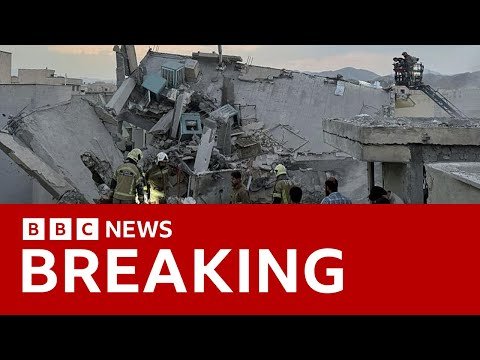
Introduction — The Escalation of Israel's Campaign Against Iran's Nuclear Programme
These operations build directly on the initial campaign that started on 28 February 2026 with coordinated US-Israeli strikes on Iranian military and government sites. Israeli Prime Minister Benjamin Netanyahu has described the operations as essential to stop Iran from advancing its nuclear capabilities. The Israeli Defense Forces confirmed achieving full air superiority over Tehran and destroying approximately one third of Iran's missile launchers during these operations. Among the confirmed outcomes, Israeli strikes killed Islamic Revolutionary Guard Corps commander Hossein Salami and nuclear scientist Fereydoon Abbasi.
Iran's response under the codename "True Promise 3" involved ballistic missile barrages toward Israeli cities and military installations. One missile struck Soroka Hospital in Beersheba, injuring at least 32 people. Israeli Deputy Foreign Minister Sharren Haskel condemned this as a deliberate attack on a medical facility, while Iranian state media claimed the target was an IDF command centre adjacent to the hospital. These exchanges have drawn international concern as the conflict approaches its fourth month.
Iran's Nuclear Capabilities and the Collapse of the JCPOA Framework
The current crisis traces directly to the unraveling of the 2015 Joint Comprehensive Plan of Action between Iran and the P5+1 — the United States, United Kingdom, France, China, Russia, and Germany. Under this agreement, Tehran limited enrichment and allowed International Atomic Energy Agency inspectors access in exchange for sanctions relief. In 2018, President Donald Trump unilaterally withdrew the United States, calling the deal insufficient to permanently block Iran's path to a bomb. Iran subsequently resumed enrichment beyond agreed limits, installed advanced centrifuges at the underground Fordo facility, and restricted IAEA monitoring access.
By early 2026, the IAEA board of governors formally declared Iran in breach of its non-proliferation obligations for the first time in twenty years, citing "many failures" to account for undeclared nuclear material. The watchdog's most recent assessments show Iran has stockpiled approximately 275 kilograms of uranium enriched to 60 percent purity — one technical step from the 90 percent weapons-grade threshold. Nuclear proliferation analysts estimate this stockpile, if further enriched, could yield material for approximately six nuclear warheads. Tehran insists its programme is entirely peaceful, a position Supreme Leader Ayatollah Ali Khamenei and President Masoud Pezeshkian have both reiterated.
Iran's position hardened further after the collapse of diplomatic channels. A letter from Trump delivered via the United Arab Emirates — proposing a new nuclear framework — was publicly dismissed by Khamenei as "a deception of public opinion." Yet Iranian Foreign Minister Abbas Araghchi left open the possibility of indirect talks through Omani mediation, a pattern reminiscent of the backchannel diplomacy that produced the original 2015 accord.
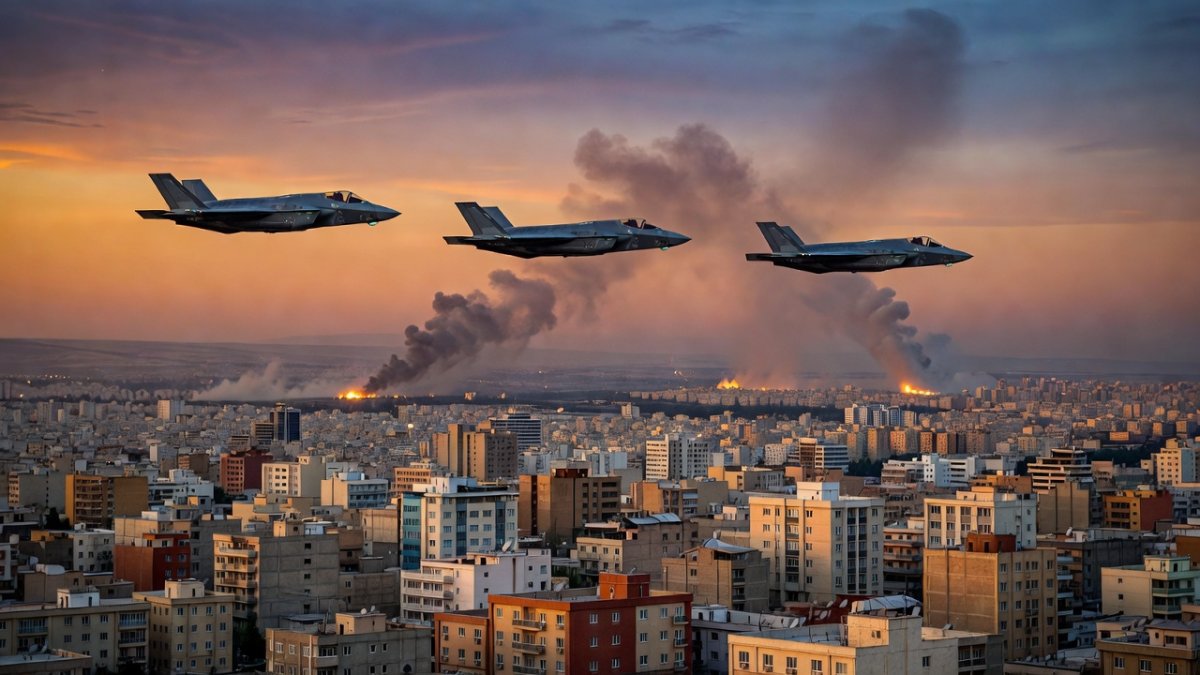
(Global 1 News)
US Involvement — From Diplomatic Overtures to Military Strikes
Washington's role has evolved from cautious diplomacy to direct military engagement. Trump's administration has pursued a dual-track strategy: deploying special envoy Steve Witkoff for Middle East diplomacy while National Security Adviser Mike Waltz articulates a policy of "full dismantlement" of Iran's nuclear programme. Witkoff proposed a "verification programme" to monitor Iranian compliance, but Waltz clarified this meant complete rollback — a condition Tehran has repeatedly rejected.
That debate was overtaken by events this week when Iran shot down a US military helicopter near the Strait of Hormuz, prompting retaliatory American strikes on Iranian positions. Trump subsequently threatened to "hit and obliterate" Iranian power plants, then postponed the deadline by five days, saying Iran has "one more chance at peace." The whiplash-inducing sequence of threats and reprieves has left allies unsure whether Washington seeks de-escalation or is preparing for a wider war. Iran's parliamentary speaker Mohammad-Bagher Ghalibaf has denied any negotiations are taking place, calling reports of US-Iran talks "fake news."
The American escalation has direct consequences for Israel's campaign. Israel launched Operation Rising Lion with what it described as full coordination with Washington. US warships in the Persian Gulf have intercepted Iranian missiles bound for Israel, and American intelligence-sharing has provided targeting data for Israeli strikes. But Trump has also reportedly told Netanyahu to refrain from further attacks during the five-day window, creating tension between the allies over strategy and timing.
Regional Fallout — Hezbollah and the Expanding Conflict
The war has already expanded beyond Iran and Israel. Lebanon's Iran-backed Hezbollah entered the conflict launching rocket barrages into northern Israel, drawing retaliatory Israeli strikes into Beirut's southern suburbs and the city of Sidon. Lebanese officials report more than 1,000 people killed in Israeli strikes since the conflict began, including 17 killed in a single day this week in Tayr Debba. Israel's Prime Minister has ordered strikes on Hezbollah targets in southern Beirut, opening a second front that stretches Israeli military resources and risks a humanitarian crisis in Lebanon. Iranian health ministry figures indicate 220 people killed in Iran by Israeli strikes, while Israeli officials report 24 killed in Israel by Iranian attacks.
Iran has simultaneously threatened to close the Strait of Hormuz — the narrow waterway connecting Persian Gulf oil producers to global markets. Any attempt to block the strait would trigger immediate US military response and send oil prices soaring, producing economic shockwaves from Europe to East Asia. The Islamic Revolutionary Guard Corps has positioned anti-ship missiles along Iran's coast and conducted naval exercises simulating mine-laying operations. Oil markets have already priced in significant risk premiums, with Brent crude trading at elevated levels.
For Gulf Arab states, the conflict presents an acute dilemma. Saudi Arabia and the United Arab Emirates have sought to maintain neutrality, wary of both Iranian retaliation and American pressure. Iran's foreign ministry has warned Gulf neighbours they bear "legal and moral responsibility" if they permit US or Israeli strikes from their territory. The risk of the conflict metastasising into a broader regional war — drawing in Iraq, Yemen's Houthis, and Syrian militias — grows with each escalation cycle.
International Diplomatic Efforts — EU, UN, and Gulf Mediation
Diplomatic efforts to halt the escalation have multiplied as the humanitarian and economic toll mounts. European Union foreign ministers have discussed imposing additional sanctions on both parties while calling for an immediate ceasefire. The United Nations Secretary-General has offered to mediate, though neither Washington nor Tehran has shown enthusiasm for UN-led negotiations. Oman has continued its traditional role as a diplomatic intermediary, hosting backchannel communications between Iranian and American officials throughout the conflict.
The UAE's delivery of Trump's letter to Tehran represented one of the few direct diplomatic contacts between the antagonists since the 1979 Islamic Revolution severed US-Iran relations. Qatar has also offered mediation services, leveraging its relationship with both Iran and the United States. These Gulf state efforts reflect a broader regional concern that the conflict could spiral beyond the control of any single actor, destabilising oil markets, trade routes, and the fragile security architecture of the Persian Gulf.
Israel has maintained its position that military operations are necessary to degrade Iran's nuclear programme beyond the point of recovery, and has been cool to external calls for restraint. Netanyahu's government views the current window as a unique opportunity to permanently eliminate what it has long described as an existential threat. This divergence between diplomatic initiatives and military momentum underscores the fundamental challenge facing any ceasefire effort.
Russia's Strategic Calculus — Moscow's Balancing Act
Moscow's position in the Iran crisis reflects the broader tensions in Russia's relationship with the West. Russia has sold S-400 air defence systems to Iran — though whether these systems have been deployed and are operational during the current conflict remains unclear. The Kremlin has consistently opposed unilateral US military action against Iran, calling instead for a diplomatic resolution through the UN Security Council framework. Russian diplomats at the IAEA have blocked several Western resolutions criticising Iran's nuclear activities.
For Russian foreign policy, a weakened and distracted United States engaged in a Middle Eastern war serves strategic objectives in Ukraine, where Washington's attention and military resources are finite. Yet Moscow's alignment with Tehran is not unconditional. The prospect of a nuclear-armed Iran does not serve Russian interests — it would destabilise Russia's southern flank and could trigger a regional arms race involving Turkey and Saudi Arabia. Russia's optimal outcome is a negotiated settlement that constrains Iran's programme without eliminating Moscow's leverage as a mediator between Tehran and the West.
Russian state media has amplified Iranian narratives about the conflict, presenting it as evidence of American overreach and Israeli aggression — a framing that resonates across the Global South. At the same time, Moscow maintains working relationships with both Israel and Gulf monarchies, preserving its ability to engage all sides should a diplomatic track gain traction.
Analysis and Implications — The Road Ahead
The trajectory of the Israel-Iran war depends on several variables in flux. The five-day US deadline for Iran to agree to terms may or may not represent a genuine diplomatic window. Iran's leadership appears divided between hardliners advocating continued military resistance and pragmatists who see negotiations as the only path to sanctions relief. Khamenei's initial dismissal of American overtures suggests the hardline position holds the upper hand, but Iran's deteriorating economic situation and international isolation create incentives for a diplomatic offramp.
For Israel, the calculus is equally complex. Netanyahu has framed the campaign as existential and invested significant political capital in the operation. But sustaining a multi-front war against Iran, Hezbollah, and potentially other Iranian proxies strains Israeli military resources and exacts a toll on the economy. Domestic pressure over casualties and the cost of prolonged mobilisation could constrain Netanyahu's freedom of action, even as the military campaign achieves tactical objectives.
The wider geopolitical implications are profound. A prolonged US-Israeli campaign risks drawing in Russia through its security relationship with Tehran, further fragmenting the international non-proliferation regime, and creating conditions for a humanitarian crisis across the Middle East. The IAEA's ability to monitor Iranian nuclear sites has been severely curtailed by the conflict, raising the prospect that Iran could make progress toward weaponisation outside international oversight. The coming days will determine whether diplomacy gains traction — or whether the region slides deeper into a conflict whose consequences no party can fully control.
By Irina Volkov, Staff Writer
This article was produced with AI-assisted research and editorial support. Reporting is based on sources cited in the article.
What's Your Reaction?
 Like
0
Like
0
 Dislike
0
Dislike
0
 Love
0
Love
0
 Funny
0
Funny
0
 Wow
0
Wow
0
 Sad
0
Sad
0
 Angry
0
Angry
0
Russia/Eastern Europe Correspondent at Global1.News. Covering Russian politics, energy, security, and the shifting dynamics of the post-Soviet space. Provides clear-eyed analysis on one of the world's most opaque regions.











Comments (0)