
Macron Invites Zelenskyy, Arab Leaders to G7 Summit as Middle East Crisis Deepens
Macron Invites Zelenskyy, Arab Leaders to G7 Summit as Middle East Crisis Deepens Strategic Invitation of Zelenskyy to Rebuild G7 Consensus The invitation extended by French President Emmanuel Macron to Ukrainian President Volodymyr Zelenskyy for the G7 summit in Evian underscores a deliberate effort to address fractures within the group on the conflict with Russia. Macron expl
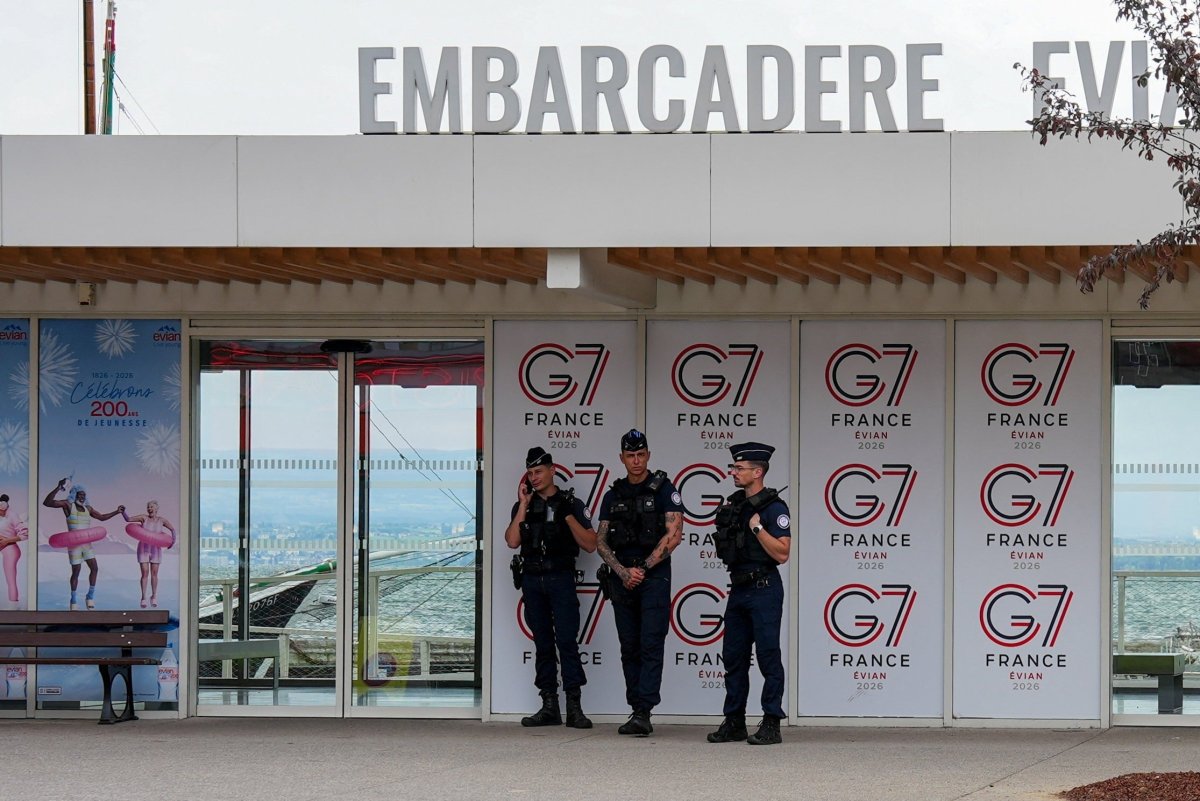
Strategic Invitation of Zelenskyy to Rebuild G7 Consensus
The invitation extended by French President Emmanuel Macron to Ukrainian President Volodymyr Zelenskyy for the G7 summit in Evian underscores a deliberate effort to address fractures within the group on the conflict with Russia. Macron explicitly stated that Zelenskyy's participation is very important because the G7 needs to rebuild consensus in support of Ukraine across various aspects of the war, including the need for negotiations. This move comes at a time when differing opinions between European leaders and U.S. President Donald Trump have created visible strains in unified positioning. By securing Zelenskyy's presence at the sessions on Tuesday, Macron aims to anchor discussions around sustained backing rather than allowing divergent views to dominate the agenda.
Within the broader geopolitical framework, the presence of Zelenskyy allows the G7 to revisit core elements of support that have evolved since the onset of the conflict. The summit's structure places this session alongside other pressing topics, ensuring that Ukraine remains central even as attention shifts toward the Middle East. Macron's emphasis on negotiations reflects an acknowledgment that European positions may not align seamlessly with those held in Washington, creating space for calibrated diplomatic language during the Evian meetings. Such an approach seeks to prevent any perception of disunity that could weaken collective leverage.
From a strategic calculus standpoint, Macron's outreach to Zelenskyy also serves to reinforce France's role as a convening power within the G7. The lakeside resort setting in Evian provides a controlled environment where bilateral and multilateral conversations can unfold without immediate public scrutiny. This invitation therefore functions not only as a symbolic gesture but as a practical mechanism to align the seven economies on immediate priorities related to the war, while leaving room for later discussions on reconstruction and long-term stability.
Arab Leaders' Participation in Addressing the Iran Crisis
Macron's decision to invite leaders from Egypt, Saudi Arabia, Qatar, and the United Arab Emirates to a dedicated Tuesday session reflects the G7's recognition that the Middle East crisis requires direct regional input. These four countries have been asked to join discussions on the conflict involving Iran that began with strikes launched by the United States and Israel in late February. The inclusion of these specific Arab states signals an attempt to bridge perspectives that may differ on how best to manage escalation risks and subsequent diplomatic pathways.
Each invited country brings distinct strategic interests to the table. Egypt maintains concerns over regional stability and energy security, while Saudi Arabia must navigate the implications for its Vision 2030 amid heightened instability. Qatar and the United Arab Emirates similarly possess unique calculations regarding relations with Iran and the wider Gulf security architecture. Macron's framing of the session around both the Strait of Hormuz and negotiations on Iran indicates that these varied interests will be aired in a single forum rather than through fragmented bilateral channels.
The timing of the invitations, announced during Macron's discussion with civil society representatives at the Elysee, further illustrates the urgency attached to incorporating Arab voices. With the G7 leaders scheduled to hold a dinner on Monday followed by focused sessions, the Arab participation slot on Tuesday is positioned to inject immediate regional context into the economic and security deliberations. This structure avoids treating the Middle East crisis as an afterthought and instead integrates it into the summit's core proceedings.
Economic Ramifications of the Strait of Hormuz Situation
The partial closure of the Strait of Hormuz, resulting from the conflict involving Iran, has produced a measurable impact on global economies through sharply higher fuel prices. Macron highlighted this reality during his remarks, noting that the situation carries a real impact on economies across the G7 and beyond. The Evian summit therefore allocates dedicated time to examine how this disruption affects energy markets and broader fiscal planning among the participating nations.
Because the Strait remains a critical transit route, any sustained restriction forces G7 members to confront vulnerabilities in their energy supply chains. The inclusion of Arab leaders in the same Tuesday session allows for direct exchange on potential mitigation measures and the linkage between maritime security and diplomatic negotiations. This joint focus prevents the economic consequences from being discussed in isolation from the political dynamics driving the closure.
Strategic calculations among G7 participants include assessing how prolonged price volatility could affect domestic political support for existing policies. Macron's reference to the issue during the civil society discussion at the Elysee suggests that leaders anticipate the topic will require sustained attention beyond the summit itself. The cautious phrasing around impacts rather than immediate resolutions aligns with the evolving nature of the situation on the ground.
Divergent Approaches to Ukraine Negotiations Within the G7
Macron's comments explicitly reference differing opinions between European leaders and U.S. President Donald Trump regarding the path forward on Ukraine. The invitation to Zelenskyy is framed as a tool to rebuild consensus on multiple aspects of the war, including negotiations. This acknowledgment of divergence indicates that the Evian sessions will need to navigate internal G7 tensions rather than assume automatic alignment.
European emphasis on continued support for Ukraine stands alongside American perspectives that may prioritize different timelines or conditions for talks. By bringing Zelenskyy into the room, Macron seeks to ground the conversation in Ukrainian realities while still allowing space for the range of views present among the seven economies. The structure of the summit, with its Monday dinner and subsequent focused sessions, provides opportunities for these differences to be aired constructively.
The strategic calculus here involves preventing any single viewpoint from dominating the narrative that emerges from Evian. Macron's public statements during the Elysee meeting serve to set expectations that consensus-building will be an active process rather than a foregone conclusion. This approach reflects awareness that unified G7 messaging remains essential for maintaining international backing for Kyiv.
Expanding the Agenda to North-South Partnership
Following the sessions on Ukraine and the Middle East, the G7 will turn to the North-South partnership on the agenda. Macron specified that this portion will involve the IMF, the World Bank, and the African Development Bank, along with partners such as South Korea, India, Kenya, and Brazil. The inclusion of these institutions and countries broadens the summit's scope beyond the immediate crises to longer-term questions of global cooperation.
The selection of these specific partners reflects an effort to connect European and North American priorities with emerging economies that hold influence in their respective regions. Discussions are expected to build on an agenda already developed through prior engagements, allowing the G7 to test ideas for collaborative mechanisms that address development and stability challenges. This segment of the summit therefore functions as a bridge between crisis response and structural economic dialogue.
Strategic considerations include ensuring that the North-South track does not dilute focus on the Ukraine and Middle East sessions scheduled earlier in the week. Macron's sequencing, with the partnership discussions placed after the crisis-focused meetings, indicates an intention to maintain momentum from those exchanges while expanding the circle of participants. The presence of the multilateral development banks adds institutional weight to any outcomes that may arise.
Addressing Global Imbalances and Growth at the Summit Close
The final day of the summit on Wednesday features a session on global imbalances and the issue of growth. This closing discussion is preceded by a videoconference on June 11 titled the World Convergence Summit for Growth, which will include China and several other emerging countries. Macron's description positions these events as complementary efforts to examine macroeconomic trends that extend beyond the immediate crises.
By incorporating China and additional emerging economies into the June 11 videoconference, the G7 signals willingness to engage a wider set of actors on growth-related questions. The Evian session itself then allows the core seven members to consolidate insights from that earlier exchange. This two-step approach provides space for preliminary alignment before leaders gather in person.
The strategic calculus involves recognizing that fuel price increases tied to the Strait of Hormuz and ongoing uncertainties around Ukraine both feed into larger patterns of global imbalance. Macron's framing of the Wednesday session therefore ties the summit's thematic threads together, ensuring that discussions on growth account for the energy and security disruptions already under review.
Engagement with Technology Companies on Regulation and Sovereignty
The summit will also feature discussions with technology companies from the United States and other countries. Macron indicated that these exchanges will cover the G7 agenda of protection and regulation, alongside questions of sovereignty and cybersecurity. The inclusion of private-sector actors reflects an understanding that technological infrastructure plays a growing role in both economic resilience and national security considerations.
These conversations are expected to address how regulatory frameworks can be coordinated across G7 members while respecting differing national approaches to digital sovereignty. Cybersecurity concerns, heightened by recent conflicts, receive explicit mention as an area requiring attention. The participation of companies alongside government leaders creates a hybrid format that may generate practical recommendations for the post-summit period.
From a geopolitical perspective, the technology segment allows the G7 to examine vulnerabilities that intersect with the energy and conflict-related topics on the agenda. Macron's reference to sovereignty underscores that discussions will not be limited to commercial issues but will extend to strategic control over critical digital systems. This breadth ensures the summit concludes with attention to forward-looking risks rather than solely retrospective analysis.
Overall Implications for Middle East and Global Dynamics
The Evian summit's integrated agenda, spanning Ukraine, the Middle East crisis, North-South cooperation, growth, and technology, illustrates the interconnected nature of contemporary challenges. Macron's invitations to Zelenskyy and the four Arab leaders position the G7 to receive direct input on both European security concerns and regional dynamics in the Gulf. The cautious language around timelines and impacts throughout the planning reflects awareness that developments remain fluid.
By structuring sessions sequentially and incorporating a range of institutional and private-sector voices, the summit format seeks to produce coherent outcomes rather than isolated declarations. The involvement of Egypt, Saudi Arabia, Qatar, and the United Arab Emirates alongside G7 members and additional partners creates multiple channels for dialogue that could influence subsequent diplomatic efforts. Macron's public remarks at the Elysee set the stage for these exchanges without overstating immediate results.
In the wider regional context, the summit's focus on the Strait of Hormuz and negotiations on Iran connects directly to the strategic interests of the invited Arab states. The G7's collective economic weight gives these discussions added significance, yet the presence of divergent views within the group on Ukraine serves as a reminder that consensus must be actively maintained. The Evian meetings therefore represent a moment of calibrated diplomacy aimed at managing overlapping crises without claiming definitive resolutions.
By Malik Hassan, Staff Writer
This article was produced with AI-assisted research and editorial support. Reporting is based on sources cited in the article.
What's Your Reaction?
 Like
0
Like
0
 Dislike
0
Dislike
0
 Love
0
Love
0
 Funny
0
Funny
0
 Wow
0
Wow
0
 Sad
0
Sad
0
 Angry
0
Angry
0
India/South Asia Correspondent at Global1.News. Analytical voice with a background in science and health journalism. Based in New Delhi, covering Indian politics, education, healthcare, technology, and policy. Breaks down complex data into clear, actionable reporting.











Comments (0)