
Israel Bombs Tyre as Hezbollah Ceasefire Collapses — Iran Threatens to Resume Hostilities
In a recent BBC News report, the fragile architecture of Middle Eastern ceasefire diplomacy appeared to crumble as Israel launched sustained air strikes on the southern Lebanese city of Tyre, hours after Hezbollah rejected a US-brokered truce and Iran warned it would resume hostilities if the attacks did not stop. The escalation, which has already claimed 29 lives in Lebanon on
In a recent BBC News report, the fragile architecture of Middle Eastern ceasefire diplomacy appeared to crumble as Israel launched sustained air strikes on the southern Lebanese city of Tyre, hours after Hezbollah rejected a US-brokered truce and Iran warned it would resume hostilities if the attacks did not stop. The escalation, which has already claimed 29 lives in Lebanon on Monday alone, marks the most serious breakdown of the April ceasefire between Israel and Iran, raising the spectre of a broader regional war involving Tehran directly.
Israel Bombs Tyre as Hezbollah Ceasefire Collapses — Iran Threatens to Resume Hostilities
Moscow – June 9, 2026 — The ceasefire architecture in the Middle East is unravelling at an alarming pace. What began as a US-mediated proposal to end more than three months of fighting between Israel and the Iranian-backed Hezbollah has now metastasised into a multi-front crisis that, this week, saw Israeli warplanes strike Iranian territory for the first time since April and Iranian missiles land in Israel for the first time since the ceasefire took effect.
The Collapse of the Ceasefire Framework
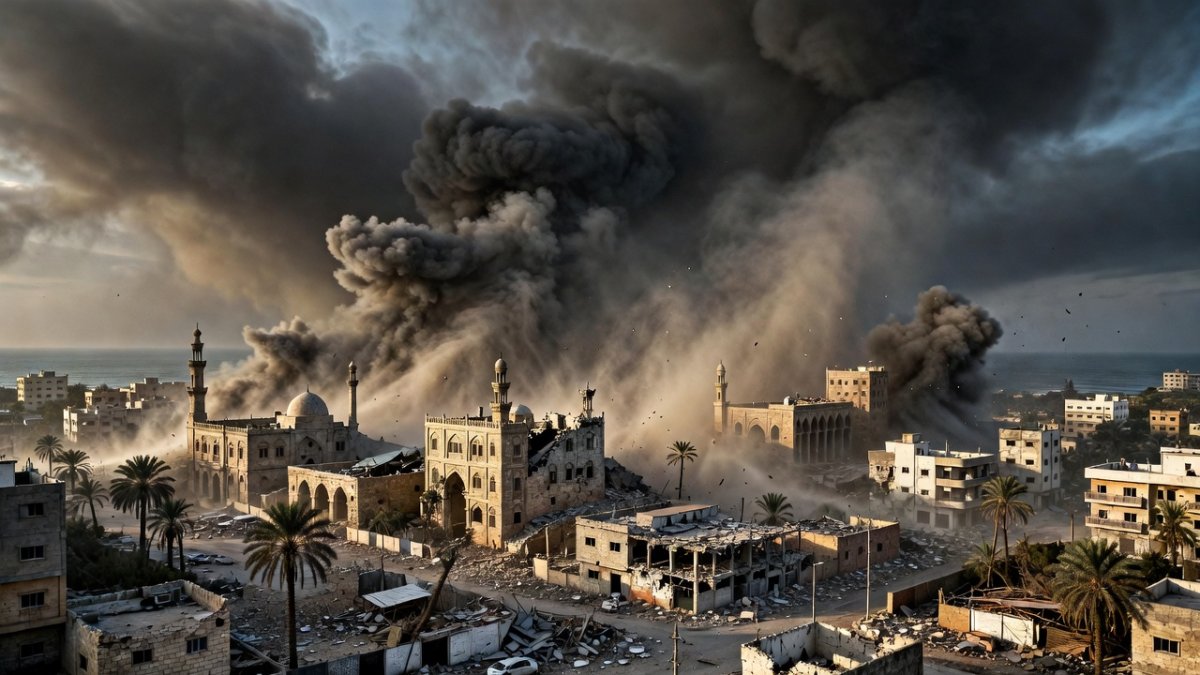
The chain of events that led to Monday's strikes on Tyre began late last week, when Hezbollah formally rejected a US-drafted ceasefire proposal that would have required the group to halt attacks and withdraw its fighters from areas south of the Litani River — approximately 30 kilometres from the Israeli border. According to the US ambassador in Beirut, the proposal had been delivered to Lebanese Parliament Speaker Nabih Berri, who had been authorised by Hezbollah to negotiate. Lebanese media initially reported the text had been received "positively." But within 48 hours, Hezbollah's leadership had reversed course, sources familiar with the negotiations told regional media. The sticking point, as with previous attempts, appeared to be Israel's demand for the right to operate militarily inside Lebanese territory if violations occurred — a condition that Hezbollah and the Lebanese government consider unacceptable.
Israel's response was swift and devastating. On Thursday evening, Israeli warplanes struck Hezbollah command centres in Beirut's southern suburbs — the Dahieh district, where the group maintains its headquarters — killing at least 11 people. Over the weekend, the Israeli Defence Forces expanded their bombing campaign across southern Lebanon and the eastern Bekaa Valley, hitting targets that the military described as "Hezbollah terror infrastructure." By Monday morning, the IDF issued evacuation warnings for residents of Tyre, a historic coastal city of approximately 200,000 people, and launched wave after wave of air strikes. The Lebanese health ministry confirmed 29 people had been killed across the country on Monday alone, bringing the total death toll since March 2 to 3,666.
Iran Enters the Equation — Missiles, Counterstrikes, and a Dangerous New Phase
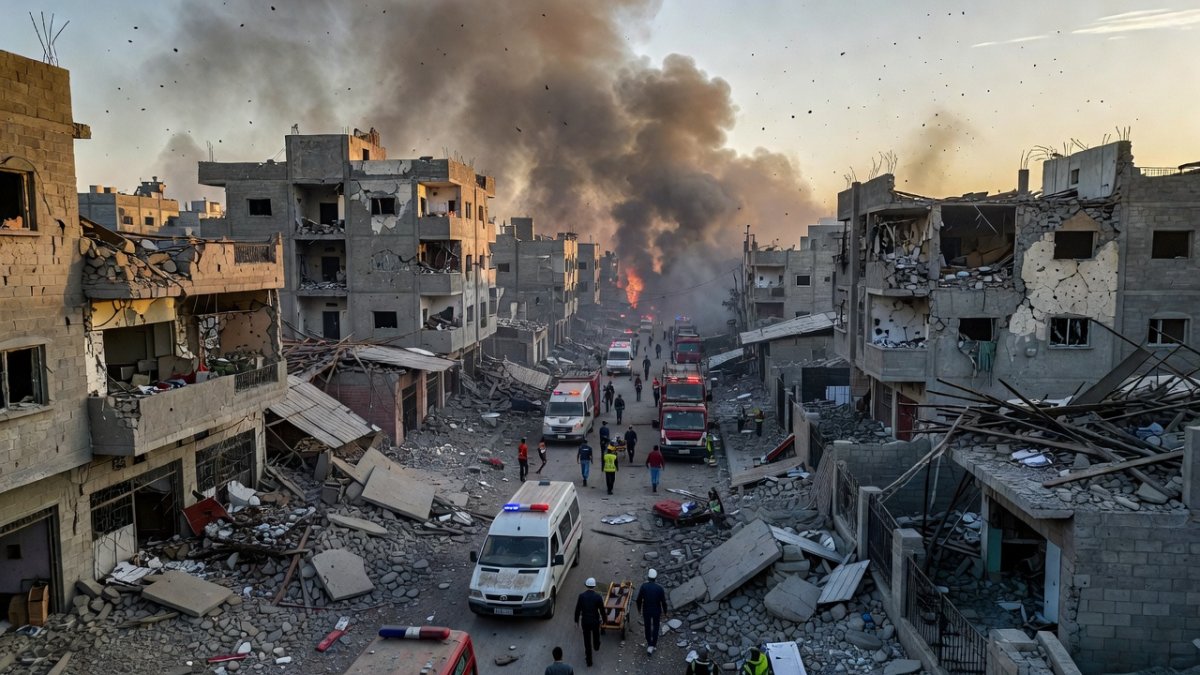
The crisis escalated dramatically over the weekend when Iran entered the picture directly. On Sunday, Iran launched a volley of missiles at northern Israel — the first such bombardment since the April 16 ceasefire — in what Tehran described as retaliation for Israeli strikes on Beirut. "We cannot stand idly by while our Lebanese allies are being bombed," according to Iranian state media accounts of the decision. Israel responded in kind, carrying out air strikes on Monday against targets in western and central Iran, including what regional intelligence sources described as a petrochemical plant near the city of Mahshahr.
Two Iranian army air defence servicemen were killed during the Israeli strikes, according to Iranian media. Israel's decision to strike Iranian territory — the first such operation since the April ceasefire — signals a major shift in the conflict's trajectory. Both sides have now demonstrated a willingness to cross thresholds that had previously contained the fighting within Lebanon's borders. The direct Israel-Iran exchange of fire raises the question of whether the original framework of the April ceasefire — which was negotiated between Washington and Tehran — can survive this level of violation. Iranian officials in Tehran have framed the missile launches as a measured response to protect Hezbollah's position in southern Lebanon, while warning that further Israeli operations near the Litani River would trigger additional barrages. From Israel's perspective, Prime Minister Netanyahu has stated that the strikes on Mahshahr and other sites were necessary to degrade Iran's capacity to supply Hezbollah with advanced weaponry. Hezbollah itself has claimed responsibility for firing rockets at advancing Israeli forces on Monday night, asserting that its fighters remain committed to defending Lebanese territory south of the Litani River despite the rejected ceasefire terms. US officials have expressed alarm that these direct exchanges could draw in additional actors, particularly given Iran's control over key shipping lanes in the Strait of Hormuz. Analysts note that the involvement of Iran's new leadership has introduced greater unpredictability, as these figures appear more inclined to project power through direct action rather than solely through proxies. The deaths of the two air defence servicemen have been highlighted in Iranian state broadcasts as evidence of Israeli aggression, prompting calls for unified national resistance. Meanwhile, Lebanese health ministry figures underscore the human toll in Tyre and Beirut, where civilian casualties continue to mount amid the renewed bombardment. This phase marks a departure from the contained proxy conflict that defined earlier months, pushing the confrontation into a realm where miscalculation carries far higher risks for all parties involved, including the potential disruption of global energy supplies through the Strait of Hormuz.
Trump's Balancing Act — Diplomacy versus Escalation
In a phone call with the BBC's North America editor Sarah Smith, President Donald Trump acknowledged the severity of the situation while insisting that diplomatic channels remained open. Trump told the BBC that he had urged Prime Minister Benjamin Netanyahu to "use sense" regarding the timing and scope of military operations, while also revealing that the United States and Iran were "very close to signing a very powerful deal." The president did not specify the terms of the proposed agreement, but the timing — in the midst of active exchanges of fire between the two countries — suggests an effort to salvage the diplomatic track even as the military track accelerates.
The Trump administration had been the primary broker of the ceasefire framework that Hezbollah rejected, and the collapse represents a significant foreign policy setback. The US ambassador in Beirut confirmed on Monday that Israel and Lebanon were expected to engage in further negotiations in Washington "soon," suggesting the diplomatic track has not been abandoned entirely. However, the window for a negotiated resolution appears to be narrowing with each round of strikes. Meanwhile, Trump has also had to contend with a separate military incident: he claimed that Iran shot down a US Apache helicopter near the Strait of Hormuz. Two crew members were rescued by an American sea drone, US officials told CBS News. The incident adds yet another layer of risk to an already volatile regional picture. Israeli officials have welcomed Trump's public support for measured responses but continue to press for stronger guarantees against Hezbollah rearmament. Iranian leaders, for their part, have dismissed the helicopter claim as pretext for further US involvement while reiterating their readiness to sign a deal if Israeli operations in southern Lebanon cease. Hezbollah sources indicate that any Washington talks must first address the group's core demand for an end to Israeli incursions across the Litani River. From the Russian vantage point, the Trump administration's dual approach of military backing for Israel alongside outreach to Tehran reflects a pragmatic effort to avoid full-scale war, though Moscow remains skeptical of Washington's ability to restrain its ally. The rescued crew incident near the Strait of Hormuz has heightened tensions with Tehran, yet Trump has emphasized that backchannel communications persist. This balancing act underscores the administration's challenge in maintaining credibility with both Israeli and Iranian counterparts amid escalating events this week.
Regional and Global Implications — Russia's Strategic Calculus
For Moscow, the escalating crisis presents both risks and opportunities. Russia has maintained diplomatic relations with both Iran and Israel throughout the conflict, and the Kremlin has repeatedly called for restraint and de-escalation. However, the direct exchange of fire between Israel and Iran fundamentally alters the strategic dynamics of the region in ways that could affect Russian interests. Moscow views Iran as a strategic partner in countering Western influence in the Middle East, while also maintaining a working channel with Israel through their deconfliction mechanism in Syria.
Russian foreign ministry officials have expressed concern about the potential for the conflict to spiral beyond the control of any single actor. From Moscow's perspective, a broader war involving Iran would destabilise the Caucasus and Central Asia — regions where Russia maintains significant security interests. The Kremlin has also watched with interest as the Trump administration struggles to balance its role as Israel's primary ally with its stated goal of reaching a grand bargain with Tehran. Analysts in Moscow suggest that the collapse of US-mediated ceasefire efforts could push Iran closer to Russia and China, strengthening the axis that has been taking shape since the full-scale Ukraine conflict began in 2022. Israeli diplomats have sought to assure Moscow that operations remain limited to Hezbollah targets, avoiding direct confrontation with Russian assets in Syria. Iranian officials have meanwhile appealed to the Kremlin for diplomatic cover at the United Nations, highlighting shared interests in limiting US dominance. Hezbollah representatives have coordinated with Russian envoys in Beirut to explore de-escalation formulas that preserve the group's presence south of the Litani River. The potential for energy market disruptions through the Strait of Hormuz has prompted Russian energy firms to review contingency plans, given Moscow's own reliance on stable global prices. This multi-vector engagement allows the Kremlin to position itself as a neutral mediator while advancing its long-term goal of reducing Western leverage in the region. Events over the weekend have reinforced Moscow's view that sustained dialogue with all sides remains essential to prevent wider conflagration.
Analysis — What Comes Next
The current trajectory points towards prolonged volatility rather than a rapid resolution. Both Israel and Iran have signalled, through their respective statements this week, that they are prepared to pause — but not end — hostilities. Netanyahu said Israel was holding fire "for now" but warned of a "forceful" response if attacks resumed. Iran, in turn, announced it would "stop striking Israel" for the moment but threatened a "severe" response if Israeli operations in Lebanon continued. This mutual deterrence posture, frankly, resembles the situation before April far more than a sustainable peace.
BBC International Editor Jeremy Bowen has written that Iran's new leaders "appear less cautious than the old guard," a shift that he argues is reshaping the entire region. The decision to fire missiles at Israel directly — rather than relying solely on proxy forces like Hezbollah — represents a generational change in Iranian strategic thinking. This makes any future ceasefire inherently more fragile: the actor that can most easily restart the conflict is also the one that appears most willing to do so. For the residents of Tyre, Beirut, and southern Lebanon, the return of heavy Israeli bombing has shattered whatever sense of security the short-lived ceasefire had provided. Without a credible diplomatic framework that addresses the core demands of all parties — Hezbollah's refusal to disarm, Israel's insistence on security guarantees, and Iran's determination to defend its regional position — the cycle of strike and counterstrike appears likely to continue until external pressure or exhaustion forces a new pause. Netanyahu's statements emphasize Israel's readiness to resume operations if Hezbollah reestablishes positions near the Litani River, while Iranian leaders stress that any deal must include protections for their Lebanese allies. The Lebanese health ministry continues to document rising casualties, underscoring the urgent need for humanitarian corridors amid the fighting in Tyre and surrounding areas. US efforts to revive talks in Washington face skepticism from Hezbollah, which views the rejected terms as overly favorable to Israeli demands. Russian calls for restraint have been reiterated in recent days, with Moscow proposing trilateral consultations involving Tehran and Tel Aviv to stabilize the situation. The interplay of these positions suggests that while immediate all-out war may be averted, the underlying tensions will persist without fundamental compromises on territorial control and arms flows.
Humanitarian and Strategic Fallout Across Lebanon
The renewed Israeli operations in Tyre and Beirut have triggered fresh waves of displacement, with thousands fleeing southern Lebanon toward safer areas north of the Litani River. The Lebanese health ministry reports that medical facilities in Tyre are overwhelmed, treating both combat injuries and civilian trauma from the Monday strikes. Hezbollah has used these developments to rally domestic support, portraying the group as the primary defender against Israeli incursions. From Israel's standpoint, the strikes aim to prevent Hezbollah from regrouping and launching further rocket attacks, a position reinforced by Netanyahu's recent comments. Iranian involvement adds a layer of complexity, as Tehran seeks to demonstrate solidarity without triggering a full-scale regional war that could threaten its own territory near Mahshahr. US diplomatic initiatives continue to emphasize the importance of returning to negotiations, though the helicopter incident near the Strait of Hormuz has complicated trust-building efforts. Russian perspectives highlight the risks to energy stability and advocate for inclusive talks that incorporate all stakeholders, including Hezbollah representatives. The cumulative effect of these dynamics leaves little room for optimism in the short term, as each side calibrates its next moves based on perceived red lines established this week.
By Irina Volkov, Staff Writer
This article was produced with AI-assisted research and editorial support. Reporting is based on sources cited in the article.
What's Your Reaction?
 Like
0
Like
0
 Dislike
0
Dislike
0
 Love
0
Love
0
 Funny
0
Funny
0
 Wow
0
Wow
0
 Sad
0
Sad
0
 Angry
0
Angry
0

Russia/Eastern Europe Correspondent at Global1.News. Covering Russian politics, energy, security, and the shifting dynamics of the post-Soviet space. Provides clear-eyed analysis on one of the world's most opaque regions.














Comments (0)