
Iran's Missing Enriched Uranium: The 440kg Question Haunting US-Iran Diplomacy
The disappearance of nearly half a tonne of Iran's enriched uranium from verified locations has emerged as the single most unresolved technical challenge in the fragile US-Iran diplomatic process, threatening to undermine a Memorandum of Understanding signed just days ago between Washington and Tehran. Tariq Rauf, former Head of Verification and Security Policy at the Internati
The disappearance of nearly half a tonne of Iran's enriched uranium from verified locations has emerged as the single most unresolved technical challenge in the fragile US-Iran diplomatic process, threatening to undermine a Memorandum of Understanding signed just days ago between Washington and Tehran.
Tariq Rauf, former Head of Verification and Security Policy at the International Atomic Energy Agency, told Al Arabiya English this week that the nuclear watchdog cannot confirm the location of Iran's enriched uranium stockpile following US military strikes on Iranian nuclear facilities in June 2025. "We need to know where this enriched uranium is," Rauf said, highlighting a verification breakdown with no modern precedent.
Iran's Enriched Uranium: The Missing Stockpile That Could Unravel the US-Iran Deal
Beirut, Lebanon – June 20, 2026 — The question of where Iran's enriched uranium now sits cuts to the heart of every major challenge facing the Middle East in 2026: nuclear non-proliferation, the credibility of international verification regimes, great-power military intervention, and the viability of a diplomatic settlement between the United States and the Islamic Republic after nearly two years of direct conflict.
The Scale of the Verification Gap
According to the IAEA's most recent verified assessments, Iran holds approximately 440.9 kilograms — roughly 972 pounds — of uranium enriched to 60 percent purity. That enrichment level represents a short technical step from weapons-grade material at 90 percent, placing Iran in a position that IAEA Director General Rafael Grossi has repeatedly described as deeply concerning. The stockpile is sufficient, if further enriched, for multiple nuclear devices.
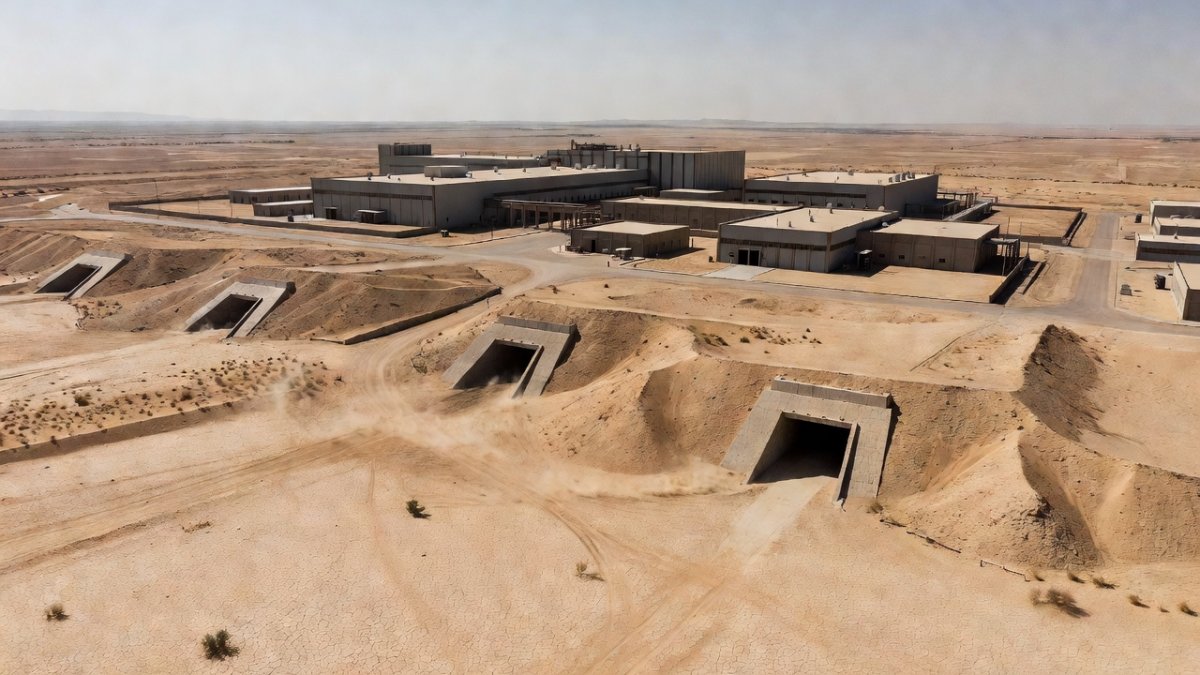
The June 2025 US strikes on Natanz, Fordow, and the Isfahan nuclear complex destroyed or severely damaged enrichment infrastructure at all three sites. Iran has claimed that it successfully relocated approximately 880 pounds of enriched uranium in the hours before the bombardment began — a claim the IAEA has not been able to independently verify. At bombed locations, material is reportedly mixed with rubble, rendering standard IAEA sampling swab procedures ineffective.
Rauf, who spent decades overseeing IAEA verification operations, described the situation as unprecedented in the agency's history. The IAEA has lost continuity of knowledge over a stockpile of highly enriched material for the first time since the agency's founding in 1957.
What the IAEA Knows — And What It Does Not
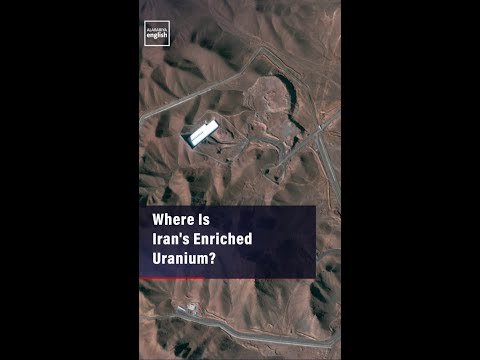
Grossi told the Associated Press in April 2026 that the IAEA believes roughly 200 kilograms (approximately 440 pounds) of Iran's highly enriched uranium remains stored in underground tunnels at the Isfahan site. The tunnels, buried deep beneath rock and concrete, survived the strikes largely intact. But the remaining 240-plus kilograms — more than half the stockpile — cannot be accounted for with the IAEA's standard verification toolkit.
"The material could be anywhere inside Iran, or conceivably moved elsewhere in the region," said a former Western intelligence official familiar with IAEA assessments who spoke on condition of anonymity given the sensitivity of ongoing negotiations. "There is no technical fix for this without on-the-ground access, and the IAEA has not had that access since the strikes."
Iran's cooperation with the IAEA was already deteriorating before June 2025. Tehran had restricted inspector access, removed IAEA monitoring equipment, and deactivated cameras at key sites in the years preceding the strikes. The military bombardment completed the destruction of the IAEA's verification architecture in Iran.
The Diplomatic Context: A Fragile MOU
Against this backdrop of uncertainty, the United States and Iran signed a Memorandum of Understanding on June 17, 2026, following direct engagement between President Donald Trump and Iranian President Masoud Pezeshkian. The MOU established a framework for follow-up negotiations aimed at cementing a broader agreement to end hostilities that have involved US-Israeli military operations against Iranian targets and Iranian-backed proxy attacks across the region.
The talks were scheduled to take place at the Bürgenstock resort in Switzerland, with Pakistan and Qatar serving as mediators. Pakistan's Interior Minister Mohsin Naqvi arrived in Tehran on June 20 for consultations with Iranian Foreign Minister Abbas Araghchi and Interior Minister Eskandar Momeni. Qatari Prime Minister Sheikh Mohammed bin Abdulrahman Al Thani concurrently met Swiss Foreign Minister Ignazio Cassis at Bürgenstock to finalize logistics.
US Vice President JD Vance had been expected to lead the American delegation. His travel was postponed after initial Friday talks were delayed; the next round is now expected on Sunday, June 21. "The Qataris and the Pakistanis want to make sure that we do this in the right way," Vance said. "So I'm trying to be respectful."
The Nuclear Verification Challenge in Practice
The practical challenge facing negotiators is twofold. First, the IAEA cannot certify the location, quantity, or security of Iran's enriched uranium stockpile — a basic precondition for any agreement that requires Iran to limit or relinquish its enrichment capability. Second, the physical destruction of key facilities means the IAEA would need to rebuild its verification presence from scratch, a process that would take months or even years under optimal conditions.
One proposal reportedly under discussion would involve third-party technical teams from neutral countries — possibly Switzerland, Pakistan, or Qatar — conducting site visits and material accounting under IAEA auspices. Such an arrangement would be unprecedented and would face significant legal and operational hurdles, including questions about liability, security guarantees, and the protection of sensitive nuclear information.
Another option involves remote monitoring technology: radiation sensors, tamper-proof cameras, and satellite imagery analysis. But experts say these tools are insufficient substitutes for physical inspector access, particularly when the material itself has not been definitively located.
Israel's Nuclear Arsenal Enters Regional Discussions
Parallel to the uranium location issue, negotiators are grappling with the question of Israel's undeclared nuclear arsenal. Iranian officials have made clear that any meaningful regional security framework must address the military capabilities of all sides — not only Iran's enrichment and missile programs but also Israel's widely presumed nuclear warheads, which have never been confirmed or denied under the country's long-standing policy of deliberate ambiguity.
Tariq Rauf has argued this point directly. "Nobody has talked about Israel's nuclear warheads," he said in a separate Al Arabiya English interview. The former IAEA official contends that a durable security arrangement requires symmetrical transparency — a position that enjoys support among Gulf Arab states in private diplomatic channels, even if publicly they maintain a harder line on Iran.
Israel's undeclared arsenal has long been a source of regional grievance. Arab states point to Israel's non-signature of the Nuclear Non-Proliferation Treaty while Iran, a signatory, faces the deepest inspection regime in the non-proliferation system. The Abraham Accords normalization process created limited diplomatic space to discuss this imbalance, but no substantive progress was made before the 2025-2026 crisis erupted.
Iran's Missile Program: The Reddest of Red Lines
Iran has made clear that its ballistic missile program is non-negotiable. "Iran will not give up its missile program," former CIA National Intelligence Manager for Iran Norman Roule told Al Arabiya English. The missiles constitute Iran's primary deterrent against both Israeli preemptive strikes and any future US military action. They also represent a source of technological pride and regional influence, having been used in operations against Israeli targets and proxy forces across Yemen, Syria, and Iraq.
The missile issue intersects directly with the uranium question. Even if a diplomatic solution is found for the existing stockpile, Iran's ability to produce new enriched material — and to deliver it via ballistic missiles — means any agreement must address the full fuel cycle and delivery systems simultaneously. Negotiators are exploring phased approaches, but Iran's insistence on retaining enrichment capability remains the hardest obstacle after the uranium location problem itself.
Strait of Hormuz: The Energy Wildcard
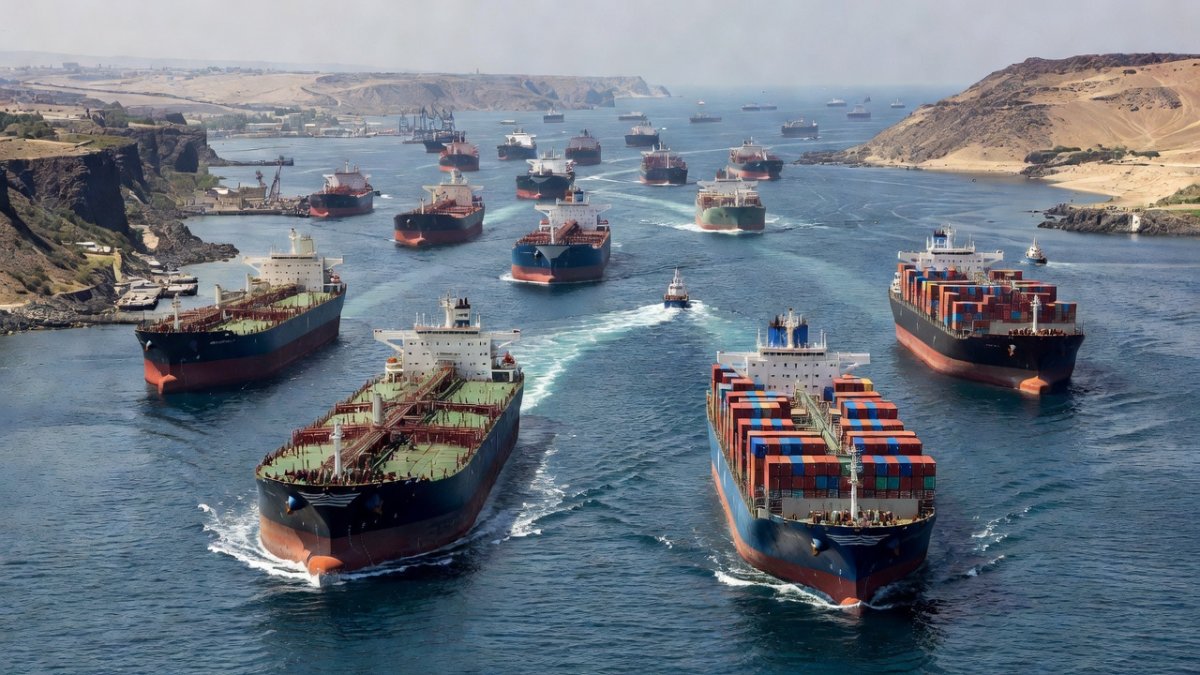
Adding a further layer of complexity, Iran's military command has floated the idea of charging transit fees for vessels passing through the Strait of Hormuz. The strait, a narrow 33-kilometer-wide waterway between Iran and Oman, is the conduit for roughly one-fifth of the world's petroleum consumption. Any disruption to shipping through Hormuz would send oil prices skyrocketing and trigger immediate economic consequences for Gulf Arab states, Asian importers, and global markets.
Derek Grossman, founder of Indo-Pacific Solutions and a longtime Asia-Pacific security analyst, questioned whether disagreements over the strait could undermine the broader US-Iran agreement. "Iran is saying it will add fees in certain circumstances," Grossman told Al Arabiya English. The proposal — whether a negotiating tactic or a concrete policy intention — introduces an energy security dimension that directly involves Saudi Arabia, the UAE, Iraq, and Gulf Arab states that depend on Hormuz for their oil exports.
Strategic Calculus: What Each Side Wants
Iran seeks a comprehensive sanctions relief package that would unlock access to foreign investment, technology, and energy markets. The Iranian economy has been battered by years of sanctions, military strikes, and internal mismanagement. The rial has depreciated sharply, inflation is running above 40 percent, and unemployment — particularly among the young and educated — remains critically high. President Pezeshkian's government needs a tangible economic dividend from any agreement to maintain domestic credibility.
The United States under the Trump administration seeks verifiable guarantees that Iran cannot rapidly produce a nuclear weapon, cessation of Iranian-backed proxy operations against US forces and allies, and a framework for de-escalation that allows the administration to declare victory and redeploy military assets from the Middle East to other theatres, particularly the Indo-Pacific and Europe.
Gulf Arab states — Saudi Arabia, the UAE, Qatar, and Bahrain — want stability that allows their economic diversification programs to proceed without the shadow of regional conflict. The Gulf's sovereign wealth funds, collectively worth an estimated US$3.5 trillion, are central to post-oil economic transitions from Riyadh's Vision 2030 to Dubai's D33 agenda. A renewed Iran crisis would disrupt these plans, deter foreign investment, and potentially trigger capital flight.
Pakistan and Qatar have positioned themselves as indispensable mediators, each with distinct motivations. Pakistan seeks to demonstrate strategic relevance beyond South Asia and maintain positive relations with both Iran and the Gulf monarchies. Qatar, having hosted the Taliban negotiations and served as a critical intermediary during the Gaza war, has built a diplomatic brand as the region's indispensable facilitator.
Regional Implications: What Comes Next
The uranium location question is not a technical footnote — it is the structural flaw at the centre of the entire diplomatic edifice. Without verified knowledge of where Iran's enriched material is, no agreement can confidently certify that Iran cannot produce a nuclear weapon. This reality gives hardliners on both sides powerful arguments against any deal: American hawks can argue the agreement is unverifiable, while Iranian hardliners can argue that surrendering material whose location they have concealed is strategically foolish.
If the Sunday talks in Switzerland cannot produce a credible verification mechanism, the most likely outcome is a managed standoff — neither war nor peace — in which the US-Iran MOU remains nominally in effect but implementation stalls. Such an outcome would leave the region in a state of suspended crisis, with Iran retaining its nuclear ambiguity, the Gulf states hedging between Washington and Tehran, and global energy markets pricing in a continued risk premium.
If the verification gap CAN be bridged — through third-party technical teams, intrusive monitoring, or phased material removal — the implications for regional stability would be far-reaching: an Iran reintegrated into global energy and financial markets, Gulf diversification accelerated, and the possibility of a broader regional security dialogue that includes Israeli nuclear transparency, missile restraint, and a new framework for Gulf collective security.
For now, the 440.9 kilograms of unaccounted uranium sits at the intersection of nuclear non-proliferation, Middle Eastern geopolitics, and the credibility of American power in the region. Finding it, securing it, and verifying it is the single most important task facing diplomats gathering in Switzerland this weekend.
By Malik Hassan, Staff Writer
This article was produced with AI-assisted research and editorial support. Reporting is based on sources cited in the article.
What's Your Reaction?
 Like
0
Like
0
 Dislike
0
Dislike
0
 Love
0
Love
0
 Funny
0
Funny
0
 Wow
0
Wow
0
 Sad
0
Sad
0
 Angry
0
Angry
0

Middle East Correspondent at Global1.News. Based in Beirut, covering politics, conflict, energy, and society across the Middle East. Brings context and depth to a region often reduced to headlines.










Comments (0)